Kids and Bikes in the Driveway: Setting Up Opener Safety Features


Published: Oct 20, 2026

When the weather clears, driveways transform into active playgrounds for bicycles, scooters, and sidewalk chalk. However, an overhead garage door is often the heaviest moving object in a residential home, weighing between 130 and 400 pounds. The U.S. Consumer Product Safety Commission (CPSC) reports between 20,000 and 30,000 garage door-related emergency room injuries annually, with children under 14 representing a disproportionate share of crushing and entrapment incidents.

Ensuring your family’s safety requires moving beyond standard childproofing to active, precise calibration of your opener’s mechanical and optical protection systems.

The Driveway Toy Blind Spot Paradox


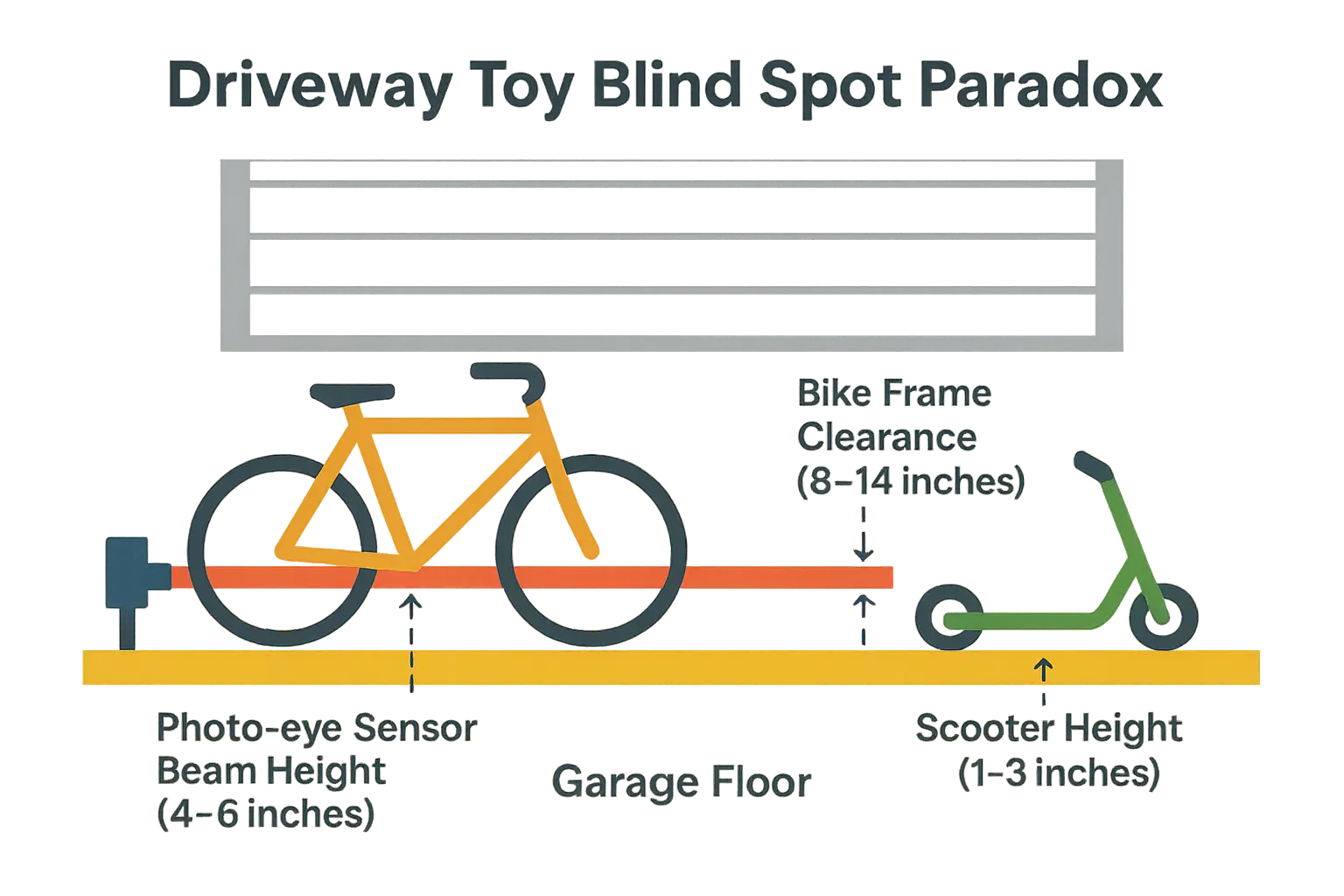
Standard safety advice instructs homeowners to check their photoelectric eyes, but standard setups possess a hidden vulnerability during driveway play: the optical geometry gap.

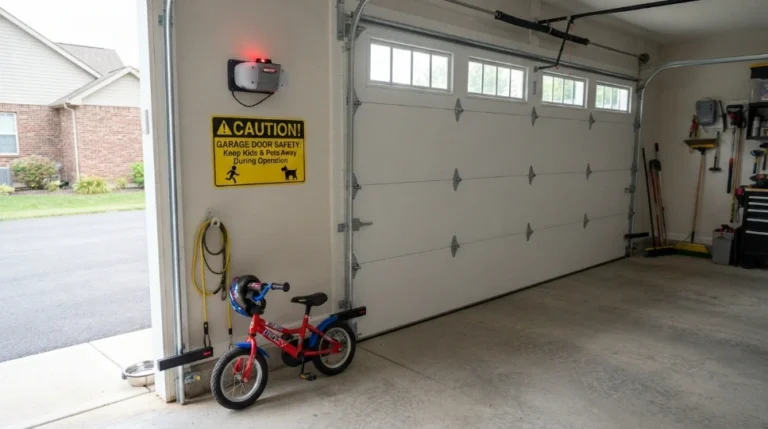
Under federal standards (UL 325), safety sensors must be installed no higher than 6 inches above the garage floor. However, a child’s bicycle frame typically has a clearance of 8 to 14 inches above the pavement. When a child rides a bike across the door threshold, the frame can pass completely over a 4-to-6-inch infrared beam while the front and rear wheels span across it. Conversely, low-profile stunt scooters or skateboards (1 to 3 inches high) can pass entirely beneath the beam.

This diagram reveals the 'Toy Blind Spot Paradox': standard photo-eye sensors set 4-6 inches above the floor can miss children's bicycle frames passing over them, and low-profile scooters passing underneath, highlighting the unique driveway safety challenge.

Automated “Timer-to-Close” (TTC) features—which automatically close the door after a set period—compound this risk during active outdoor play, initiating unexpected closing cycles while children are distracted in the driveway.

Five Core Opener Safety Features and Setup Protocols


Photoelectric Sensor Calibration

Position your sensors between 4 and 6 inches above the concrete floor. Ensure both sender and receiver lenses are clean and show solid indicator LEDs. If direct sunlight causes false reversals on west-facing driveways, install sensor sunshades or swap the transmitter and receiver positions. If you encounter flickering lights, inspect your wiring or consult a guide on garage door safety sensors not working to resolve alignment issues.

Mechanical Auto-Reverse Verification

Federal regulation 16 CFR § 1211.7 requires a compliant opener to reverse within 2 seconds of contacting a 1.5-inch obstacle.
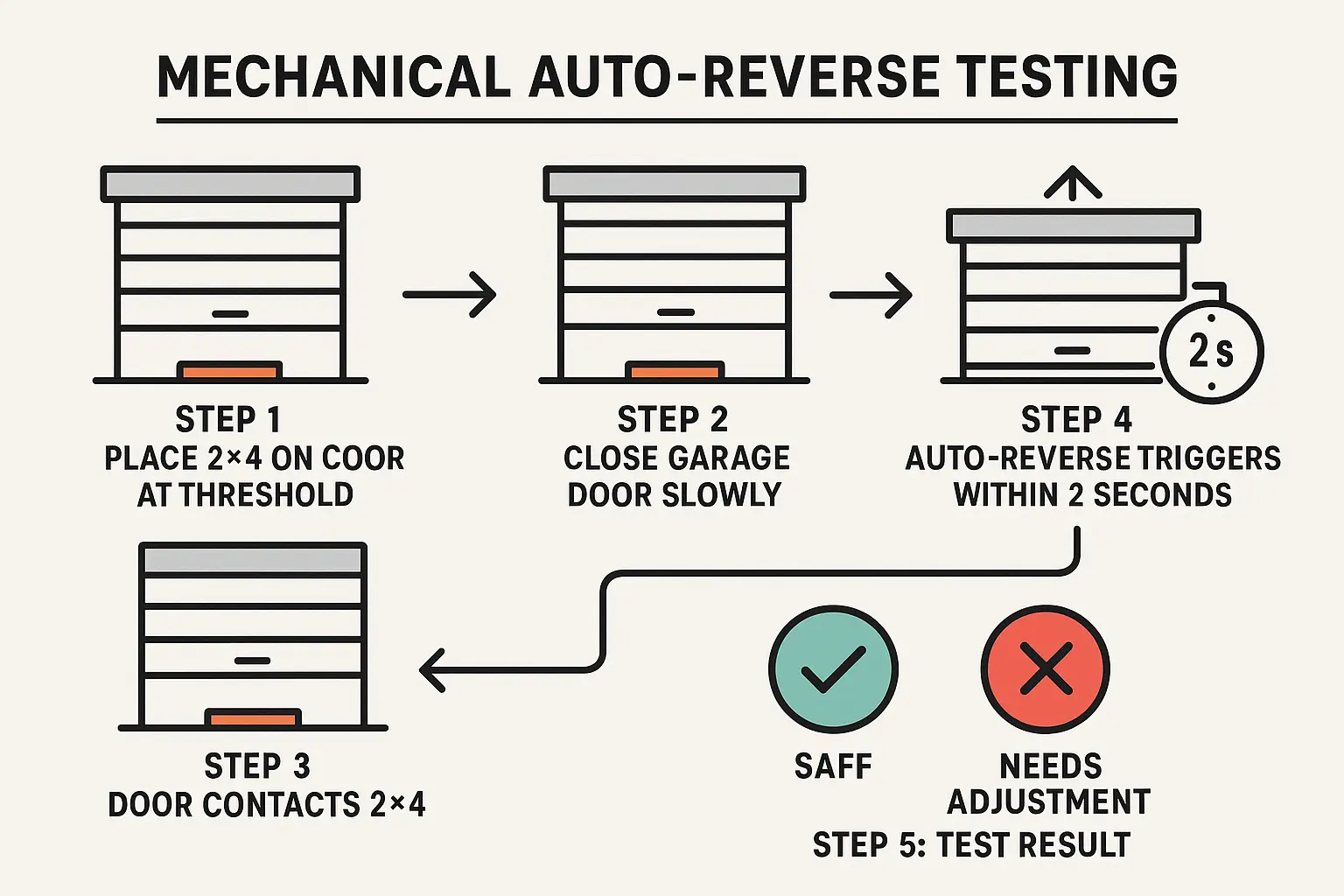
This flowchart educates on performing the critical 2x4 auto-reverse safety test, enabling parents to verify that the garage door reverses reliably within 2 seconds when encountering an obstacle.

Place a flat 2×4 board beneath the door center. If the door contacts the board and stops without reversing, immediately adjust garage door pressure sensor settings and perform a precise garage door opener adjustment.

Emergency Release Cord Management

A dangling red manual release cord poses a strangulation risk for young children and can be caught by bicycle handlebars. Secure the cord so it hangs at least 6 feet above the ground using a light zip-tie (under 12 lbs breaking strength). This keeps it out of reach while ensuring adults can break the tie in an emergency. If manual operation is ever engaged, ensure you know how to correctly reconnect garage door opener hardware before resuming automatic motor use.

Control Box Height and Lockout Features

Mount wall control buttons at least 5 feet off the floor to prevent toddler operation. When kids are playing in the driveway, engage the “Lock” or “Vacation” toggle on the wall station to disable all wireless remotes, preventing accidental activation from car keys in pockets.

Smart Lighting and Motion Detection

Modern openers equipped with ambient motion sensors illuminate the entire driveway footprint when movement is detected near the threshold, enhancing visibility during twilight bike rides.

Evaluating Your Opener: Recalibrate, Repair, or Replace?


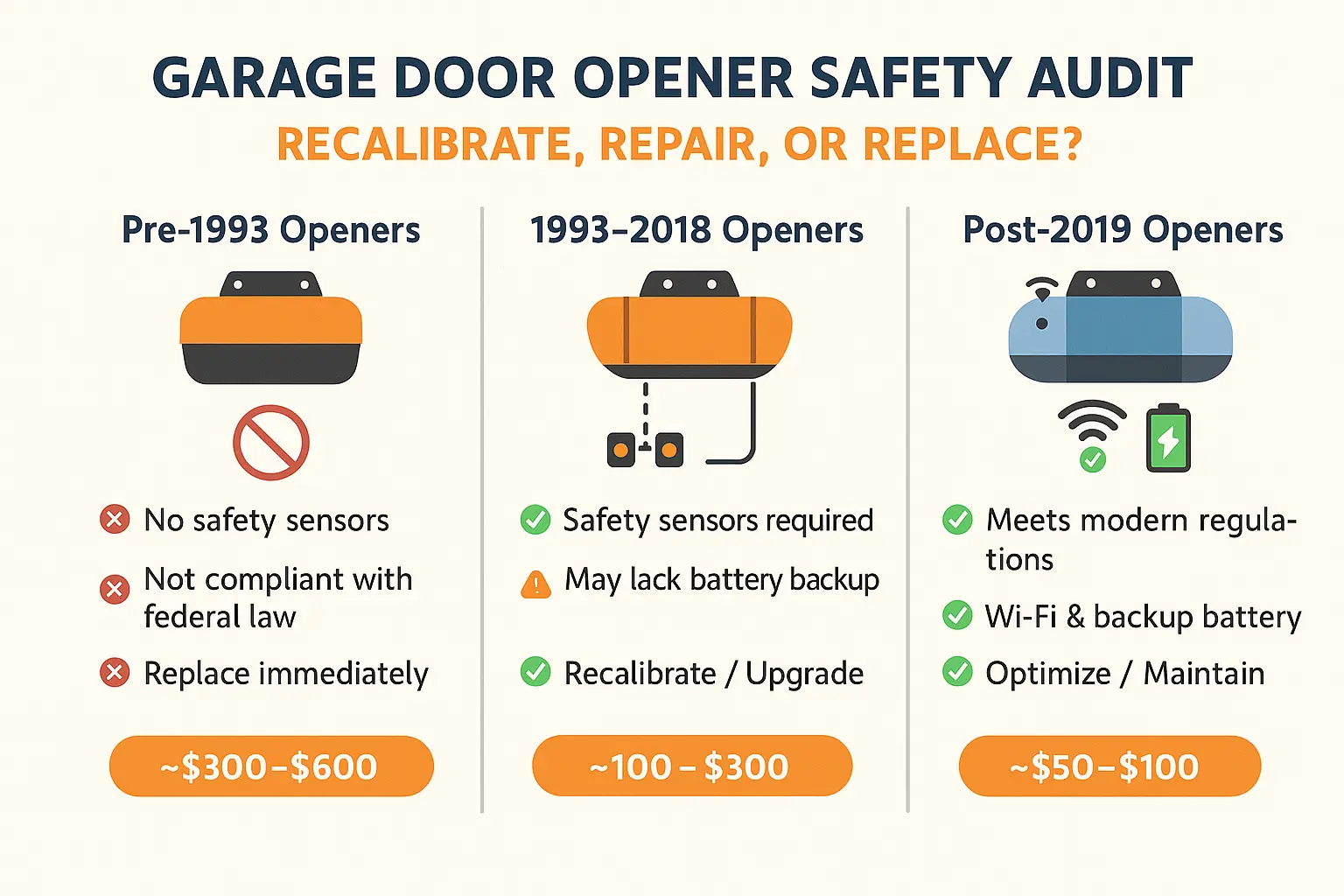
Evaluating your garage door system depends largely on its manufacturing generation and regulatory compliance history.

This infographic anchors memory by clearly contrasting garage door opener safety compliance by manufacturing era, guiding families to decide when to recalibrate, repair, or replace for optimal driveway safety.

System Compliance Eras

  • Pre-1993 Openers: Lacks mandatory dual-stage safety features. These units pose a severe hazard to children and should be prioritized for immediate garage door opener replacement.
  • 1993–2018 Openers: Features primary optical sensors and secondary force reversal. These units require regular calibration to maintain full ul 325 compliance.
  • Post-2019 Openers: Equipped with integrated battery backups (UL 325 / CA SB 969 standards), mobile alerts, and advanced force profiling.

Schedule a routine professional garage door safety inspection every six months to test mechanical balance and electrical response times. Taking these proactive setup measures creates a secure environment for neighborhood play, whether you are managing children’s toys or configuring a pet friendly garage door opener threshold.

Frequently Asked Questions


How high off the ground should garage door safety sensors be installed?

Safety sensors should be mounted between 4 and 6 inches above the garage floor. Setting them higher than 6 inches violates UL 325 safety standards and allows small children or pets to pass under the beam undetected, while setting them lower makes them vulnerable to dirt accumulation and accidental foot contact.

What should I do if my garage door auto-reverse fails the 2x4 test?

If the door contacts a flat 2×4 block and fails to reverse within 2 seconds, immediately clear the area and discontinue automatic operation. Adjust the down-force limits on the rear of the opener motor casing in small increments, clean the tracks, and retest. If it still fails to reverse, contact a certified technician to replace worn internal gears or recalibrate force logic.

Can Timer-to-Close features be safely used while children play outside?

It is best practice to disable Timer-to-Close (TTC) functions during active driveway play. Automated close timers can initiate unexpected door movement while children are riding bikes or playing near the opening, relying solely on optical sensors to prevent contact if a toy enters the path.

Contact / Request a Call