Keeping Kids and Pets Safe Around Garage Doors


Published: Sep 21, 2026

You’ve taught your kids to look both ways before crossing the street. You’ve trained your dog to stay out of the kitchen during meal prep. But what about the largest, heaviest moving object in your home? For many families, the garage door is an afterthought—a convenience that works until it doesn’t. And when it comes to the unpredictable nature of children and pets, simply hoping for the best isn’t a strategy.

The unsettling reality is that garage doors are linked to thousands of injuries each year. Between 20,000 and 30,000 people are hurt annually in the U.S., with a significant portion of the most tragic accidents involving small children (Arnold & Itkin, CPSC). A typical garage door exerts over 300 pounds of force, making its safety mechanisms not just a feature, but a critical line of defense.

If you’re comparing safety options or wondering if your current system is truly secure, you need more than a simple checklist. You need a deeper understanding of the risks and the technology designed to prevent them. This guide provides the authoritative insights you need to move from awareness to confident action, creating a truly safe environment for the most vulnerable members of your family.
Understanding the Unique Dangers: Why Kids and Pets Are Different


Standard safety advice often misses a crucial point: children and pets don’t interact with the world like adults. Their behaviors create unique risks that a one-size-fits-all approach can’t address.

A Child’s Perspective

  • Toddler Curiosity (Ages 1-3): This is the age of exploration. A wall-mounted control panel is a fascinating collection of buttons to be pushed. A moving garage door is a captivating machine. They are low to the ground, fast, and often move into a door’s path before a parent can react.
  • Childhood Impulsivity (Ages 4-10): Older children may understand the danger but lack impulse control. A stray ball or a game of tag can lead to a dangerous dash under a closing door—the classic “beat the door” game that has led to tragedy. Since 1974, at least 85 children have suffered permanent brain injury or death from automatic garage door accidents (PubMed).

A Pet’s Behavior

  • The Silent Dasher: Cats and small dogs can move quickly and quietly. They might dart out to greet you as the door closes or chase a rodent into the garage, placing them directly in the door’s path without making a sound.
  • The Loyal Waiter: Many dogs have a habit of waiting right at the threshold of the garage door for their owners to return. This places them in the most dangerous zone, often below the beam of older or improperly installed safety sensors. While national statistics for pet injuries are not systematically tracked like human ones, the risk is undeniable.

The UL 325 Standard & Beyond: Unpacking Garage Door Safety Technology


You don’t need to be an engineer to understand the core safety systems of your garage door. Knowing how they’re supposed to work is the first step in ensuring they actually do. Since the early 1990s, all garage door openers sold in the U.S. must comply with the UL 325 safety standard, which mandates two primary auto-reverse systems.

1. The Force Setting (Contact Reversal)

This is the door’s mechanical sense of touch. If the descending door encounters an obstruction, a mechanism in the opener should detect the resistance and immediately reverse direction. However, this system relies on physical contact and the force required to trigger it can still be substantial.

2. Photoelectric Safety Sensors (Non-Contact Reversal)

These are the most critical safety components for protecting small children and pets. You know them as the two small “eyes” located on either side of your garage door track, near the floor. One unit sends an invisible beam of light to the other. If anything breaks that beam while the door is closing, the door automatically reverses.

This is also where many safety systems fall short.

The 6-Inch Rule Explained: Why Sensor Height is Non-Negotiable

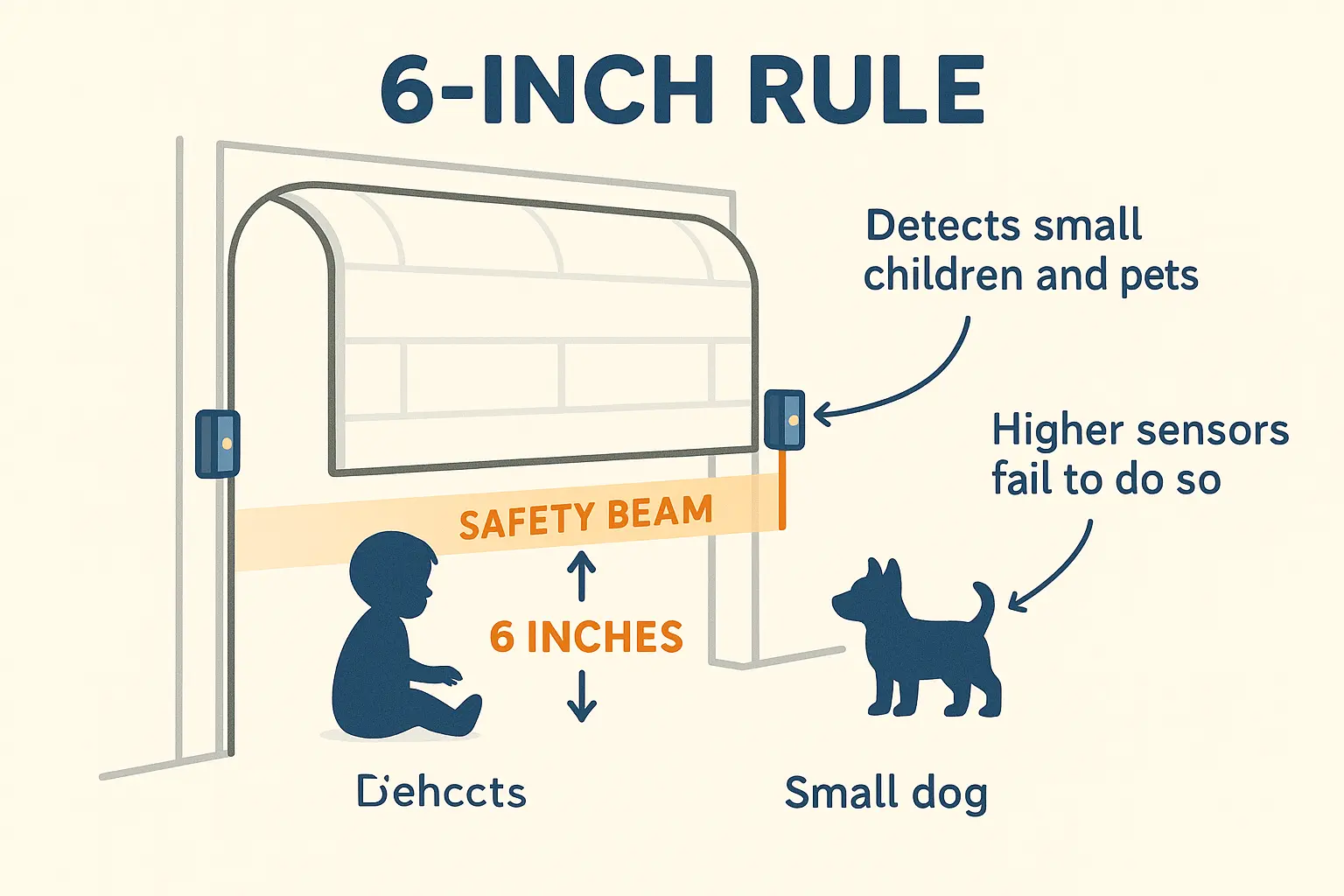
UL 325 mandates that these sensors be installed no more than six inches from the floor. Why so specific? A sensor placed higher—say, at 8 or 10 inches—could easily miss a crawling baby or a small pet lying on the ground. The beam would pass right over them, and the door would continue to close until it made physical contact, rendering the non-contact system useless.

The UL 325 '6-Inch Rule' ensures garage door sensors detect small children and pets by requiring sensor beams to be positioned 6 inches above ground. Proper placement acts like a protective light gate, preventing accidents by sensing vulnerable occupants in the door's path.

The Alarming 40% Failure Rate

Here is the most sobering statistic of all: a study cited by medical and legal experts found that while 88% of tested doors reversed on a solid block of wood, a staggering 40% failed to reverse when closing on a child-sized CPR mannequin (PubMed, Arnold & Itkin).

This highlights a terrifying gap: many systems are designed to detect solid, resistant objects, but not the softer, yielding body of a small child or pet. This is why knowing how do garage door safety sensors work on a technical level, and ensuring they are perfectly aligned and maintained, is not just a good idea—it’s a life-saving necessity.

A Proactive Safety Playbook: Tailored Measures for Your Family


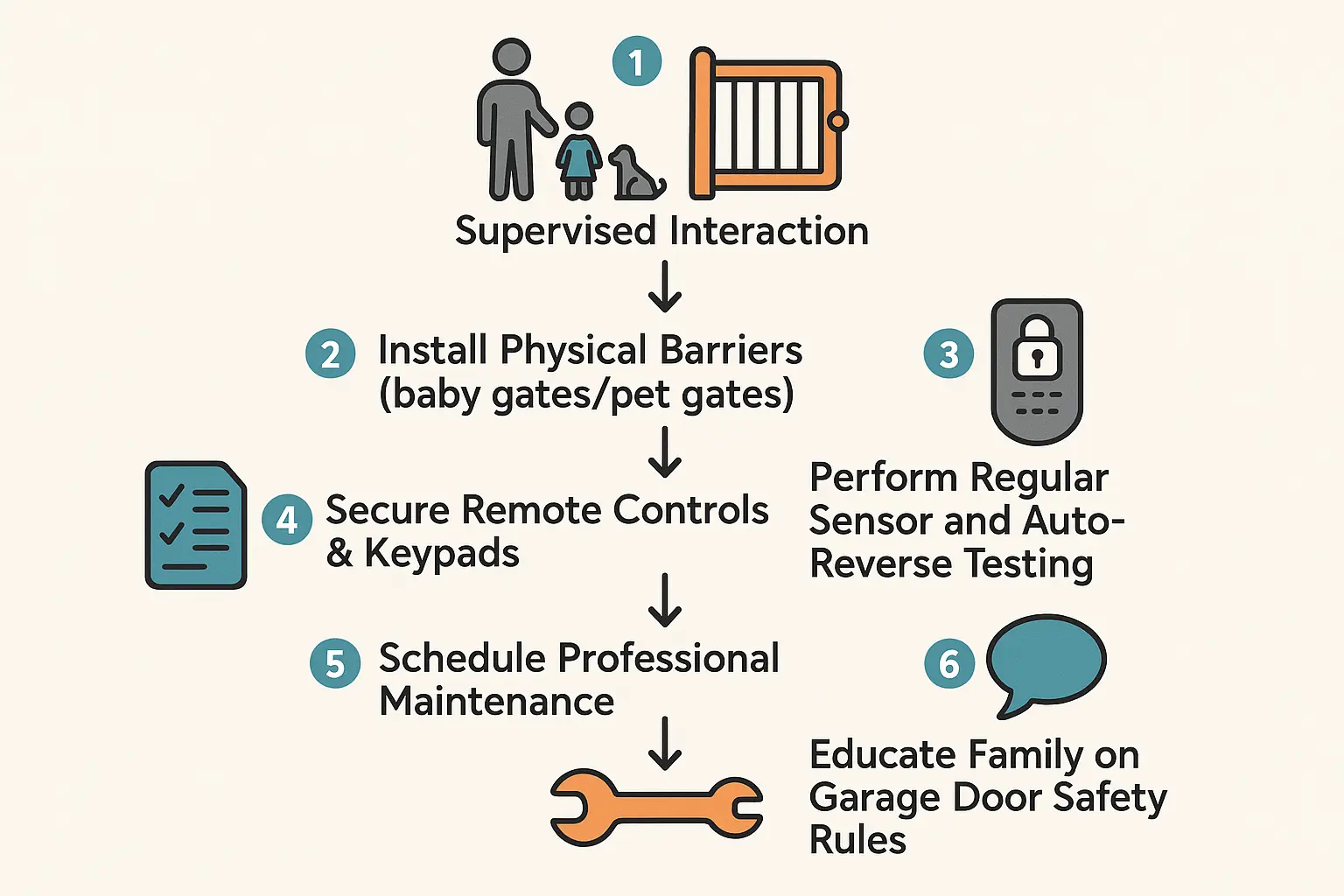
Technology is only one part of the equation. True safety comes from a layered approach that combines hardware, habits, and professional oversight.

A layered safety approach combines supervision, physical barriers, secured controls, routine testing, professional checks, and family education to proactively protect children and pets from garage door hazards.

Create and Enforce Family Rules

  • The Door is Not a Toy: Teach children that the garage door and its remotes are tools for adults only.
  • Supervised Passage: Make it a rule that young children only go through the garage door with an adult who can ensure the path is clear.
  • Establish Boundaries: Designate a “safe zone” several feet away from the door that kids and pets must stay behind while it’s in motion.

Secure Your Controls

  • Wall Control Placement: Mount the indoor wall control at least five feet high, completely out of reach of small children.
  • Remotes and Keypads: Treat garage door remotes like car keys. Store them out of sight and reach. Never leave them in a car parked in the driveway. Set a private keypad code that children don’t know.

Perform Monthly Safety Tests

Your safety features are only effective if they work. Perform these two simple tests every month:

  1. The Reversal Test: Place a 2×4 board flat on the ground in the door’s path. When the door touches the wood, it should immediately reverse. To better simulate a small body, repeat this test with a softer object, like a full roll of paper towels. If the door doesn’t reverse instantly, the force setting needs professional adjustment.
  2. The Sensor Test: With the door open, press the close button. Wave a broom handle (not your hands or feet) through the sensor beam. The door should immediately stop and reverse. If it doesn’t, the sensors may be misaligned or faulty.

Smart Garage, Smarter Safety: Leveraging Emerging Technologies


Modern technology offers another powerful layer of protection. If you’re considering an upgrade, prioritizing smart features can provide unparalleled peace of mind.

  • Real-Time Alerts: A smart opener can send an alert to your phone if the door is opened, closed, or left open for a specific period. This lets you know instantly if a child has managed to operate the door.
  • Remote Monitoring and Control: Integrated cameras allow you to visually check that the garage is clear before closing the door remotely for a delivery person or family member.
  • Scheduled Closures: You can program the door to close automatically at a certain time each night, eliminating the risk of it being left open accidentally.

Exploring the latest in smart garage gadgets can transform your garage from a potential hazard into a secure, monitored extension of your home.

Evaluating Your Options: A Decision Guide for Garage Door Safety Upgrades


When evaluating a new garage door opener or considering upgrades, it can be difficult to cut through the marketing noise. Focus on these core safety differentiators.

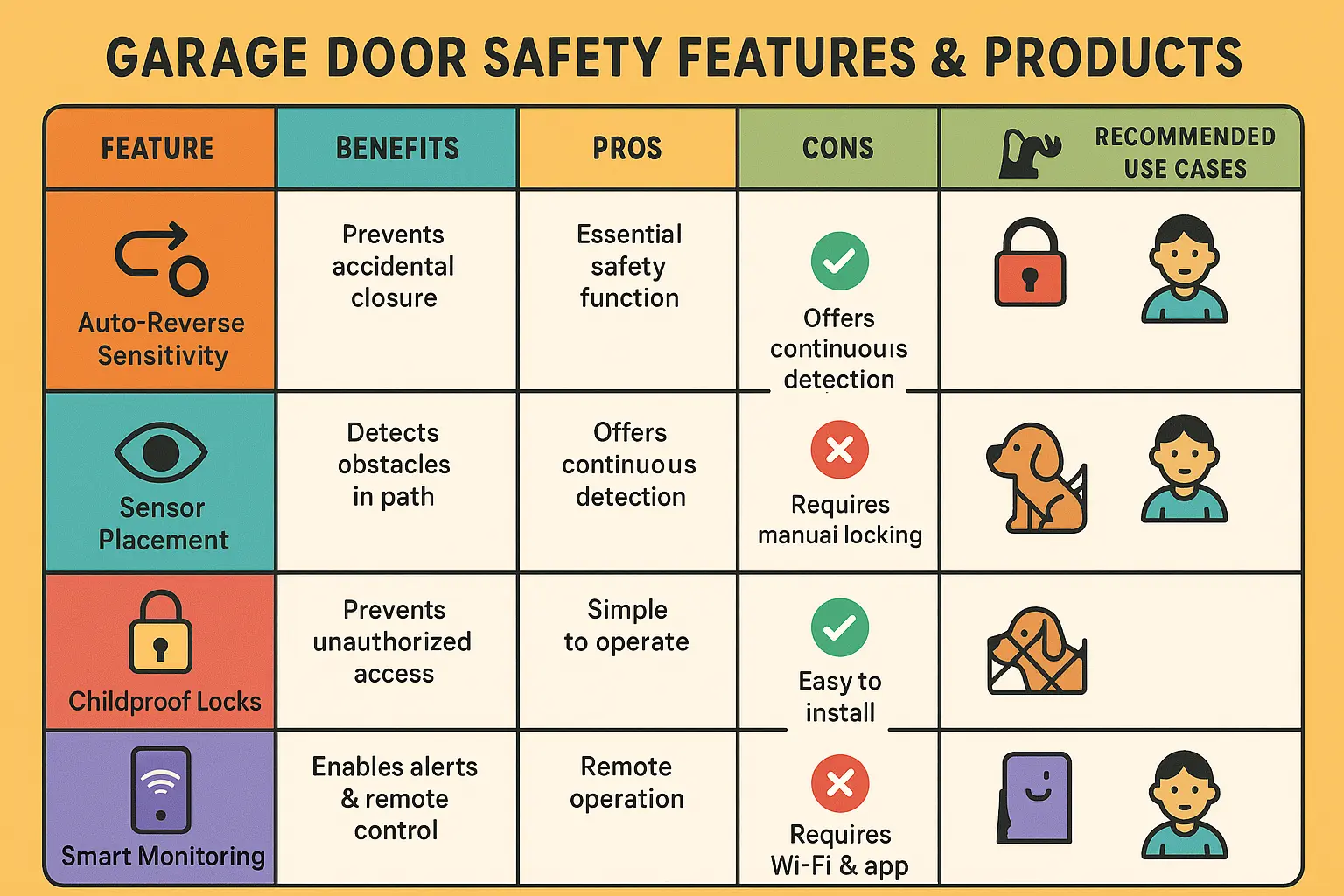
Comparing garage door safety features side-by-side helps families make informed decisions to choose the best upgrades for protecting children and pets, balancing benefits, costs, and practical use.

Key Features Checklist for Maximum Child & Pet Safety:

  • [ ] UL 325 Compliance: This is non-negotiable.
  • [ ] Reliable Photoelectric Sensors: Look for models with robust, easily aligned sensors.
  • [ ] Smart Connectivity: Prioritize systems with real-time alerts, remote camera access, and scheduling.
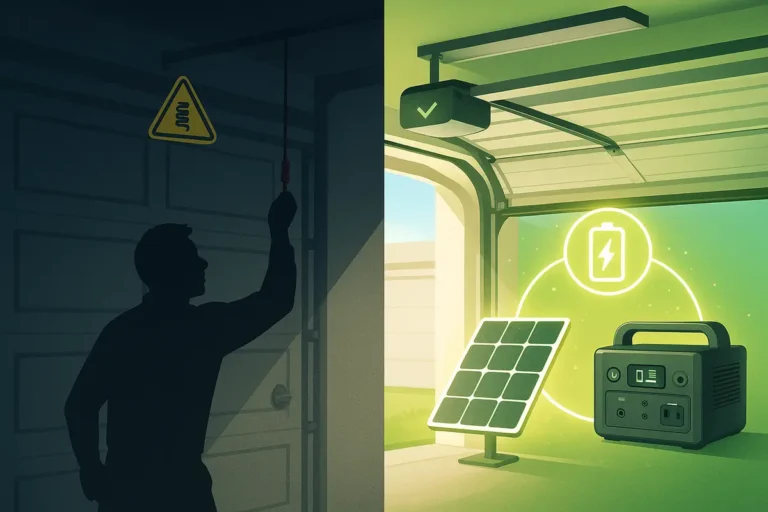
  • [ ] Battery Backup: This ensures your safety features (and access) work even during a power outage.
  • [ ] Soft-Start/-Stop Motors: These reduce the jarring motion of the door, giving people or pets more time to move away.
  • [ ] Professional Installation Guarantee: A system is only as good as its installation.

Sometimes, a simple repair or sensor adjustment is all that’s needed. But if your opener was made before 1993, it lacks modern photoelectric sensors and should be replaced immediately. If your current system fails any of the monthly safety tests consistently, an upgrade is the most reliable path to safety.

The Gold Standard: Why Professional Inspection is Paramount


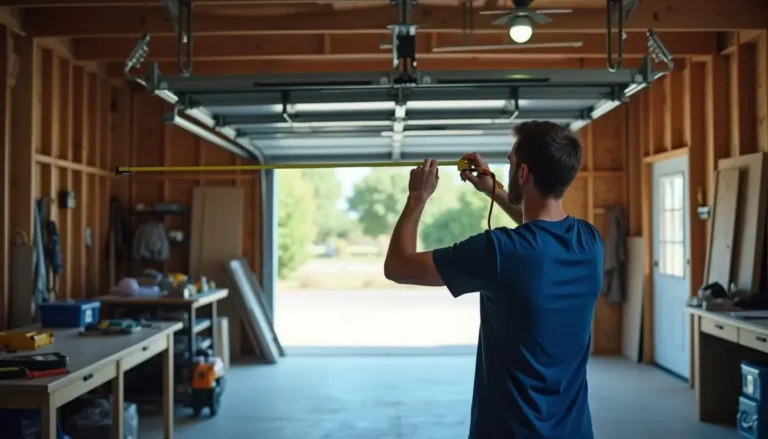
You can perform the monthly tests, but a certified technician can see things you can’t. They can accurately measure the force setting, check the tension of the springs (which can be extremely dangerous to adjust yourself), and ensure the sensor alignment is perfect, not just “good enough.”

An annual professional safety inspection is a small investment that provides an invaluable return: the certainty that every component of your garage door system is working in perfect harmony to protect your family.

Empowering Your Family with Uncompromised Safety


Protecting your children and pets isn’t about a single product or a magic fix. It’s about creating a layered system of safety that combines modern technology, consistent habits, and professional expertise. By understanding the real risks and taking these proactive steps, you can transform your garage from a source of anxiety into a space of complete confidence and security.

If you have any doubts about your garage door’s performance or want the peace of mind that comes from a professional safety inspection, our expert technicians are here to help. We can test, calibrate, and service every component to ensure it meets the highest safety standards for your family.

Frequently Asked Questions


How often should I test my garage door safety features?

You should perform the 2×4 reversal test and the sensor beam test once a month. It only takes two minutes and is the best way to catch potential problems early.

Can I make my old garage door opener safer without replacing it?

If your opener was manufactured before 1993, it lacks the mandatory photoelectric safety sensors and must be replaced. For openers made after 1993 that are malfunctioning, sometimes a repair or sensor replacement is sufficient. However, a professional evaluation is the only way to be sure.

What’s the most important safety feature to focus on?

The photoelectric safety sensors, installed no more than six inches from the ground, are the single most important feature for preventing accidents with small children and pets. Ensure they are clean, aligned, and tested monthly.

Are all smart openers equally safe for pets?

While most smart openers offer similar features, look for ones with integrated camera systems. The ability to visually confirm your pet is not in the doorway before closing it remotely offers a superior level of safety.

Contact / Request a Call