The Two Safety Systems Your Garage Door Has (And How to Test Them in 10 Minutes)


Published: Aug 7, 2026

You probably don’t think much about your garage door—until it stops working. But here’s a thought that might surprise you: to prevent thousands of injuries a year, every automatic garage door opener sold in the U.S. since 1993 is legally required to have two separate automatic reversal systems.

Most homeowners know about one.

They know about the little electronic “eyes,” or photo-sensors, near the bottom of the door track. But there’s a second, equally critical safety mechanism built into the motor itself. Understanding and testing both is the key to ensuring your garage door—the largest moving object in your home—is operating as safely as possible.

This 10-minute guide will walk you through how to test both systems like a pro. It’s a simple check that can offer immense peace of mind.
Beyond the Blinking Lights: Your Two Mandated Safety Systems


Two Mandated Safety Systems

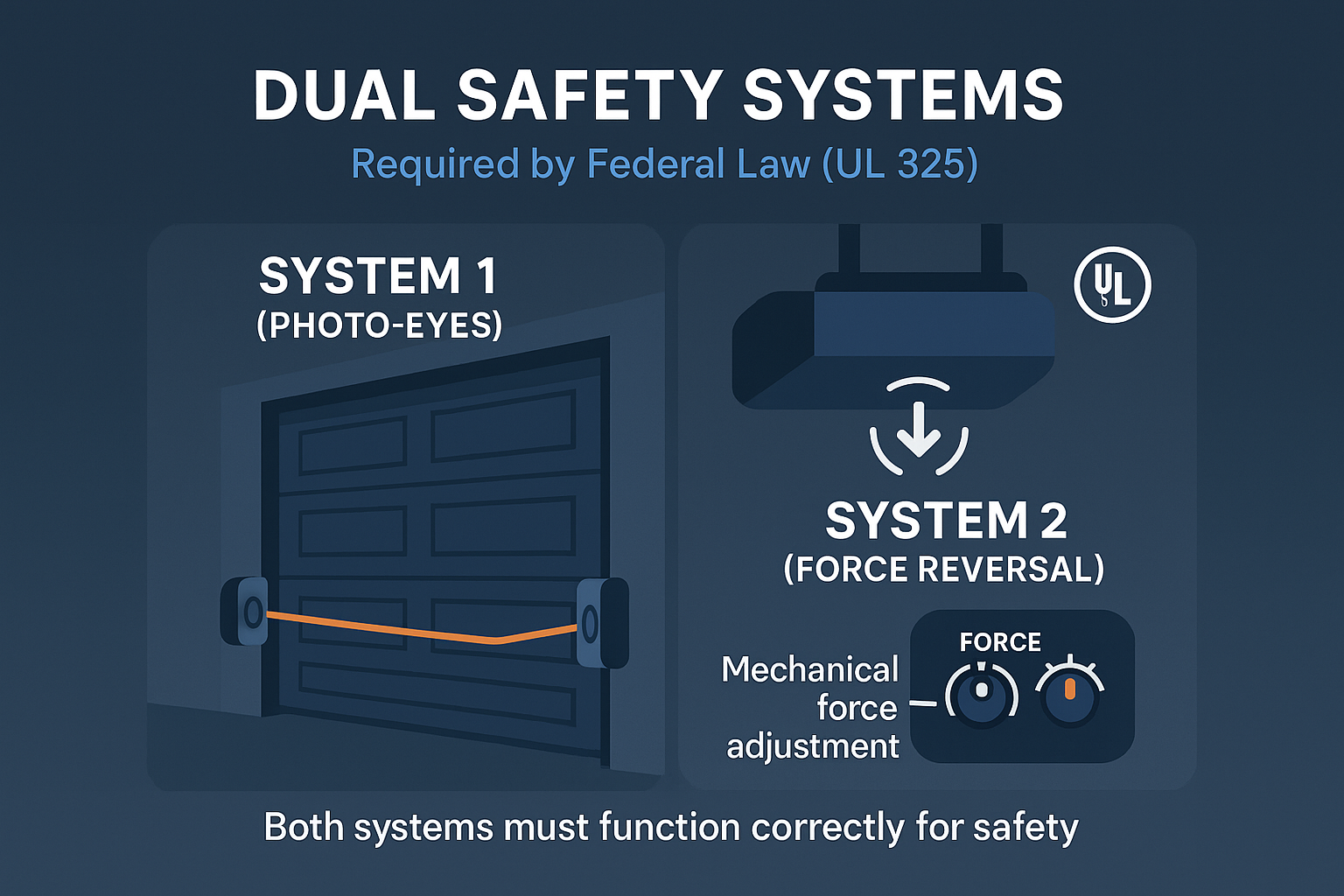
Think of your garage door’s safety features as a team. Each has a specific job, and they work together to protect you, your family, and your property. These systems are mandated by a federal safety standard called UL 325, which sets the rules for garage door opener safety.

System #1: The Photo-Electric Reversal System (The “Eyes”)This is the one you’re likely familiar with. Located a few inches off the floor on either side of your garage door opening, these sensors project an invisible infrared beam across the opening. If anything breaks that beam while the door is closing, the system instantly tells the motor to reverse direction and open the door. This is your first line of defense against the door closing on a person, pet, or object.

System #2: The Force Reversal System (The “Contact-Reverse”)This system is your backup. It’s a force-sensing mechanism inside the garage door opener motor itself. It continuously measures the amount of pressure required to close the door. If the door encounters an obstruction and has to push even slightly harder than usual, the system registers this as a potential problem and immediately reverses the door.


Your 10-Minute Annual Safety Tune-Up


Set aside a few minutes twice a year to perform these simple, crucial tests. All you’ll need is a standard 2×4 piece of wood and perhaps a friend to help.

Part A: Testing the Photo-Electric Sensors (The Beam Test)

This test confirms your door’s “eyes” are working correctly.

  1. Start with the Door Open: Make sure the garage door is fully open.
  2. Press the Close Button: Use your remote or wall control to begin closing the door.
  3. Block the Beam: As the door is descending, simply pass an object (like a cardboard box or even just your foot) through the path of the sensors.
  4. Observe the Reaction: The door should immediately stop its downward travel and reverse to the fully open position.

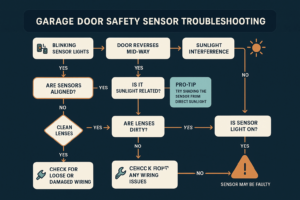
If the door doesn’t reverse, you have a problem. The first step is to check if the sensor lights are on and solid (not blinking). You can learn more about “how do garage door safety sensors work” to better diagnose the issue.

Part B: Testing the Force Reversal Mechanism (The 2×4 Test)

This test checks the sensitivity of the contact-reverse system.

  1. Place the Obstruction: Lay a 2×4 piece of wood flat on the ground in the center of the garage door opening.
  2. Press the Close Button: From a safe distance, close the garage door.
  3. Observe the Reaction: When the door makes contact with the 2×4, it should immediately reverse and travel back up.

If the door does not reverse and continues to push against the wood, the force setting is too high. This is a significant safety hazard, as it means the opener may not recognize an actual obstruction. You might even get an “excessive force detected garage door” warning on newer models, but older ones won’t tell you there’s a problem.

Mastery: Advanced Calibration & Troubleshooting


If your door fails either of these tests, some adjustments may be needed. Many homeowners can perform these basic calibrations themselves, but never hesitate to call a professional if you’re unsure.

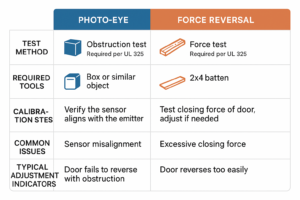
Photo Eye s Force Reversal Safety Systems

Calibrating Your Opener’s Force Settings

Most garage door openers have two small adjustment dials or screws on the motor unit, often labeled “Up Force” and “Down Force.”

  • The Goal: Use the minimum force necessary to close the door smoothly. Too much force is a safety risk.
  • The Process: If your door failed the 2×4 test, locate the “Down Force” dial. Turn it counter-clockwise just a small amount (think one click or a five-minute turn on a clock face) to decrease the force. Run the 2×4 test again. Repeat this process until the door reverses properly upon contact. Proper “garage door adjustment” can sometimes be a process of small, incremental changes.

⚠️ Mistake: Assuming you should crank up the force if the door reverses

on its own. Often, a door that reverses for no reason needs its tracks cleaned or rollers lubricated, not more force. When in doubt, it’s safer to seek help with “adjusting force on garage door opener” settings.

Solving the Sunlight Problem & Other Common Glitches

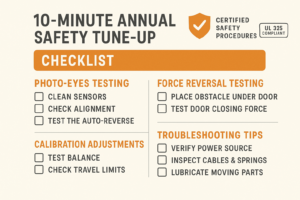
Annual Safety Tune-Up Checklist

Sometimes, the issue isn’t mechanical but environmental. Here are a few advanced tips:

  • Sunlight Interference: Does your door refuse to close only when the sun is shining directly on one of the sensors? Direct sunlight can “blind” the receiving sensor, making it think the beam is broken.
    •  

    • Pro-Tip:
      Try swapping the sender and receiver sensors. Often, moving the receiver out of the direct path of the sun is all it takes. You can also purchase or create small sun shields to block the glare.
  • Blinking Sensor Lights: This is the most common sign of a problem. A blinking light on one sensor usually means they are misaligned. Gently adjust the sensor until its light and the light on the partner sensor are both solid.

Putting It All Together: Your Printable Safety Checklist


Garage Door Safety Sensor TroubleshootingConsistent, regular inspections are absolutely the best way to ensure your system runs smoothly and to maintain a safe garage door for your family. Catching small wear-and-tear issues early prevents them from turning into costly, unexpected breakdowns when you least expect them.

Regular checks are the best way to maintain a safe garage door. To make it easy, we’ve created a simple checklist you can print and keep in your garage. Think of it as part of your home’s routine health checkup, just like testing a smoke detector. A complete “garage door safety checklist” can help you stay on top of seasonal maintenance.

Try to think of these visual and operational inspections as a mandatory part of your home’s routine health checkup. Just like testing a smoke detector or swapping out your HVAC filters, a few minutes of preventative care goes a very long way.

Frequently Asked Questions (FAQ)


Should both lights be green on my garage door sensors?

Generally, yes. Most brands (like LiftMaster and Chamberlain) use a green light on one sensor to indicate it has power and an amber/yellow light on the other. Both lights should be solid and not blinking. If one is off or blinking, it typically indicates a power issue or misalignment.

Why does my garage door reverse after closing all the way?

This is usually related to the “travel limit” settings, not the safety sensors. The opener thinks it hasn’t closed far enough and is hitting an obstruction (the floor). It requires a simple travel limit adjustment, which is different from the force settings.

Can I just bypass the safety sensors if they're causing problems?

While some systems allow you to bypass the sensors by holding down the wall button, this should only be a temporary measure to get your door closed in an emergency. Disabling your safety sensors is extremely dangerous and violates federal safety standards.

How often should I perform these safety tests?

The U.S. Consumer Product Safety Commission (CPSC) recommends testing your garage door’s safety features monthly. At a minimum, performing this two-system check twice a year is a great habit to get into.

By taking just a few minutes to understand and test these two vital systems, you’re not just performing maintenance—you’re actively ensuring a safer environment for your home and family.

Contact / Request a Call