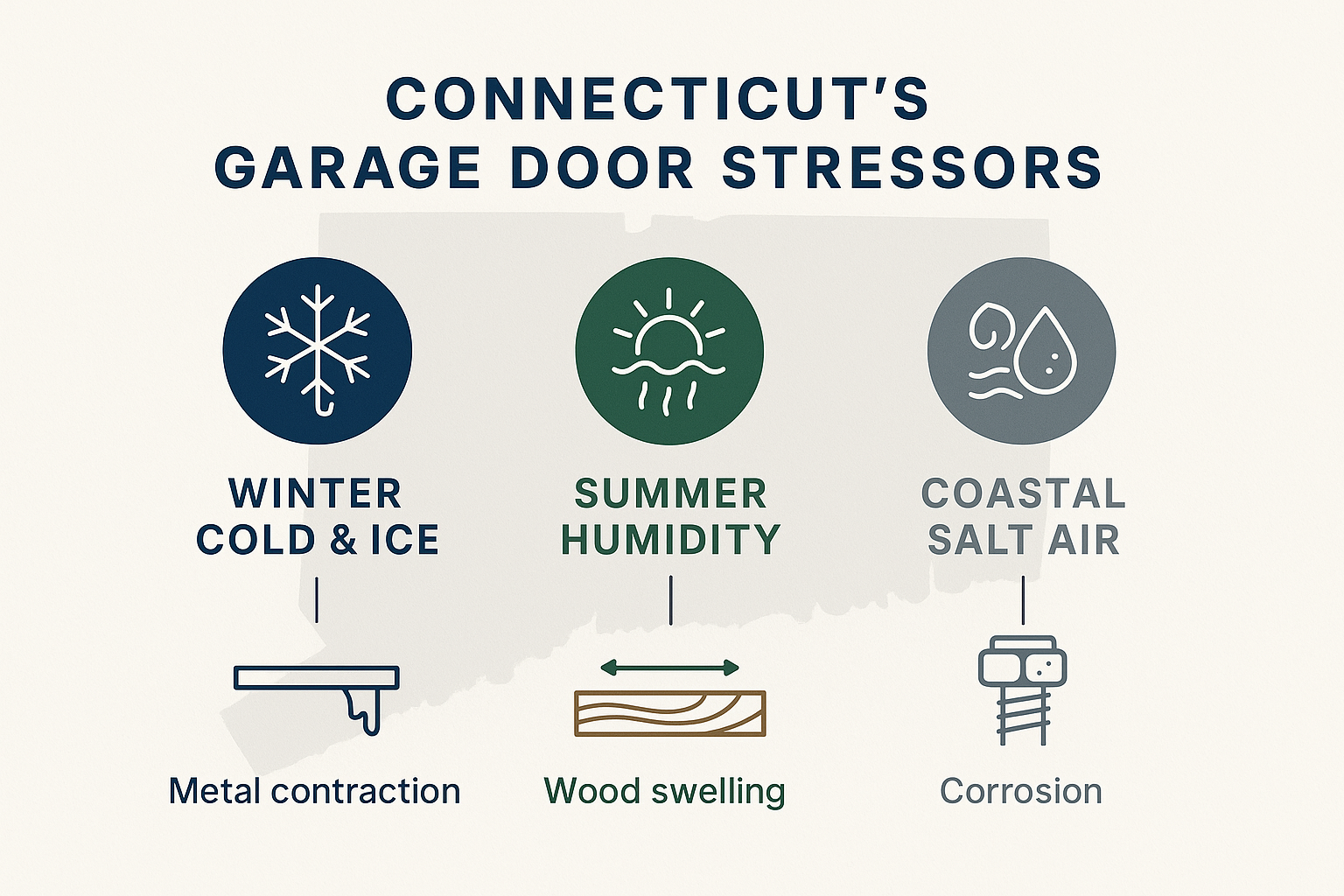
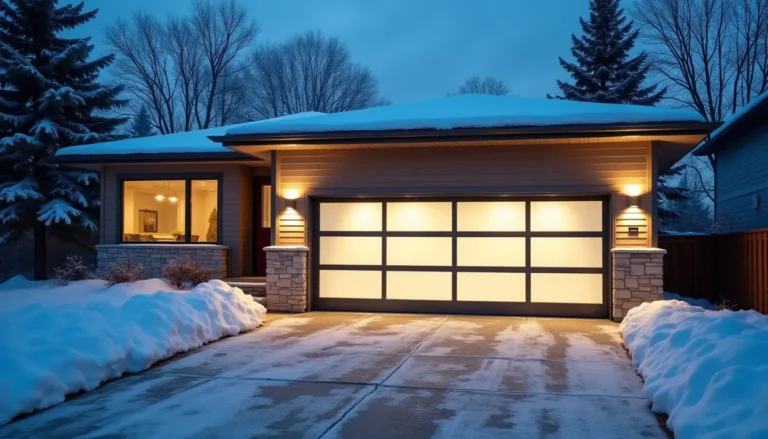
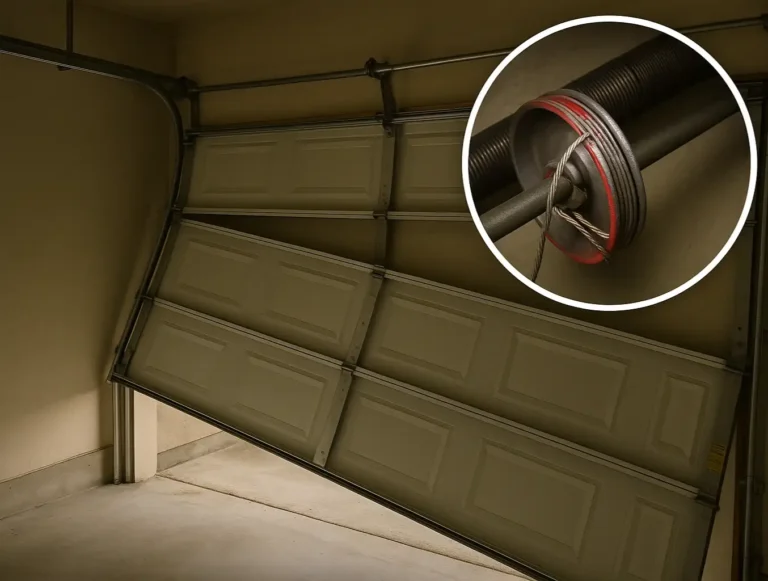
Before touching a single tool, it’s crucial to understand what you’re up against. Your garage door is in a constant battle with three uniquely Connecticut adversaries.
1. Winter Cold & Ice
When temperatures plummet, metal contracts. The steel in your tracks, springs, and rollers shrinks, which can cause binding and friction. The lubricant that kept things moving in October can harden into a thick, sticky sludge, forcing your opener to work overtime. Worse yet, melting snow can refreeze overnight, literally gluing your weather seal to the concrete driveway, creating a seal you can’t break without risking damage.
2. Summer Humidity
Connecticut summers aren’t just hot; they’re humid. Wooden garage doors are especially vulnerable, as they absorb moisture from the air and swell. This expansion can cause the door to rub against the frame, leading to scraping, sticking, and chipped paint. For steel doors, constant moisture creates the perfect environment for rust to begin its slow, destructive march across panels and hardware.
3. Coastal Salt Air
If you live anywhere near the Long Island Sound, from Greenwich to Stonington, you have a third enemy: salt. The same salty air you enjoy at Hammonasset Beach is a highly corrosive agent that aggressively attacks metal parts. Torsion springs, cables, and rollers are particularly susceptible to rust, which weakens their integrity and can lead to a sudden, dangerous failure. For coastal homes, choosing the best garage door material for coastal homes is the first line of defense, but maintenance is key to longevity.