Opener Died Overnight: How Professional Same-Day Replacement Works


Published: Sep 22, 2026

Waking up to a dead garage door opener is a uniquely stressful scenario. Your car is trapped, your schedule is instantly derailed, and your home security feels compromised. When you press the wall button and get nothing but silence or a faint click, you are forced to transition rapidly from troubleshooting to evaluating your replacement options.

Making an informed decision under pressure requires understanding why these overnight failures happen, how to manage the immediate safety risks, and what a professional same-day replacement process actually entails.
Emergency Release Protocol: Getting Your Car Out Safely


Before worrying about the hardware, you need to free your vehicle. Every residential garage door is equipped with a red emergency release cord. However, pulling this cord incorrectly can cause severe damage or injury.

First, ensure the garage door is fully closed. If you pull the emergency release while the door is partially open, and you happen to have a broken spring, the weight of the door (often exceeding 150 pounds) can cause it to crash down like a guillotine.

To safely disengage the carriage, pull the red rope down and back toward the motor. Once freed, lift the door manually from the center to prevent track binding. To understand how to reverse this process later, you can read our guide on how to reset garage door opener after pulling red cord.

The Five-Point Diagnostic to Confirm a Dead Motor


Before calling for a replacement, run this quick diagnostic sequence to verify that your motor is actually dead and not simply experiencing a minor issue:

  1. The Lock/Vacation Mode Check: Check your wall console. If the indicator light is blinking rapidly, you may have accidentally activated lock mode. Learn how to turn off lock button on garage door opener systems to quickly restore remote frequency signals.
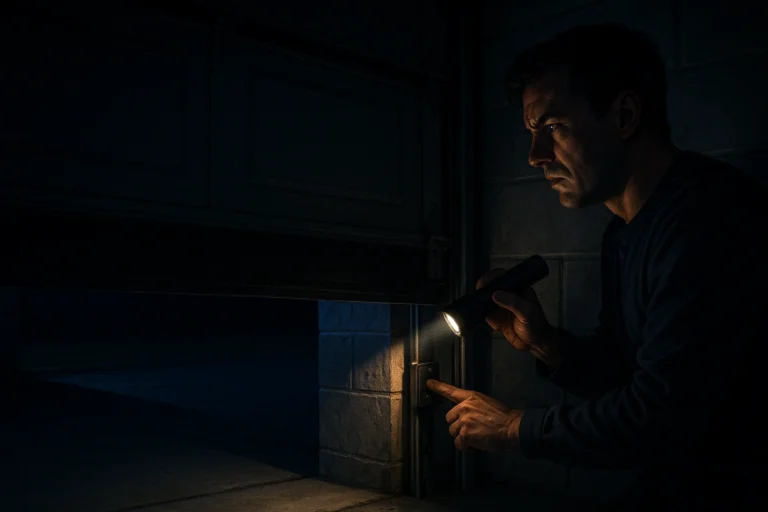
  2. The “Cold Outlet” Test: Plug a small appliance, like a hair dryer, into the ceiling outlet powering the motor. This confirms whether the outlet is receiving power or if a GFCI breaker tripped overnight.
  3. The Sensor LED Alignment: Check the safety photo-eyes near the floor. If one is blinking or dark, your garage door opener not working is likely a simple sensor misalignment rather than a motor failure.
  4. The Capacitor Click: Press the button. If you hear a distinct hum or click but the motor does not turn, your start capacitor is blown.
  5. The Thermal Overload Trip: If you have cycled the door repeatedly, the motor’s internal thermal switch may have tripped to prevent meltdown. Wait 30 minutes for the unit to cool before testing again.

If none of these troubleshooting steps restore power, you are likely dealing with an unrepairable component, and professional garage door opener repair or replacement is necessary.

Why Garage Door Openers Fail Suddenly Overnight


Why Openers Fail Overnight

It is common to wonder why an opener that worked perfectly at dinner is completely unresponsive by morning. Overnight failures are typically driven by three silent catalysts:

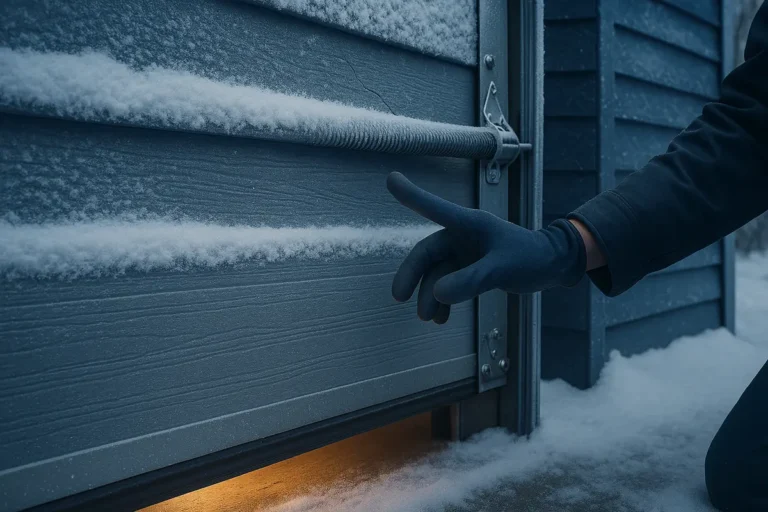
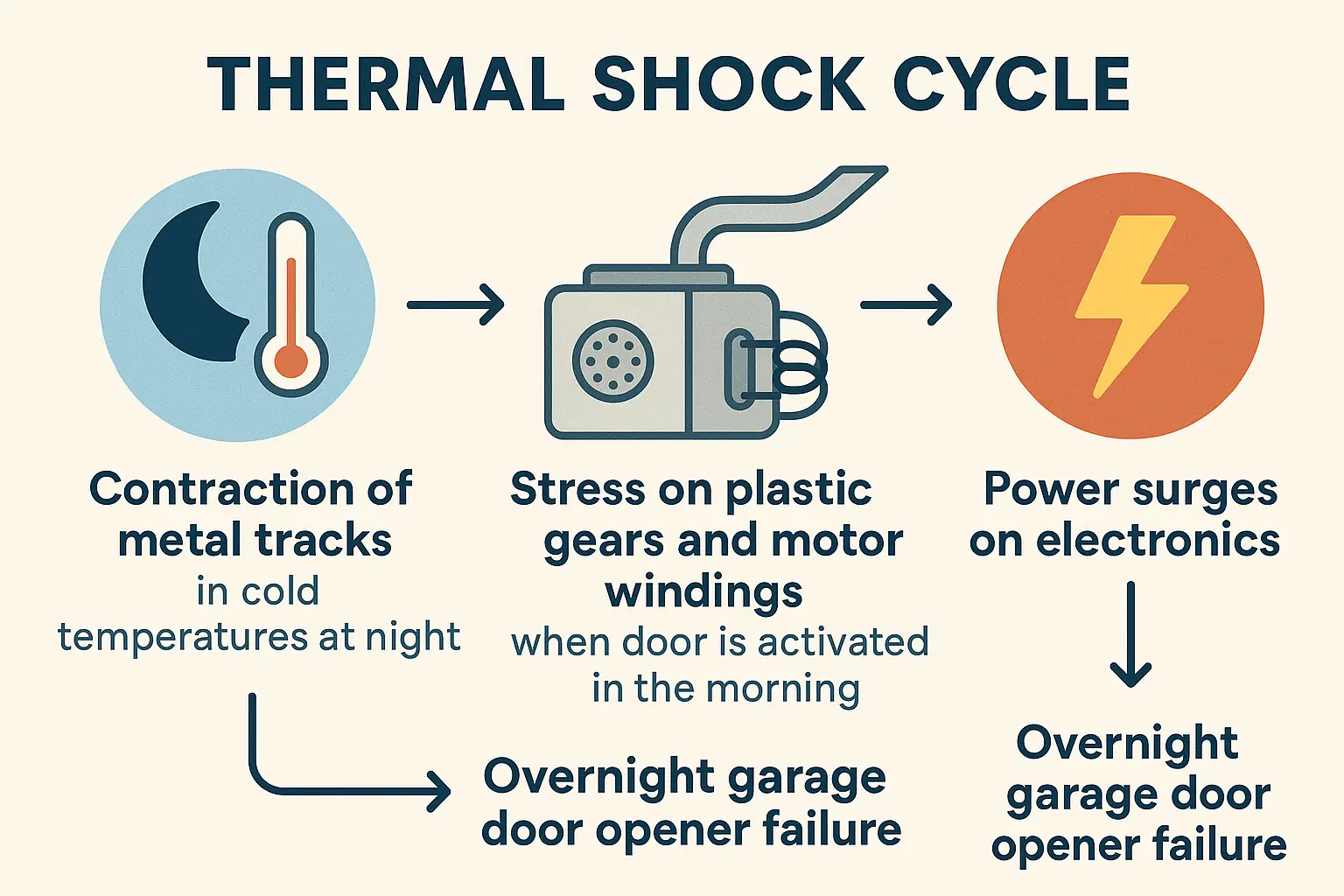
  • Cold-Snap Contraction (Thermal Shock): Rapid overnight temperature drops cause old steel parts to contract, altering track tolerances. When you activate the system in the morning, this added physical resistance can instantly shear worn plastic internal gears or burn out motor windings.
  • Overnight Power Surges: Minor grid fluctuations and lightning storms can send high-voltage spikes through your electrical system, easily frying delicate, standby logic boards. Explore power surge garage door opener solutions to safeguard your next system.
  • Capacitor Thermal Contraction: Aged electrolytic capacitors degrade over time. The drop in ambient overnight temperatures can cause internal components to shrink, triggering a final short circuit.

The Logistics of Same-Day Professional Replacement


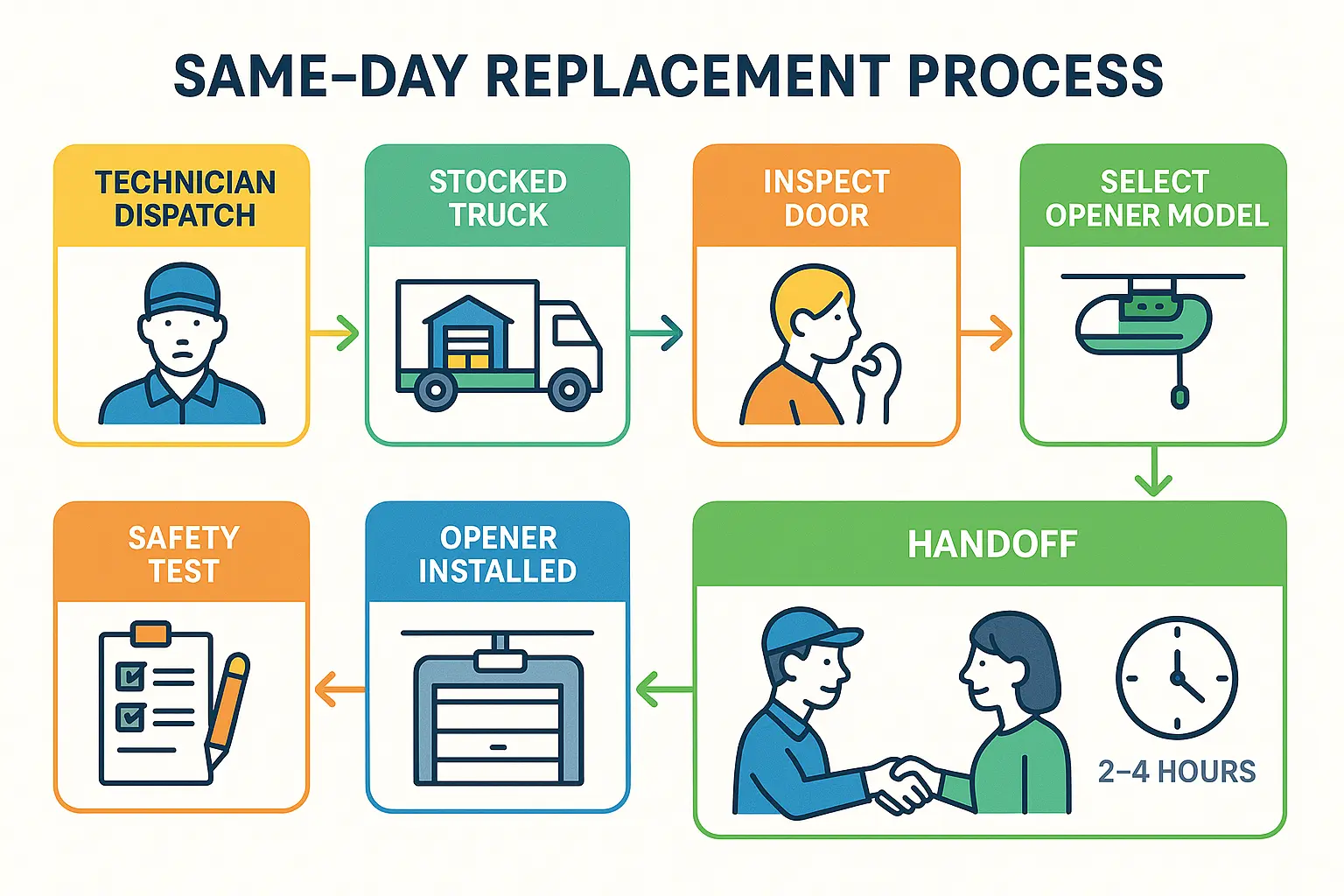
Same-Day Replacement Logistic Flow

A true same-day replacement relies on a highly efficient, logistical workflow. You do not need to visit a big-box retailer or purchase a unit beforehand. A professional service provider operates a mobile warehouse on wheels, arriving at your home with a full selection of premium drive types, structural rails, and safety sensors.

The service begins with a comprehensive, door-first physical inspection. A new motor will not fix a structurally compromised door. If you have broken garage door springs, the severe imbalance will burn out a brand-new opener in less than 30 days. Your technician will verify the spring balance and roller friction before unboxing any equipment.

Once confirmed, a standard like-for-like opener swap takes between 2 to 4 hours. Under federal law (UL 325), every residential installation must include functional secondary entrapment protection. Before leaving, your technician will run a mandatory 2×4 safety reverse test and verify photo-eye beam interruptions, ensuring full compliance and safety.

Selecting Your Next System: Chain, Belt, or Jackshaft


When choosing a new motor, look past simple brand names and match the drive style to your specific architectural layout and lifestyle:

  • Belt-Drive: Using steel-reinforced rubber belts, these systems are exceptionally quiet, making them ideal for garages positioned directly beneath or adjacent to bedrooms.
  • Chain-Drive: Made of heavy-duty steel, chain drives are robust, highly durable, and cost-effective, though they operate with noticeable mechanical sound.
  • Jackshaft (Wall-Mount): Mounted directly to the torsion bar beside the door, these units eliminate overhead rails to reclaim valuable ceiling storage space.

For long-term reliability, consider investing in a high-efficiency liftmaster garage door opener repair or installation system. Modern units feature built-in Wi-Fi, rolling-code security, and critical battery backup systems. To understand how these backup systems operate during outages, explore do garage door openers have batteries and learn more about integrated power solutions.

Preparing Your Garage for a Seamless Installation


You can help your technician complete your same-day garage door opener installation connecticut service quickly by taking a few simple steps before they arrive:

  • Clear the Work Area: Ensure there is at least 10 feet of clear workspace directly underneath the opener and along the ceiling tracks.
  • Provide Electrical Access: Clear a direct path to your main electrical breaker panel in case the power circuit needs to be temporarily isolated.
  • Locate Your Wi-Fi Credentials: Have your home network name and password ready so the technician can assist you in pairing your smartphone apps, Homelink car transmitters, and outdoor wireless keypads.

By preparing your space and choosing an experienced team with fully stocked trucks, you can turn a morning emergency into a seamless, high-quality home upgrade.

Frequently Asked Questions


How long does it take to replace a dead opener?

A professional, like-for-like opener replacement typically takes 2 to 4 hours. Converting a standard system to a wall-mounted jackshaft system can take 4 to 6 hours, as it requires adjusting the torsion assembly and running new wiring.

Do I need to buy the new opener from a retailer first?

No. Reliable same-day technicians carry a full inventory of top-tier residential motors, rails, and safety accessories in their service vehicles. You can choose the ideal belt, chain, or wall-mount drive option directly from their on-board stock during the initial consultation.

Can a professional replace an opener if my car is still trapped inside?

Yes. Technicians are trained to safely manually release and secure your garage door to remove trapped vehicles before beginning any physical disassembly or installation work.

Contact / Request a Call