Ready to do it right? This process focuses on removing debris before applying any lubricant, ensuring you’re helping, not hurting.
Step 1: Safety First
Before you begin, you must disengage your system to work on it safely.
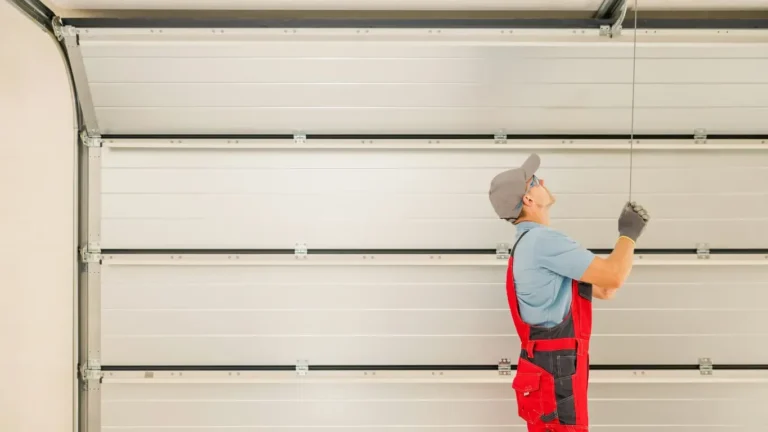
- Close the Garage Door: This takes tension off the springs and cables.
- Unplug the Garage Door Opener: This prevents anyone from accidentally opening the door while you’re working.
- Clamp the Track: For extra security, place a C-clamp or locking pliers on the track just above one of the bottom rollers to physically prevent the door from moving.
Step 2: The Deep Clean
This is the most important step. Your goal is to get the tracks and rollers completely free of debris.
- Vacuum: Use a shop vacuum with a narrow brush attachment to suck out all the loose dust, cobwebs, and grit from inside the entire length of the tracks.
- Wipe Down: For caked-on grime, use a rag lightly dampened with a degreaser or brake cleaner. Spray the cleaner on the rag, not directly into the track. Wipe the inside of the track until it’s spotless. You’ll be amazed at what comes off. For more details on this process, you can find a guide to clean garage door tracks and other components here.
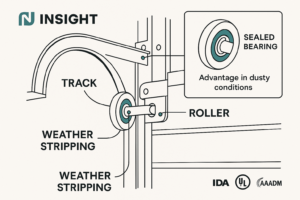
- Clean the Rollers: Wipe down each roller individually, paying special attention to the stems where they meet the hinges.
Step 3: Lubricate with Precision (Not in the Tracks!)
This is where most people get it wrong. You should not lubricate the garage door tracks. A slippery track doesn’t help the rollers do their job; it just attracts more dust.
Instead, apply a high-quality silicone or white lithium grease spray to the moving metal parts that actually bear a load:
- Roller Bearings: Aim the spray straw directly into the bearings at the center of each roller. A small burst is all you need. If you have sealed bearings, you can skip this.
- Hinges: Lightly spray each pivot point on the hinges that connect your door panels.
- Springs and Bearing Plates: A light coating on the torsion springs and the bearing plates at either end will prevent rust and reduce noise.
Work the door up and down manually a few times to distribute the lubricant evenly. The difference in sound and smoothness should be immediate.

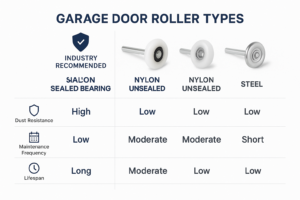 Understanding your garage door components is key to effective maintenance—sealed bearings and focused lubrication keep your door running smoothly in dusty settings.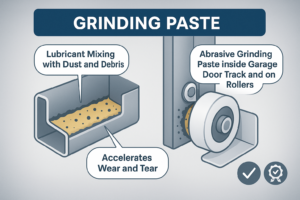
 Here’s the “aha moment” that most homeowners miss. When you spray a lubricant like grease or oil into a dirty garage door track, you aren’t helping. You are mixing that sticky lubricant with pollen, dust, sand, and grit.