Pet Garage Door Damage Repair and Prevention


Published: Aug 25, 2026

Our companion animals bring immense joy to our homes, but their natural behaviors—scratching, chewing, and marking—can create costly and dangerous garage door failures. When safety systems malfunction, wires are chewed, or steel tracks corrode, you need solutions that restore safety and protect your property valuation.

Rather than resorting to temporary fixes or expensive overhauls, understanding the intersection of garage door mechanics, structural building codes, and material science allows you to make informed decisions.

The Urgent Crisis Portal (Interactive Accordion)


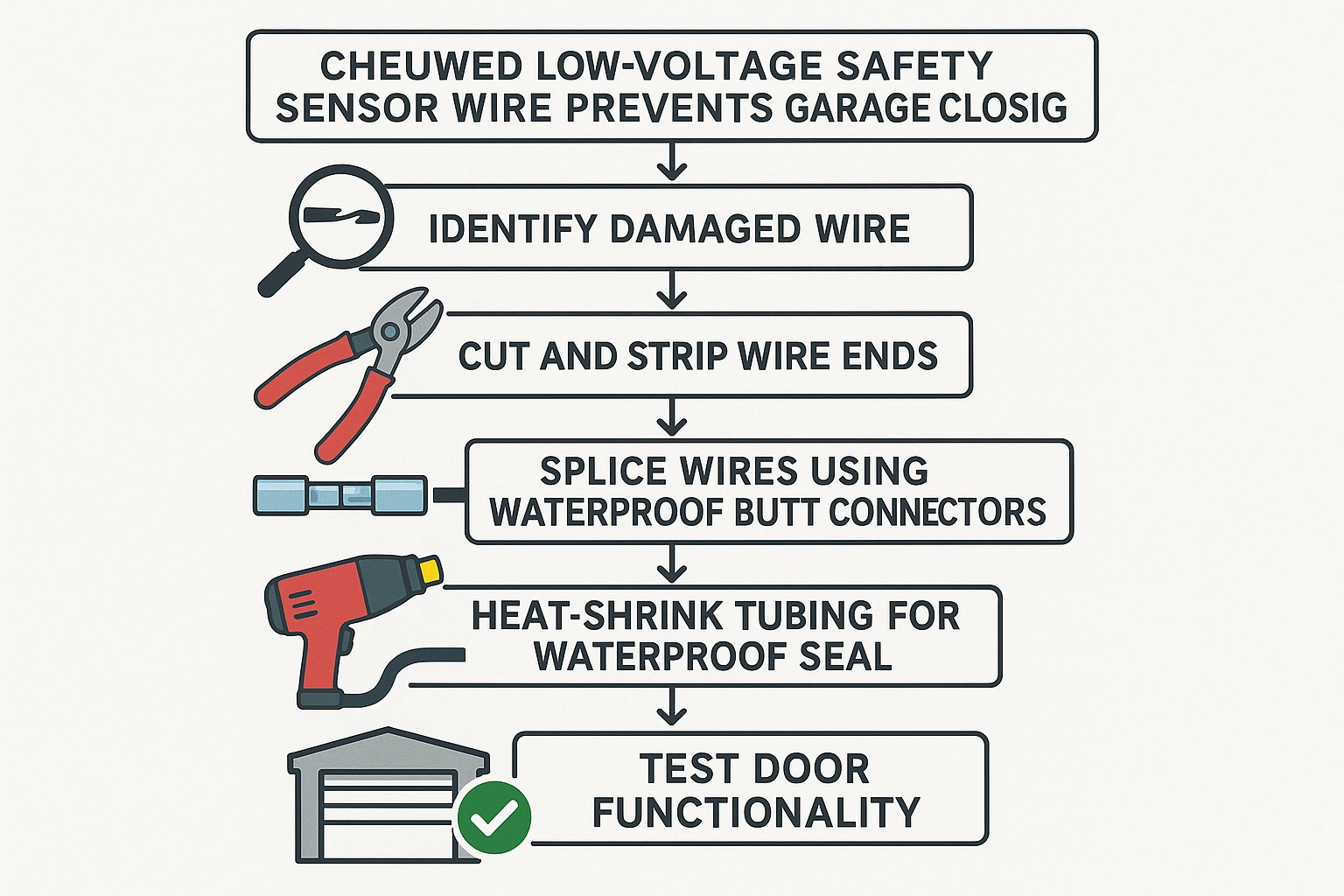
Follow this clear, stepwise flowchart to quickly restore garage door operation after a pet chews through the safety sensor wire, avoiding costly service calls.

If your garage door is currently stuck or malfunctioning due to pet activity, the two most common failure points are the safety sensor wiring and the bottom perimeter seals.

Scenario A: Chewed Safety Sensor Wires

Under UL 325 safety standards, photo-eye sensors must be positioned no higher than 6 inches from the floor. This proximity makes them prime targets for teething or anxious puppies. If you are experiencing a garage door sensor green light blinking or failing to illuminate entirely, your pet may have severed the low-voltage wires.

To resolve this without buying a new system, you can perform a safe DIY splice:

  1. Cut out the damaged portion of the wire.
  2. Strip back the insulation by approximately 1/2-inch.
  3. Splice corresponding colored wires using waterproof, heat-shrink butt connectors.
  4. Apply gentle heat to seal the connection against dust and moisture.

Scenario B: Shredded Bottom Seals

Pets often scratch or chew the bottom rubber gasket, leaving a visible gap at bottom of garage door that compromises your garage’s thermal efficiency and allows pests to enter. Replacing this seal with a heavy-duty, steel-mesh-infused T-rubber astragal prevents future chew damage.

Bulletproofing Your Garage Door Components


Preventive upgrades shield vulnerable mechanical parts from persistent clawing and chewing:

  • Conduit Wire Protection: Wrap low-voltage safety wires in 3/8-inch Greenfield flexible metal conduit (FMC). Secure the conduit to the sensor brackets using MC connectors.
  • Panel Scratch Guards: Heavy-duty aluminum kick plates or clear polycarbonate shields installed over wood or steel panels block sharp claws.
  • Selecting Tough Materials: If you’re replacing damaged panels, reference this guide on how to repair a garage door panel. For long-term durability, choosing resilient, low-maintenance finishes over natural wood dramatically reduces maintenance demands.

Remediating Dog Urine Damage & Preventing Track Rust


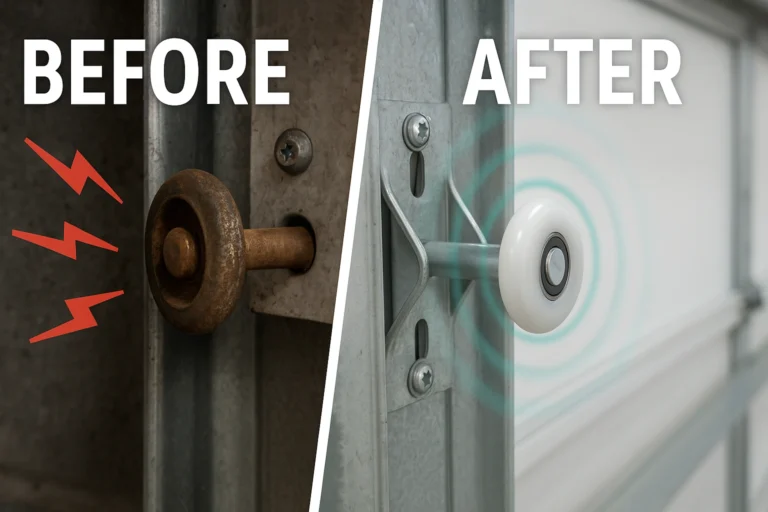
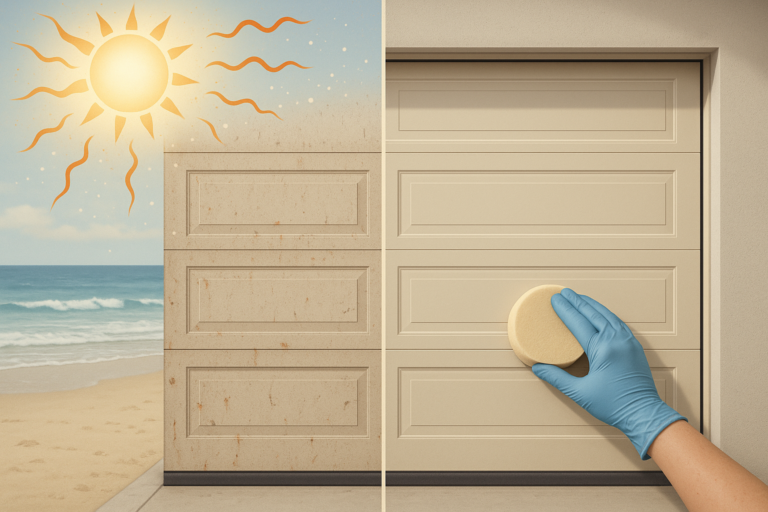
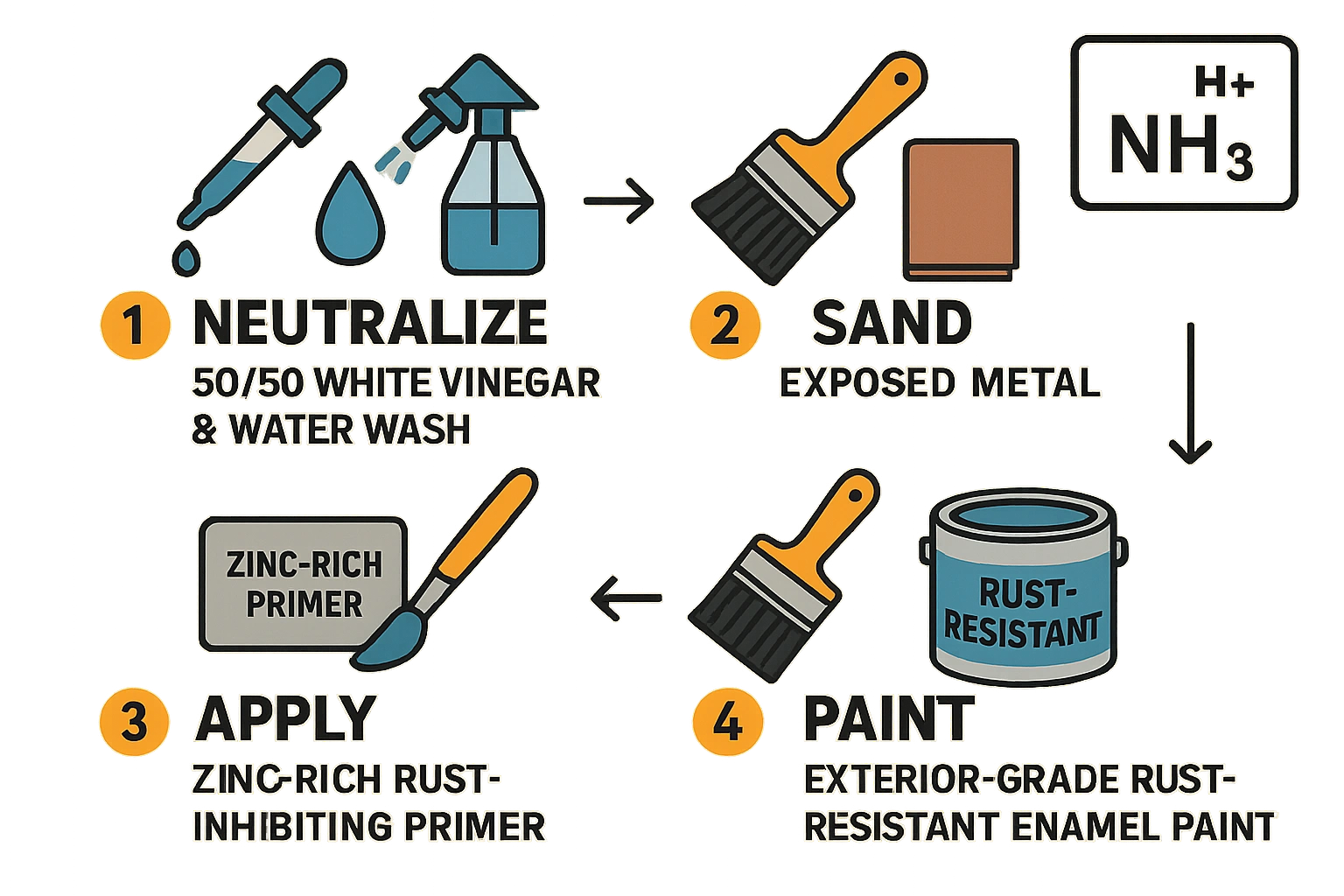
This 4-step chemical remediation process prevents and repairs corrosion caused by dog urine on garage door tracks, restoring protective zinc layers and preventing structural damage.

Many homeowners overlook the chemical impact of pet urine on galvanized steel tracks and bottom brackets. Animal urine contains urea, which breaks down into highly alkaline ammonia. This compound strips away the sacrificial zinc coating on galvanized metals. Once the raw steel underneath is exposed, moisture triggers rapid oxidation, putting high-tension lift cables at risk.

Regularly cleaning garage door tracks is critical to intercepting this corrosion before it leads to structural failure.

To remediate active rust:

  1. Neutralize: Scrub the affected track with a 50/50 water and white vinegar solution. Never use ammonia-based cleaners, as they encourage pets to re-mark.
  2. Sanding: Polish the rusted areas down to bare steel using a wire brush or 220-grit sandpaper.
  3. Prime: Apply a zinc-rich, rust-inhibiting primer to restore the sacrificial protective layer.
  4. Top Coat: Finish with an exterior-grade, rust-resistant enamel paint.

The Truth About Garage Pet Doors (Safety, Code & Springs)


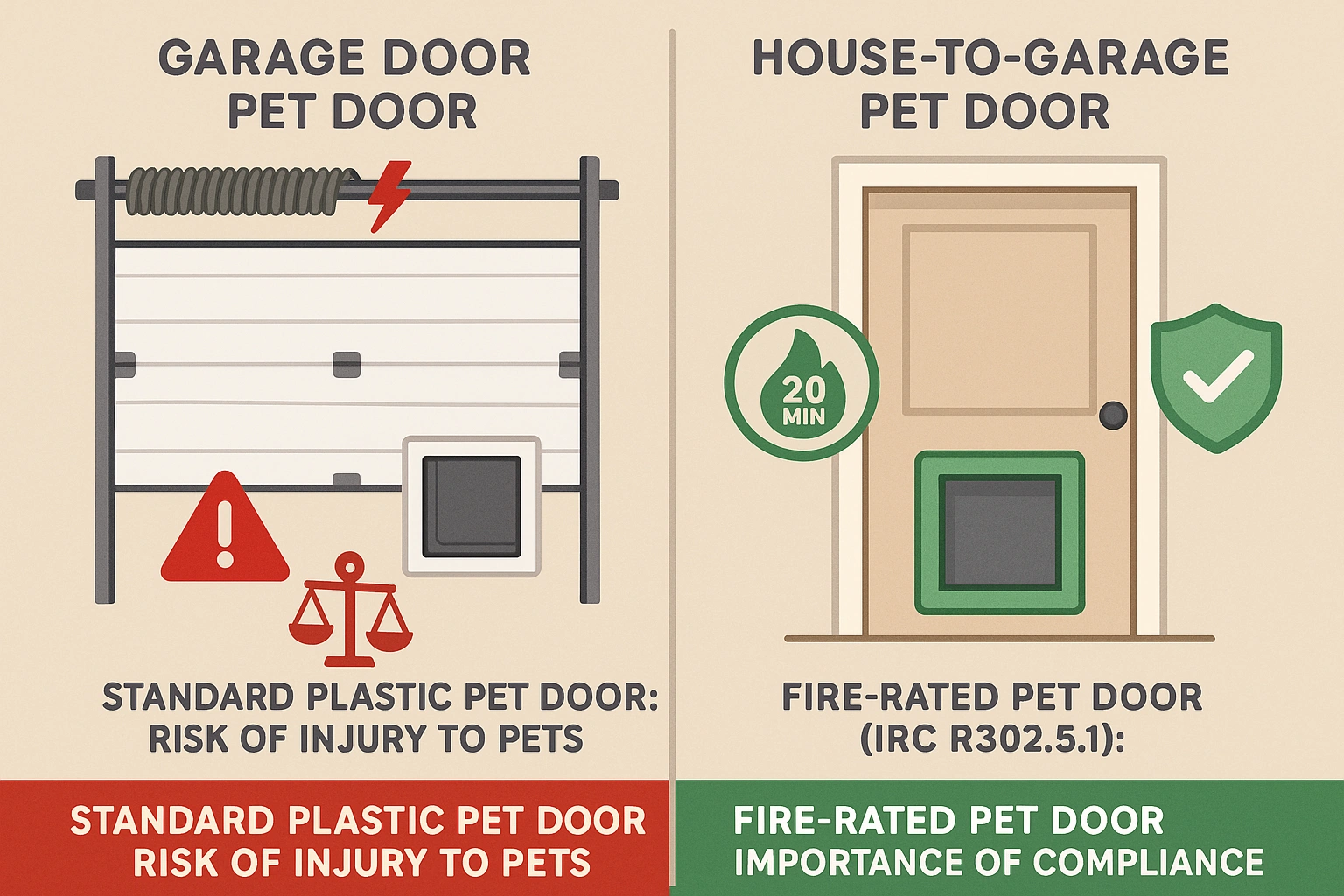
This visual clarifies why cutting pet doors into overhead garage doors risks mechanical failure and pet injury, while certified fire-rated pet doors comply with safety codes and protect your home.

Installing a pet door in your garage seems convenient, but it introduces severe structural, mechanical, and legal complications.

Fire and Building Code Violations

International Residential Code (IRC) Section R302.5.1 mandates a fire-rated barrier between an attached garage and living spaces. Traditional plastic pet doors breach this seal. Standard installations must utilize certified fire rated doors for home garages to preserve structural integrity, maintain insurance eligibility, and prevent carbon monoxide backdrafts.

Mechanical Counterbalance Issues

Overhead garage doors operate on a delicate balance system managed by torsion springs. Altering a door’s weight distribution by cutting panels disrupts this system. If a door is off-balance by even 8 pounds, it can stress the opener’s plastic gears or snap critical springs. Learn how to balance a garage door to understand these physical limits. Attempting custom modifications without verifying balance can lead to a dangerous garage door off track situation.

If pedestrian access is required, a code-compliant wicket door offers a much safer, structural alternative to a custom plastic opening.

Restoring and Protecting Your Home


When home safety, compliance, and functionality are compromised, seeking expert support is the most effective way forward. Our team specializes in assessing structural integrity, ensuring proper balance, and installing pet-resistant materials. Contact us today to secure and protect your garage system.

Frequently Asked Questions


Will repairing my own safety sensor wires void my opener's warranty?

Minor external wiring splices do not typically void the manufacturer’s warranty on the motor unit itself, provided you do not alter internal components. However, wrapping the wires in flexible conduit is recommended to prevent future issues.

How do I know if my garage door has been thrown off balance by pet damage?

Pull the manual emergency release cord and lift the door halfway. If it fails to stay in place and slides down rapidly, the balance is compromised. You should consult a specialist rather than attempt to adjust the high-tension torsion springs yourself.

What is the safest way to prevent my dog from treating the garage door as a target?

Combine mechanical barriers with veterinary behavioral strategies. Address separation anxiety and establish visual blocks to reduce territorial behavior at the base of the door.

Contact / Request a Call