A specialized tune-up moves beyond a simple checklist and becomes a comprehensive diagnostic and preservation process. It’s about understanding
the “why” behind every action, ensuring each step honors the door’s unique character and engineering.
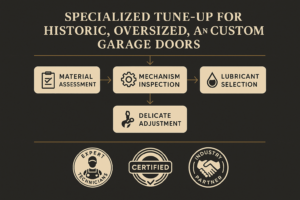
Our expert-driven tune-up process ensures precision, preservation, and performance tailored to your unique garage door system.
Material-Specific Maintenance: Preserving Character and Integrity
The material of your door dictates the tools, cleaners, and techniques used. Applying the wrong product can be a disaster.
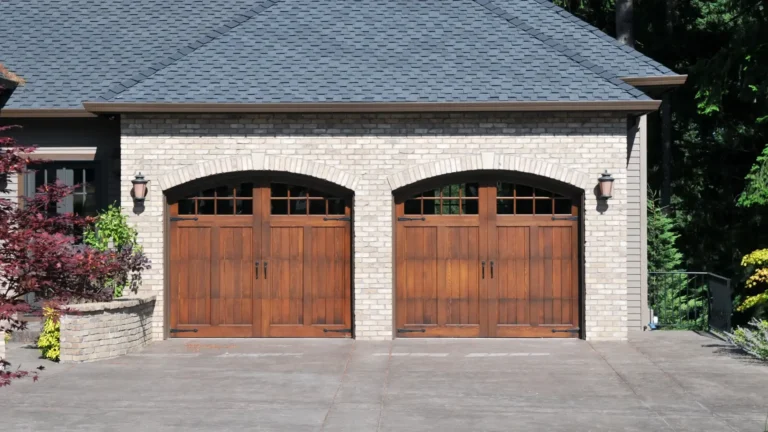
- Historic Wood: Forget harsh power washers. Old wood needs gentle cleaning with pH-neutral cleansers. It’s crucial to inspect for rot or insect damage, especially at the base. Sealing requires breathable, oil-based stains that nourish the wood rather than plastic-like coatings that trap moisture. While knowing how often should you lubricate your garage door is a good start, using a non-petroleum, wax-based lubricant on its historic hardware is essential to prevent staining the wood.
- Wrought Iron: The primary enemy is rust. A tune-up involves meticulously inspecting every weld and joint for signs of oxidation. Treatment involves removing rust with a wire brush, neutralizing it, and applying a specialized sealant and paint designed for exterior metalwork.
- Glass & Custom Materials: For full-view glass doors, the focus is on the integrity of the seals and the frame’s structure. Seals prevent moisture from getting between panels, and the frame must bear the glass’s weight without flexing. Cleaning requires ammonia-free solutions to protect any special coatings or tints. This is a far cry from the simple task of cleaning garage door tracks on a standard door. While there are some great low-maintenance garage door materials available today, these specialized materials require a dedicated approach.

Understanding the Physics: Stress, Balance, and Safety
The sheer weight of an oversized door transforms it from a simple panel into a massive, suspended load.
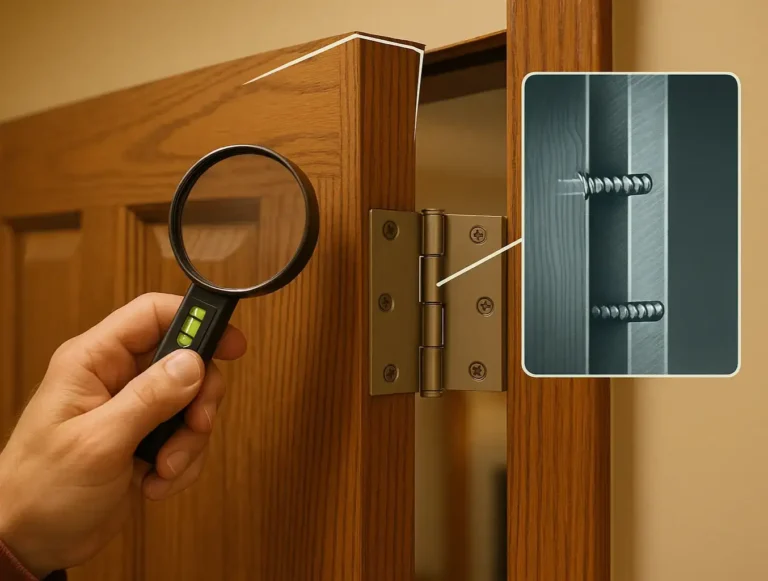
- Cable & Spring Inspection: On a 1,000-pound door, the springs and cables are under immense tension 24/7. During a tune-up, a technician looks for the microscopic signs of metal fatigue: fraying on cables and tiny gaps in spring coils. A common issue is when a garage door cable has too much slack, which is a red flag for a serious balancing problem.
- Structural Integrity: The door’s frame and the building’s jambs must support the weight. A specialized tune-up includes checking for frame sagging, loose anchor bolts, and stress cracks in the surrounding wall—issues that would never appear with a standard 200-pound door.
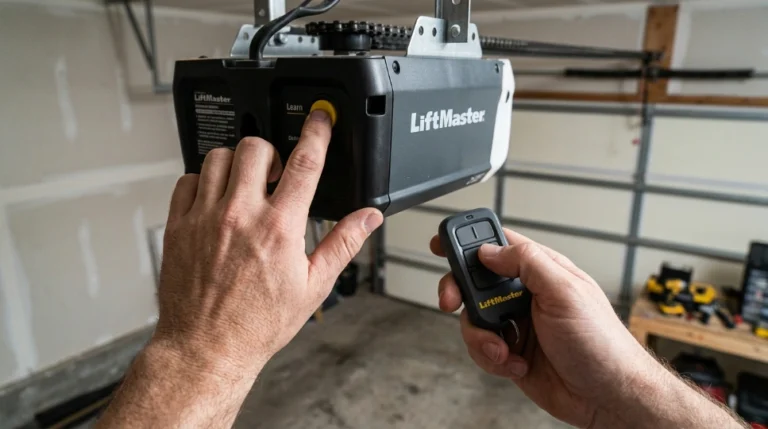
- Balance Testing: Properly balancing an oversized door is a delicate and dangerous art. It ensures the opener is only lifting a fraction of the door’s true weight. An imbalanced heavy door will destroy an opener in months, not years.
Honoring Unique Mechanisms
Custom and historic doors often use systems you won’t find in a big-box store, from intricate counterweights to swing-out carriage mechanisms. A technician must understand these systems intimately to service them. This includes lubricating unique pivot points, adjusting non-standard track alignments, and ensuring bespoke parts are functioning in harmony.

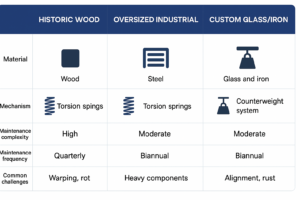 Specialized Door Triage: Identify Your System
 Your garage door is more than a utility. It’s a crucial part of your property’s value, curb appeal, and history. A standard tune-up is an expense; a specialized tune-up is an investment in preservation and safety.