main logo

Low-Maintenance Garage Door Materials: A Comparison for Busy Homeowners


Published: Jul 16, 2026

Let's be honest: your garage door should protect your home, not become a second job. Between work, family, and trying to find a spare moment for yourself, the last thing you want to add to your to-do list is "sand and repaint the garage door." Yet, many homeowners accidentally sign up for years of weekend upkeep simply by choosing the wrong material.

If the thought of scraping, priming, and painting makes you tired, you're in the right place. The good news is that modern garage doors offer fantastic options that demand very little of your time. But the term "low-maintenance" is thrown around so often it's almost lost its meaning.

This guide changes that. We're going to translate vague promises into a tangible concept you can actually use: the Maintenance Time-Budget. We'll explore how much time you'll really spend on upkeep for each material, helping you choose a door that fits your lifestyle, not one that dictates it.

The Big Question: What Does "Low-Maintenance" Actually Mean?


When manufacturers say a door is "low-maintenance," they usually mean it's resistant to common problems like rot, rust, or insect damage. But that doesn't tell the whole story. For a busy homeowner, low-maintenance means:
  • Minimal Time Commitment: You're not spending a full Saturday every few years on a major overhaul.
  • Simple Tools: Upkeep requires a bucket of soapy water and a soft cloth, not a belt sander and a paint sprayer.
  • Forgiveness: The material can withstand a bit of neglect without failing catastrophically.
Think of it as a spectrum. On one end, you have traditional wood doors that require regular, intensive care. On the other, you have materials that ask for little more than a quick wash once or twice a year. We're focusing on the "set it and forget it" side of that spectrum.

The Top Contenders for a "Set It and Forget It" Garage Door


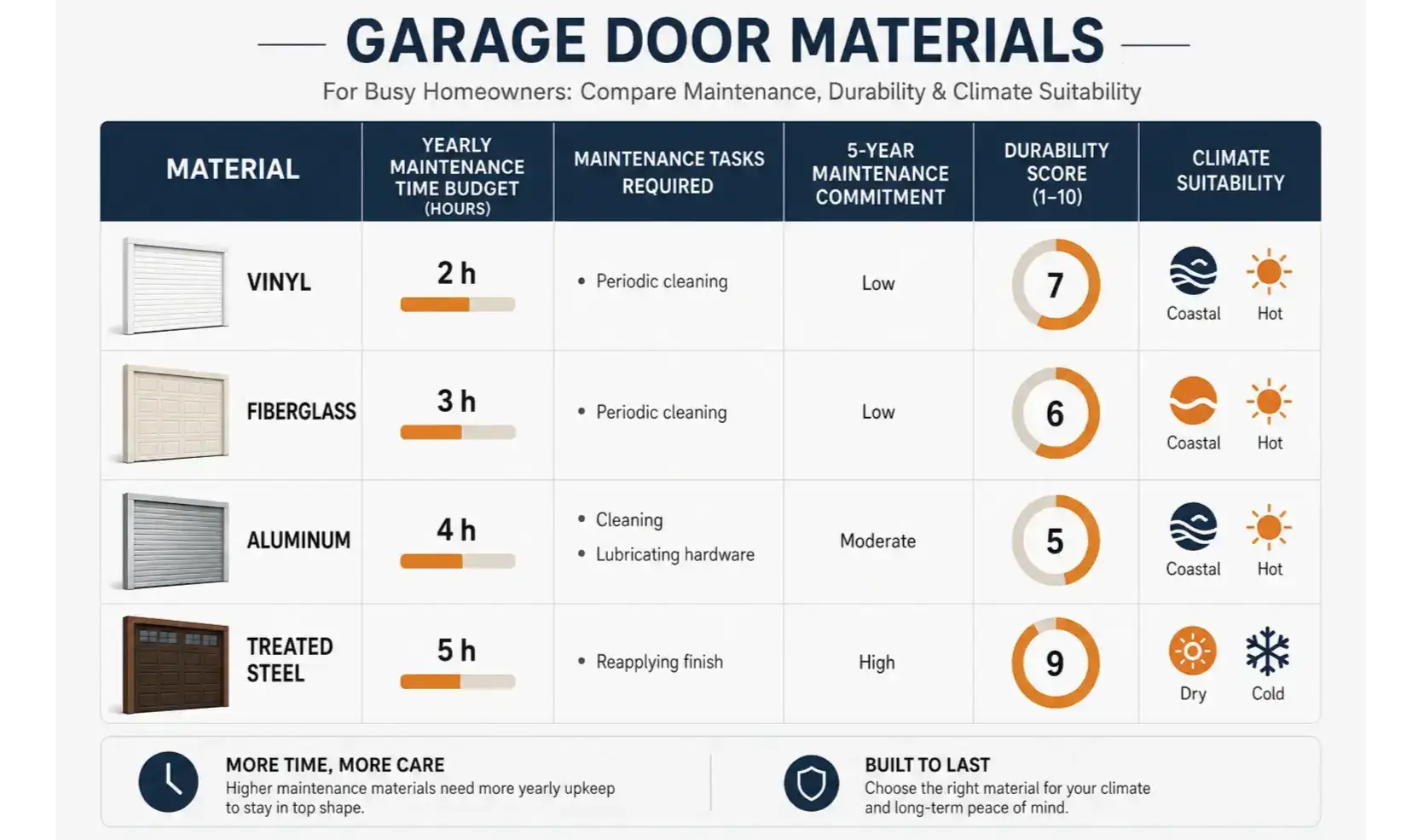
A chart comparing garage door materials based on their maintenance time, effort, cost, and durability.
When it comes to your Maintenance Time-Budget, three materials consistently rise to the top: vinyl, fiberglass, and modern treated steel. Each offers a unique balance of durability, aesthetics, and, most importantly, freedom from constant upkeep.

A chart comparing garage door materials based on their maintenance time, effort, cost, and durability.

Your "Maintenance Time-Budget": A Realistic Look at Upkeep


This is where we move from theory to reality. Let's break down exactly what you're signing up for with each material over the next five years.

The Hands-Off Champion: Vinyl Garage Doors

If you want the absolute minimum in maintenance, a vinyl door is your best friend. It’s the closest you can get to a truly "install it and forget it" option.

Yearly Time-Commitment: ~1 hour.

Required Tasks & Tools: A simple wash with a soft cloth, mild soap, and water once or twice a year is all it takes to remove surface dirt and keep it looking fresh.

5-Year Time-Commitment: The same as the yearly commitment. No painting, no sealing, no rust-proofing.

What Neglect Looks Like: Vinyl is incredibly forgiving. If you neglect it, it will simply look dirty. Its color is solid all the way through, so scratches are much less noticeable than on a painted surface. However, in extreme climates, it can become brittle over time and may crack on heavy impact. While damage is rare, knowing which garage door materials are easiest to fix can be helpful for any homeowner.
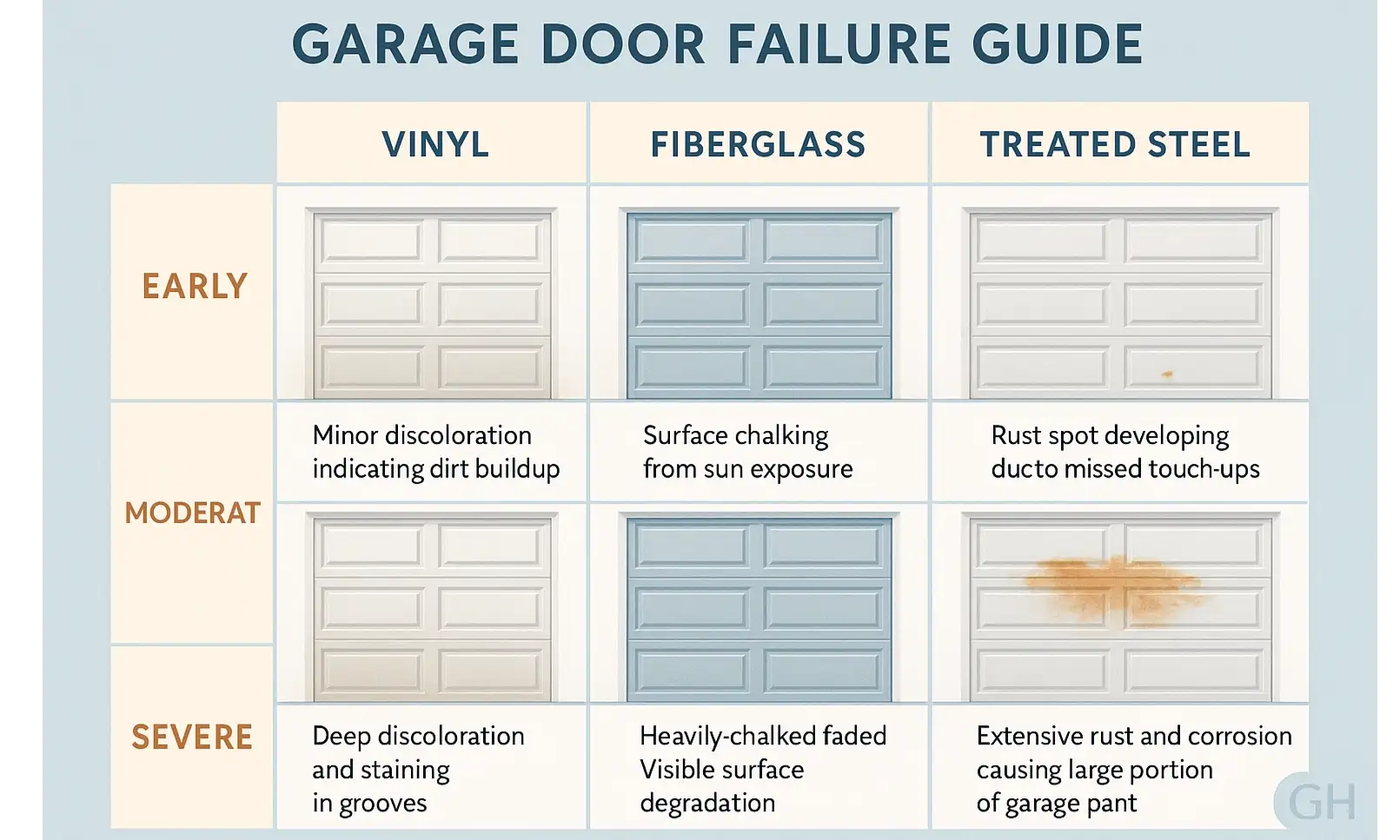
A visual comparison showing different stages of wear and tear on various garage door materials, including rust spots on steel and fading on fiberglass.

The Coastal Crusader: Fiberglass Garage Doors

Fiberglass doors are the perfect choice for homes that face harsh elements, especially salty air. They offer the beautiful look of wood without the demanding upkeep.

Yearly Time-Commitment: ~1-2 hours.

Required Tasks & Tools: Similar to vinyl, a yearly wash is usually sufficient. If the top coat begins to fade from heavy sun exposure, you may need to apply a clear protective coat every few years.

5-Year Time-Commitment: You might spend an afternoon applying a new clear coat to protect it from UV damage and restore its sheen, but you won't be dealing with rot or rust.

What Neglect Looks Like: If left unwashed, a fiberglass door will collect dirt and grime. In areas with intense sun, a neglected clear coat can lead to fading or a chalky appearance over many years. In the worst cases, the fiberglass can become brittle and may crack if struck hard. For homeowners in our area, understanding the best garage door material for coastal homes is crucial for long-term durability.

The Modern Workhorse: Treated Steel Garage Doors

Don't confuse today's steel doors with the rust-buckets of the past. Modern steel doors are typically made with a core of galvanized steel and covered in a tough, baked-on primer and top coat.

Yearly Time-Commitment: ~1-2 hours.

Required Tasks & Tools: A yearly wash keeps it clean. The most important task is to inspect for any deep scratches or dings that have penetrated the protective layers.

5-Year Time-Commitment: If you find a deep scratch, you'll need to sand the small spot lightly, apply a rust-arresting primer, and touch it up with matching paint. This is a 15-minute fix that prevents a small problem from becoming a big one. Exploring the full range of steel garage door benefits shows why it's such a popular choice for durability and value.

What Neglect Looks Like: This is where steel requires a bit more attention than vinyl or fiberglass. If a deep scratch is ignored, moisture can get to the raw steel and start to form rust. While it's an easy fix when caught early, widespread neglect can lead to more significant cosmetic issues.

A visual comparison showing different stages of wear and tear on various garage door materials, including rust spots on steel and fading on fiberglass.

Beyond the Material: Factors That Impact Your Weekend Freedom


Choosing the right material is a huge step, but a few other factors can influence your long-term maintenance needs. Thinking about these now can save you headaches later.
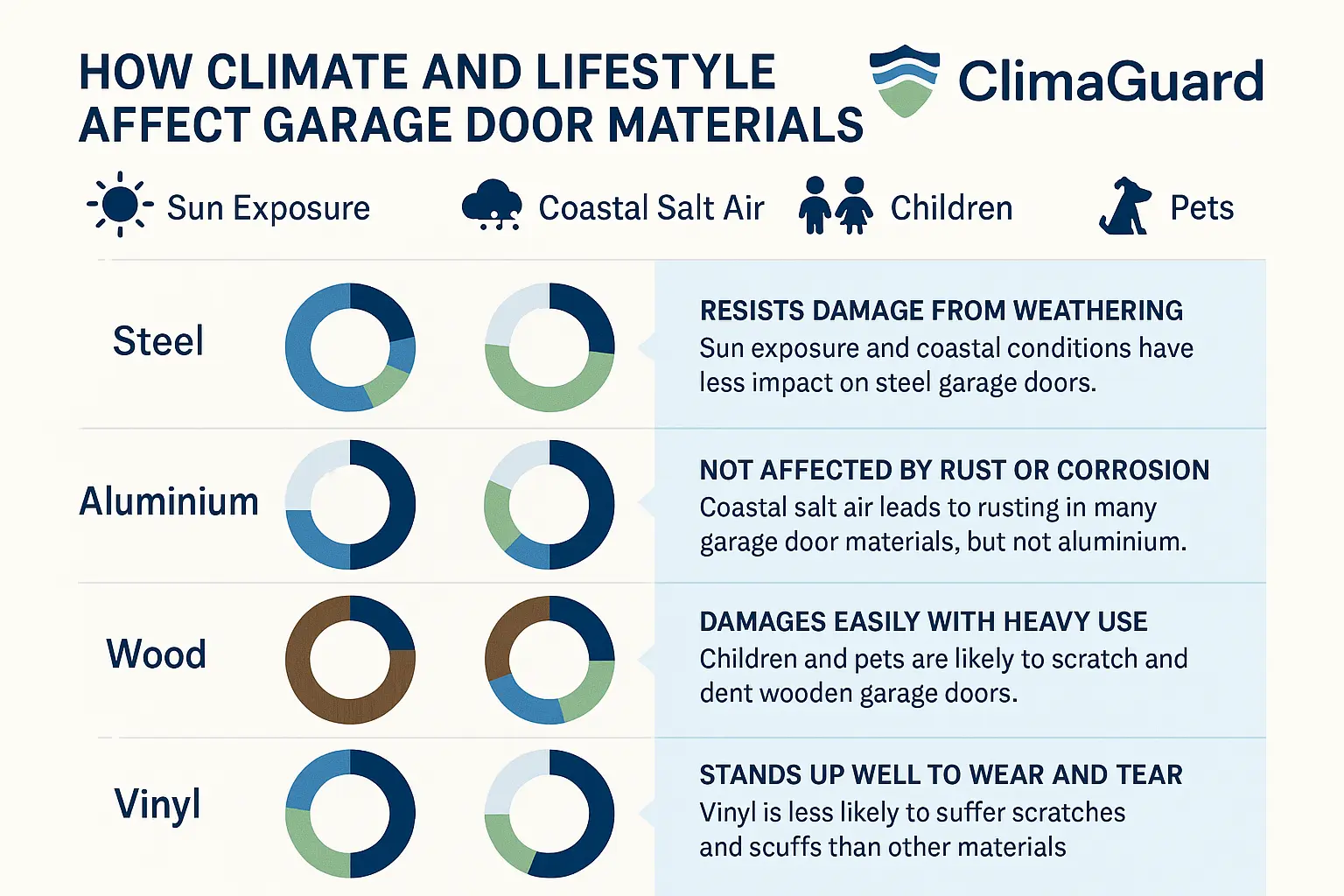
An infographic showing how climate, family activities, and aesthetic preferences affect the ideal choice of garage door material.

  • Climate: If you live on the Connecticut coast, a fiberglass or vinyl door is a no-brainer because they are impervious to salt-air corrosion. If your home gets intense, direct sunlight all day, a lighter-colored door will be less prone to fading over time.
  • Lifestyle: Do you have kids who play basketball in the driveway? A steel door might be more prone to denting than a resilient fiberglass or vinyl door. Considering your daily life is key.
  • The Unseen Connection: Here’s an "aha moment" most homeowners miss: the door's weight affects your garage door opener. Heavier doors, like insulated steel or multi-layer fiberglass, put more strain on the opener's motor and parts. While not a material maintenance issue, choosing the right opener is vital. If you're wondering what horsepower garage door opener do I need, matching it to your door's weight is a critical step in reducing future repairs.
An infographic showing how climate, family activities, and aesthetic preferences affect the ideal choice of garage door material.

Find Your Perfect Low-Maintenance Match


Still not sure which material fits your life best? Answer these three simple questions to find your ideal match.
  • On a scale of 1-10, how much do you hate yard work and home maintenance?

    - 8-10 (I want zero maintenance): Go with Vinyl. Its durability and color-through construction make it the ultimate hands-off option.

    - 5-7 (I don't mind a little work if it looks great): Fiberglass is for you. It offers stunning wood-grain looks with minimal upkeep beyond washing.

    - 1-4 (I'm practical and want the best all-around value): Treated Steel is a fantastic choice. It's tough, cost-effective, and a tiny bit of vigilance with scratches keeps it looking new for decades.
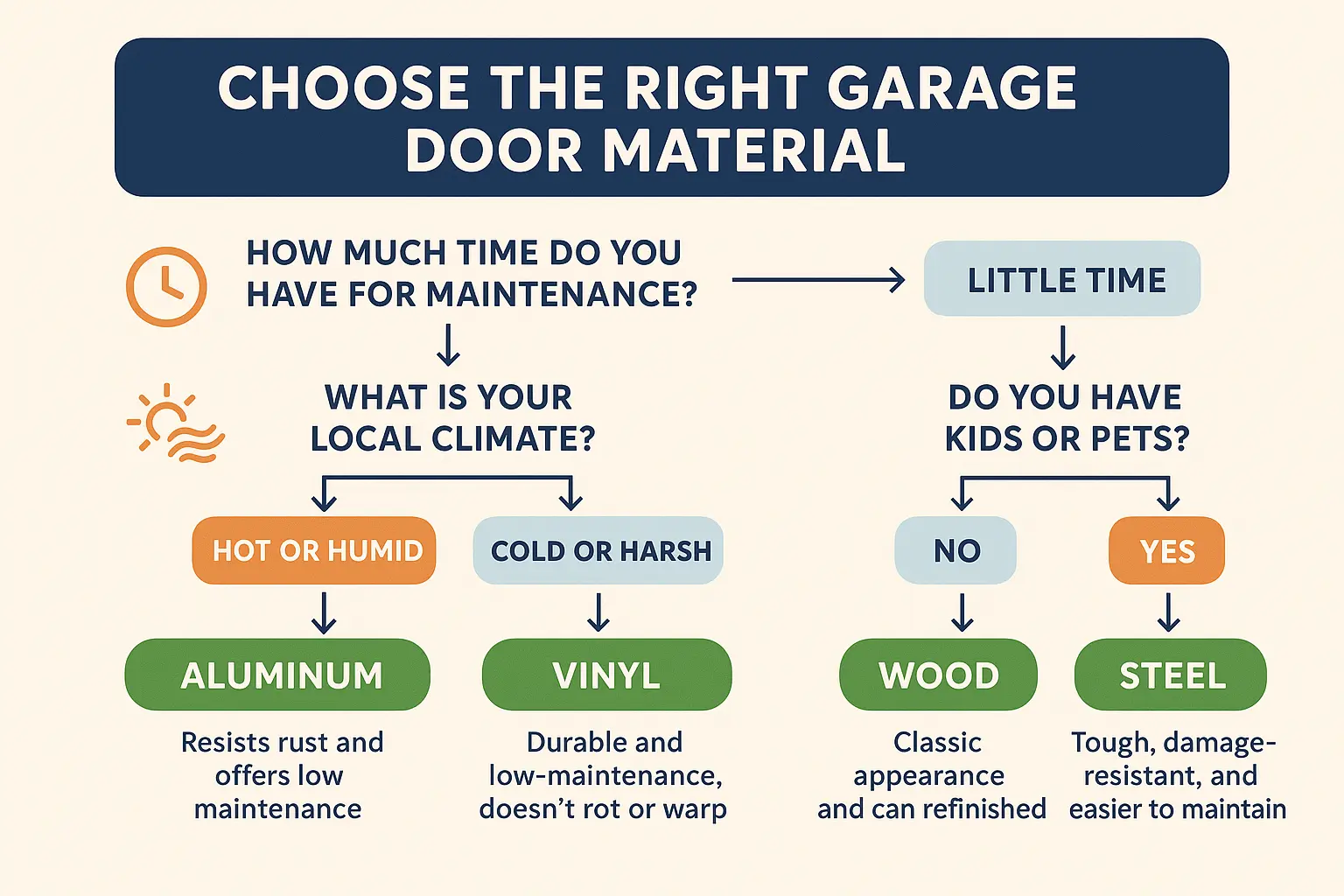
A decision tree or flowchart that guides a user through questions about their lifestyle, climate, and budget to recommend the best low-maintenance garage door material.

  • Where is your home located?

    - Near the coast (e.g., New Haven, Stamford): Prioritize Fiberglass or Vinyl to eliminate any worries about salt-induced corrosion.

    - Inland with lots of sun exposure: Any material works, but a lighter color will resist fading better. Fiberglass with a UV-resistant top coat is also an excellent choice.

    - In a neighborhood with active kids: Consider Fiberglass or a dent-resistant Vinyl to handle the occasional stray ball or bicycle bump
  • What is your top priority?

    - Durability and impact resistance: Fiberglass often leads the pack.

    - Cost-effectiveness: Steel generally provides the best performance for the price.

    - Lowest possible effort: Vinyl is the undisputed champion.
A decision tree or flowchart that guides a user through questions about their lifestyle, climate, and budget to recommend the best low-maintenance garage door material.

Frequently Asked Questions About Low-Maintenance Garage Doors


What is the most durable material for a garage door?

Durability can mean different things. Steel is very strong but can dent. Fiberglass is highly resistant to dents, cracking, and rust, making it arguably the most durable all-around option in many environments.

What garage doors won't rust?

Vinyl and fiberglass doors are 100% rust-proof, which is why they are top recommendations for coastal and high-moisture areas. Modern treated steel doors have multiple protective layers, so they will not rust unless those layers are deeply penetrated and the exposed steel is left untreated.

What is the best material overall?

There's no single "best" material—only the best material for you. The best choice depends entirely on your budget, your climate, and, most importantly, your Maintenance Time-Budget.

What maintenance needs to be done on a garage door?

Beyond cleaning the door itself, all garage doors benefit from routine checks. Once a year, you should inspect rollers and cables for wear, lubricate moving parts like hinges and springs, and test the auto-reverse safety features. These simple steps are crucial for anyone looking to extend the lifespan of your garage door.

Your Next Step: From Learning to Planning


You're now equipped with the knowledge to choose a garage door that gives you back your weekends. By thinking in terms of a "Maintenance Time-Budget," you can confidently select a material that not only enhances your home's curb appeal but also respects your busy schedule.

Once you have a material in mind, the next step is to explore styles and options. A professional can provide expert advice tailored to your home's specific needs and ensure a flawless installation. If you're looking for garage door installation near me, a trusted team can bring your vision to life. And don't forget the engine of the whole system—a quality garage door opener installation is just as important as the door itself for long-term, trouble-free operation.

You may also like


blog photo

Best Garage Door Materials for Coastal & High-Wind Regions

If you live in a coastal or high-wind region, you’ve probably got a storm-prep checklist: board up the windows, secure outdoor furniture, and stock up on supplies. But have you ever stopped to think about the largest, most vulnerable opening in your home? Your garage door. During a hurricane, intense wind pressure can cause a standard garage door to buckle and fail. Once the wind gets inside, the pressure can build up and blow your roof off from within, leading to catastrophic structural failure. It’s a terrifying domino effect, and it all starts with the garage door. This isn't just about protecting your car; it's about safeguarding your entire home. Understanding how to choose a storm-ready door is one of the most critical steps you can take to fortify your home against the elements.