Dents & Scratches: Which Garage Door Material is Easiest to Fix?
Published: Jun 11, 2026
It happens to the best of us. A stray baseball, a misjudged turn into the driveway, or a bump from the lawnmower—and now your garage door has its first battle scar. That sinking feeling is universal. But here's something most homeowners don't realize until it's too late: the cost, effort, and success of fixing that dent or scratch depends almost entirely on the material your door is made of.
Choosing a garage door is about more than just color and style. It’s about understanding how your door will age and how it will stand up to the small accidents of everyday life. Before you try a DIY repair or call a professional, let's explore which materials are the most forgiving and which require a more expert touch.
Foundation: A Quick Guide to Garage Door Repairability
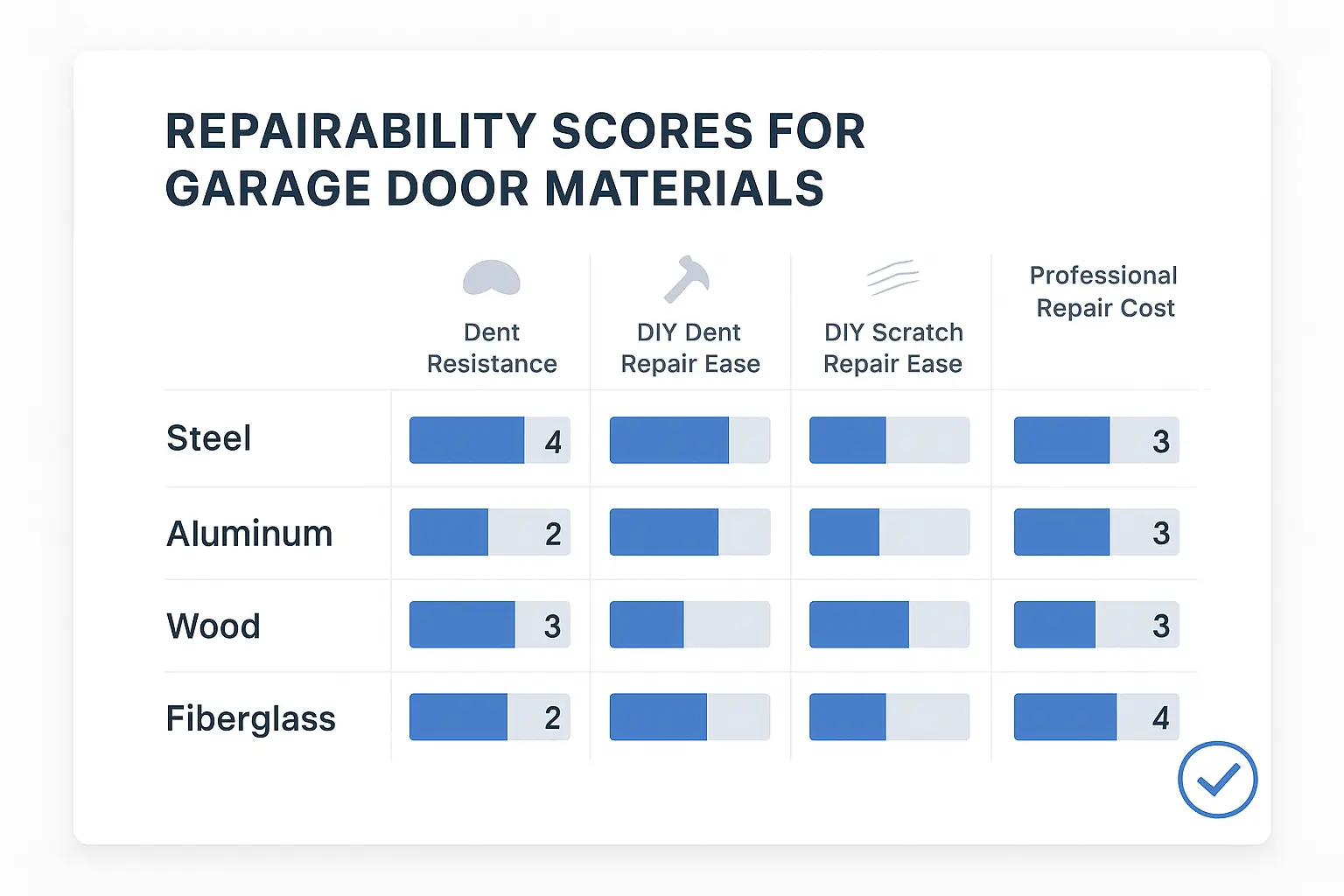
The Material Repairability Matrix helps homeowners quickly compare garage door materials on ease and cost of repairing dents and scratches, empowering informed purchase and maintenance decisions.
This chart gives you a quick snapshot, but the story behind these numbers is what really matters. Let’s dive into the specifics of each material.
A Closer Look: How Each Material Handles Dents and Scratches
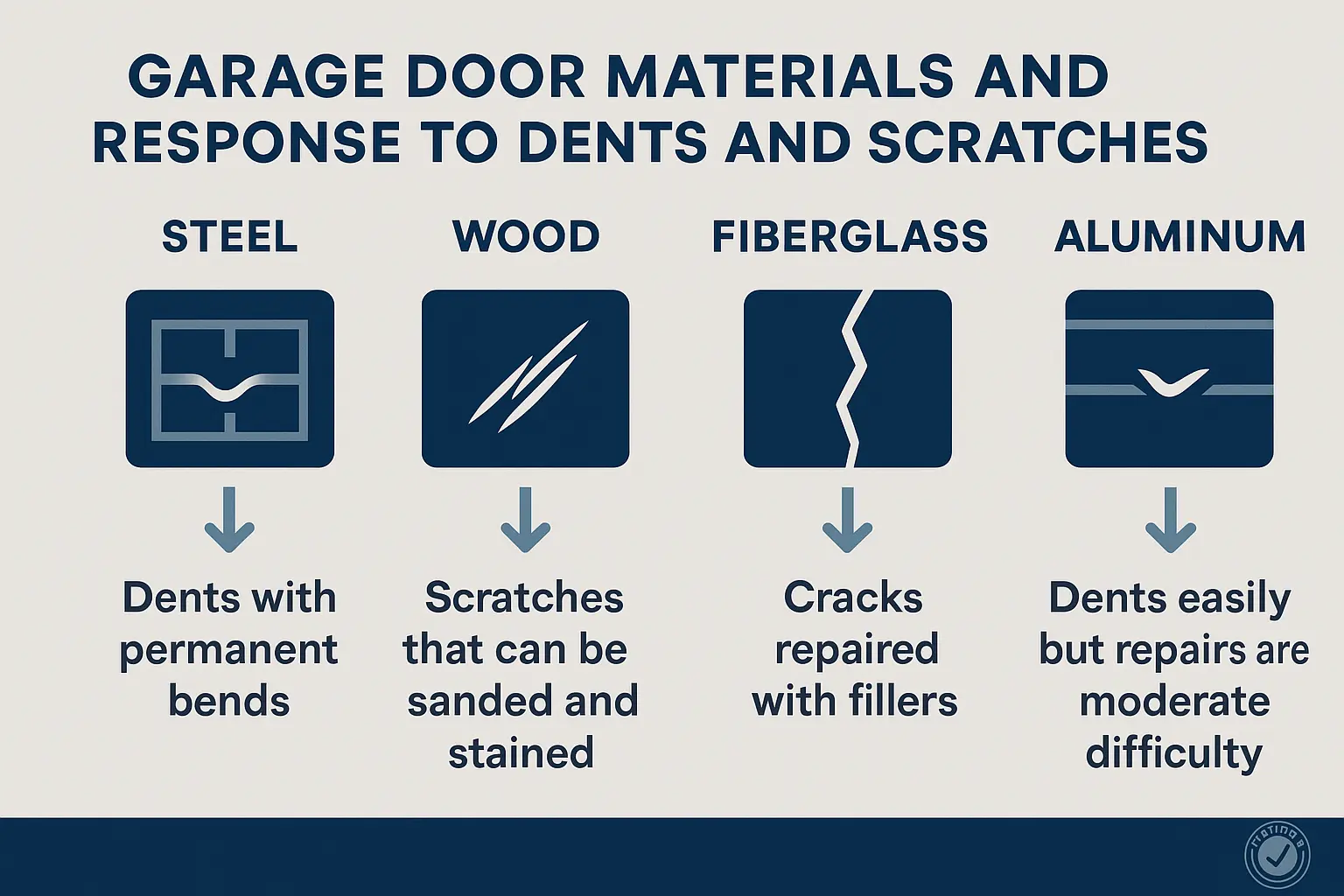
Understanding how each garage door material reacts to damage demystifies repair challenges and builds trust in our expertise to guide your maintenance planning.
Steel Garage Doors: Strong but Stubborn
Steel is the most popular garage door material for a reason: it's durable, secure, and relatively affordable. However, when it comes to cosmetic damage, its strength becomes a challenge.
- Dents: Steel doesn't have "memory." Once it's bent, the metal stretches. While DIY methods using suction cups or a combination of heat and cold can sometimes pop out shallow dents, it's nearly impossible to restore the panel to a perfectly flat, factory finish. Deeper dents with creases are almost always permanent.
- Scratches: This is steel's strong suit for repair. A simple scratch that hasn't gone through the primer can often be fixed with a high-quality touch-up paint from the manufacturer, much like fixing a scratch on a car.
Aluminum Garage Doors: Lightweight but Delicate
Often used for modern, full-view glass doors, aluminum is lightweight and rust-proof. Its biggest drawback? It's the softest of the metals and dents very easily.
- Dents: Because the metal is thinner and softer than steel, aluminum doors are highly susceptible to dents from even minor impacts. The repair process is similar to steel, but requires an even gentler touch to avoid making the damage worse.
- Scratches: Repairing scratches depends on the finish. For painted aluminum, a color-matched touch-up paint works well. For anodized or brushed aluminum finishes, however, scratches are much more difficult to hide and may be permanent.
Fiberglass & Composite Doors: Modern Looks, Unique Fixes
Fiberglass and composite doors are excellent at resisting dents and corrosion, making them a popular low-maintenance choice, often mimicking the look of real wood. However, they handle severe impacts differently.
- Dents: These materials are fantastic at resisting the small dents that plague metal doors. A basketball bouncing off a fiberglass door will likely leave no trace.
- Cracks & Scratches: A very sharp, heavy impact won't dent fiberglass—it will crack or puncture it. Repairing this involves an auto-body-style approach, using a resin or epoxy filler (like Bondo), sanding it perfectly smooth, and then repainting the entire door, as spot-painting is difficult to blend. For those interested in this aesthetic, it's worth exploring the best faux wood garage doors to see if their durability is right for you.
The Big Question: Should You Repair or Replace the Panel?
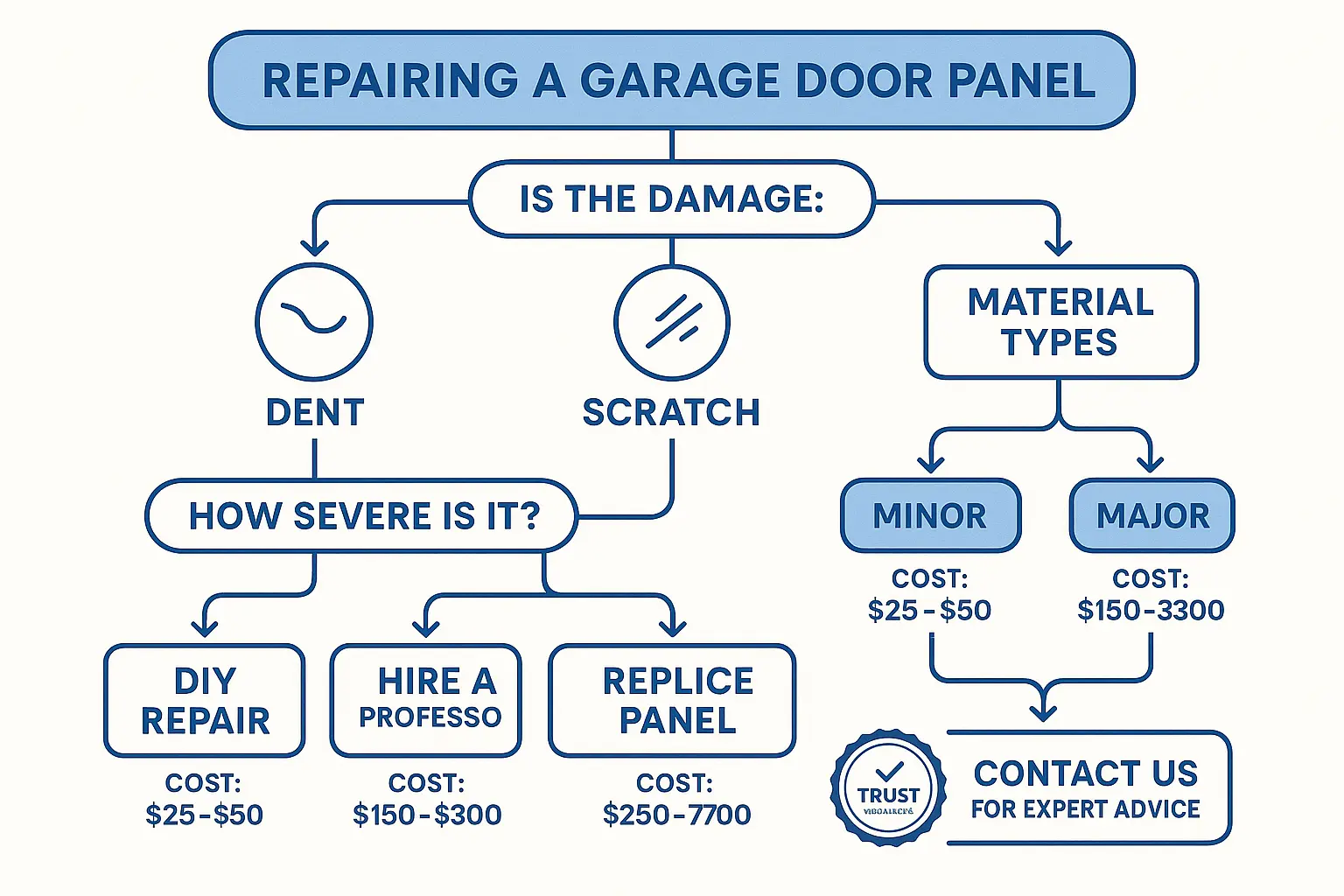
Use this decision framework to confidently determine the best repair approach for your garage door based on material and damage, simplifying your maintenance journey.
Consider these factors:
- Size and Depth of Damage: A shallow dent the size of a golf ball on a steel door might be improved. A deep, creased dent across the whole panel has structurally weakened it, and a garage door panel repair might not be feasible.
- Location: Damage along the edges or on the structural ribs of a panel is much harder to fix than damage in the flat, center area.
- Your Door's Age and Model: For older doors, finding a perfectly matching replacement panel can be difficult or impossible. If you can't find a match, you may need to replace the entire door to maintain a uniform look.
- Cost-Benefit Analysis: Get a quote for a professional repair and compare it to the cost of one or two replacement garage doors panels. If the repair cost is 75% or more of the replacement cost, replacement is often the better long-term investment.
Proactive Care: Preventing Damage Before It Happens
- For All Doors: Install parking aids like a hanging tennis ball or a small floor bumper in your garage to prevent car taps.
- For Steel & Aluminum: Apply a coat of automotive wax once a year. This adds a protective layer that helps repel dirt and can minimize minor scuffs.
- For Wood Doors: Re-apply a protective sealant every 1-3 years, depending on your climate and sun exposure. This prevents moisture from seeping in and keeps the wood from drying out and cracking.
- For Fiberglass/Composite: Regular cleaning with a mild detergent is all that's typically needed to keep the finish looking its best.
Frequently Asked Questions (FAQ)
Can all garage door dents be repaired?
How much does it cost to fix a dent?
Is it cheaper to replace one panel or the whole door?
Which material is best for a home with active kids?
Understanding your garage door's material is the first step toward smart maintenance and long-term satisfaction. Whether you're assessing a recent mishap or planning for a new installation, this knowledge empowers you to keep your home's curb appeal looking its best for years to come. And if you're exploring new door styles, understanding the difference between a garage door raised panel vs flush panel is another great step in your research.

You may also like