main logo

Fire-Rated Garage Doors: The Homeowner's Guide to Safety And Code Compliance


Published: Jul 20, 2026

You've heard the term "fire-rated garage door" and now you're wondering if your home is up to code. It’s a common and important question, but here’s a secret: most people are asking about the wrong door.

Before you start pricing out a new overhead door for your car, let's clear up the single biggest point of confusion for homeowners.

Are You Asking About the Right Garage Door?


When building codes and safety experts talk about a "fire-rated door" in the context of a residential garage, they are almost always referring to the smaller, standard-sized entry door that connects your garage to the inside of your house. They are not talking about the large overhead door your car passes through.

This one distinction changes everything. Understanding it is the key to ensuring your family's safety and passing a home inspection.

Why the focus on this specific door? Because the garage is a common starting point for house fires due to stored flammable liquids (gas, paint), electrical systems, and vehicles. The door between your garage and house is a critical barrier designed to slow the spread of fire and smoke, giving your family precious time to escape.
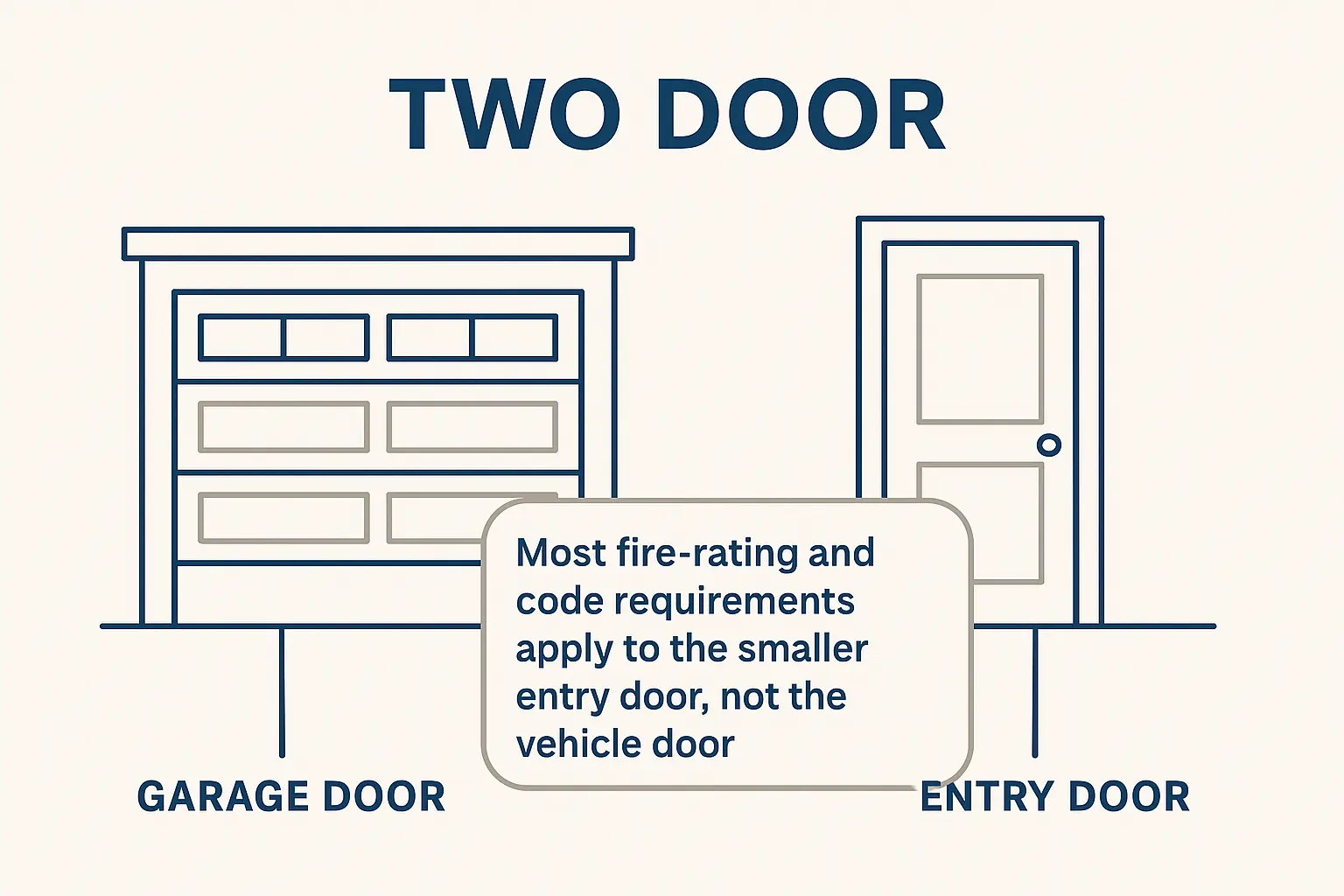
The 'Two Door' illustration clarifies that fire-rated requirements primarily apply to the smaller entry door, helping homeowners focus on the correct code compliance.

Code Made Simple: The "20-Minute Rule" and Fire Separation

You might hear intimidating terms like "fire-rated assembly" or "NFPA 80," but the concept for homeowners is much simpler. The International Residential Code (IRC) requires a "fire separation" between the garage and the living space.

Think of it this way: the goal isn't to build an impenetrable commercial fire wall. It's to create a barrier that can resist smoke and flames for at least 20 minutes. This is known as the "20-minute rule."

This 20-minute window is a crucial safety measure that allows occupants to get out of the house safely before a fire that starts in the garage breaches the main living area.

The 'Two Door' illustration clarifies that fire-rated requirements primarily apply to the smaller entry door, helping homeowners focus on the correct code compliance.

Your Material & Door Options


The good news is you don’t necessarily need a special, lab-tested door with a big "fire-rated" sticker on it (though that is one option). The IRC outlines a few simple, common-sense choices that meet the 20-minute fire separation requirement.
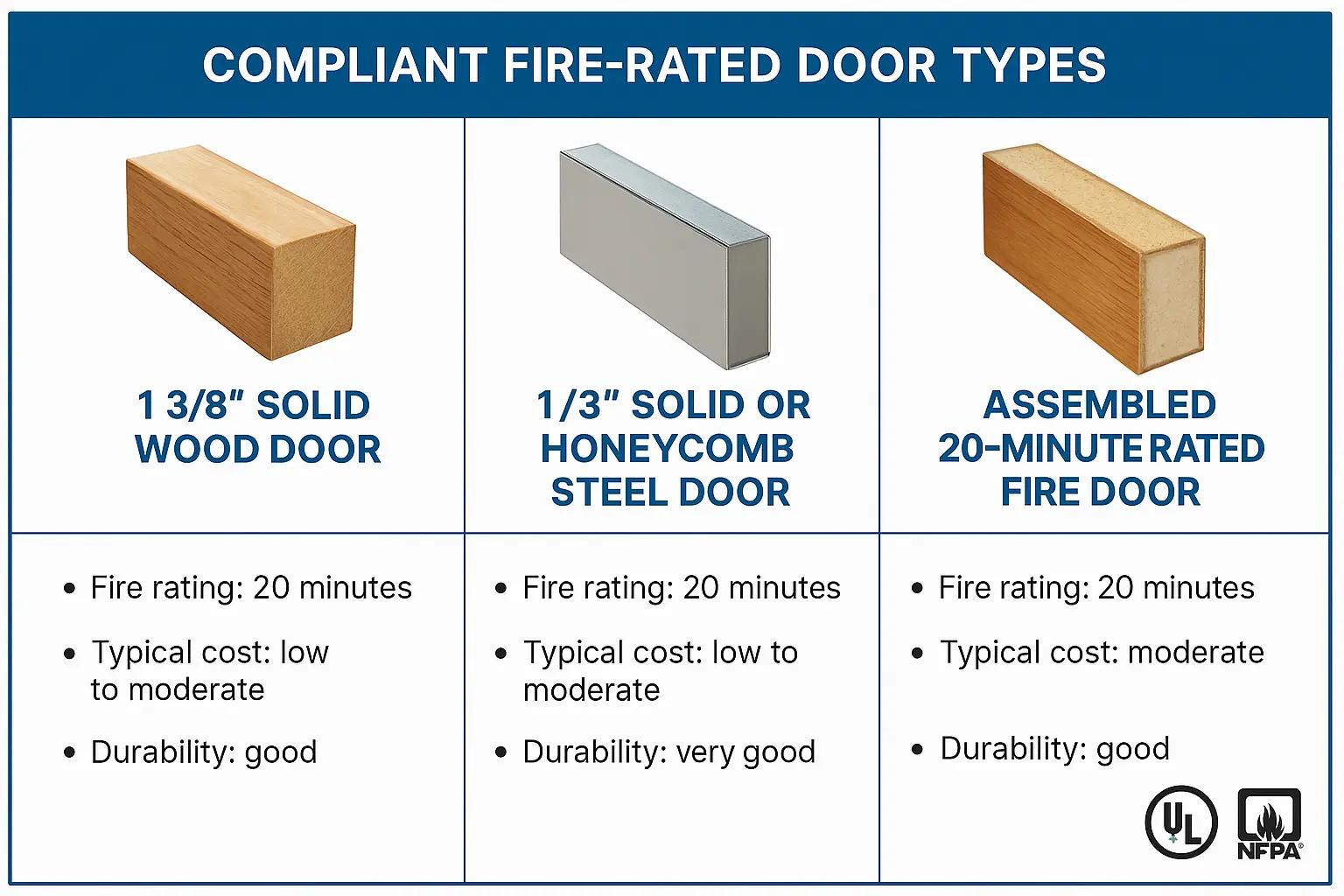
Quickly compare the compliant materials and fire ratings for residential garage entry doors, empowering confident material choice decisions.


Here are the three most common compliant door types for the house-to-garage entry:

1. Solid Wood Door: Must be at least 1-3/8 inches thick. A solid-core door provides a dense barrier that burns slowly. Hollow-core interior doors are not compliant and are a significant safety hazard.

2. Solid or Honeycomb-Core Steel Door: Must also be at least 1-3/8 inches thick. The steel facing and dense core offer excellent fire resistance.

3. A 20-Minute Fire-Rated Door: These doors have been tested by a third-party agency (like Underwriters Laboratories, or UL) and will have a special label on the edge of the door, between the hinges, certifying their rating.

While fire safety is the main driver for this specific entry door, the materials for your main overhead garage door are also important for durability and longevity. The best garage door material for coastal homes, for example, will differ greatly from those in drier climates.

Quickly compare the compliant materials and fire ratings for residential garage entry doors, empowering confident material choice decisions.

How to Check for Compliance & Pass Inspection


Not sure if your current door is up to code? You can perform a quick check yourself. Grab a tape measure and a flashlight, and use this simple visual checklist.
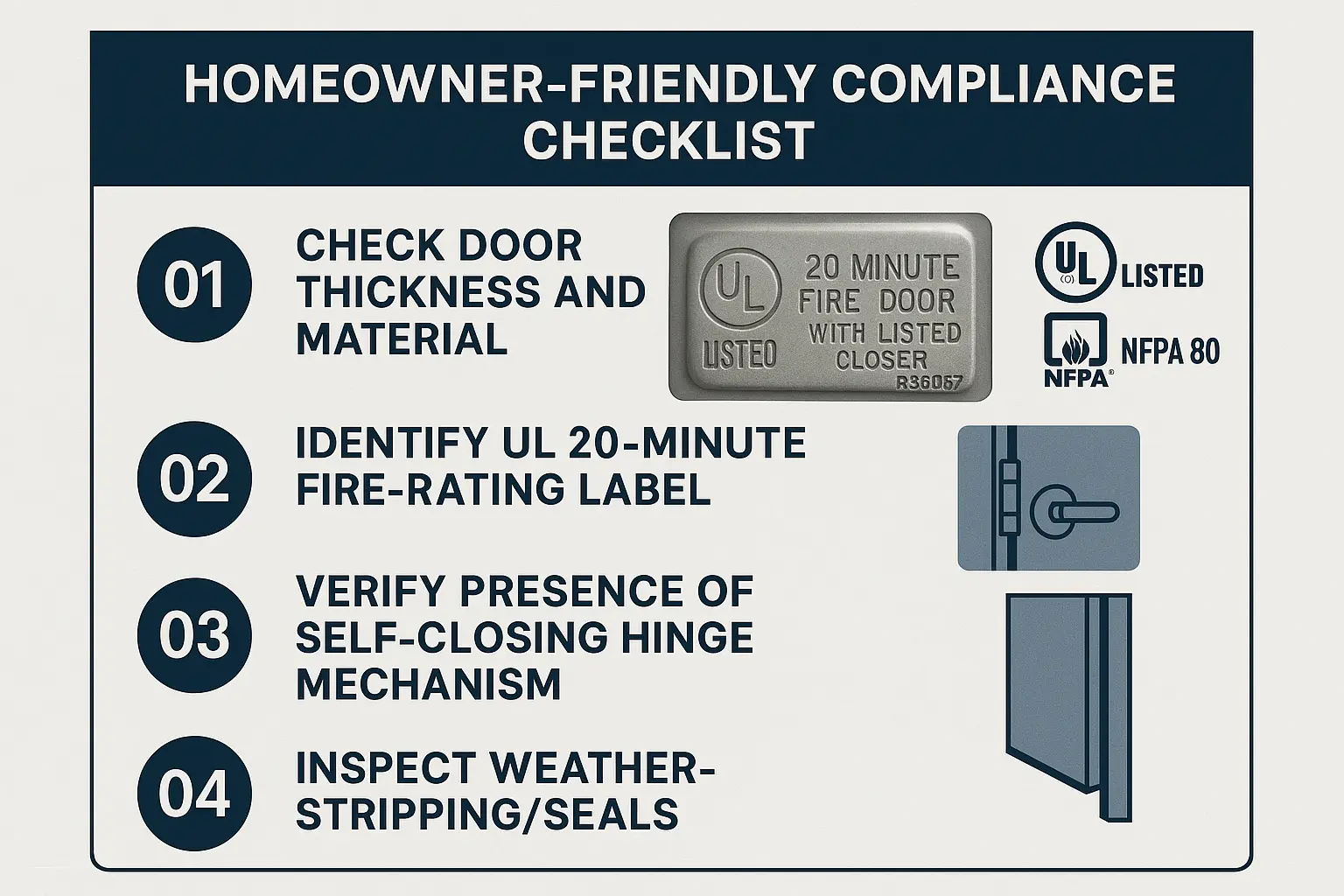
Visual compliance checklist guides homeowners through verifying critical features to confidently pass fire safety inspections.

Your 4-Point Compliance Checklist:

1. Check the Material & Thickness: Is it a solid wood or steel door? Measure the thickness—it must be at least 1-3/8 inches. If you knock on it and it sounds hollow, it's likely a non-compliant door that needs to be replaced.

2. Look for a Label: Carefully inspect the edge of the door (the part you only see when it's open). Look for a small metal plate or sticker that mentions a "20-minute rating" or a "UL" listing for fire safety.

3. Confirm It's Self-Closing: The door must close and latch automatically behind you. This is usually achieved with special self-closing hinges. This crucial feature prevents the door from being left open accidentally during a fire, which would render the fire barrier useless.

4. Inspect the Seals: The door should have weather-stripping around the frame to create a tight seal when closed. This helps prevent smoke from seeping into your home.

This quick check is a key part of any comprehensive garage door safety features, which helps keep your entire garage system safe for your family.

Visual compliance checklist guides homeowners through verifying critical features to confidently pass fire safety inspections.

Next Steps for Homeowners


After performing your check, you'll know where you stand. If your door doesn't meet these requirements, replacing it is a straightforward and highly effective way to increase your home's safety.
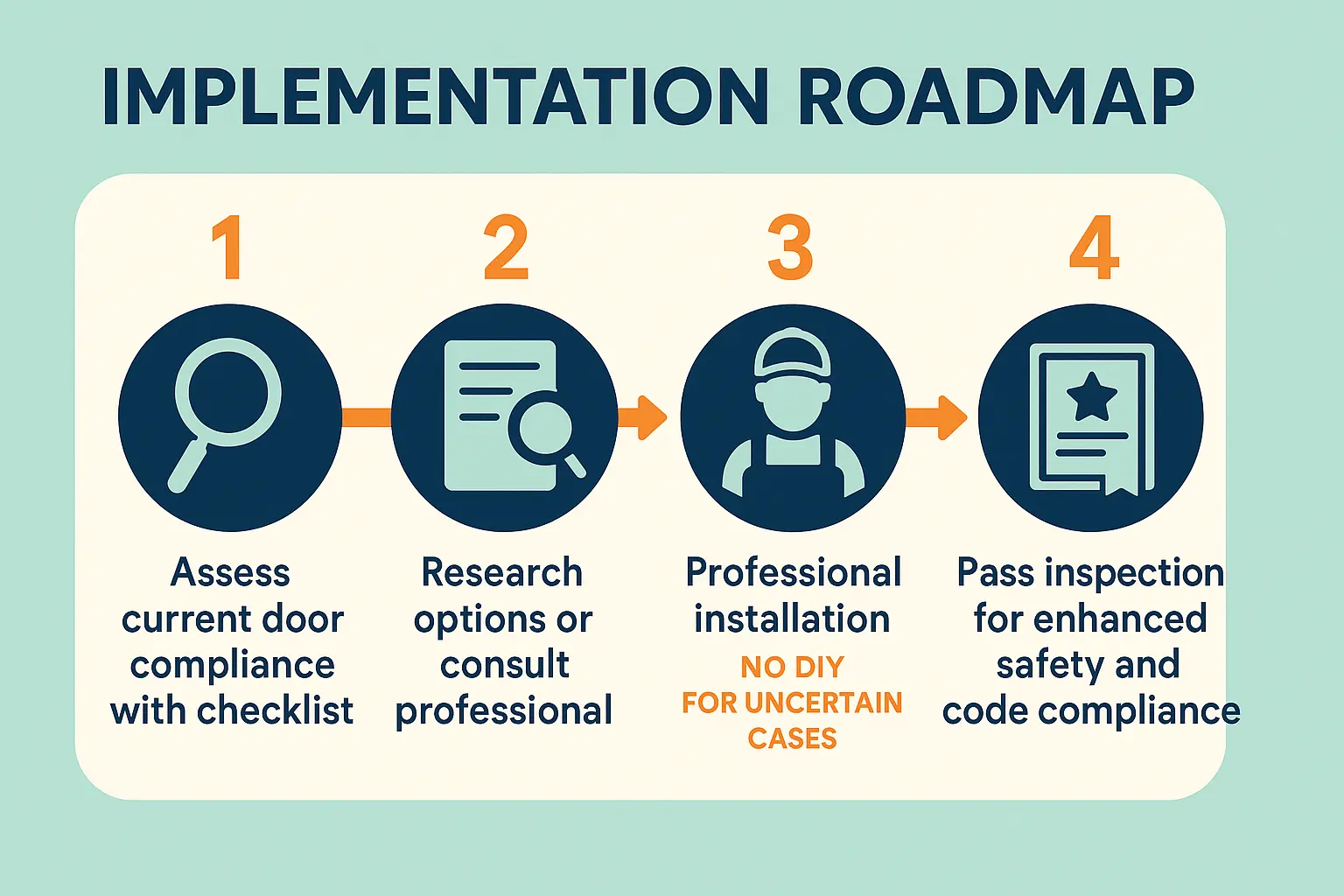
A clear roadmap empowers homeowners to confidently take action ensuring their garage entry door meets fire safety standards.
If you've discovered your door isn't compliant:

Prioritize Replacement: This is not just about passing an inspection; it's about protecting your loved ones.

Choose a Compliant Door: Select a solid-core wood, steel, or 20-minute rated door from your local hardware or home improvement store.

Ensure Professional Installation: While it may seem like a simple door swap, proper installation is critical for a fire-rated door. The frame, seals, and self-closing hinges must be installed correctly to provide the intended protection. If you're looking for professional garage door installation and replacement, working with an experienced technician ensures the job is done right.

A clear roadmap empowers homeowners to confidently take action ensuring their garage entry door meets fire safety standards.

Frequently Asked Questions (FAQ)


So, my main overhead garage door doesn't need to be fire-rated?

In most standard residential situations, no. The building code focuses on the separation between the garage and the house interior. The exception is for homes in specific high-risk wildfire zones, which may have local ordinances requiring fire-resistant overhead doors, but this is not the standard IRC requirement.

What does a fire-rating label look like?

It's typically a small metal plate or durable sticker etched or printed with information from the testing agency (like UL). It will explicitly state the fire rating, such as "20-Minute." It is located on the hinge-side edge of the door.

Is a self-closing mechanism always required?

Yes. A fire-rated door that is left open offers zero protection. The IRC requires the door to be "equipped with a self-closing device." This usually means spring-loaded hinges that automatically pull the door closed.

Can I add self-closing hinges to my existing solid-core door?

Yes, in many cases. If your door is the proper thickness and material but just lacks the self-closing hardware, replacing one or two of the existing hinges with self-closing ones is a common and acceptable upgrade.

What's the main difference between a fire-rated door and a standard solid-core door?

A labeled "fire-rated" door has been formally tested in a laboratory setting to withstand fire for a specific duration. A standard solid-core wood or steel door of the proper thickness is accepted by the code as "prescriptive," meaning it's known to provide the necessary 20-minute protection without needing an official label. Both can be compliant.

You may also like


blog photo

Low-Maintenance Garage Door Materials: A Comparison for Busy Homeowners

Let's be honest: your garage door should protect your home, not become a second job. Between work, family, and trying to find a spare moment for yourself, the last thing you want to add to your to-do list is "sand and repaint the garage door." Yet, many homeowners accidentally sign up for years of weekend upkeep simply by choosing the wrong material.If the thought of scraping, priming, and painting makes you tired, you're in the right place. The good news is that modern garage doors offer fantastic options that demand very little of your time. But the term "low-maintenance" is thrown around so often it's almost lost its meaning.This guide changes that. We're going to translate vague promises into a tangible concept you can actually use: the Maintenance Time-Budget. We'll explore how much time you'll really spend on upkeep for each material, helping you choose a door that fits your lifestyle, not one that dictates it.