If you live in a coastal or high-wind region, you’ve probably got a storm-prep checklist: board up the windows, secure outdoor furniture, and stock up on supplies. But have you ever stopped to think about the largest, most vulnerable opening in your home? Your garage door.
During a hurricane, intense wind pressure can cause a standard garage door to buckle and fail. Once the wind gets inside, the pressure can build up and blow your roof off from within, leading to catastrophic structural failure. It’s a terrifying domino effect, and it all starts with the garage door. This isn’t just about protecting your car; it’s about safeguarding your entire home. Understanding how to choose a storm-ready door is one of the most critical steps you can take to fortify your home against the elements.
Best Garage Door Materials for Coastal & High-Wind Regions
Published: Jun 16, 2026 | Updated: Jul 28, 2026
Foundation: Cracking the Code on Hurricane-Rated Doors
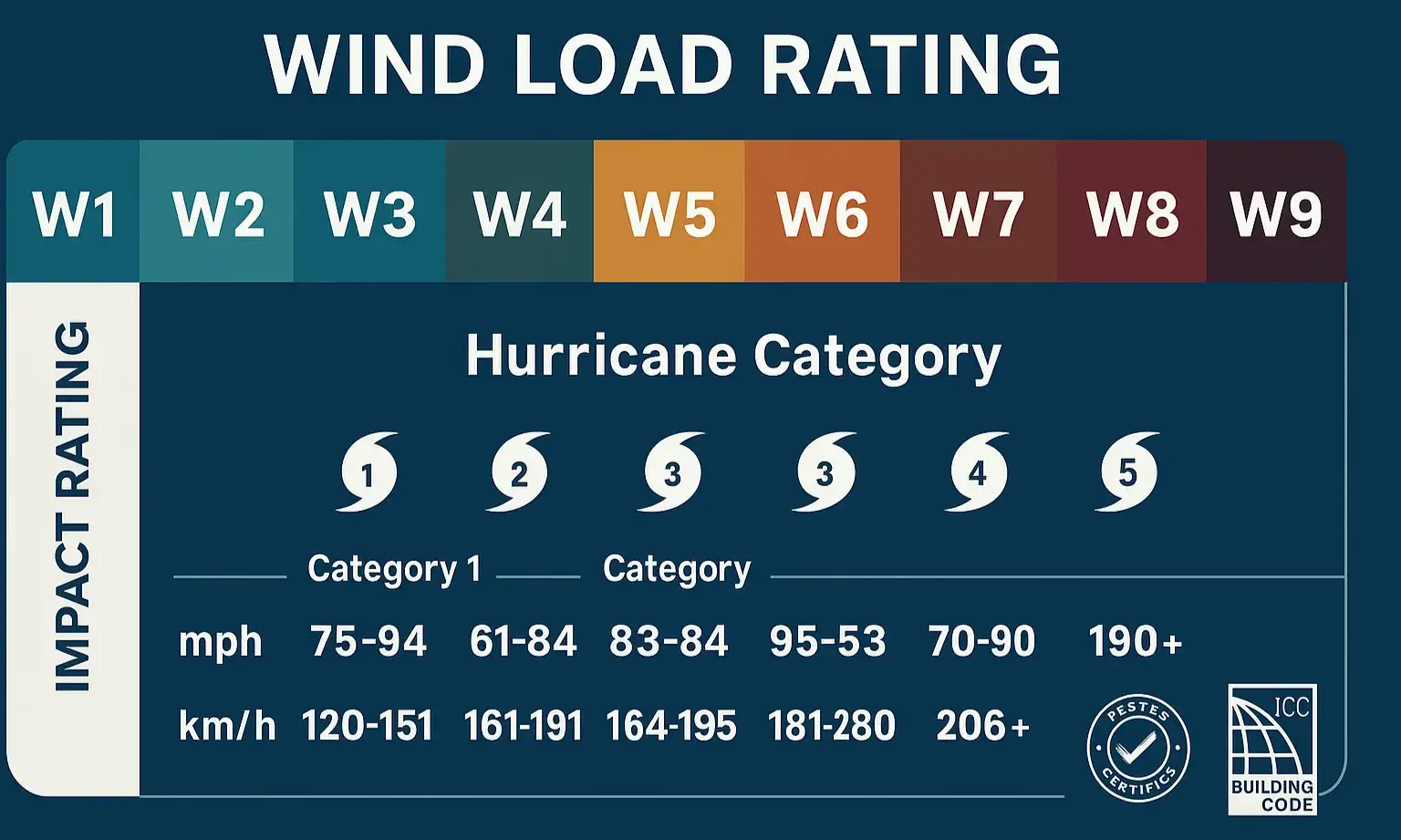
So, what actually makes a garage door “hurricane-rated”? It’s not just a sticker or a marketing term. It’s a system of reinforcement and testing designed to withstand specific forces. To truly understand it, you need to know two key concepts that are often confused: wind load and impact rating.
Wind Load vs. Impact Rating: The Two-Part Safety Test
Think of this as a door’s one-two punch of protection.
Decoding Your Local Building Codes
It’s crucial to remember that requirements aren’t one-size-fits-all. A garage door that’s up to code in coastal Connecticut might not be sufficient for Florida’s High-Velocity Hurricane Zone (HVHZ). Your local building codes are your ultimate guide. These regulations are based on your area’s specific risk factors and will dictate the minimum wind load and impact ratings your garage door must have. Always check with your local municipality or a certified installer to ensure your choice is compliant.
Building: Your Guide to Coastal-Ready Garage Door Materials
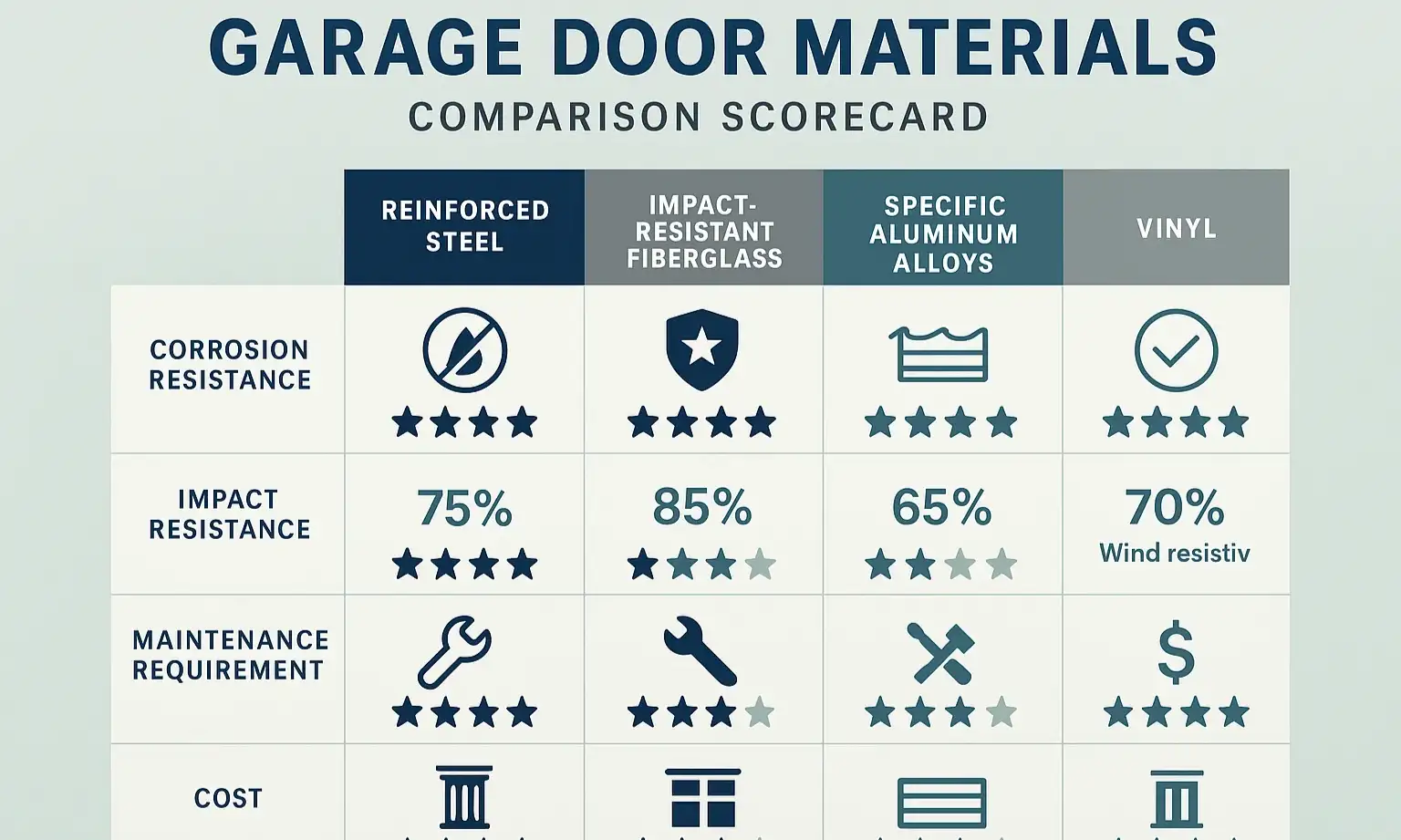
With the technicals covered, let’s talk materials. In a coastal environment, you’re fighting a two-front war: high winds and corrosive, salt-filled air. The right material makes all the difference.
Reinforced Steel: The Strength Standard
Steel is the powerhouse of garage doors. When properly reinforced with steel struts (braces) and heavy-duty hardware, it offers exceptional resistance to both wind load and impact.
Impact-Resistant Fiberglass: The Coastal Champion
Fiberglass is a fantastic choice for coastal homes because it’s completely rust-proof. These doors typically feature a steel frame for strength, which is then covered with a durable, impact-resistant fiberglass skin.
Modern Aluminum: The Lightweight Contender
Often used in contemporary designs with large glass panels, modern aluminum doors offer a sleek look with natural corrosion resistance. For hurricane zones, these doors use heavier-gauge, reinforced aluminum frames to meet wind load requirements.
Mastery: Beyond the Door—Installation, Insurance, and Upkeep
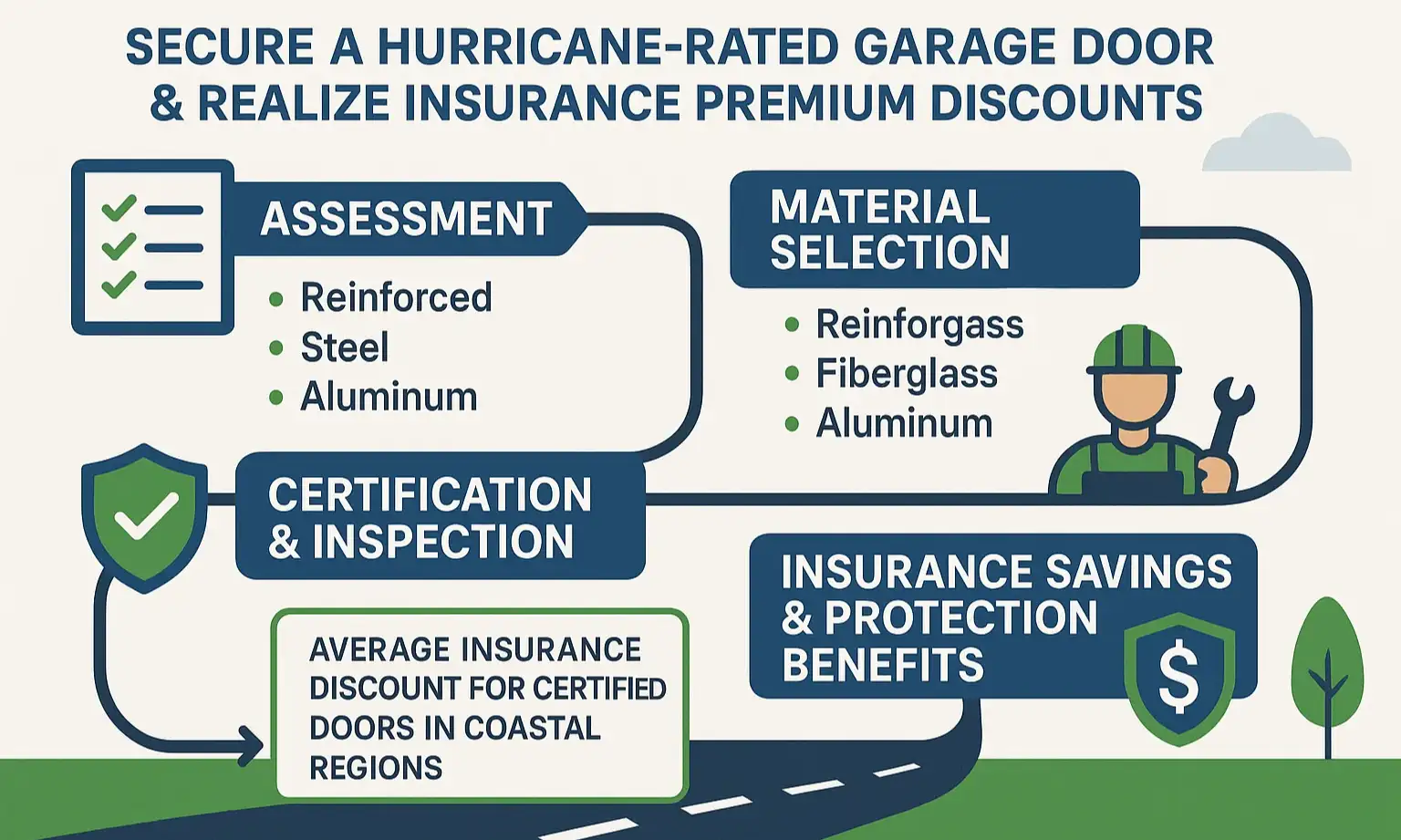
Choosing the right door is only half the battle. To truly master your home’s defense, you need to consider the bigger picture.
Can I Retrofit My Existing Door? A Cost-Benefit Reality Check
Many homeowners ask if they can simply add a reinforcement kit to their existing door. While retrofit braces can add some strength, they are often not a substitute for a purpose-built, tested, and certified hurricane-rated door. An older door, especially a wooden one, may not have the structural integrity to handle the added stress. In most cases, a full replacement is the safer and more reliable long-term investment.
Unlocking Home Insurance Discounts: The Financial Upside
Here’s a major “aha moment” that many people miss: installing a certified, wind-rated garage door can often lead to significant discounts on your homeowner’s insurance premiums. Insurance companies know that a rated door dramatically reduces the risk of catastrophic damage. Be sure to save the certification sticker from your new door and send a copy to your insurance agent—it’s proof that you’ve made a valuable upgrade.
The Critical Role of Professional Installation
A hurricane-rated door is a complete system: the panels, the tracks, the springs, and the hardware all work together. This is not a DIY project. A professional installation ensures that every component is installed to manufacturer specifications and meets local building codes. If you’re searching for garage door installation near me, make sure you choose certified technicians who have experience with wind-rated systems. Knowing what to expect during a professional garage door installation can help you ask the right questions and ensure the job is done correctly from the start.
Action: Your Practical Next Steps to a Safer Home
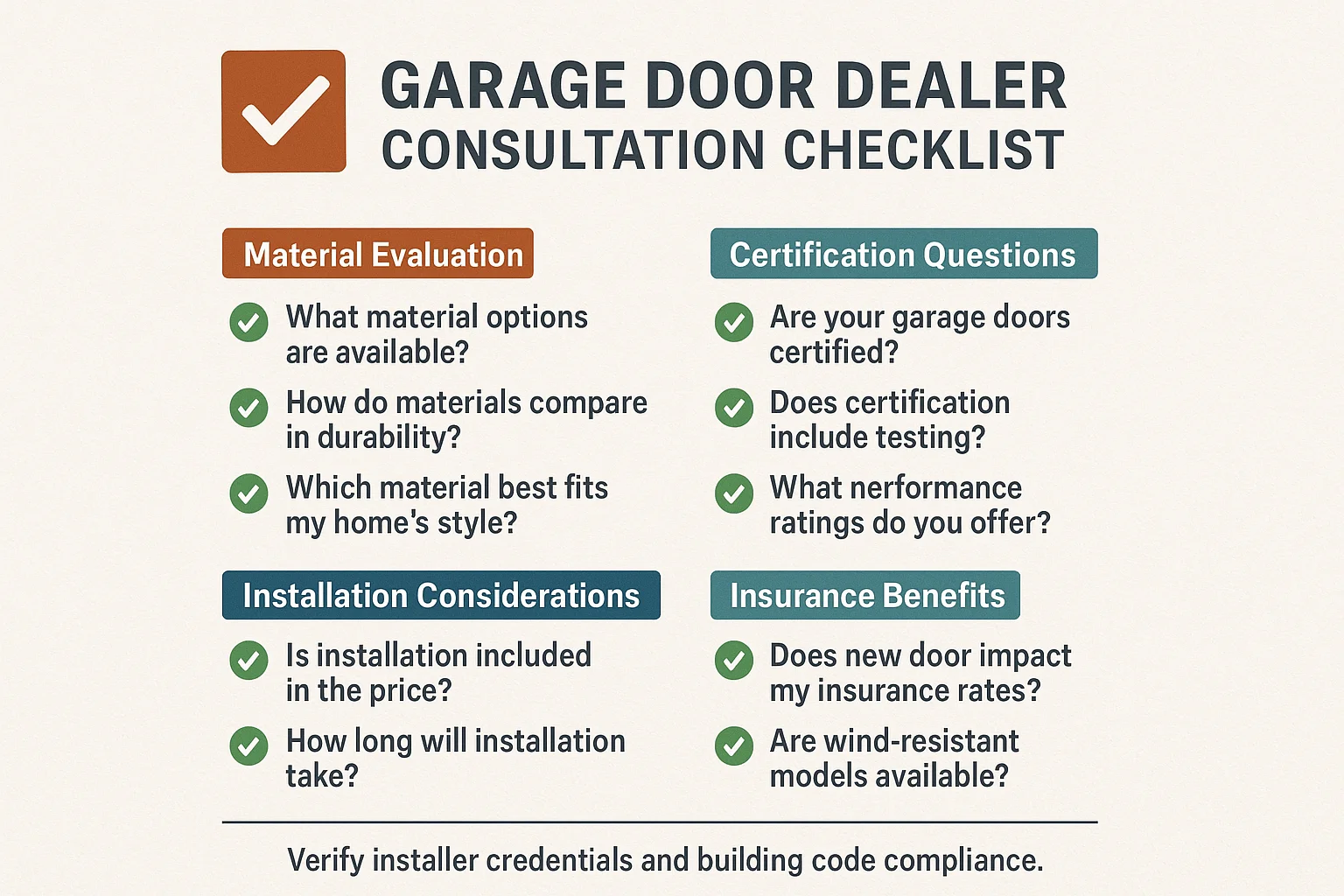
Feeling empowered? Good. Knowledge is your best tool. As you move forward, use a methodical approach to ensure you cover all your bases.
Your Pre-Purchase Checklist
Before you speak with an installer, review this checklist. It will help you organize your thoughts and ensure you ask all the right questions.
Frequently Asked Questions About Hurricane-Proof Garage Doors
Should garage doors be open or closed during a hurricane?
Absolutely, unequivocally closed. There is a dangerous myth that cracking the door open will “equalize the pressure.” This is false and will only make it easier for wind to enter your garage and compromise your home’s structure. Always keep it closed and locked.
How do I know if my current garage door is hurricane-rated?
Look for a sticker on the inside of the door, usually on one of the end panels. This sticker should provide information about the manufacturer, the design pressure (wind load) ratings, and impact resistance. If you can’t find a sticker, your door is likely not wind-rated.
What wind speed can a standard garage door withstand?
A standard, non-reinforced garage door is often only rated for winds up to about 55 mph. This is far below the wind speeds of even a Category 1 hurricane (74-95 mph), highlighting the need for a properly rated door in storm-prone areas.
Are glass panel garage doors a safe option in hurricane zones?
Yes, provided they are built to code. Hurricane-rated glass doors use heavy-duty aluminum or steel frames and impact-resistant laminated glass, which is designed to crack like a car windshield rather than shatter into dangerous shards.
Conclusion: Fortifying Your Home's First Line of Defense
Choosing a garage door in a coastal region is about much more than curb appeal—it’s a critical decision for your home’s safety and your family’s peace of mind. By understanding the essentials of wind load, impact ratings, and material performance, you can move from a casual browser to a confident, informed homeowner. This investment not only fortifies your home’s most vulnerable point but also reinforces its overall structural integrity, providing a powerful defense against the storm.
As you prepare your home for the next season, remember that a complete hurricane prep garage door strategy is your best asset.
As you prepare your home for the next season, remember that a complete hurricane prep garage door strategy is your best asset.
Frequently Asked Questions
Should garage doors be open or closed during a hurricane?
Absolutely, unequivocally closed. There is a dangerous myth that cracking the door open will “equalize the pressure.” This is false and will only make it easier for wind to enter your garage and compromise your home’s structure. Always keep it closed and locked.
How do I know if my current garage door is hurricane-rated?
Look for a sticker on the inside of the door, usually on one of the end panels. This sticker should provide information about the manufacturer, the design pressure (wind load) ratings, and impact resistance. If you can’t find a sticker, your door is likely not wind-rated.
What wind speed can a standard garage door withstand?
A standard, non-reinforced garage door is often only rated for winds up to about 55 mph. This is far below the wind speeds of even a Category 1 hurricane (74-95 mph), highlighting the need for a properly rated door in storm-prone areas.
Are glass panel garage doors a safe option in hurricane zones?
Yes, provided they are built to code. Hurricane-rated glass doors use heavy-duty aluminum or steel frames and impact-resistant laminated glass, which is designed to crack like a car windshield rather than shatter into dangerous shards.