Opener Clicks but the Door Won’t Move? Here is How to Diagnose It Fast


Published: Oct 1, 2026

That sudden, metallic click from your garage door opener—followed by complete silence or a low hum—usually happens at the worst possible moment. You are rushed, trying to get to work or pull your car inside, and the door simply refuses to budge.

When your opener clicks but the door doesn’t move, you are at a diagnostic crossroads. Is this a minor lockout switch issue you can resolve in ten seconds for free, or is it a high-tension physical failure that requires immediate professional attention? Identifying the root cause quickly prevents motor damage and keeps your household safe.

The Emergency Manual Override: Getting Your Car Out Safely


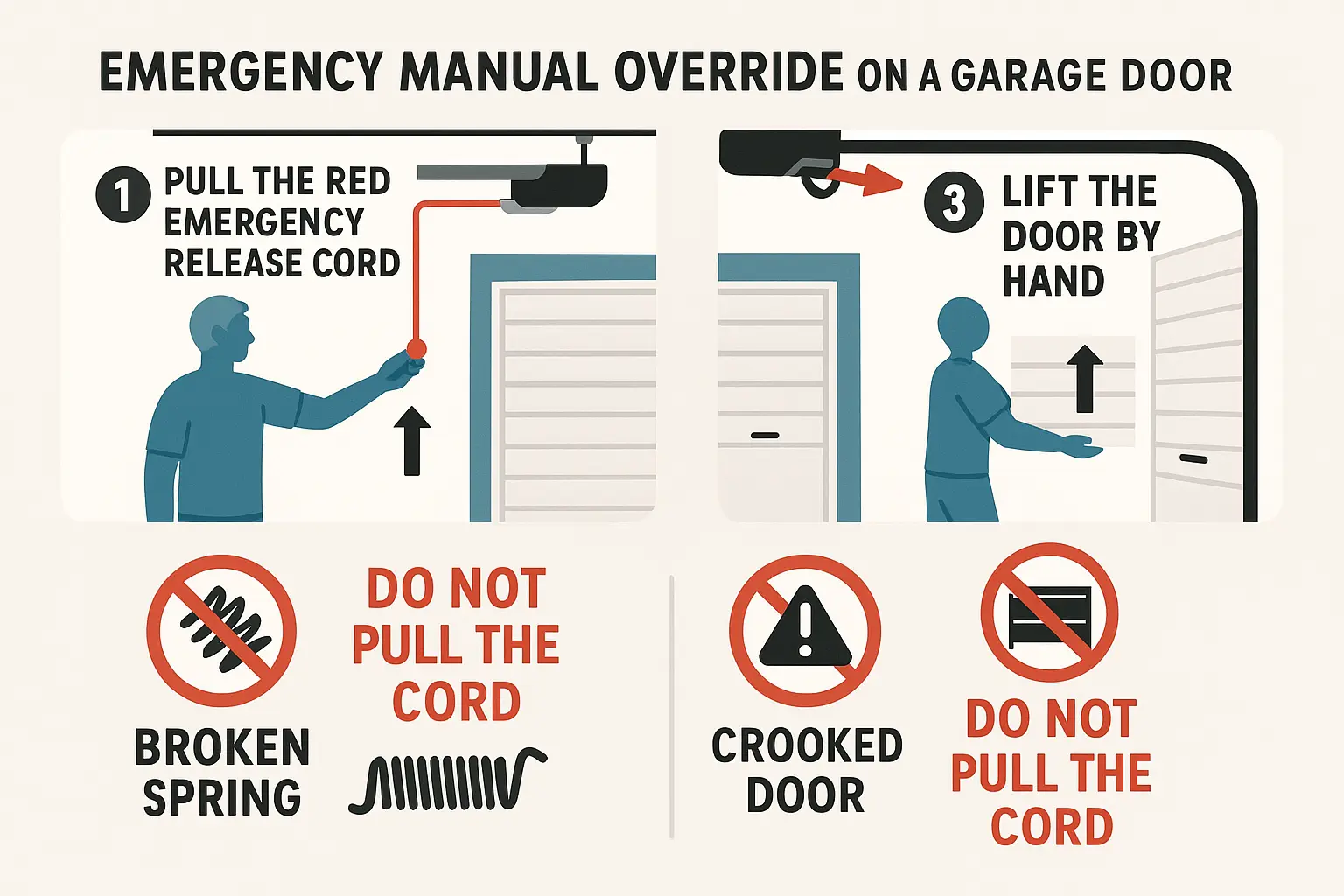
Before diving into extensive diagnostic steps, your immediate priority might be getting your vehicle out of the garage. If you are stuck inside, you can learn how to open garage door manually to safely bypass the electric opener.

Safety Warning: Never pull the emergency release cord if you suspect a broken spring, or if the door is visibly crooked on its tracks. Doing so can cause the door to crash down with extreme force, risking severe injury and property damage.

Emergency Release InfographicThis infographic provides a clear visual walkthrough for safely using the emergency manual release on a garage door, emphasizing critical safety warnings to prevent injury or damage.

The 30-Second Hand Test to Isolate the Problem


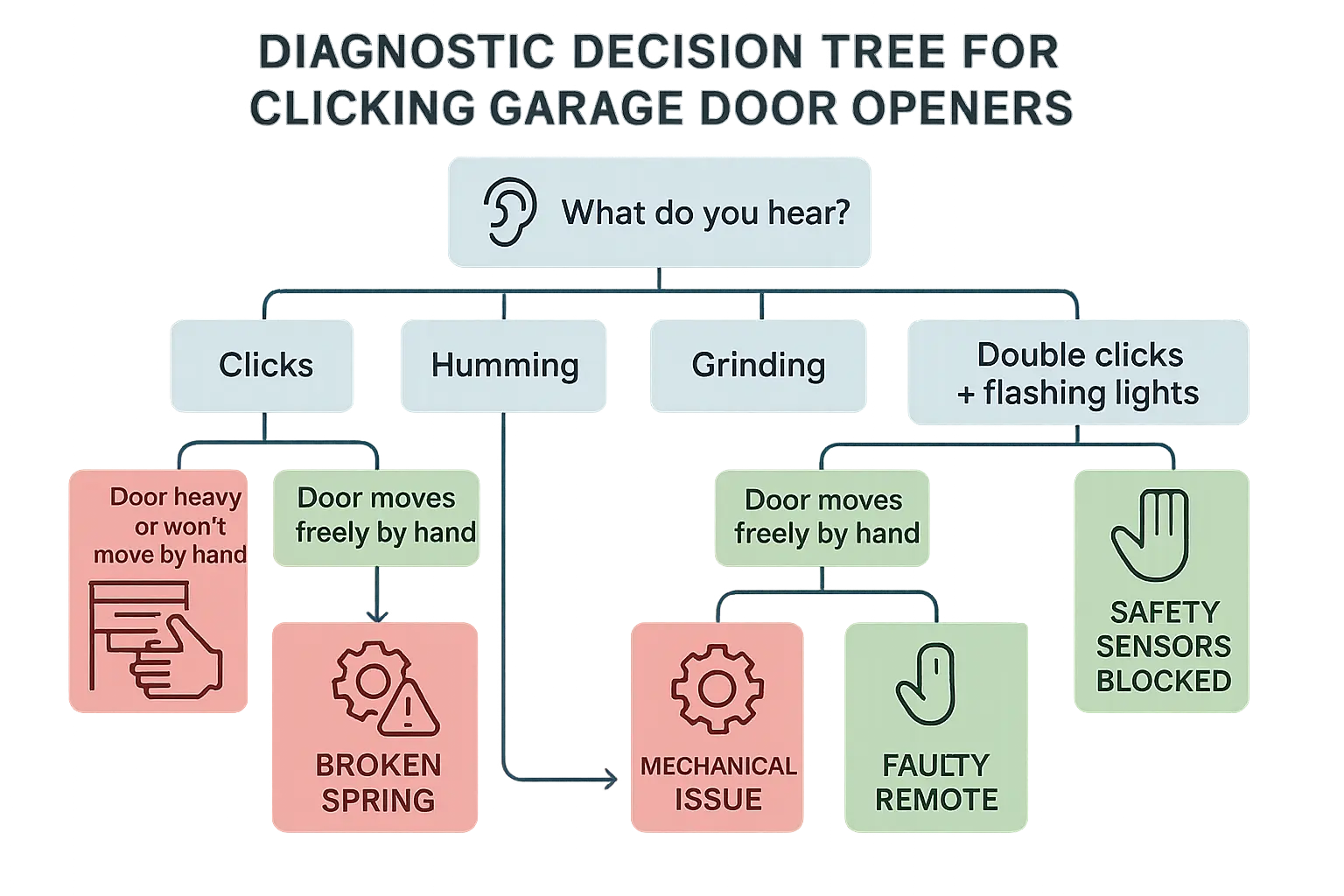
To determine if you are dealing with an electrical opener issue or a physical door failure, perform a quick “Hand Test.” Pull the red emergency release cord down and back toward the motor to disconnect the door’s carriage from the trolley. Next, attempt to lift the door manually.

  • The Door is Heavy or Jammed: Your door itself is the problem. Inspect the system for garage door broken spring symptoms, such as a visible two-inch gap in the coil above the door. If the spring is intact but the door still won’t move, you may have damaged rollers, frozen bottom seals, or a physical track block. For your safety, a broken garage door springs replacement must always be handled by an experienced professional.
  • The Door Rises Smoothly: Your door is well-balanced and moves freely. The failure lies entirely within your opener system, which could point to a dead start capacitor, a stripped drive gear, or a simple control lockout.

Diagnostic Decision TreeThis diagnostic decision tree helps users quickly identify the cause of garage door opener clicking problems by sorting symptoms by sounds and door behavior in an intuitive stepwise path.

Choose Your Sound: Sensory Troubleshooting


What you hear immediately after the click provides a massive clue about what is happening inside the motor casing.

A Click Followed by a Low Humming or Buzzing

This symptom points directly to a blown start capacitor in approximately 65% of electrical failures. The logic board relay clicks to send power, but the motor lacks the high-voltage torque boost needed to start turning. If you suspect a failing motor unit or capacitor, reaching out for an emergency garage door repair ensures the issue is resolved without burning out the entire motor.

A Single Click Followed by Total Silence

If the unit clicks once and does absolutely nothing else, you likely have a blown logic board relay, a loose wiring connection, or an active lockout feature. Check if the vacation lock on your wall console was accidentally enabled, which tells the receiver to ignore signals when you think my garage door remote stopped working.

A Click Followed by Whirring or Grinding

This is the signature sound of stripped internal gears, common in older openers. The motor is spinning successfully (the whirring sound), but the plastic nylon drive gear has shaved off. Look for white, snow-like plastic shavings inside or directly beneath the motor cover to confirm this issue.

Decoding Brand-Specific Error Patterns


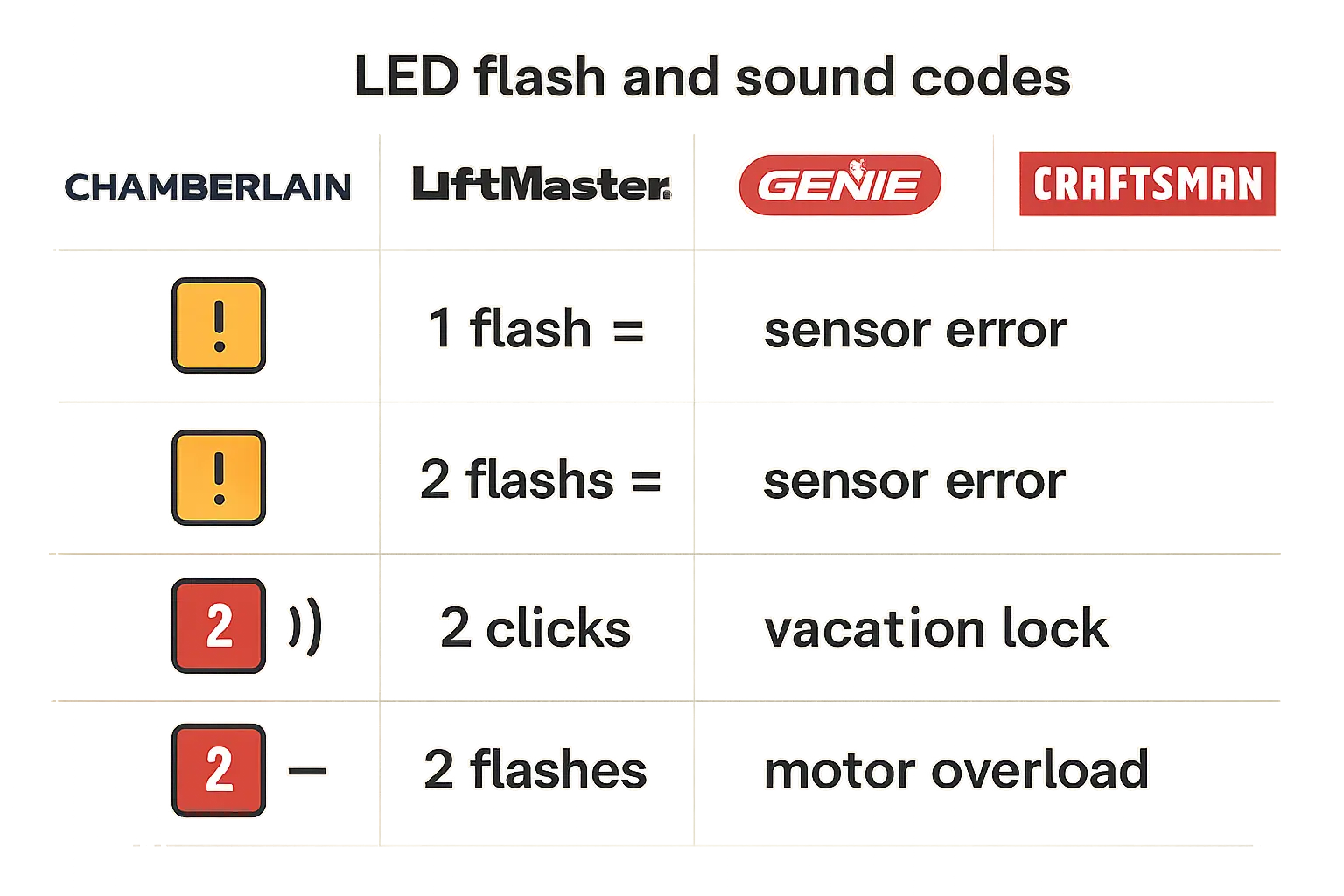
Major manufacturers like Chamberlain, LiftMaster, Genie, and Craftsman build diagnostic indicators directly into their logic boards. These flash sequences correspond with the clicking sound to tell you exactly what is wrong.

  • Chamberlain & LiftMaster (LED Diagnostic Codes):
    • 1 Flash: Safety sensor wire is open or shorted.
    • 2 Flashes: Safety sensor wire is reversed or misaligned.
    • 5 Flashes: Motor is overloaded, suggesting a heavy door or physical blockage.
  • Genie: Look for the status LED to blink red or green. If the lights on your safety sensors are not glowing steadily, your garage door safety sensors not working correctly will prevent the opener from engaging as a safety precaution.

Brand Specific Error CodesThis visual memory aid clarifies how to interpret blinking LED codes and clicking patterns across major garage door opener brands to quickly identify common problems.
Navigating Your Next Steps


A clicking garage door opener is a clear message that your system has detected an issue—either electrical or structural. Armed with the “Hand Test” and brand-specific diagnostic codes, you can confidently determine whether you are dealing with a simple console lockout or a high-tension spring failure.

If your diagnostics point to a broken spring, stripped internal gears, or a failing motor unit, safety should always remain your top priority. Let an experienced technician handle the heavy lifting to ensure your system is restored safely, keeping your home secure and your schedule on track.

Frequently Asked Questions


How do I reset my garage door opener after pulling the red cord?

To re-engage your opener, pull the emergency release cord down and back toward the garage door (away from the motor unit). This resets the spring-loaded lever on the carriage. Next, lift the door manually until you hear a loud click, indicating the carriage has re-locked into the opener chain or belt trolley. You can follow our complete guide on how to reset garage door opener after pulling red cord for visual verification.

What should I do if my garage door is off-track?

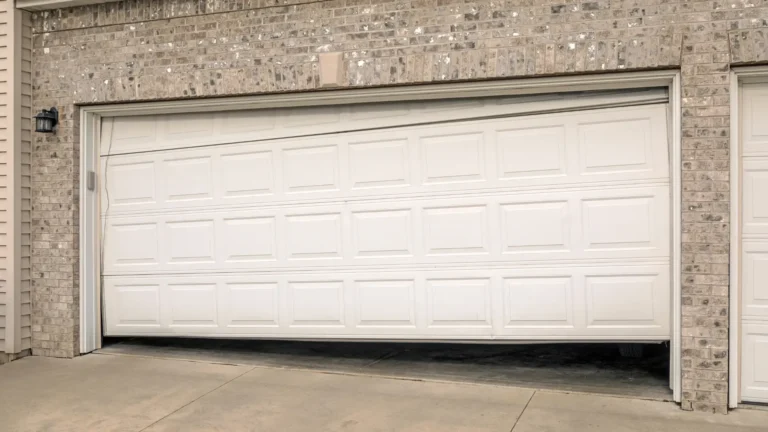
An off-track door is structurally unstable and can fall at any moment. Do not attempt to force the door down or pull the release cord. It is vital to contact a technician to get a garage door off track repair cost estimate before attempting any manual intervention, ensuring your tracks and rollers are aligned safely.

How do I adjust my opener's travel limits and switches?

If your opener clicks but halts early, you may need to adjust garage door limits using the adjustment screws on the side of your motor unit. Alternatively, check if the physical garage door limit switch along the track has slid out of position, preventing the trolley from completing its cycle.

Contact / Request a Call