When heavy wind gusts batter your home, watching your garage door hit the floor only to instantly bounce back open is stressful. This reaction is not a random glitch—it is an automated response driven by electro-mechanical safety features built into modern opener systems. Understanding why this happens allows you to make an informed decision between a quick DIY calibration, structural bracing, or a wind-rated door upgrade.
Why Your Garage Door Won’t Stay Closed in High Winds
Published: Oct 23, 2026
Understanding the Electro-Mechanical Physics of Wind Reversal
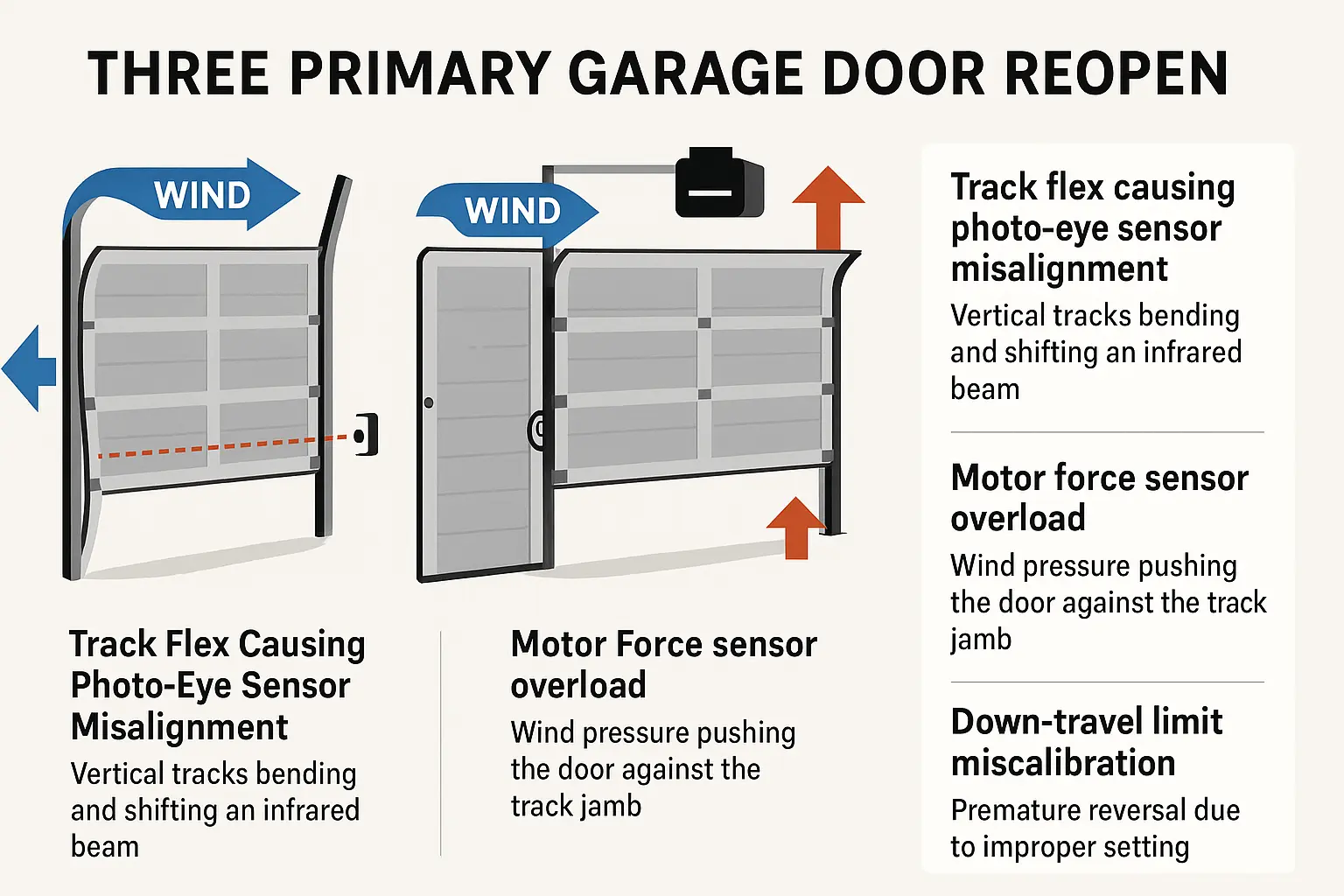
When high-velocity winds push against a large garage door, two main electro-mechanical issues usually explain why your garage door wont close:
- Track Flex & Photo-Eye Misalignment: Positive wind pressure pushes the door panels inward, bowing the vertical tracks. Because safety sensors (photo-eyes) are typically mounted directly to these tracks, even a few millimeters of deflection disrupts the infrared beam path. The opener interprets this signal loss as an obstruction and immediately triggers an auto-reversal.
- Motor Force Sensor Overload (RPM Deceleration): Wind pressure forces the door rollers hard against the inner track jambs, creating intense mechanical friction. As the motor strains to push the door down, its logic board detects a drop in RPM motor speed. Assuming the door has struck an object, the opener reverses to prevent damage.
- Down-Travel Limit Miscalibration: Strong wind uplift slightly alters the door’s downward momentum. Combined with floor seal compression, the travel module registers excess resistance before reaching its programmed stopping point.
Diagnostic Roadmap: Matching Symptoms to Root Causes
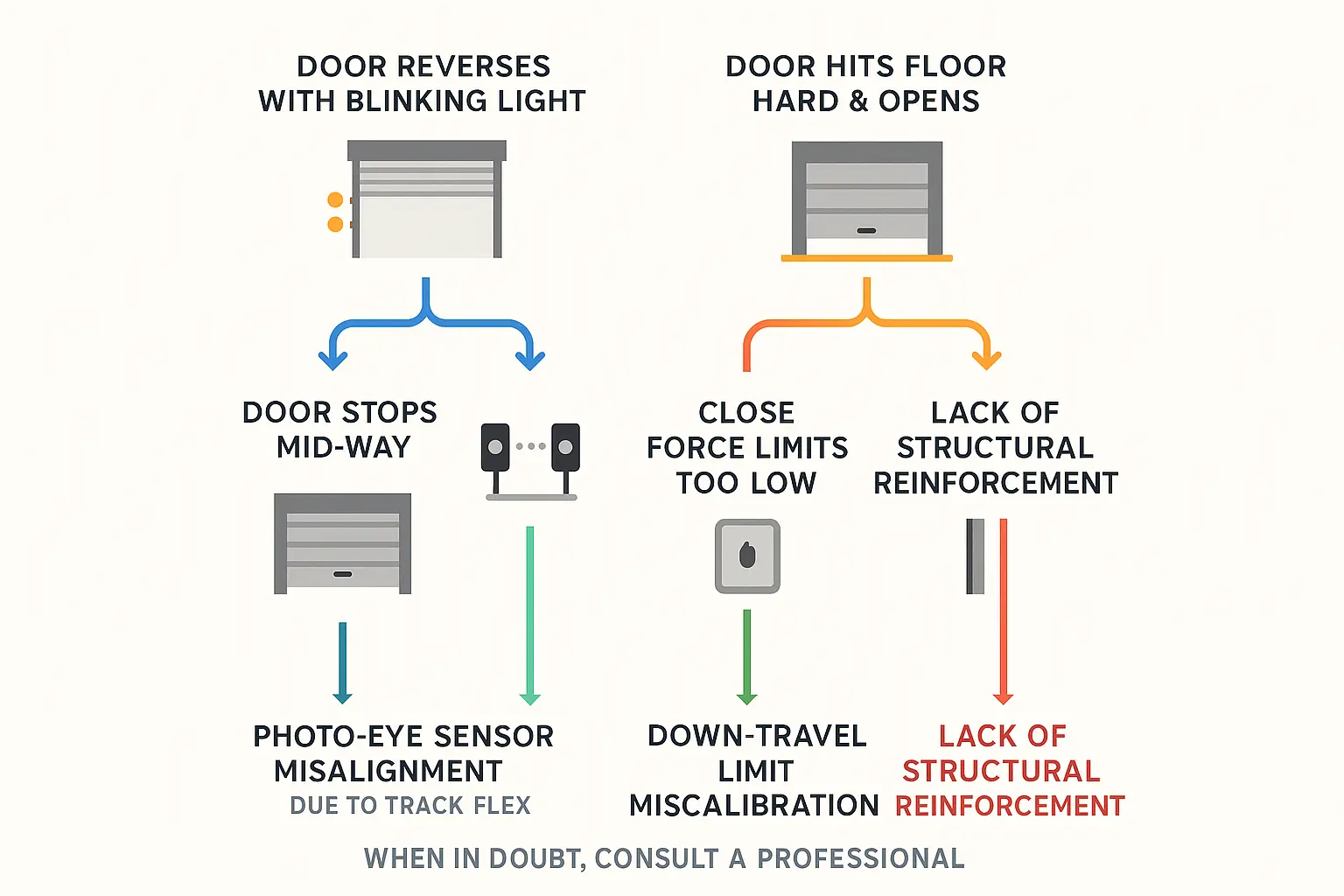
- Symptom: Door reaches 90% travel, reverses, and opener light flashes.
- Cause: Track flexing breaks the optical beam on your garage door obstruction sensor.
- Symptom: Door touches the floor hard and immediately bounces back up.
- Cause: Excessive down-travel limit setting combined with wind lift tricks the travel sensor.
- Symptom: Door stops halfway down without lights flashing and reverses.
- Cause: Wind drag exceeds the close-force threshold, triggering motor load safety limits.
- Symptom: Door shuts fully, but wind forces panels inward, creating visible gaps or popping rollers off tracks.
- Cause: Lack of structural wind-load reinforcement (door panel deflection).
Immediate Steps for Storm Preparedness and Calibration
If a storm is actively approaching, temporary adjustments can stabilize your system:
- Re-mount Photo-Eyes: Unbolt sensors from flexible track brackets and mount them directly to solid wall framing to prevent vibration misalignment.
- Fine-Tune Force Settings: Make minor adjustments when adjusting force on garage door opener dials to help overcome wind drag. Always ensure your adjustments maintain strict UL 325 compliance so auto-reverse safety features function properly.
- Adjust Travel Limits: Consult a guide on how to calibrate a garage door opener to back off the down-travel limit by 1/4 turn, ensuring the bottom seal rests firmly without over-compressing.
- Emergency Manual Lockout: In severe windstorms, learn how to disconnect garage door opener systems by pulling the emergency release cord and engaging manual side slide locks or track C-clamps.
Comparing Long-Term Wind Solutions
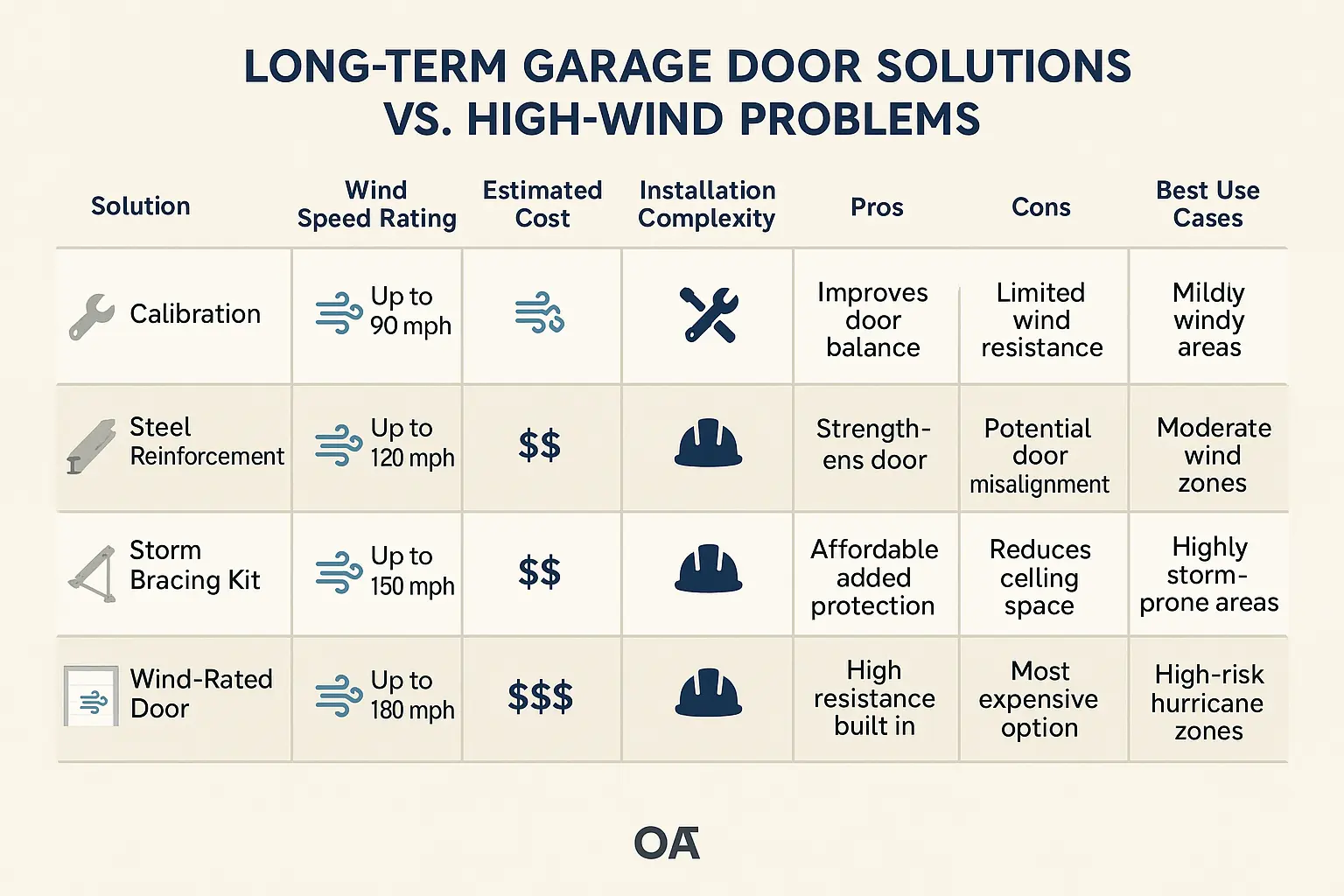
According to the Insurance Institute for Business & Home Safety (IBHS), the garage door is a primary structural vulnerability—over 80% of residential wind damage during major storms begins with garage door failure. Standard non-reinforced doors can experience critical failure at pressure thresholds as low as 12 to 15 PSF (approx. 40–50 mph gusts per DASMA Technical Data Sheet #155). If a door collapses, internal air pressure can surge by up to 300%, threatening roof integrity.
| Solution Option | Wind Speed Rating | Installation | Primary Benefit | Trade-offs |
|---|---|---|---|---|
| Opener Calibration | < 50 mph | DIY (15 mins) | Free immediate fix for nuisance reversals | Zero structural protection against blow-in |
| Horizontal Steel Struts | 90–100 mph | DIY / Professional | Reinforces individual panels against bowing | Adds weight; requires spring re-balancing |
| Vertical Storm Braces | 130–150 mph | Manual Setup | High temporary strength during severe weather | Must be installed manually before each storm |
| Impact Wind-Rated Door | 170–200+ mph | Professional | Passive 24/7 protection; ASCE 7-22 code compliant | Higher upfront investment |
If wind forces push your system beyond repair, professional services for garage door off track repair or upgrading to the best garage door material for coastal homes offer permanent protection against severe weather.
Frequently Asked Questions
Why does my garage door open back up only when it is windy outside?
Wind pressure pushes the door panels against the tracks, creating excessive friction. This extra drag triggers the motor’s force-limit sensor, which misinterprets the friction as a physical obstruction and reverses the door for safety.
Can I just increase my opener close force to fix high wind issues?
While slightly increasing close force helps overcome wind resistance, setting it too high violates UL 325 safety standards. This can prevent the door from reversing when striking a person or object, creating a serious hazard.
How do I manually secure my garage door before a major windstorm?
Close the door completely, pull the red emergency release cord to disconnect the opener trolley, and engage the interior side slide locks into the track vertical slot. For maximum security, attach heavy-duty C-clamps directly onto the tracks above the rollers.