main logo

The Ultimate Guide to Fixing Garage Door Bottom Seal Problems: Gaps, Tears, and Freezing


Published: Jun 30, 2026

Tired of seeing that sliver of daylight under your garage door? Worried about winter drafts sneaking in, rain puddling on the floor, or worse, finding your door frozen solid to the driveway? That little strip of rubber or vinyl at the bottom of your garage door—the bottom seal—is your home’s unsung hero, and when it fails, the problems start to stack up.

You’re not just imagining it. A faulty seal can lead to higher energy bills, unwanted pests, and water damage. But here’s the good news: fixing it is one of the most satisfying and impactful DIY projects you can tackle.

This guide is different. We’re not just going to show you how to replace a seal. We’re going to help you become a detective, accurately diagnosing the real problem so you can apply the right fix, the first time.

Foundation: Diagnose Your Problem in 2 Minutes


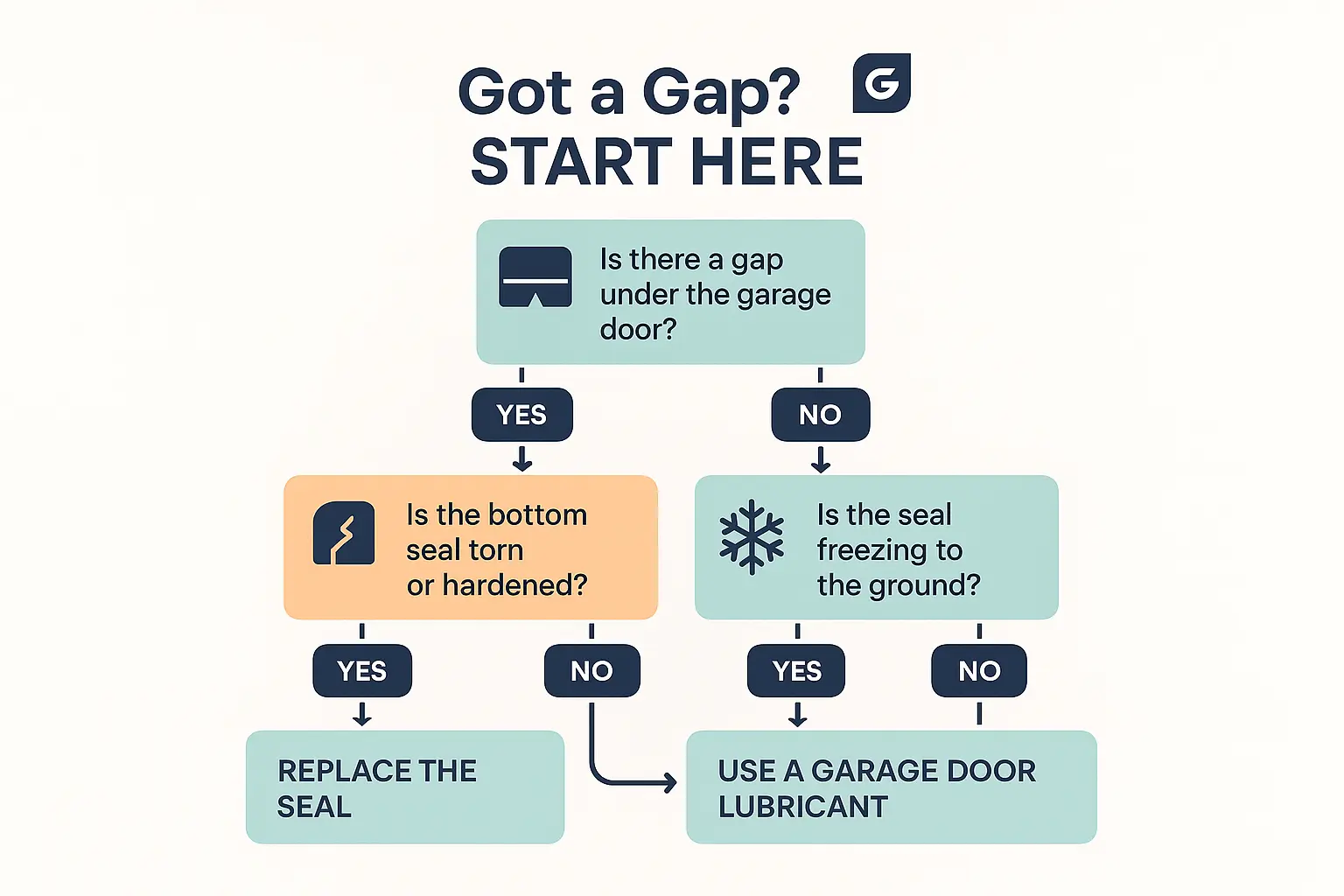
Before you buy anything or take anything apart, let's figure out what's actually wrong. A gap under the door isn't always caused by a bad seal. Use this flowchart to pinpoint your issue and jump directly to the solution you need.
Diagnostic Flowchart: Quickly identify your garage door seal problem and get pointed directly to the right solution, reducing time and uncertainty.
Performing a quick two-minute inspection saves you both time and money by isolating the exact point of failure. Start by closing the garage door completely and checking for shifting light or visible openings along the driveway. If a gap appears only on one side, your issue likely stems from an uneven concrete floor or misaligned tracks rather than a degraded rubber strip, meaning you may need the right concrete crack repair tools and materials to level the surface.
Next, physically examine the weather stripping material for visible tears, brittleness, or structural flattening caused by years of constant compression. Evaluating these common garage door bottom seals issues helps you determine if the material simply needs a full replacement. In freezing winter environments, look for ice accumulation bonding the bottom rubber directly to the ground, which strains your garage door opener system during operation. Finally, test the close-limit travel settings on your automatic opener to ensure the mechanism is actually letting the door press firmly against the floor. Pinpointing these specific garage door bottom

Diagnostic Flowchart: Quickly identify your garage door seal problem and get pointed directly to the right solution, reducing time and uncertainty.

Building: Identify Your Seal & Retainer (The Crucial Step)


Here’s an "aha moment" that most guides miss: the seal itself is less important than the track it sits in when ensuring your entire garage door operates smoothly and safely. Homeowners often buy a new seal, only to find it’s completely incompatible with their door. The secret is to identify your retainer track first.

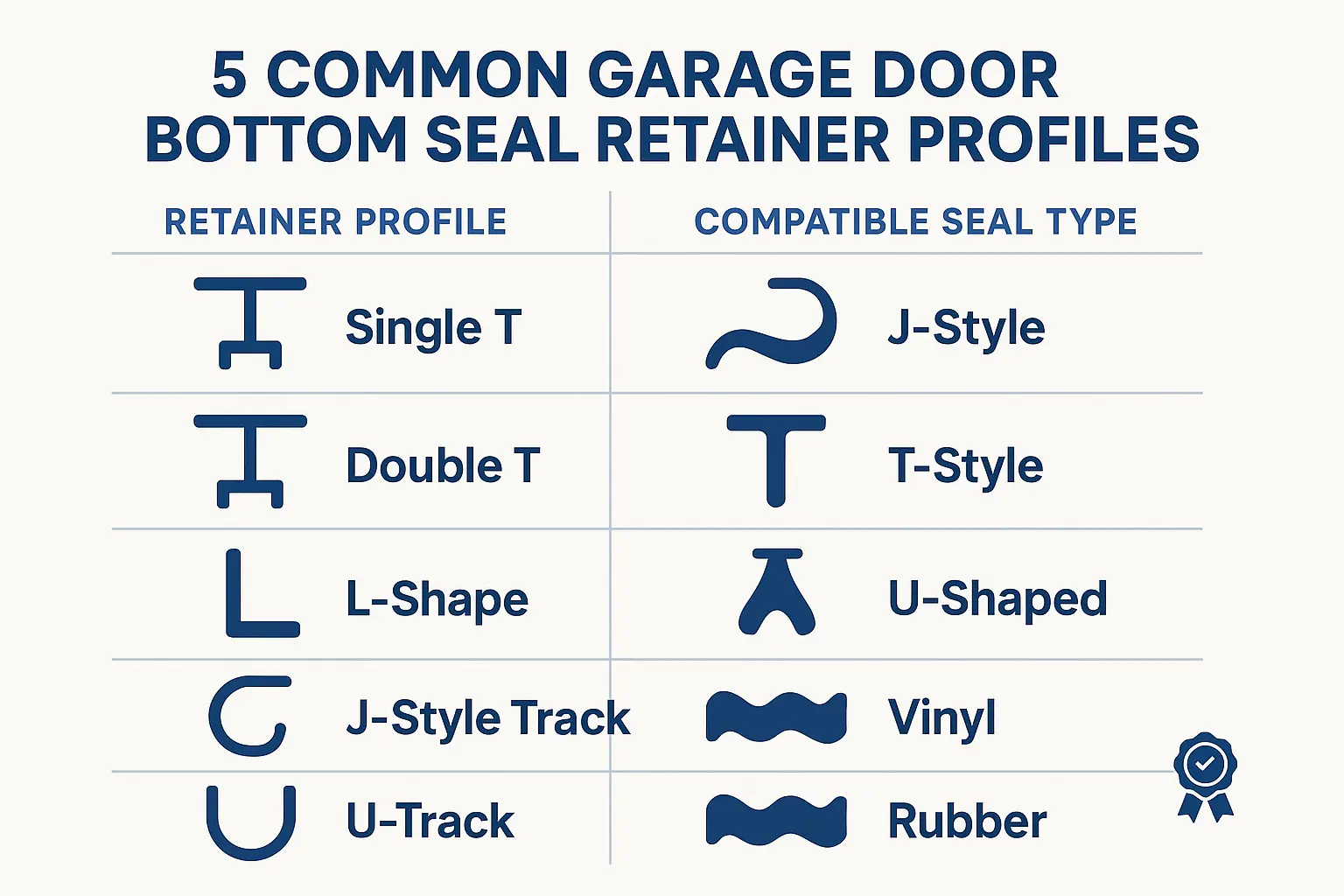
The retainer is the metal channel fixed to the bottom of your garage door that holds the seal in place. Almost all retainers fall into one of a few common profiles. Once you know your retainer type, choosing the right seal is easy.
Visual Retainer-to-Seal Matching Chart: Identify your garage door’s retainer profile to confidently select the right bottom seal, saving time and reducing costly mistakes.

The "Retainer First" Approach

Slide out a small section of your current seal to get a clear look at the end profile of the track it was in. Match that shape to the chart below.

Now that you've identified your retainer, you know exactly what type of seal to look for (e.g., a "T-Style" seal for a single-channel retainer). This simple step saves you from buying the wrong part and making a frustrating second trip to the hardware store.

Visual Retainer-to-Seal Matching Chart: Identify your garage door’s retainer profile to confidently select the right bottom seal, saving time and reducing costly mistakes.

Mastery: Step-by-Step Solutions


With your diagnosis and retainer type in hand, you're ready to tackle the problem.
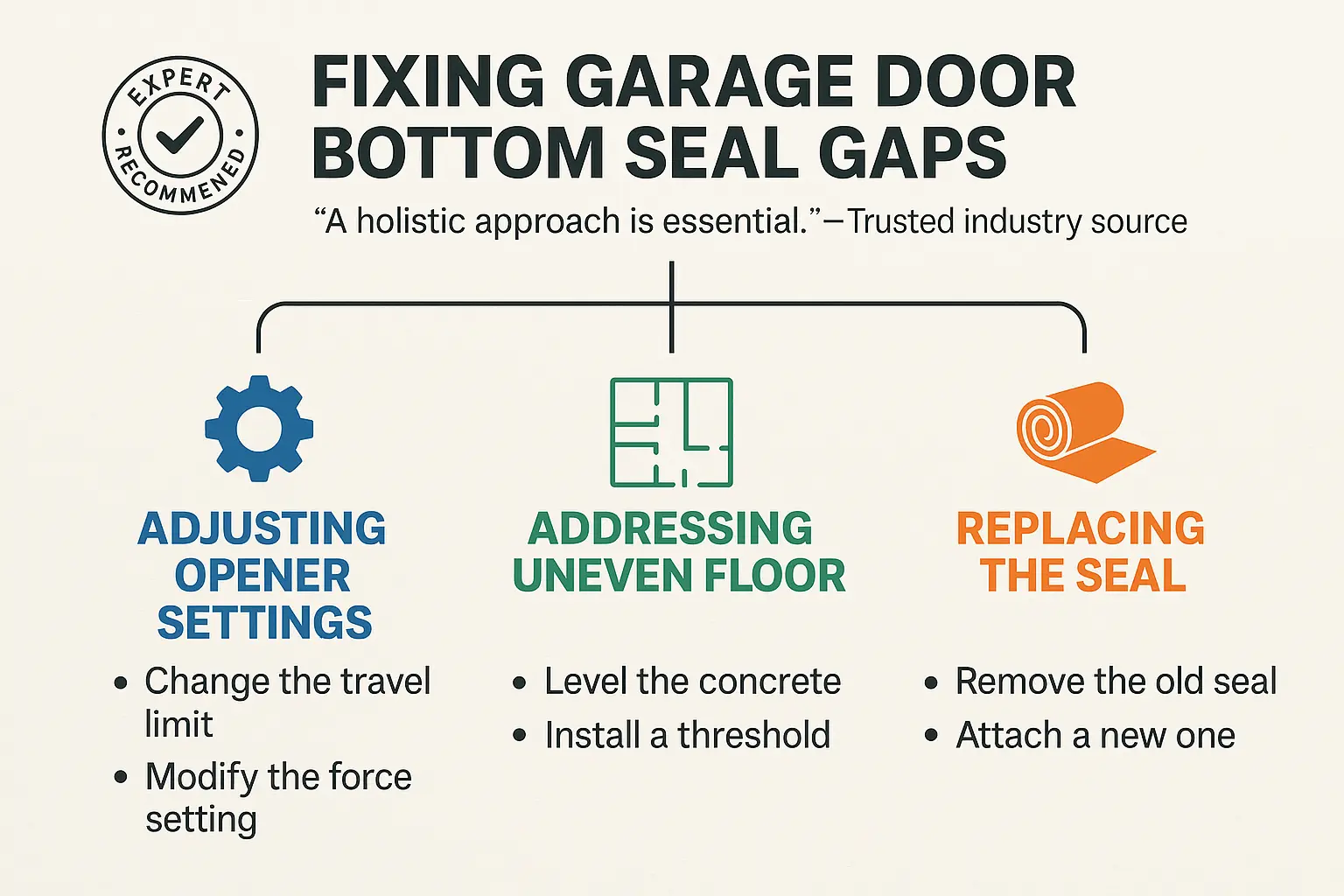
Full-System Gap Fixing Process: Understand and tackle every root cause of your garage door seal gap for lasting performance and peace of mind.

Fixing Gaps: More Than Just a Seal Problem

A gap under your door lets in everything you want to keep out — drafts, water, dust, and pests — and quietly undermines your garage's energy efficiency. But before you blame the seal, remember it's part of a larger system. Let's investigate the three main culprits.

1. The Seal is Worn, Brittle, or Flattened: Over time, seals lose their flexibility. If yours is cracked, hardened, or compressed flat, it's no longer doing its job. This is the most straightforward fix: replace it with a new one that matches your retainer type.

2. The Garage Floor is Uneven: This is incredibly common. If your concrete has settled, cracked, or heaved, you may see a gap on one side of the door while the other side seals tightly. An uneven gap like this can also point to a door that's begun to sag or fall out of alignment.

3. The Opener's "Close Limit" is Set Too High: Your garage door opener is programmed to stop at a specific point — a travel limit that's dialed in when the opener is installed. If this "close limit" setting is off, the door may stop just short of pressing firmly against the floor, leaving a gap even with a perfectly good seal.

Replacing Torn or Brittle Seals

If your seal is physically damaged, replacement is your best bet.

1. Remove the Old Seal: With the garage door partially open (so you can comfortably reach the bottom), use pliers to pinch one end of the old seal and slide it out of the retainer track.

- Warning: If the seal is old and brittle, it may be stuck. Spraying a silicone lubricant into the retainer channels helps it slide out far more easily and keeps it from tearing.

2. Clean the Retainer: Once the old seal is out, use a cloth with a degreaser or all-purpose cleaner to thoroughly clean the inside of the retainer tracks. Any leftover dirt or grit will make installing the new seal difficult.

3. Install the New Seal: This is often a two-person job. One person feeds the new seal into the channels while the other pulls it along from the opposite side. Again, a light spray of silicone lubricant makes the process dramatically easier.

4. Trim and Secure: Once the seal is fully inserted, trim any excess with a utility knife. Some people like to crimp the ends of the retainer track slightly with pliers, or insert a screw, to keep the new seal from sliding side to side. This simple replacement is a core part of effective garage door weather stripping.

Solving a Freezing Seal

Waking up to a garage door that's frozen shut is a major headache. The motor strains, the door may open unevenly, and you can easily tear the bottom seal trying to force it.

The Quick Fix (How to Unfreeze It Safely):

- Never use brute force. Don't keep hitting the opener button — this can damage the opener motor or even throw the door off its tracks.

- Use gentle heat. A heat gun on a low setting or a hairdryer can slowly warm the area where the seal is frozen to the ground.

- Carefully chip away ice. If there's significant buildup, use a plastic ice scraper (never metal) to gently break it away. Once the seal is free, wipe it and the floor dry.

The Long-Term Prevention (The Silicone Spray Trick):

- This is the best-kept secret for preventing freeze-ups. Once your seal and the concrete beneath it are clean and completely dry, apply a generous coat of silicone spray lubricant directly onto the rubber or vinyl seal.

- Silicone creates a water-repellent barrier that keeps moisture from sitting between the seal and the ground, which is what lets ice form. Reapply it a few times throughout the winter, especially before a forecast of freezing rain. This is a key tip for handling common winter garage door problems like freezing tracks, brittle springs, and stuck bottom seals.

Full-System Gap Fixing Process: Understand and tackle every root cause of your garage door seal gap for lasting performance and peace of mind.

Frequently Asked Questions (FAQ)


What's the difference between rubber and vinyl seals?

Think of it like car tires. Vinyl seals are like a standard all-season tire—they work well in moderate climates but can become stiff and brittle in extreme cold. EPDM rubber seals are like winter tires—they remain flexible even in freezing temperatures, making them a superior choice for colder regions like New England.

How much should a replacement seal cost?

The seal material itself is quite affordable, typically ranging from $1.50 to $3.00 per foot. For a standard 16-foot two-car garage, you can expect to pay between $25 and $50 for the part.

How much energy can I really save?

It’s more than you think! Gaps under your garage door can create a significant draft, especially if your garage is attached to your home. Sealing that gap helps stabilize the temperature in your garage, reducing the workload on your home's HVAC system. Effectively managing this can prevent significant energy loss due to poor door seals over the long run.

Is it really that important for keeping pests out?

Absolutely. A half-inch gap is a welcome mat for mice, insects, and other critters looking for shelter. A properly fitted seal is your first and best line of defense. Understanding how can a garage door bottom seal help with energy efficiency also means understanding its role in creating a fully sealed, protected environment.

By taking the time to properly diagnose the issue and choose the right solution, you're not just fixing a simple problem—you're investing in your home's efficiency, security, and longevity.

You may also like