main logo

Don't Just Fix It, Diagnose It: A Homeowner's Guide to Sagging Doors


Published: Jun 24, 2026

We’ve all been there. That one door in your house that just refuses to cooperate. It drags on the floor with a groan, sticks stubbornly in its frame, or leaves an awkward, uneven gap when it’s closed. The common impulse? Grab a screwdriver, tighten a few things, and hope for the best.

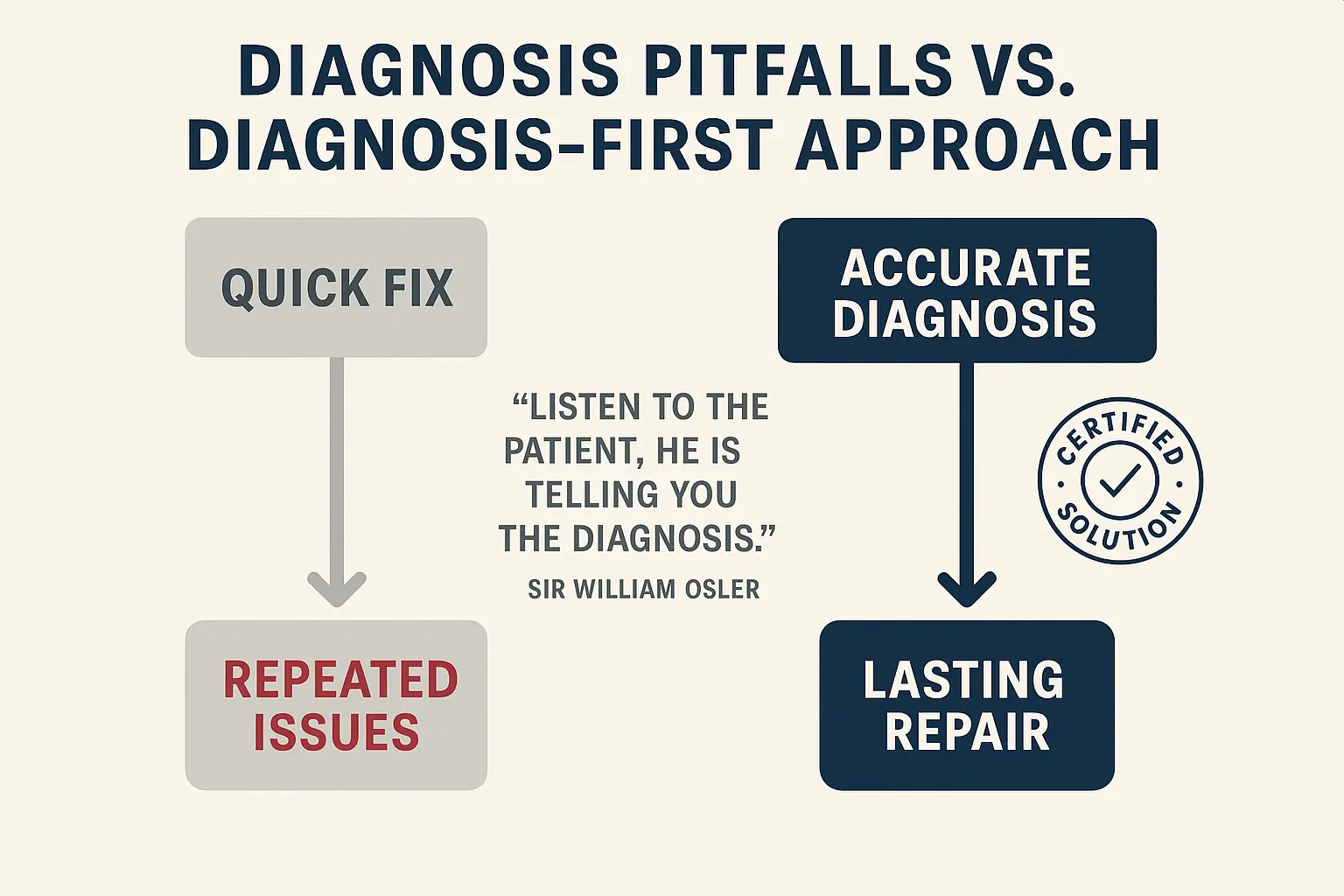
The truth is, a sagging door is a symptom, not the actual problem. It's your home's way of telling you that something is out of balance. Jumping straight to a "fix" without understanding the why is like taking a painkiller for a broken arm—it might dull the ache for a bit, but it won't heal the underlying issue. This guide is about becoming a detective, learning to read the clues your door is giving you, and finding the true root cause.

The Anatomy of a Perfectly Hung Door


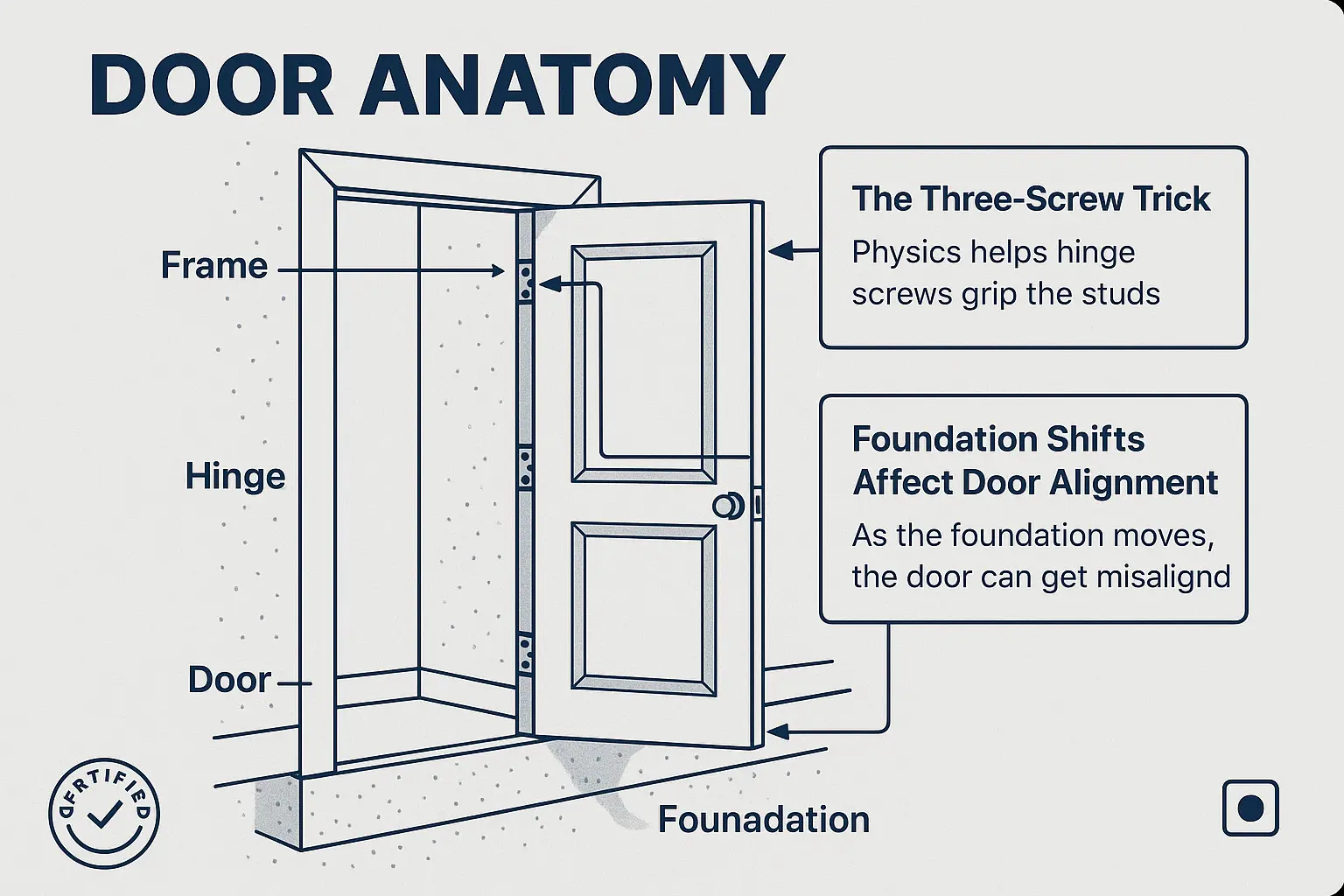
Before we can figure out what's wrong, we need to appreciate what "right" looks like. Think of a perfectly hung door as a balanced system. It's a heavy slab of wood or composite material held up against the constant pull of gravity by just a few small metal hinges.

Here are the key players:

  • Door Slab: The door itself.
  • Hinges: Usually three of them, doing all the heavy lifting.
  • Jamb: The part of the frame that the hinges are screwed into.
  • Stud: The sturdy wooden beam inside the wall that the jamb is attached to. This is the true anchor.
  • Header: The top part of the door frame.
  • Threshold: The bottom part of the frame you step over.
In a perfect world, there's an even gap—about the thickness of a nickel—all the way around the door slab. It swings open and closed effortlessly, latching securely without any friction. This delicate balance is what we're trying to restore.

Your Step-by-Step Diagnostic Process


Grab a cup of coffee and let's walk through this together. We're going to systematically investigate the scene of the crime, moving from the most obvious clues to the more subtle ones.
Compare common sagging door symptoms side-by-side to quickly pinpoint likely causes before repair begins.

Step 1: Read the Gaps—A Visual Inspection

The easiest and most revealing first step is to simply close the door and look at it. The gaps between the door and the frame are telling a story.

Where is the gap widest?

Where is the door rubbing against the frame?

Is the top of the door parallel with the header?

Most sagging doors follow a predictable pattern: the top corner on the handle side will droop, causing it to rub against the frame, while a corresponding wedge-shaped gap appears near the top hinge.

This initial look gives you a powerful clue. If the door rubs at the top, the problem is almost always related to the top hinge. If it drags on the floor, the bottom hinge might be the issue.

Step 2: The Hinge Check—The Usual Suspect

About 80% of the time, the root cause of a sagging door lies with the hinges—specifically the top one. It bears the most weight and stress.

1. Check for Loose Screws: Open the door and examine the hinges. Are any of the screws loose? Try to tighten them with a screwdriver. If a screw just spins without tightening, the wood underneath is stripped. This is a classic sign of fatigue.

2. Check for Hinge Play: With the door slightly ajar, gently lift up on the handle. Do you feel any "slop" or movement at the hinges? This can indicate that the hinge pins are worn out.

3. The Pro-Tip "Three-Screw Trick": Many guides will tell you to simply tighten the screws. But if the wood is stripped, that won't help. The "aha moment" is understanding why the fix works. The short screws that come with most hinges only grip the thin wood of the door jamb. The real strength is in the thick stud behind the jamb. By replacing one of the screws in the top hinge (the one closest to the center of the door) with a 3-inch screw, you can bite directly into that solid stud, pulling the entire door back into alignment. It’s a simple, brilliant fix for the most common issue.

Hinges are fundamental to any door's operation. While the scale is different, the principles of proper garage door hinge repair often involve similar diagnostic steps to identify wear and tear before a major failure occurs.

Step 3: The Frame & Jamb Assessment

If the hinges are solid but the door still sags, it's time to question the frame itself. Grab a 4-foot level and check if the frame is square.
Check the Hinge Jamb: Place the level vertically against the side of the frame where the hinges are. Is it perfectly plumb (straight up and down)?
Check the Header: Place the level horizontally against the top of the frame. Is it perfectly level?

Check the Latch Jamb: Do the same for the other side.

If any of these are off, it means the door frame itself is out of square. This can happen over time as a house settles, or it could be the result of a poor initial installation.

Step 4: Beyond the Door—Spotting Deeper Issues

Occasionally, a sagging door is a canary in a coal mine, signaling a much larger issue like a shifting foundation. Before you panic, look for other corroborating evidence. A single sagging door is probably not a foundation problem, but if you see these other signs, it's worth a closer look:

  • Cracks in the drywall, especially coming off the corners of the door frame.
  • Other doors or windows in the house that also stick or don't close properly.
  • Noticeable slopes or unevenness in the floor near the door.
  • Cracks in any visible foundation concrete or brickwork.
Compare common sagging door symptoms side-by-side to quickly pinpoint likely causes before repair begins.
If you spot several of these issues, your sagging door is just a symptom of a much larger problem that requires a professional foundation specialist.

Mastery: Understanding the Root Causes


Let's connect the dots. By now, you should have a good idea of what's going on. Here's a quick cheat sheet to translate your symptoms into a diagnosis.
Visualize the anatomy and root causes of door sagging to build trust in the diagnostic approach and deepen understanding.

  • If your door rubs the frame at the top corner (latch side): Your top hinge is loose, its screws are stripped, or the hinge itself is bent/worn.
  • If your door rubs along the entire top of the frame: The house has likely settled, causing the entire frame to be unlevel.
  • If the gap along the hinge side is uneven: The door may have been improperly mortised (the cutouts for the hinges are too deep or shallow).
  • If the whole frame is out of plumb/level: You're looking at a framing or house-settling issue.
Visualize the anatomy and root causes of door sagging to build trust in the diagnostic approach and deepen understanding.

Action: Your Diagnostic Results & Next Steps


You've completed your diagnosis. Now you can confidently move forward with the right solution instead of guessing.
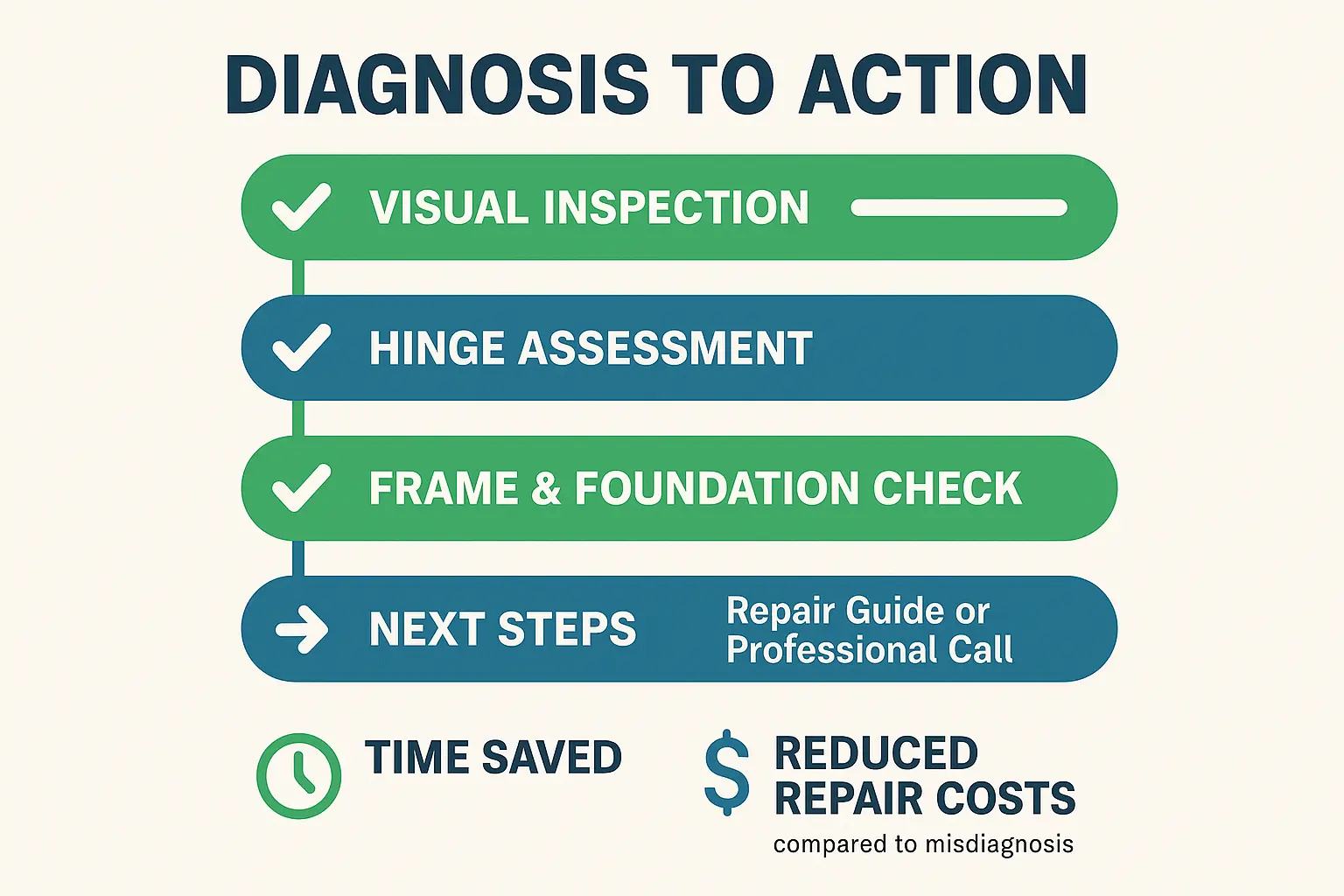
Follow this clear diagnostic-to-action roadmap to confidently determine your sagging door issue and choose the right fix or professional help.

  • For Loose Hinges or Stripped Screws: This is a confident DIY fix. Try the 3-inch screw trick first. If that doesn't work, you can use wood filler or dowels to repair the screw holes before re-drilling. Once your door is properly aligned, you might consider other ways to reinforce side entry doors for added security and stability.
  • For a Bent Hinge or Out-of-Square Frame: This can be a more advanced DIY project, but it may be worth calling a handyman if you're not comfortable. It can involve shimming the hinges or even resetting a portion of the door frame.
  • For Suspected Foundation Issues: Do not attempt to fix this yourself. Your next step is to call a structural engineer or a foundation repair company for a professional assessment.
This diagnostic principle applies to all doors in your home. Just as your interior doors need attention, so do your larger entryways. Performing a regular inspection using a garage door inspection checklist can prevent similar alignment issues on a much larger and more complex scale.
Follow this clear diagnostic-to-action roadmap to confidently determine your sagging door issue and choose the right fix or professional help.

Frequently Asked Questions (FAQ)


What is a sagging door, really?

A sagging door is one that is no longer hanging square within its frame due to issues with its support structure—usually the hinges, the frame itself, or even the home's foundation. It manifests as rubbing, sticking, or uneven gaps.

How can I tell if my door is sagging or if it's just swollen from humidity?

A door swollen by humidity will typically feel tight all around, not just in one specific corner. It will be difficult to close, but the gaps will look relatively even. A sagging door will have a distinct, uneven, wedge-shaped gap and will rub in a very specific spot.

Can I fix a sagging door myself?

In many cases, yes! If the problem is simply loose hinges or stripped screw holes, it's one of the most common and satisfying DIY home repairs. However, if the issue is a warped frame or potential foundation shifts, it's best to call a professional.

Will tightening the hinge screws always fix a sagging door?

No. This is the most common mistake. If the screw just spins in its hole, the wood is stripped, and tightening it does nothing. You need to use a longer screw to reach the stud or repair the hole first.

How can high humidity affect my doors?

Wooden doors are porous and can absorb moisture from the air. In humid months, they can swell, causing them to stick in their frames. While this isn't technically "sagging," it can cause similar symptoms. If your door only sticks in the summer, humidity is the likely culprit.

You may also like


blog photo

Garage Door Chain Troubleshooting: When to Call a Pro

That sound. The one you hear right before you leave for work—a sudden grinding noise, a jerky shudder, or an alarming pop from your garage. Your garage door opener is trying to tell you something, but its language is all about chains, gears, and tension. And when the chain is the culprit, it can be tough to know if you're facing a five-minute fix or a serious mechanical failure.You’re not alone in this. Many homeowners hear that sagging chain or that grinding motor and immediately jump to YouTube, only to find a dozen different videos that don't quite match their problem. The real challenge isn't just fixing the issue; it's correctly diagnosing it in the first place.This guide is your translator. We'll walk you through the essential anatomy of your opener, help you handle the simple DIY adjustments with confidence, and—most importantly—show you the undeniable red flags that mean it's time to put down the tools and call a professional.

blog photo

How to Troubleshoot and Fix a Slipping Garage Door Cable

You hit the button, and something just isn’t right. One side of your garage door lifts faster than the other, creating a jarring, crooked angle. Or maybe you heard a loud bang, and now a cable is hanging loose, looking like a tangled fishing line. It’s a common problem, but it’s also a clear signal that a critical part of your garage door system is failing—and it’s more dangerous than most people realize.That crooked door is a symptom, not the core issue. The real problem lies in the complex, high-tension system of cables, drums, and springs that does the heavy lifting. When a cable winds unevenly on its drum, it throws the entire system out of balance. This guide will help you safely diagnose what’s happening, understand why it’s happening, and learn the crucial difference between a simple check-up and a high-risk repair that’s best left to the pros.

blog photo

That High-Pitched Squeak: A Homeowner's Guide to Silencing Garage Door Pulleys

That sound. It’s the high-pitched squeal that cuts through the morning quiet, announcing your departure to the entire neighborhood. Or it’s the grating screech that welcomes you home, making you wince every time. A noisy garage door isn't just an annoyance; it's a communication. Your door is trying to tell you something is wrong, and one of the most common culprits is a tiny, overlooked part: the pulley.Many homeowners grab the nearest can of spray and hope for the best, but this "spray and pray" method often misses the root cause. The secret isn't just what you do, but why. By learning to diagnose the specific sound your door is making, you can move from a temporary fix to a lasting solution. This guide will teach you how to listen to your garage door, pinpoint the problem, and finally bring peace and quiet back to your home. If reducing noise is a priority, you may also want to explore the quietest garage door opener options for smooth operation and learn what contributes to a quieter garage door system overall.