Don't Just Fill That Crack: A Pro's Guide to Concrete Repair Materials & Tools
Published: Jun 22, 2026
Not so fast.
Choosing the wrong material for a concrete crack is like putting a band-aid on a broken bone. It might look better for a little while, but it doesn’t address the real problem and often leads to a bigger, more expensive failure down the road.
This guide is different. We’re not just going to show you what to use; we’re going to teach you how to think like a professional. By the end, you’ll understand how to diagnose your specific crack and choose the perfect material and tools for a repair that actually lasts.
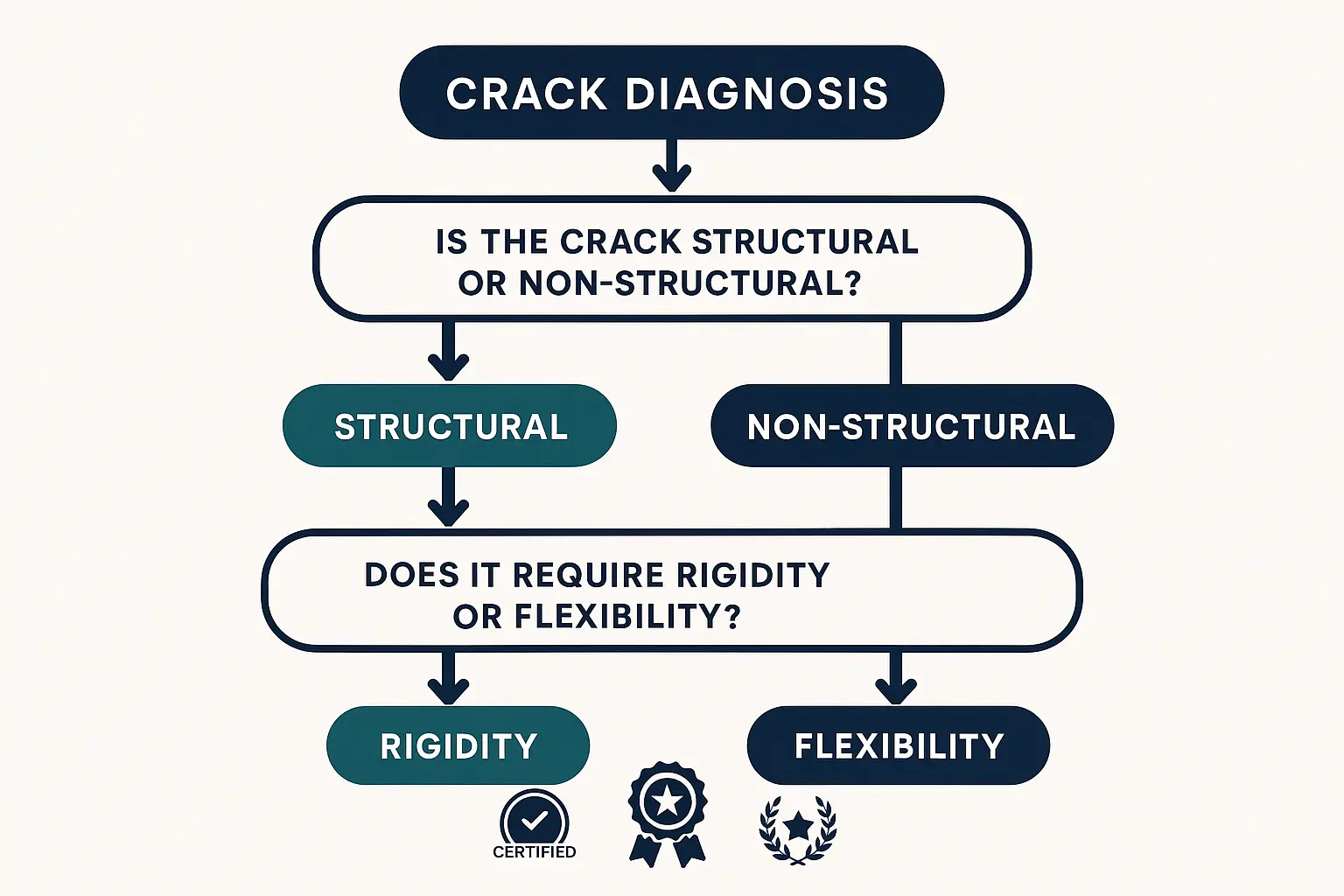
The Two-Question Diagnostic: Your Key to a Perfect Repair
2. Does it Move? Concrete expands and contracts with temperature changes. A crack in an expansion joint is a "moving" or "active" crack designed to accommodate this. A crack in the middle of a stable, indoor floor is likely a "static" crack that won't change.
Understanding this distinction is the single most important "aha moment" in concrete repair. You either need to "weld" the concrete back together or give it a flexible filling that can move with it.
Material Masterclass: Matching the Compound to the Crack
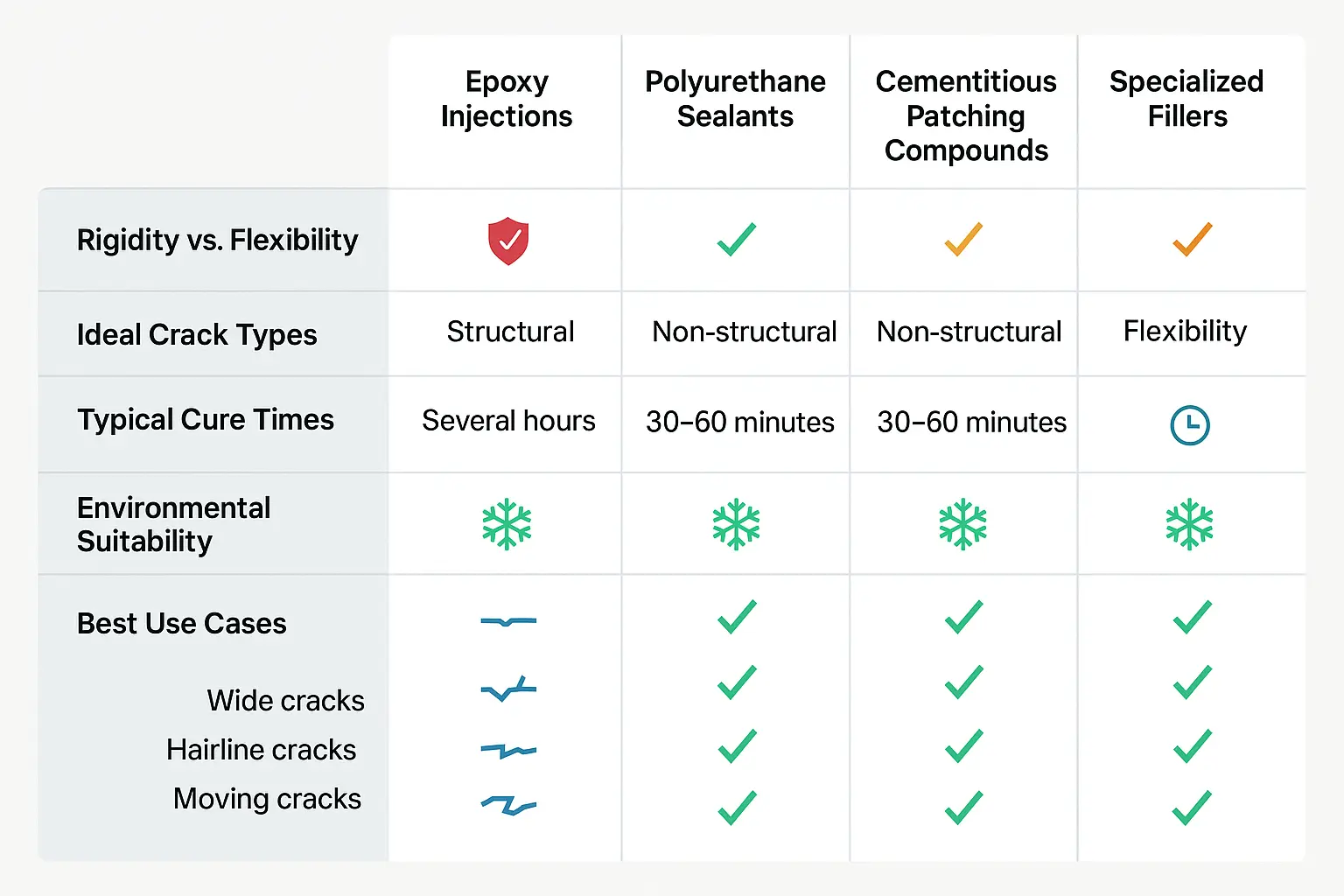
Epoxy Injection Resins: The Structural Weld
- Best For: Structural, static cracks. When you need to bond the two sides of a crack together and restore the concrete's original strength, epoxy is your answer. This is critical for foundation repairs or any crack where structural integrity is a concern.
- Properties: Extremely high bond strength, low viscosity (so it can penetrate deep into fine cracks), rigid and inflexible once cured.
- AVOID THIS: Never use rigid epoxy in a moving joint. As the concrete expands and contracts, the inflexible epoxy will crack or delaminate, and the repair will fail.
Polyurethane Sealants & Foams: The Flexible Seal
- Best For: Non-structural, moving cracks. Ideal for expansion joints in driveways, saw cuts in garage floors, or any crack that will see seasonal movement. It’s also the go-to for sealing cracks against water intrusion in basements.
- Properties: Highly flexible (elastomeric), excellent adhesion, waterproof. It doesn't add structural strength; it simply seals the gap.
- A Quick Note: Polyurethane comes in two main forms: self-leveling sealant for horizontal surfaces (floors, driveways) and injectable foam that expands to fill voids and stop active water leaks.
Cementitious Patching Compounds: The Surface Fix
- Best For: Superficial, non-structural repairs where you want the patch to look and feel like the surrounding concrete. Think spalling, chips, or wide, shallow gouges on a patio or walkway.
- Properties: Similar texture and color to concrete, good compressive strength, but low tensile (pulling) strength and very little flexibility.
- Why They Can Fail: Using a standard cement patch in a moving crack is a common mistake. Because it has no flexibility, the patch will quickly crumble and break apart as the seasons change.
Application: A Real-World Scenario for a Wide Driveway Crack
- Structural? No, it's in a control joint, which is designed to crack.
- Moving? Absolutely. This joint expands in the summer heat and shrinks in the winter cold.
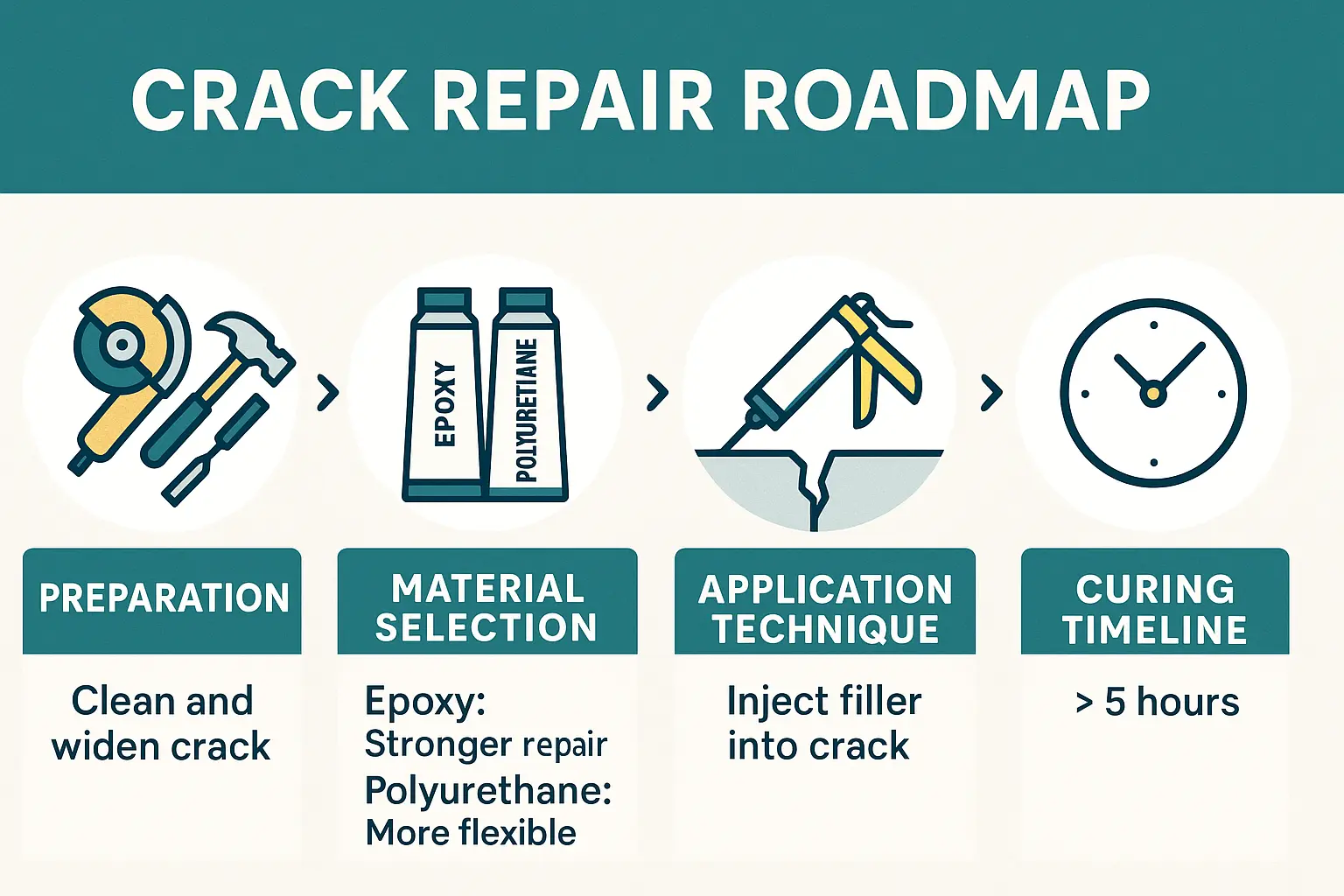
2. Select Material: Because it's a non-structural, moving crack, you need a flexible sealant. A self-leveling polyurethane sealant is the perfect choice.
3. Select Tools & Process: A successful repair is all about preparation. Following a clear process ensures the sealant bonds properly and lasts for years.
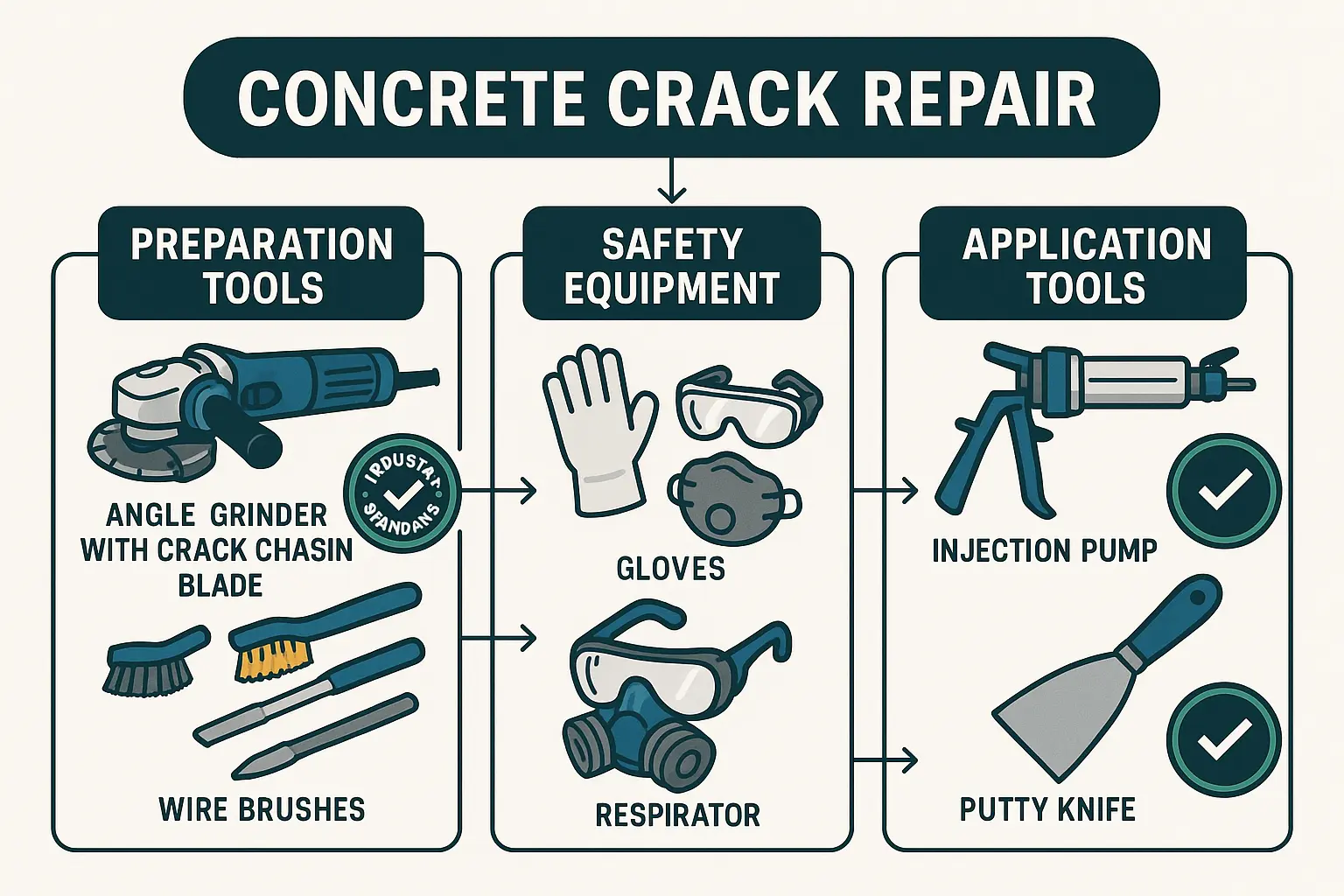
Mastery: The Professional's Toolkit
Preparation Tools
- Angle Grinder with a Diamond "Crack Chaser" Blade: This is the pro's choice for opening up and profiling a crack. It creates clean, solid walls for the new material to adhere to, removing any weak or crumbling concrete.
- Shop Vacuum: Absolutely essential. You must remove all dust and debris from the crack for the sealant or epoxy to bond properly.
- Wire Brush / Stiff Bristle Brush: For cleaning out smaller cracks where a grinder isn't necessary.
- Hammer and Chisel: Useful for breaking away larger pieces of loose concrete.
Application Tools
- Caulk Gun: A high-quality, sturdy caulk gun is needed for applying sealants and some epoxies.
- Backer Rod: This is a flexible foam rope that you press into deep cracks before applying sealant. It saves material and provides the proper depth for the sealant to function correctly.
- Trowel or Putty Knife: For finishing cementitious patching compounds.
Safety Equipment
• Dust Mask or Respirator: Grinding concrete creates fine silica dust, which is hazardous to inhale.
• Gloves: Protect your hands from abrasive concrete and chemical compounds.
Proper maintenance of your garage space is crucial. A severe foundation crack, for instance, can eventually cause misalignment and lead to a
If you are dealing with cracks in your driveway or garage floor, it is a good idea to check the surrounding structures at the same time. For instance, shifting ground or physical impacts can easily affect your home's entry points; if you notice issues with your tracking or panels, learning whether a damaged garage door can be repaired or needs a total replacement will save you both time and money.
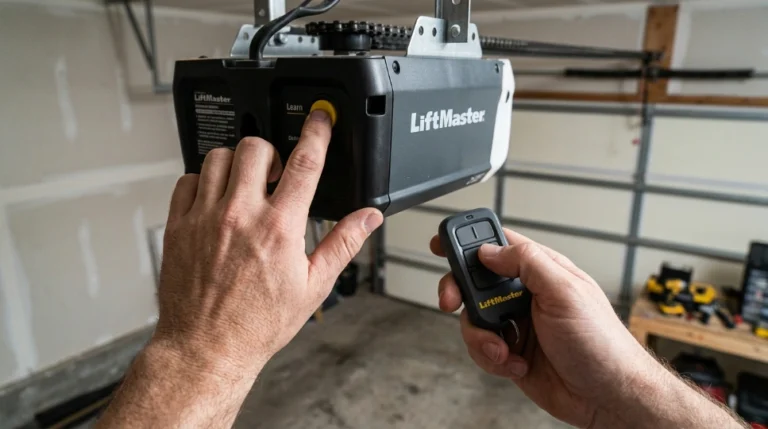
Addressing concrete issues promptly is a key part of holistic home care. Similarly, while you're focused on the floor, it's a good time to inspect other mechanisms; if you find you need toIn addition to maintaining your concrete surfaces, it's important to keep your home's mechanical systems in top shape. If your system is failing, learning how to repair garage door opener issues promptly will help ensure your home remains secure and convenient.
components, tackling it at the same time can save future headaches.Frequently Asked Questions (FAQ)
Q: What about very thin hairline cracks?:
A: For hairline cracks that are non-structural and not leaking water, the best solution is often to do nothing. If they bother you aesthetically, a concrete patch product with a fine aggregate can be troweled over the surface. For garage floors, an epoxy floor coating can seal and hide them effectively.Q: How do I know if my crack is structural?:
A: Look for these warning signs: 1. The crack is wider than 1/4 inch. 2. One side of the crack is higher than the other (indicating shifting). 3. The crack is growing in length or width over time. 4. It appears on a foundation wall along with other signs like bowing or water intrusion. If you see any of these, it's best to consult a structural engineer.Q: How long does the repair material take to dry or cure?:
A: It varies dramatically by product. Polyurethane sealants can be tack-free in a few hours but may take several days to fully cure. Epoxies have a specific "pot life" (working time) and cure time, often reaching full strength in 24-72 hours. Always read the manufacturer's instructions carefully.Q: Can I do these repairs in any weather?:
A: No. Most repair compounds have specific temperature and moisture requirements. Applying them in conditions that are too hot, too cold, or too wet can cause the repair to fail. Check the product's technical data sheet before you begin.Your Path to a Perfect Repair
Taking pride in your home's integrity is a rewarding process. As you continue to improve your space, remember how modern advancements are changing home maintenance, from durable repair compounds to the exciting
Upgrading your home’s security and convenience goes beyond just fixing physical cracks. Embracing smart garage door technology 2025 allows you to monitor and control your entry points directly from your smartphone, ensuring your entire garage setup is modern and secure.
is expected to bring.You may also like