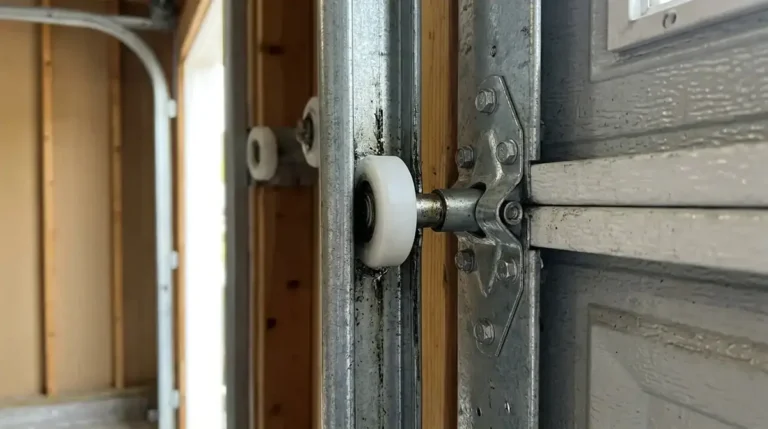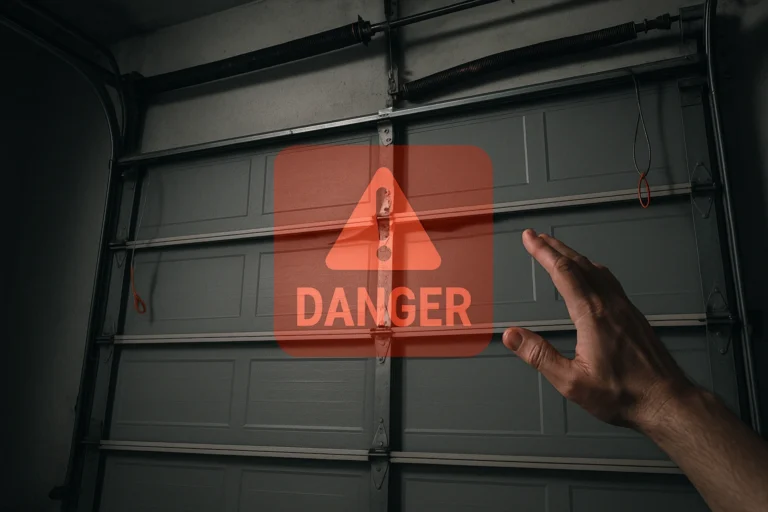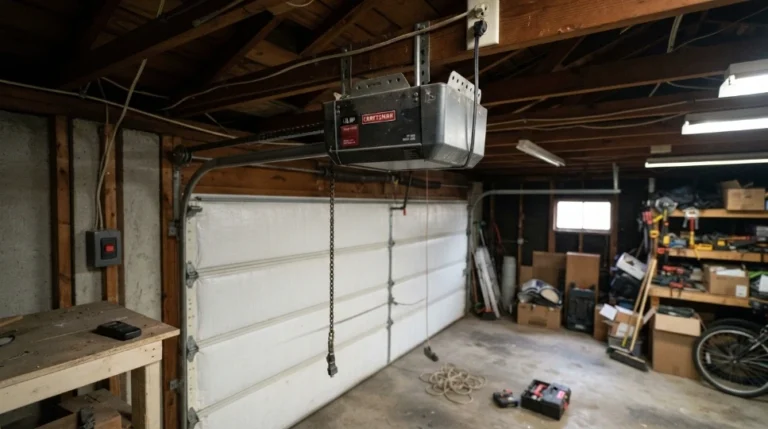
When a garage door opener hums without lifting the door, electrical power is reaching the motor housing, but a mechanical blockage, disconnected drive component, or failed start capacitor is stopping torque from moving the door. For Connecticut homeowners experiencing sudden opener stalls, isolating whether the issue stems from a disengaged trolley, a broken counterbalance spring, or a weak start capacitor prevents unnecessary motor burnout and helps restore safe operation.
Quick Checks Before Calling for Service:
-
Verify manual and wall locks: Confirm that interior slide bolts and wall-console lock switches are disengaged so the door is free to travel.
-
Inspect the emergency release trolley: Check if the red release cord was pulled, uncoupling the carriage from the opener rail; re-engage the trolley latch with the door fully closed.
-
Test manual door balance: With the door down, pull the emergency release cord and lift the door by hand—if it feels unusually heavy or binds in the tracks, a spring or hardware failure is likely.
Primary Mechanical & Electrical Culprits:
-
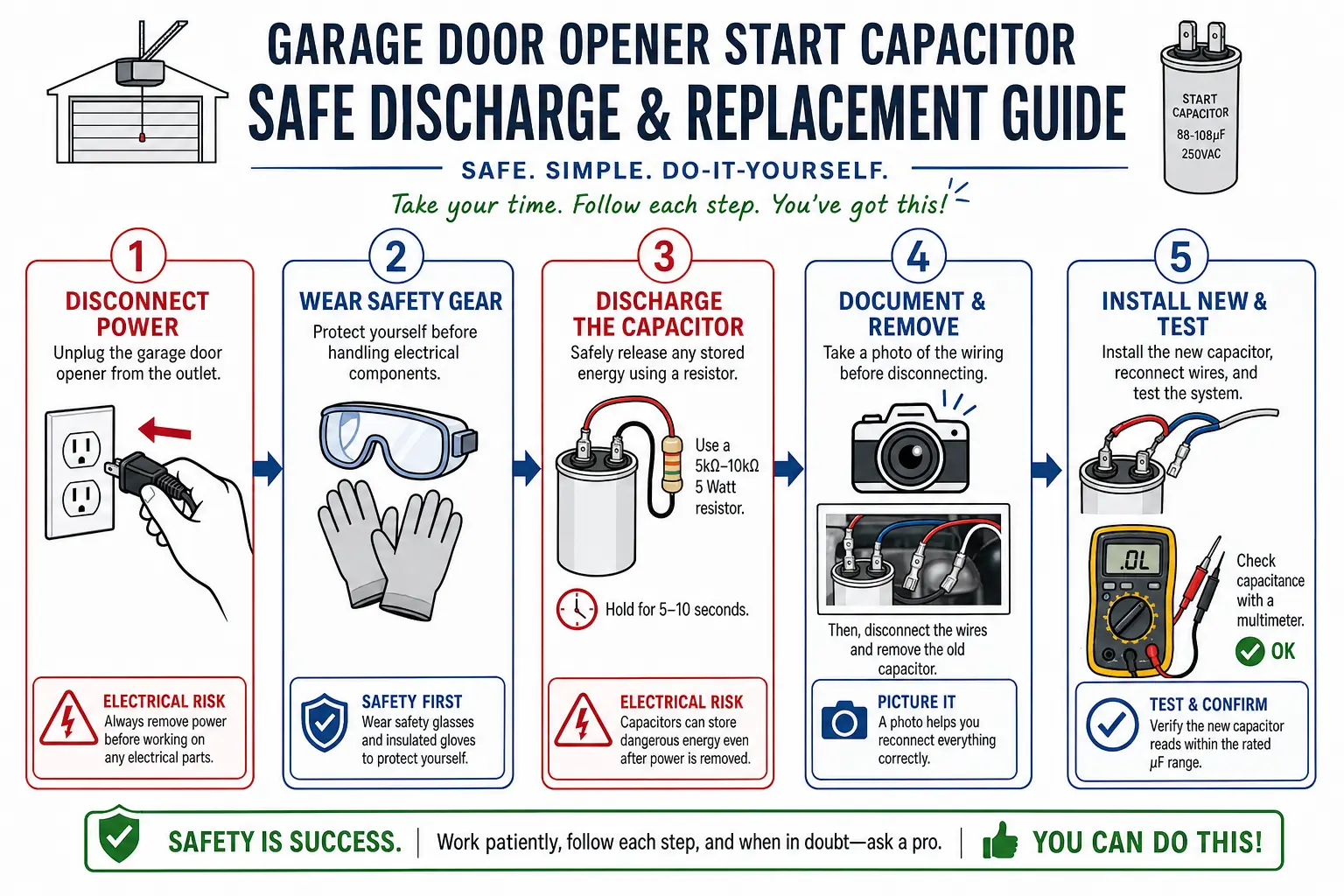
Faulty start capacitor: A worn or bulging motor capacitor cannot deliver the initial electrical surge needed to spin the motor shaft, causing a steady hum without rotation.
-
Snapped torsion or extension spring: Without functional springs to counterbalance the door’s weight, the opener motor stalls under excessive load.
-
Stripped internal drive gear or jammed carriage: Sheared nylon gears inside the opener unit or a trolley wedged against a stop bolt allow the motor to run without transferring motion to the door.
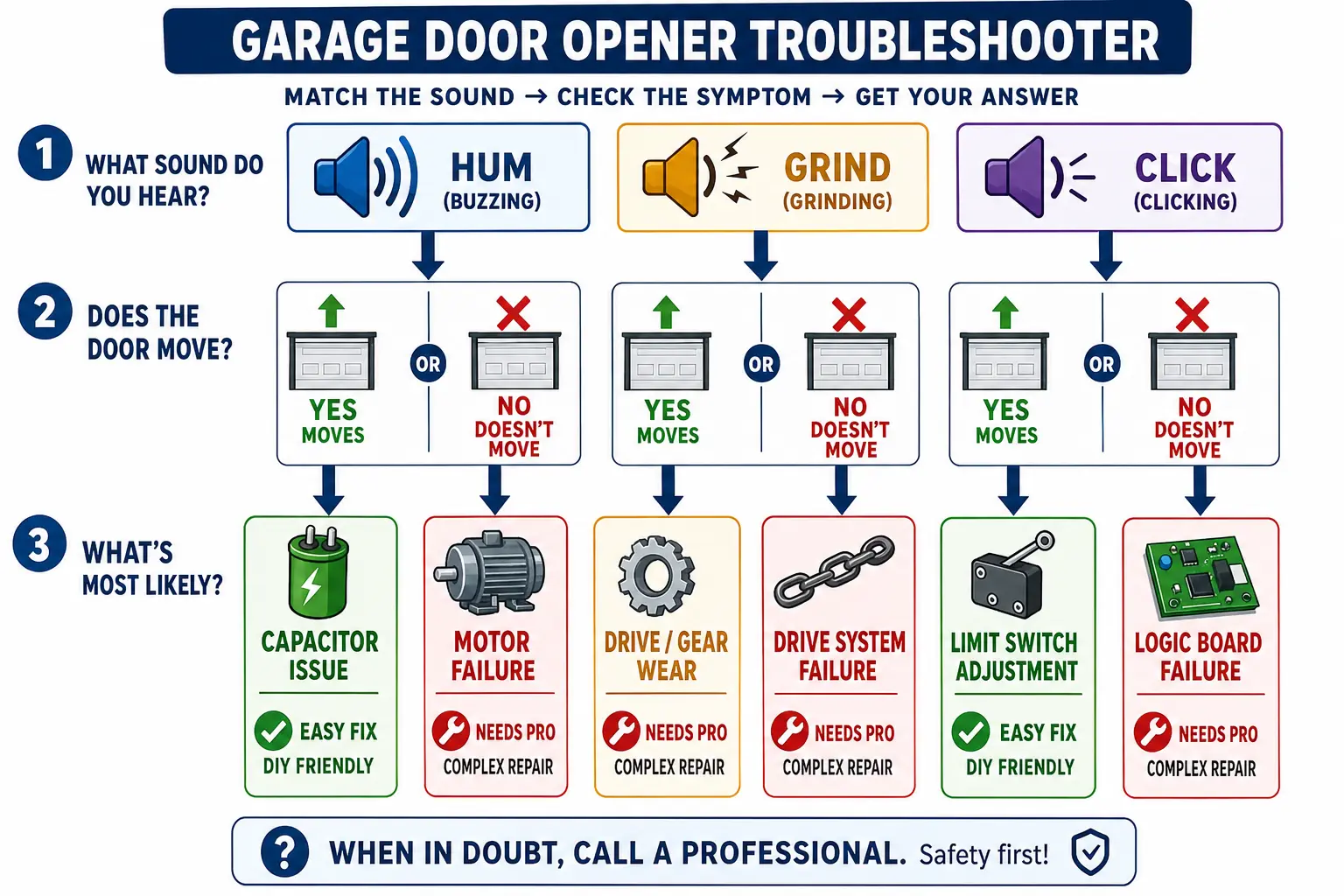 Quick visual diagnostic triage: distinguish between a humming start capacitor failure and other mechanical faults in under 30 seconds to save time and money.
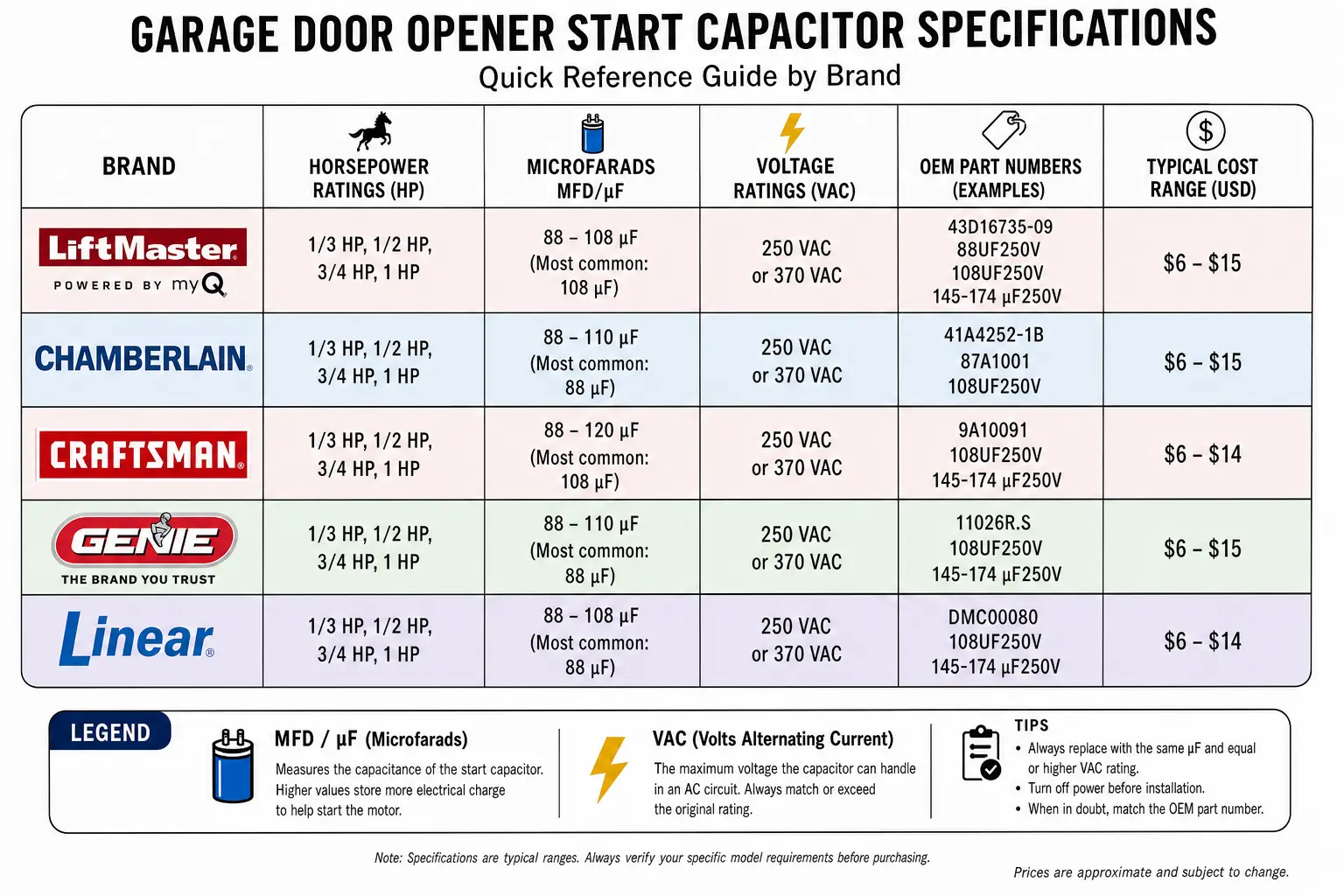
 For brand-specific maintenance support, review our specialized services for
 Follow this clear, safety-first step guide to confidently replace your garage door opener’s start capacitor and avoid electrical hazards.