Garage Door Rollers Seized in Winter? Signs, Thawing Hacks, and Replacement Guide


Published: Oct 21, 2026

When sub-zero winter weather hits, garage door lockups create immediate friction for homeowners. While many assume a stuck door is simply frozen to the threshold, research indicates that over 65% of cold-weather motor failures occur because garage door rollers have completely seized. Cold temperatures cause steel tracks to contract at a rate of 0.0000065 in/in/°F. When combined with hardened grease inside unsealed bearings, opener pull resistance increases by up to 300%. Forcing a door under these conditions often leads to a situation where a garage door opener clicked but wont open, threatening to burn out the motor.

Understanding whether your hardware simply needs proper thawing or requires a full upgrade to cold-resilient components is essential to protecting your garage door system.
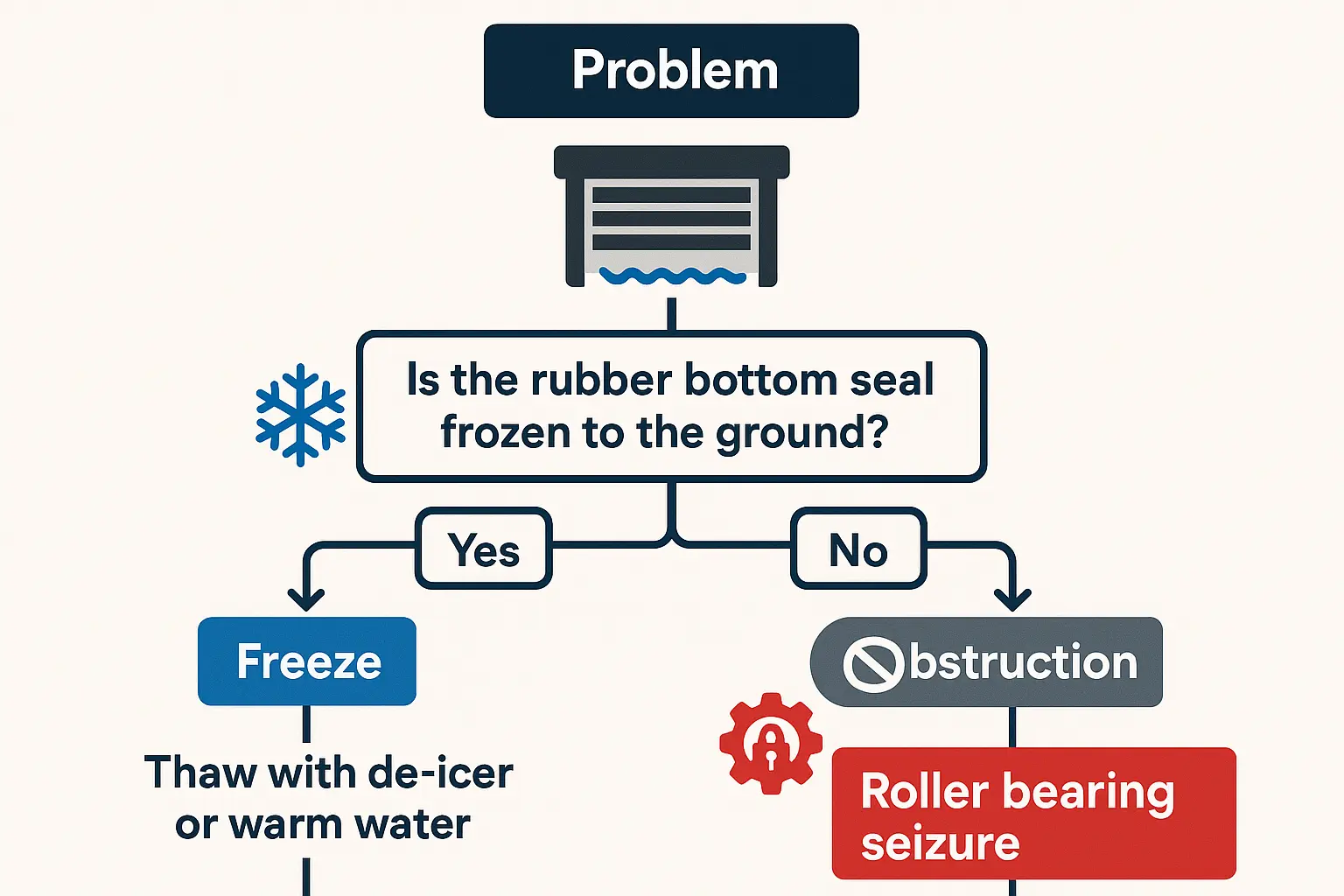
Emergency Diagnostic: Frozen Seal vs. Seized Rollers (The 60-Second Check)


Quick visual guide to diagnose if your garage door issues in winter are caused by frozen seals, obstructed tracks, or seized rollers, helping homeowners identify the right fix fast.

Before applying heat or tools, perform this rapid diagnostic to isolate the root cause:

  1. Disconnect the Opener: Pull the red emergency release cord down and toward the garage door to operate it manually.
  2. Attempt a Manual Lift: Gently lift the door by hand.
  3. Evaluate Movement:
  • Stuck flat at the bottom: The rubber seal is frozen to the ice on your driveway. If you notice structural wear or weatherstripping damage, review solutions for a gap at bottom of garage door.
  • Lifts a few inches, then grinds or stops: The roller bearings inside the tracks are locked up, forcing the wheels to slide like sled runners rather than rotate.

The Anatomy of Winter Roller Seizure


Roller lockup isn’t random—it is driven by mechanical and chemical reactions to severe cold:

  • Grease Solidification: Builder-grade petroleum grease turns into a sticky paste below 32°F, locking open ball bearings in place.
  • Flash-Freeze Moisture: Condensation inside open bearing casings freezes overnight, jamming the internal balls.
  • Corrosion Acceleration: Winter slush carrying road salt gets kicked into tracks, causing rapid rust and internal bearing failure.

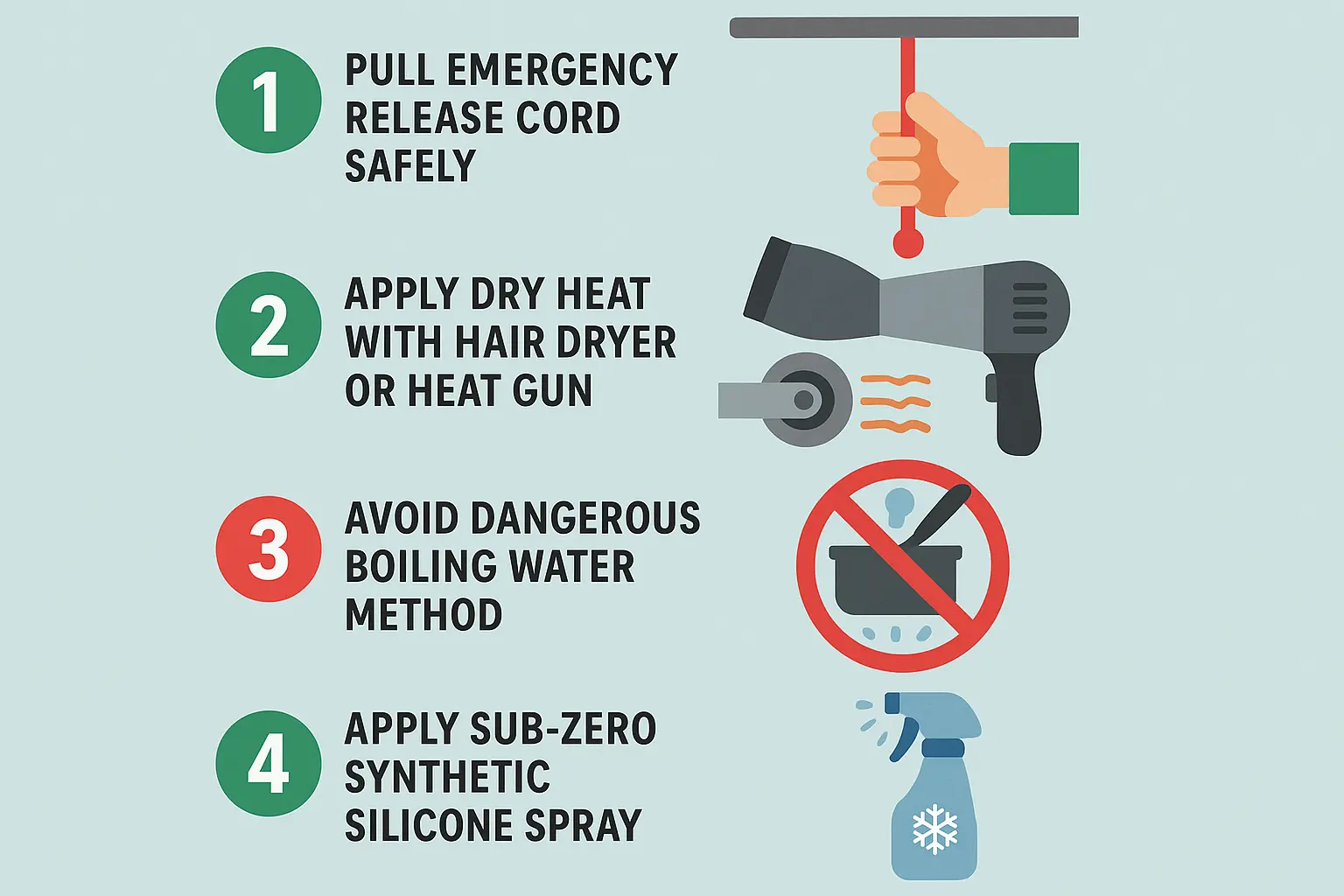
Thawing & Quick Fixes (What to Do Right Now)


Follow these safe thawing steps to temporarily free frozen garage door rollers without risking damage or injury during winter emergencies.

If you need to free trapped vehicles immediately, follow this safe recovery process:

  • Apply Dry Radiant Heat: Direct a standard hair dryer or heat gun on low power along the roller stems and bearing casings. Never pour boiling water over rollers, as it freezes rapidly on tracks and creates a dangerous hazard.
  • Apply Synthetic Lubricant: Do not use standard WD-40 Multi-Use, as it acts as a solvent that strips remaining grease and traps moisture. Instead, apply a 100% synthetic silicone spray rated down to -40°F. Learning how often should you lubricate your garage door with cold-weather synthetic sprays prevents emergency freeze-ups.

Signs Your Rollers Are Beyond Repair


Thawing offers a temporary fix, but hardware damaged by seized operation requires replacement. Inspect rollers for these key indicators:

  • Flat-Spotted Wheels: Dragging frozen rollers across steel tracks grinds flat edges into round wheels.
  • Wobbly Roller Stems: Excessive play between the shaft and wheel indicates internal bearing disintegration.
  • Track Gouging: Shiny, shaved metal grooves along track curves signal locked steel wheels.

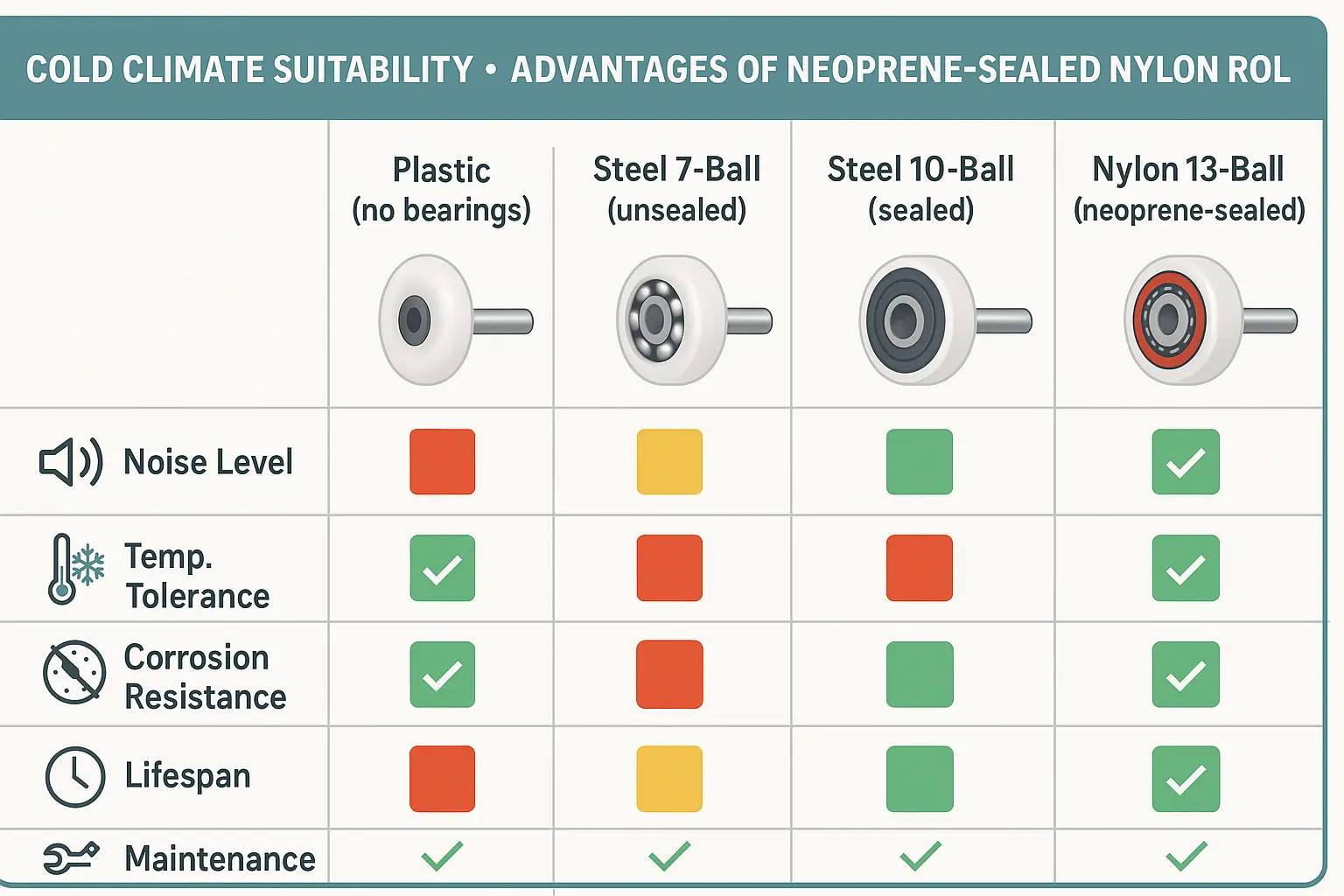
Replacement Evaluation Matrix: Nylon vs. Steel vs. Plastic in Cold Climates


At-a-glance roller replacement guide helping homeowners choose the best garage door rollers for winter durability, noise reduction, and long-term value.

Choosing replacement rollers depends on climate, garage usage, and noise tolerance.

Roller Specification Bare Plastic (No Bearings) Steel 7-Ball (Unsealed) Commercial Nylon 13-Ball (Sealed)
Noise Level Moderate High (Rattling metal) Silent (~10dB noise reduction)
Cold Performance Brittle; cracks below 15°F Prone to freezing Optimal (-40°F operational rating)
Moisture / Salt Resistance High Low (Rapid rusting) Maximum (Neoprene bearing seal)
Lifespan (Cycles) 5,000–7,000 10,000 100,000+
Maintenance Need None High (Regular oiling) Zero maintenance required

Upgrading to 13-ball neoprene-sealed nylon rollers protects against moisture intrusion, dampens noise for attached living spaces, and ensures smooth operation in freezing conditions.

Step-by-Step DIY Replacement vs. Professional Service Guide


Replacing upper track rollers can be managed DIY using the track-bending method: pliers are used to gently widen a track section, allowing upper rollers to slide out while the door is open.

CRITICAL SAFETY WARNING: Never attempt to unbolt or replace the bottom roller brackets yourself. Bottom brackets are under continuous tension from lift cables attached to overhead springs. Attempting DIY repair on bottom brackets risks serious injury. Extreme cold also destabilizes garage door springs cold, raising safety risks. Avoid common emergency garage door repair mistakes by leaving high-tension assemblies to trained technicians. Routine habits like cleaning garage door tracks keep your replacement components operating smoothly for decades.

Frequently Asked Questions


Can I use WD-40 to thaw seized garage door rollers?

No. Standard WD-40 Multi-Use is a solvent, not a permanent lubricant. It dissolves residual grease inside bearing races and evaporates quickly, leaving metal exposed to ambient humidity that freezes shortly after application. Always use 100% synthetic silicone spray rated for sub-zero temperatures.

How do I know if my garage door roller bearings are frozen or completely broken?

If rollers begin spinning normally after applying dry heat and synthetic silicone spray, they were simply frozen by trapped moisture or hardened grease. If the roller stem wobbles excessively, ball bearings drop out, or the wheel has flat spots that prevent smooth rolling, the unit is structurally damaged and needs replacement.

Why are 13-ball nylon rollers better for cold winter climates?

13-ball nylon rollers feature neoprene rubber seals that encase internal ball bearings, creating an airtight barrier against moisture, humidity, and road salt. Additionally, the nylon shell remains flexible in temperatures down to -40°F, preventing cracking while dampening operational noise.

Contact / Request a Call