The Cold Truth: Why Winter is Your Garage Door's Worst Enemy
Published: Jun 12, 2026
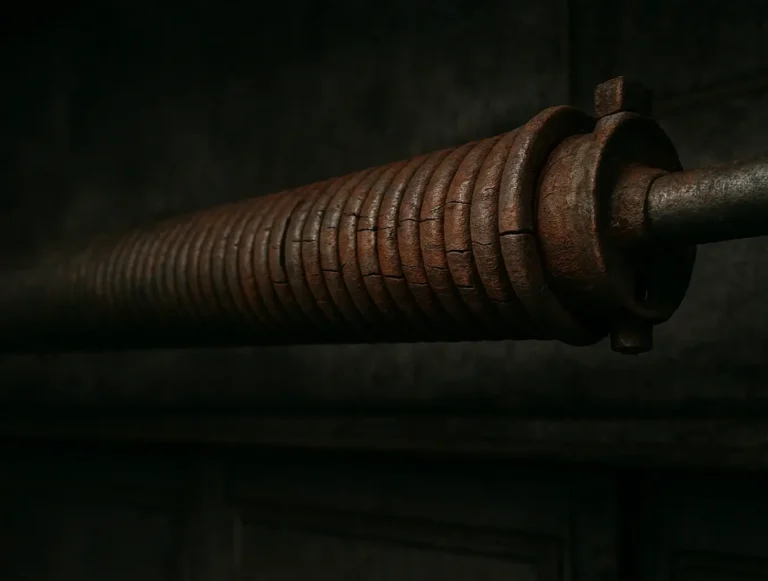
It’s five in the morning on the coldest day of the year. You’re already running late, coffee in hand, when you hit the garage door button. Instead of the familiar hum and smooth glide, you’re met with a jarring, deafening BANG. You peer into the dim garage and see it: a heavy steel door, now crooked and motionless, with a snapped, menacing-looking spring hanging loose.
If this scenario sounds familiar—or like a nightmare you’d rather avoid—you’ve experienced winter's silent assault on your garage door. It’s not your imagination; garage door springs and hardware genuinely struggle, and often fail, when the temperature plummets.
But why? It’s just metal, right? The answer lies in some fascinating science that happens right in your garage when the mercury drops. Understanding this science is the first step to preventing a cold-weather catastrophe.
Foundation: The Science of Cold Steel
The Incredible Shrinking Spring
Everything contracts, or shrinks, when it gets cold. You see it when you try to fit a slightly-too-large lid on a cold container. For most objects, this change is negligible. But a garage door torsion spring is not most objects. It’s a highly-calibrated piece of steel under immense tension—enough to lift hundreds of pounds.
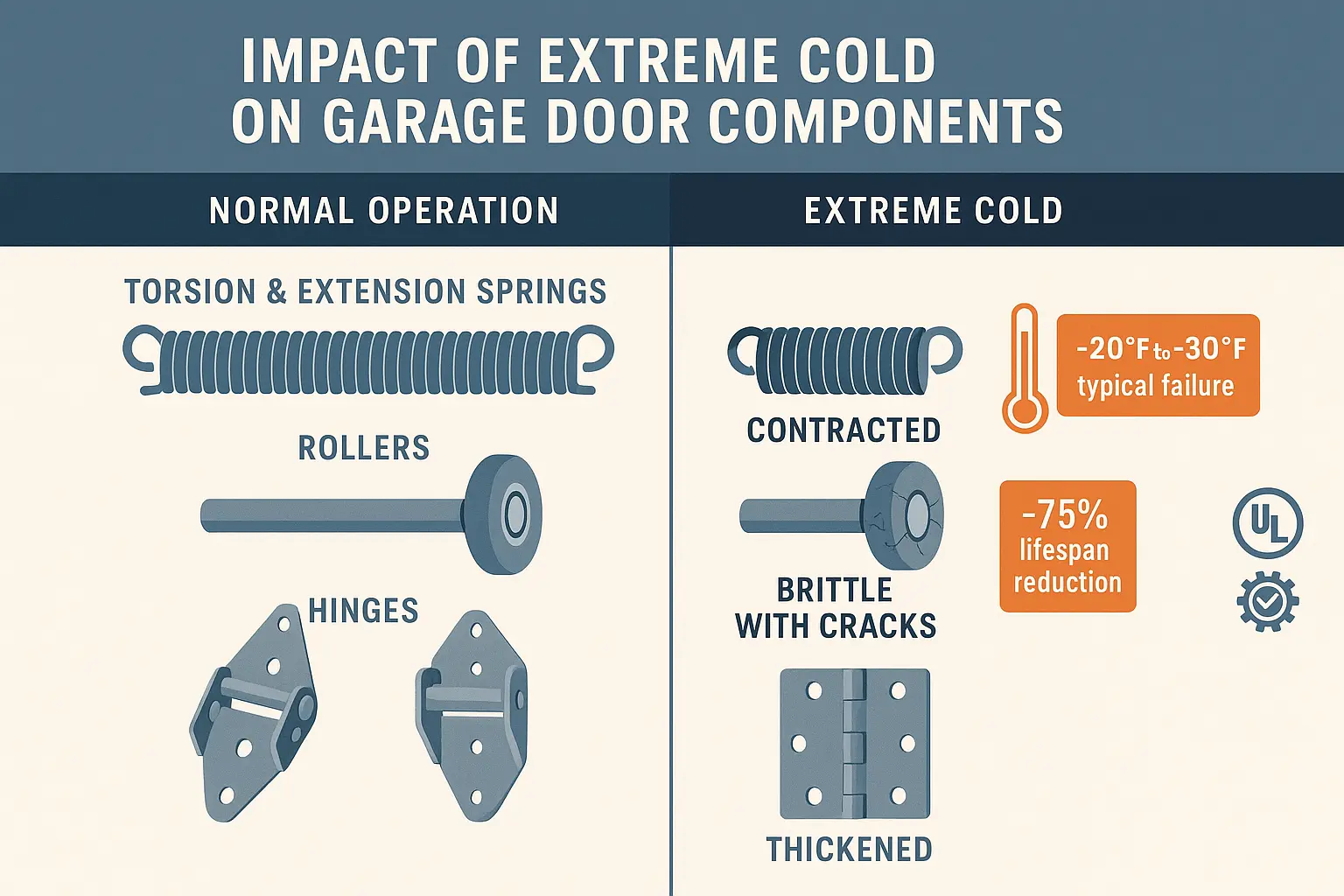
When it gets freezing cold, the steel in the spring contracts. The coils get tighter, and the spring’s overall length shortens slightly. This seemingly tiny change dramatically increases the tension on an already-stressed component. Every time you open or close the door, you’re asking this over-tightened spring to do its job, compounding the stress on the metal.
The "Frozen Candy Bar" Effect
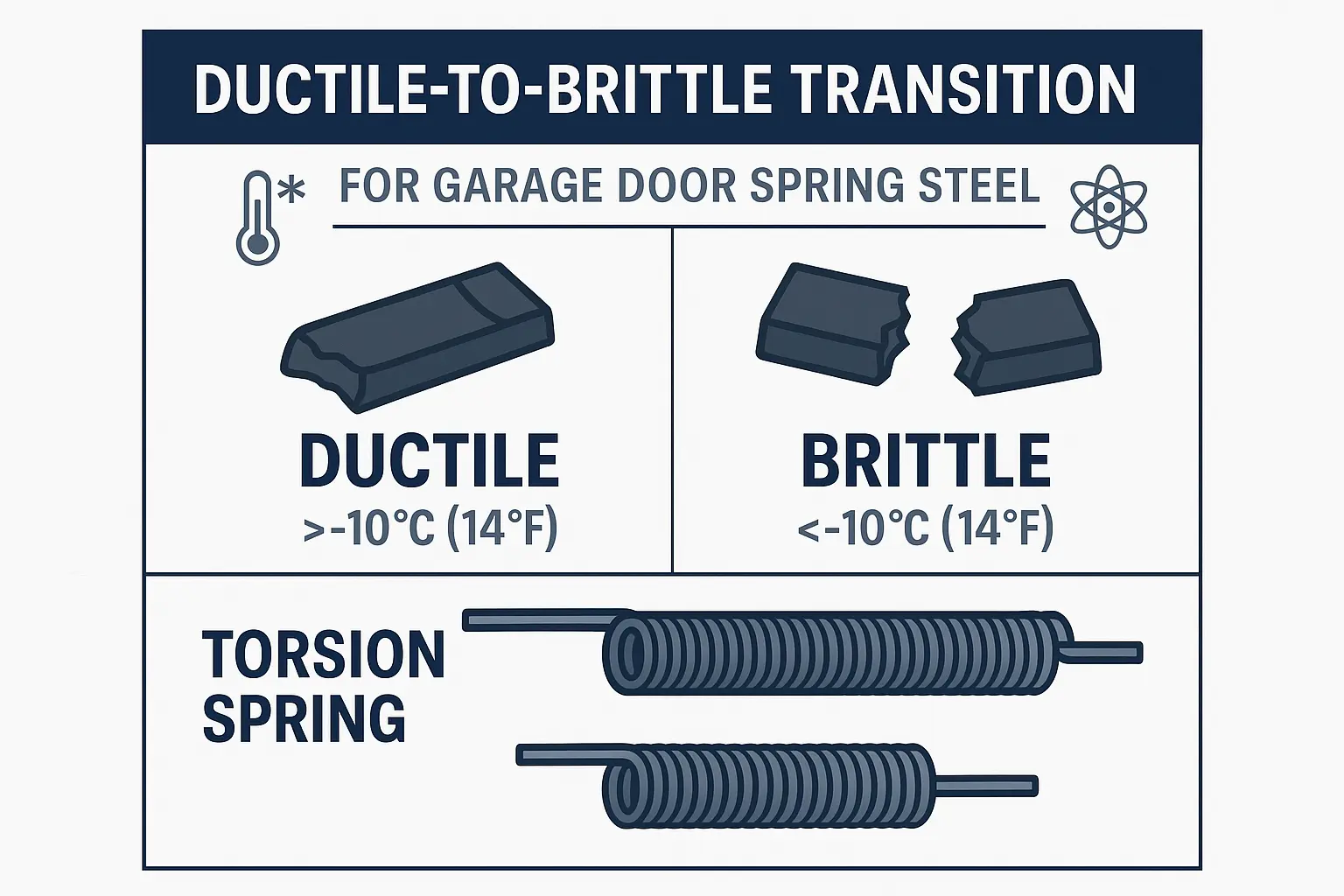
Now for the real "aha moment." Think about a chewy candy bar at room temperature. You can bend it, and it will give. Now, imagine that same candy bar after it’s been in the freezer for hours. If you try to bend it, it won’t give—it will snap.
This is the ductile-to-brittle transition. At warmer temperatures, steel is ductile—it has a tiny bit of flex and give. As it gets colder, it loses that flexibility and becomes brittle. It loses its ability to absorb the stress of movement and instead becomes fragile, like the frozen candy bar.
When you combine the increased tension from thermal contraction with the newfound brittleness of the steel, you have the perfect recipe for a sudden, explosive failure.
Building: The Domino Effect of Cold on Your Garage Door
Torsion & Extension Springs: The Primary Victim
Rollers & Hinges: The Unsung Heroes Under Stress
Lubricants: The Frozen Shield
Weather Seals: The Icy Grip
The rubber or vinyl weather seal at the bottom of your garage door is designed to keep the cold out. But when snow melts and refreezes, it can literally freeze your door to the concrete floor. When you try to open it, the opener pulls with immense force, potentially tearing the seal, damaging the bottom panel of the door, or even straining the motor to the point of failure.
Mastery: A Proactive Winterization Plan
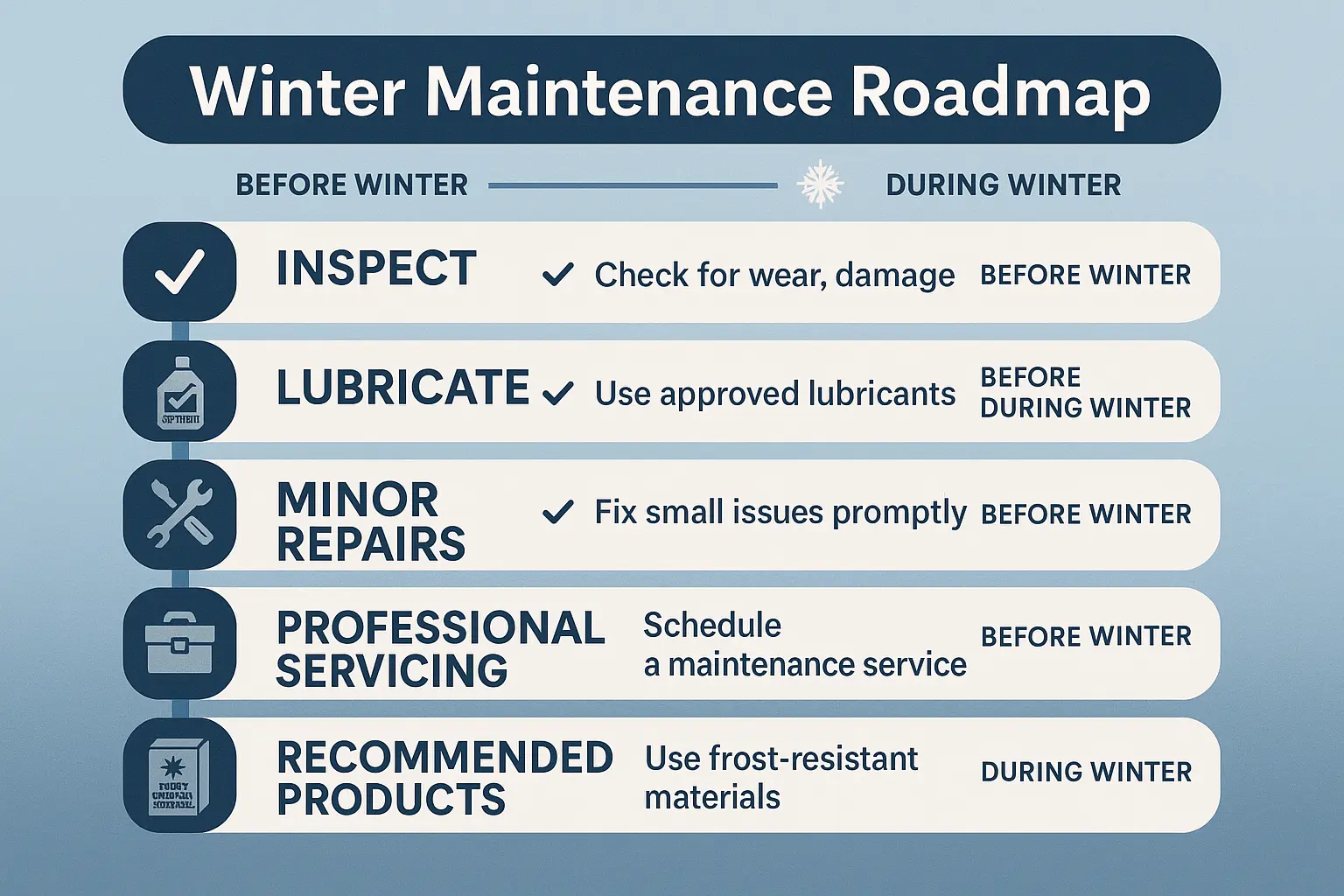
1. Inspect Your System (Visually):
Before the first deep freeze, take a look at your entire system. Look for signs of wear on the springs (rust, gaps in the coils), frayed cables, and cracked or worn rollers. Catching these issues early is key.2. Lubricate, The Right Way:
This is the single most important step. In the fall, clean the tracks and lubricate all moving parts—springs, rollers, hinges, and bearings—with a high-quality, silicone- or lithium-based spray lubricant. These are designed to resist thickening in the cold. Learning exactly how to lubricate garage door springs and other components is a simple DIY task that pays huge dividends.3. Test the Door Balance:
Disconnect the garage door opener (usually by pulling the red cord) and try to lift the door manually. It should lift smoothly with minimal effort and stay open about halfway up. If it’s heavy or slams shut, your springs are losing their tension and may be at risk of failure.4. Keep the Seal Clear:
Make it a habit to sweep away snow and water from the base of the garage door to prevent it from freezing to the ground. If it does get stuck, don't use the opener. Carefully use a heat gun or hot water to melt the ice first.By addressing these common winter garage door problems proactively, you can ensure a smoother, safer season.
Action: What to Do When a Spring Breaks
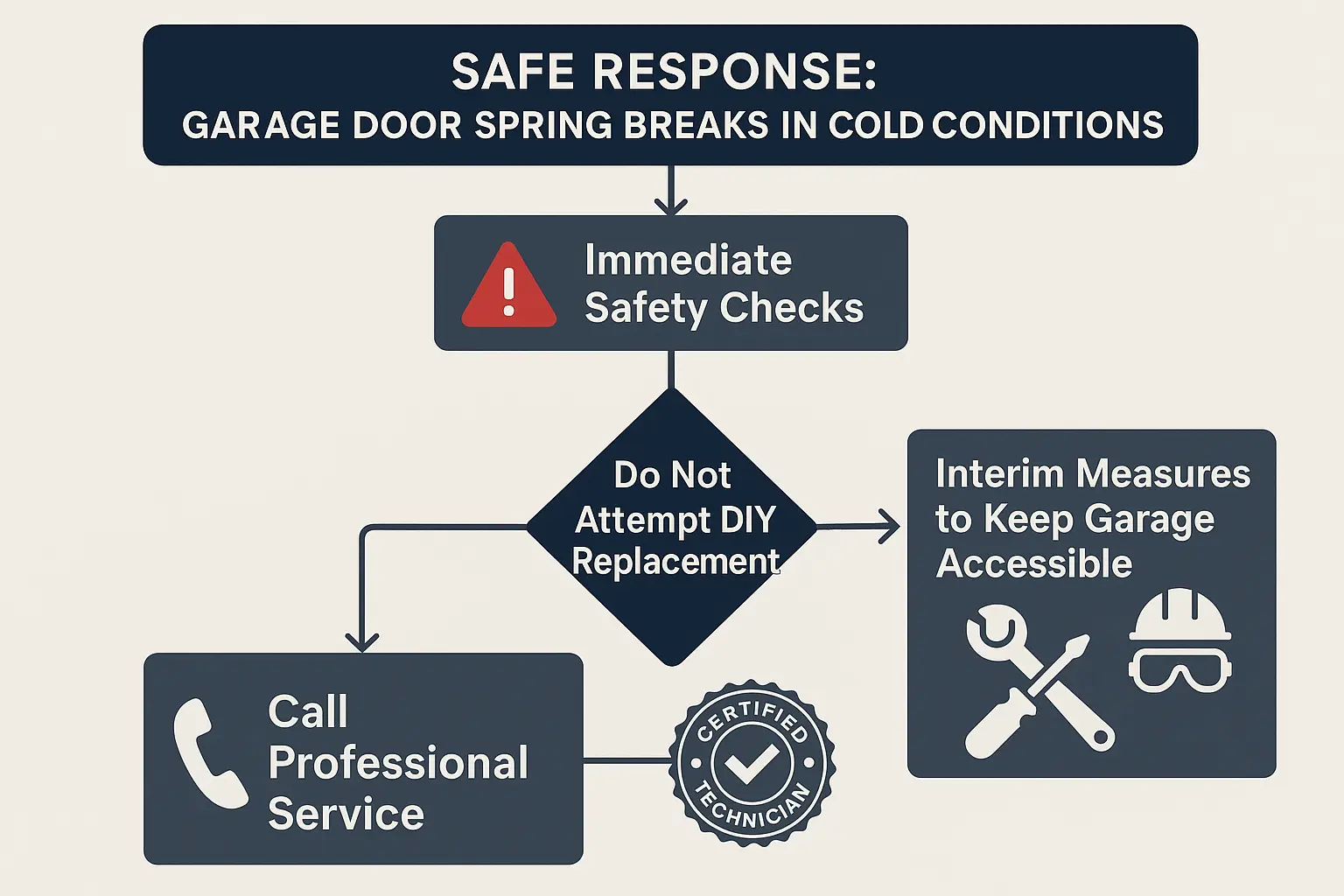
- 1. DO NOT Try to Open the Door: The opener is not designed to lift the full weight of the door without the help of the springs. Attempting to use it can strip the gears, burn out the motor, or even bend the door panels.
- 2. DO NOT Attempt a DIY Repair: Torsion springs are under extreme tension, even when broken. Attempting to replace one without the proper tools and training is incredibly dangerous and can result in severe injury. This is a job strictly for professionals.
- 3. Secure the Area: Keep kids and pets away from the door. If possible, disconnect the power to the garage door opener to prevent anyone from accidentally trying to operate it.
- 4. Call a Professional: A broken spring is not a suggestion; it’s an emergency stop sign. Contact a qualified technician for a safe and correct garage door spring repair. They have the specialized tools and expertise to replace the spring and inspect for any other damage caused by the sudden failure.
Frequently Asked Questions
At what temperature do garage door springs become a risk?
Does the age of my spring matter more in the winter?
Can I just use WD-40 on my garage door parts?
You may also like