Why Screw-Drive Garage Door Openers Slow Down in Extreme Cold


Published: Oct 6, 2026

It is 6:00 AM on a freezing winter morning. You press your garage door remote, expecting a smooth, prompt exit. Instead, your garage door groans, travels barely three inches, and reverses with a clattering noise. When temperatures plummet, screw-drive garage door openers experience a disproportionate rate of winter performance failures.

Many homeowners assume their motor is burning out, but the reality is a battle against physical forces. Understanding the physics of cold-weather mechanical failures helps you determine whether your opener needs a simple seasonal maintenance step or a complete professional upgrade.

The Science - Why Screw-Drives Fail in the Cold


Screw-drive garage door systems are engineered with a threaded steel rod that rotates inside a channel to move the trolley. While highly durable in moderate climates, this design has unique physical vulnerabilities when exposed to sub-zero temperatures.

The winter slowdown is caused by three primary factors:

  • Grease Viscosity Dynamics: Standard petroleum-based greases experience a 300% to 500% increase in shear viscosity when temperatures drop from 70°F (21°C) to 0°F (-18°C). The once-slick grease thickens into a tacky, paste-like adhesive, forcing the motor to fight through heavy resistance.
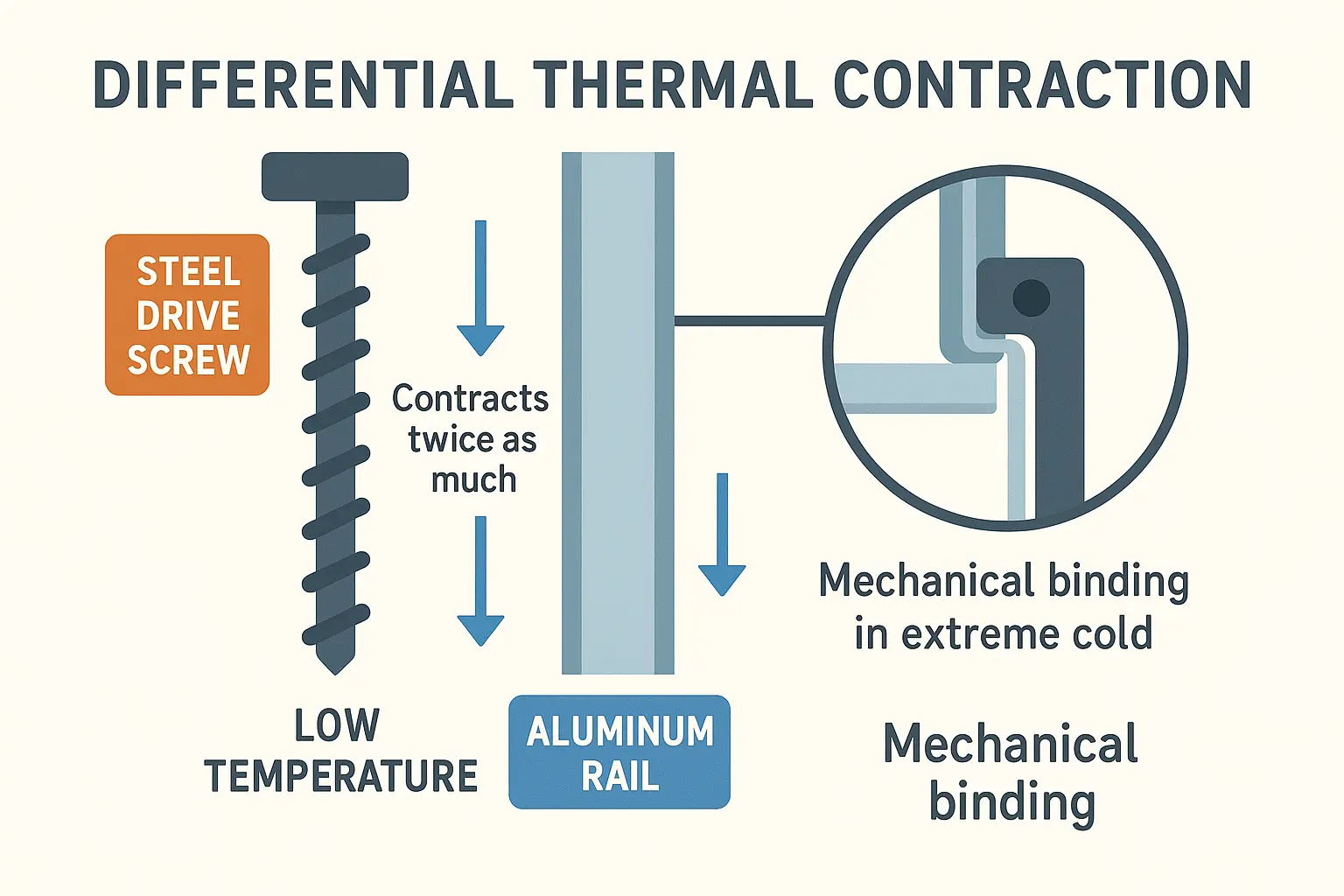
  • Differential Thermal Contraction: The rotating threaded screw is carbon steel, while the outer support rail is typically extruded aluminum. These metals contract at significantly different rates. Aluminum has a Coefficient of Thermal Expansion (CTE) of approximately $23 times 10^{-6}/K$, which is double that of carbon steel ($12 times 10^{-6}/K$). In extreme cold, the aluminum rail contracts and pinches the steel screw, creating localized mechanical binding.
  • Capacitor Torque Degradation: Electrolytic start capacitors inside older AC motors experience a 20% to 40% drop in capacitance in freezing weather. This directly degrades the initial torque output of the motor. When you hear a garage door motor clicking without turning, the system is struggling to generate the torque required to overcome cold-induced drag.

When these factors combine, the opener’s internal RPM sensors read the sudden physical drag as a safety hazard, triggering a “ghost reversal” and sending the door back up.

Differential thermal contraction causes aluminum rails to shrink faster than steel screws, leading to mechanical binding and slowed door operation in freezing temperatures.

The 4-Step Cold Weather Restoration Protocol


If your screw-drive system is stalled by the cold, you can restore its performance using this structured four-step DIY protocol.

Degrease the Rail

Old, contaminated grease must be removed before applying new lubricant. Dampen a rag with a mild solvent, such as mineral spirits, and thoroughly clean the old, gummed-up grease from the threaded steel rod. This process is similar to how you would clean garage door tracks to prevent dust and debris from seizing the system.

Apply a Specialty Low-Temperature Lubricant

Never use multi-purpose lithium grease or standard household oils, which quickly freeze and thicken. Apply a dedicated, low-temperature synthetic lubricant designed specifically for garage door screws. Ensure even coverage along the entire length of the rod.

Perform a Manual Balance Test

Disconnect the opener by pulling the red emergency release cord. Manually lift and lower the door. If the door feels heavy, sticky, or uneven, the issue lies in frozen bottom seals or out-of-balance springs rather than the opener itself.

Safely Re-Calibrate Force Limits

If the door still reverses due to cold-weather resistance, you may need to adjust garage door opener settings. Marginally adjusting the travel force can help the motor overcome the residual cold drag. Refer to your manual to adjust the garage door limit force settings safely, ensuring the system remains in strict ul 325 compliance for auto-reversal safety.
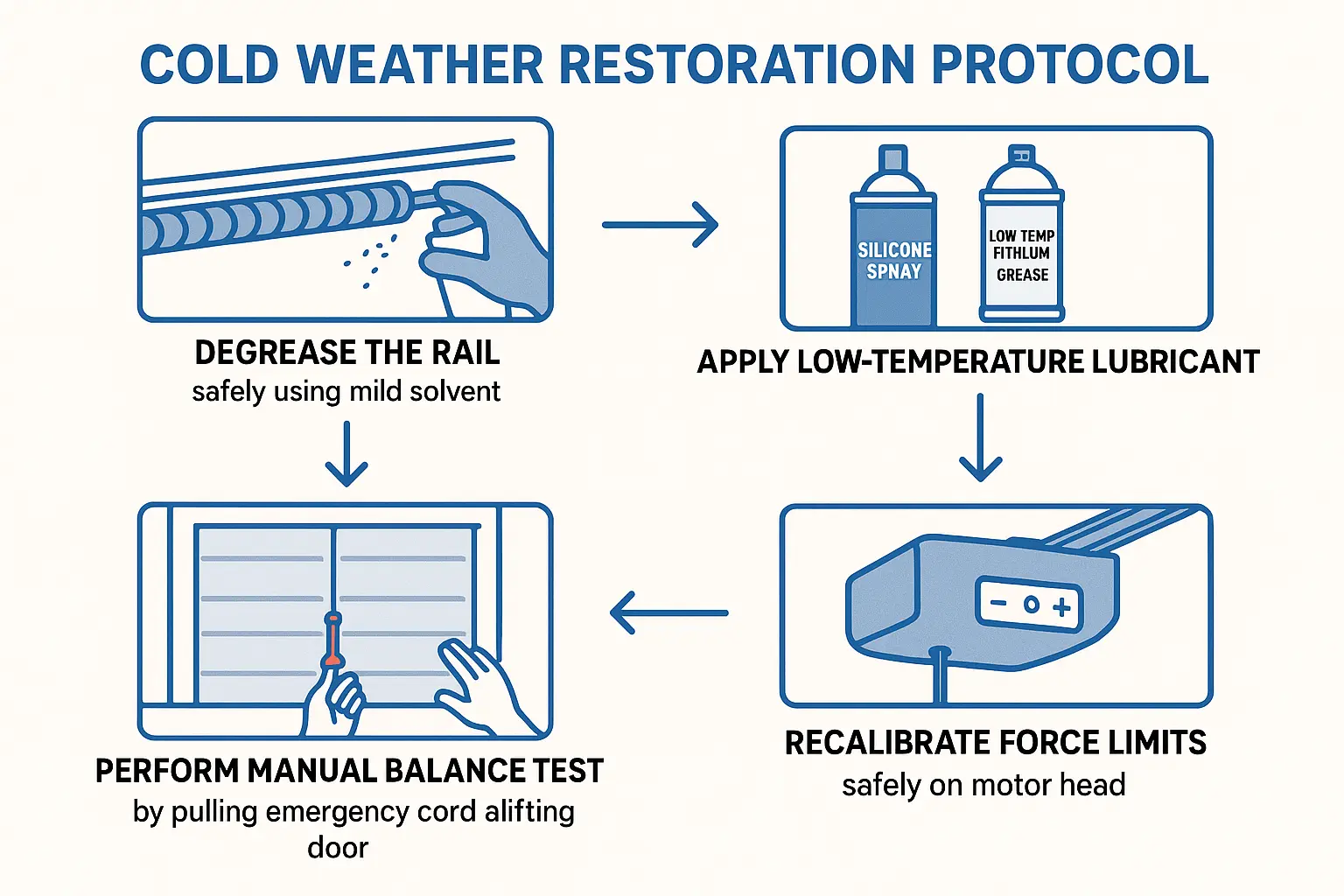

Follow these four clear steps to restore the operation of your screw-drive garage door opener in freezing conditions and avoid costly repairs.

The Long-Term Decision Matrix - Lube vs. Upgrade


While seasonal maintenance can extend the lifespan of an older screw-drive opener, it is often more practical to evaluate whether an upgrade to a modern belt-drive system is a better long-term choice for cold climates.

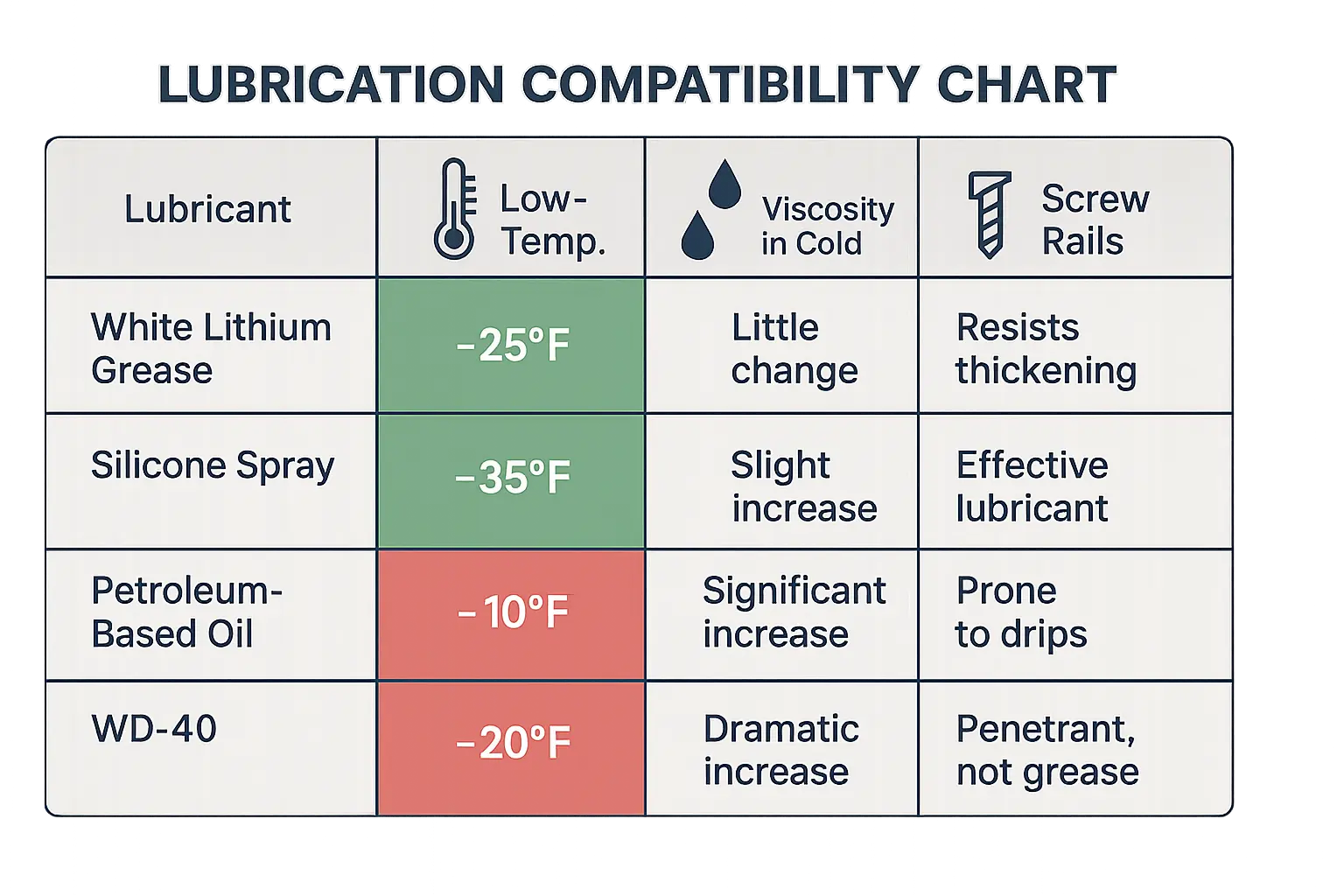
Lubricant Type Low-Temp Threshold Viscosity in Cold Recommended for Screw Rails? Why/Why Not
Genie OEM Screw Lube -15°F (-26°C) Low (Remains Slick) Yes (Best Choice) Formulated specifically for steel-on-steel screw rails.
Lubriplate Aero LBR-S -60°F (-51°C) Ultra-Low Yes (Extreme Cold) Excellent low-temperature lithium grease used in aerospace.
Generic White Lithium 0°F (-18°C) High (Gums Up) No Thickens quickly in sub-zero temps, causing motor strain.
Silicone Spray (Professional) -40°F (-40°C) Very Low Yes (Temporary) Great for rollers/hinges, but wears off screw rails quickly.
WD-40 (Multi-Use) N/A Evaporates NEVER A degreaser, not a lubricant. Attracts dirt and strips existing grease.

If you are tired of performing annual maintenance, a modern DC-powered belt-drive opener offers superior cold-weather reliability. DC motors maintain consistent torque regardless of the temperature and feature soft-start/stop technology that reduces wear on metal components.

When you decide to replace your system, selecting a professional garage door opener replacement ensures your new unit is rated for your climate. Additionally, booking an annual garage door tune up keeps your entire door assembly running reliably through the coldest months.

Refer to this lubrication chart to choose the best grease for your screw-drive garage door opener in winter, avoiding common pitfalls that cause failures.

Frequently Asked Questions


Why does my garage door opener stop and reverse only on very cold mornings?

On freezing mornings, the combination of thickened rail grease, contracted aluminum housing, and a cold start capacitor increases mechanical resistance. The opener’s safety force sensor misinterprets this resistance as an obstruction and automatically reverses the door as a safety precaution.

Can I use WD-40 to get my frozen garage door screw moving again?

No. WD-40 is a solvent and degreaser, not a high-pressure lubricant. Applying it will strip away what remains of your protective specialty grease, allowing dirt and abrasive dust to accumulate directly on the steel rod, which accelerates wear.

How can I tell if my opener’s motor is failing or if it is just a cold-weather lubrication issue?

Disconnect the emergency release cord and pull the door open manually. If the door glides smoothly along its tracks but the motor hums or clicks without moving the screw when activated, the problem is likely a failing start capacitor or damaged internal gears. If the motor runs smoothly once disconnected from the door, the issue is mechanical resistance caused by temperature drops.

Contact / Request a Call