Snowblower Hit the Garage Door? Safely Checking Tracks and the Bottom Section


Published: Sep 30, 2026

A sudden crunch on a freezing morning is all it takes. Whether a heavy snowblower slipped on a patch of ice or a hired contractor cleared your driveway a bit too aggressively, a low-level collision can instantly compromise your garage door’s system.

According to historical field reports from the Door & Access Systems Manufacturers Association (DASMA), the bottom section of a garage door accounts for over 70% of all impact points. When an object strikes this area, it impacts the door at its most mechanically vulnerable point—the lowest 12 to 18 inches of the assembly. This guide will help you safely diagnose the damage, protect your home from winter drafts, and decide whether to handle the repair yourself or call in a professional.
The Immediate Safety Protocol (The First 60 Seconds)


If you just hit your door, the most critical step you can take right now is to stop and step back.

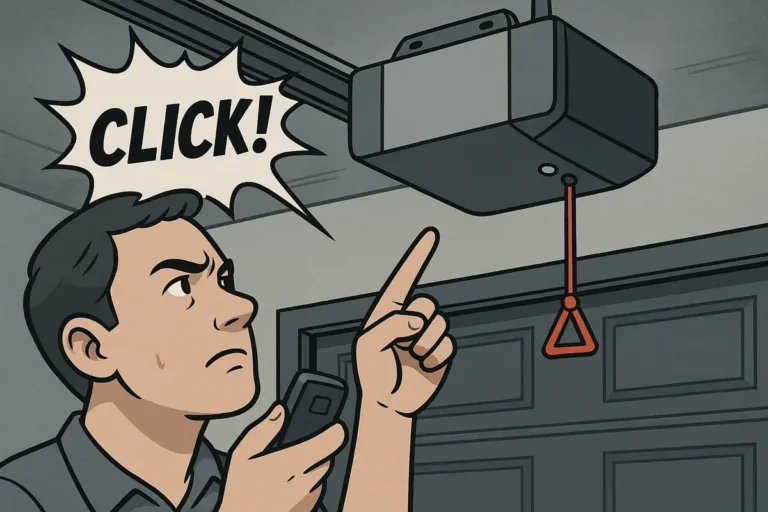
DO NOT press your wall button or garage door remote.

Running an unbalanced or misaligned garage door can burn out your opener’s motor gears, snap lifting cables, or force the door to crash down entirely. Underwriters Laboratories (UL 325) safety standards govern the force limits of automatic openers, but physical track blockages or twisted panels can bypass these safety features, leading to catastrophic mechanical failure.

If your garage door is fully closed, pull the red emergency release cord to disengage it from the opener. If you need assistance with this manual switch, read our detailed guide on how to open garage door manually. Once the immediate danger is managed, you can later learn how to reset garage door after pulling red cord to reconnect your system safely.

Anatomy of a Snowblower Impact (What Actually Happens)


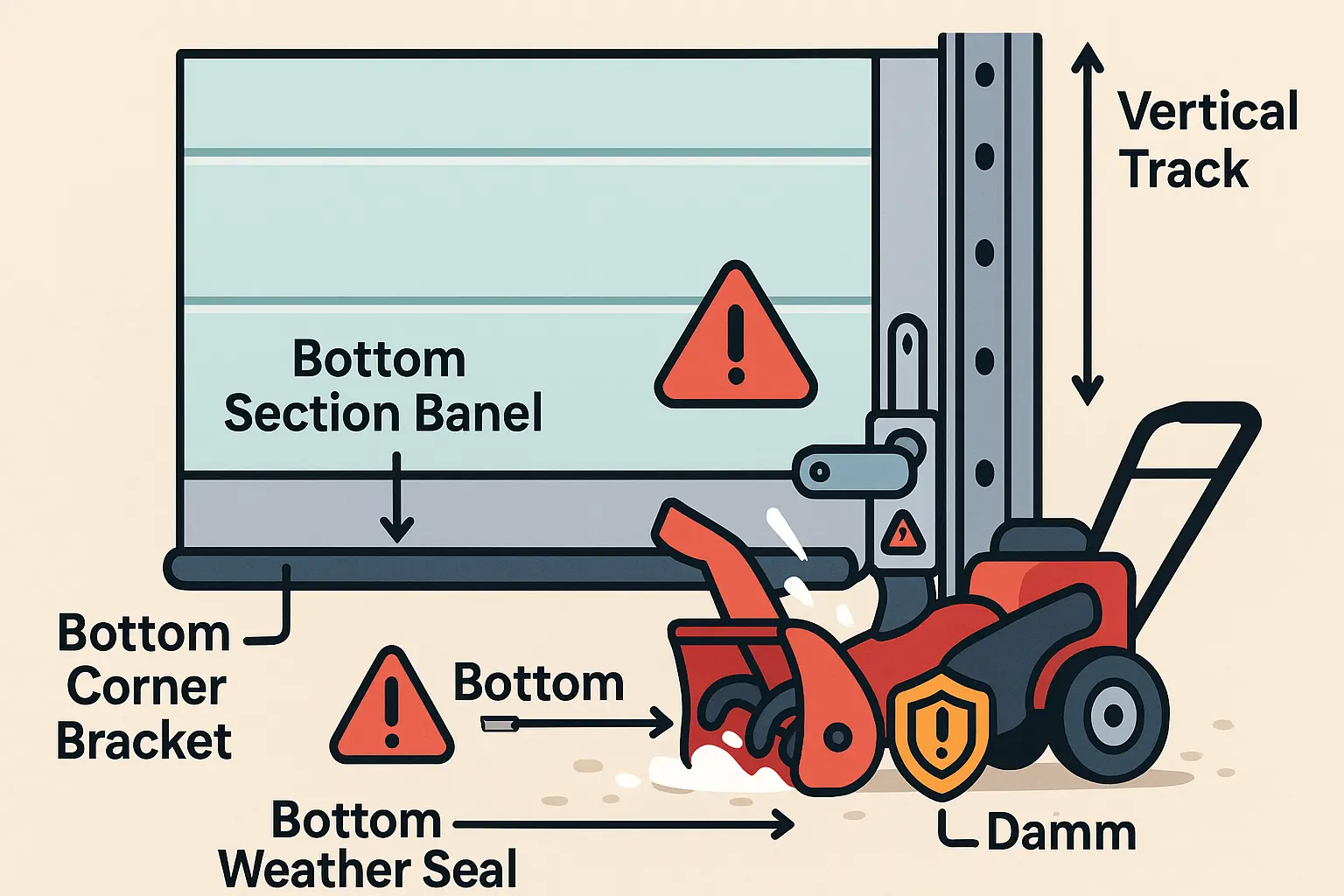
A snowblower collision transfers concentrated kinetic energy directly into four high-stress components at the base of your door.

  • The Bottom Section (Panel): This skin handles the physical impact. If the interior metal support strut buckles, the structural integrity of the entire door is lost.
  • The Bottom Corner Brackets: These brackets are anchor points for the high-tension lift cables. They are under massive mechanical tension (often up to 300+ lbs). Unbolting or adjusting these brackets during a DIY inspection poses an extreme garage door spring danger and should never be attempted.
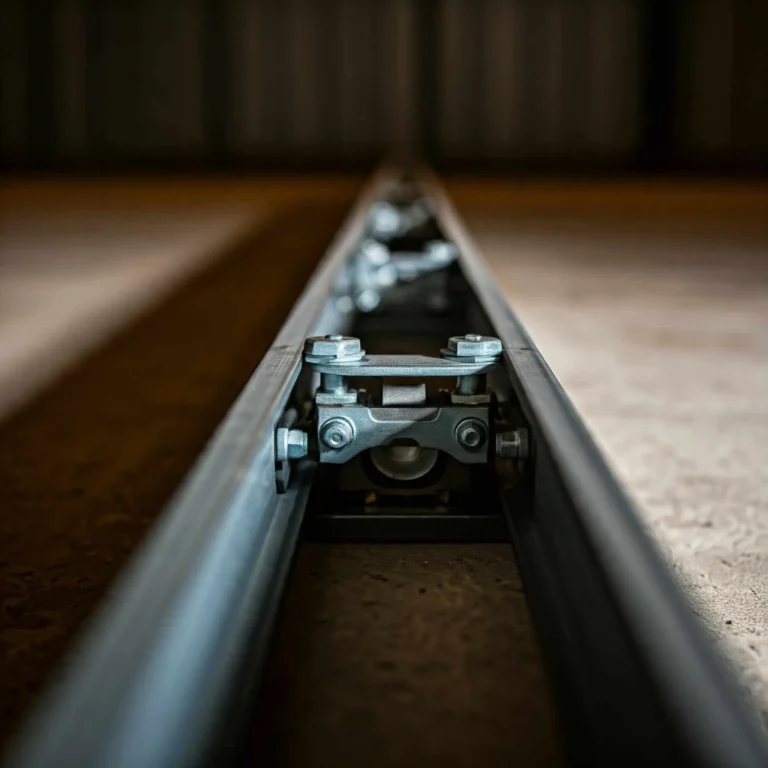
  • The Vertical Tracks: Positioned inches from your driveway, these guide rails can easily twist, bend outward, or detach from their wall brackets.
  • The Bottom Weather Seal: Cold weather makes rubber brittle. Snowblower augers or frozen debris can easily tear this seal, leaving a gap at bottom of garage door that invites freezing drafts and rodents.

This visualization breaks down the critical garage door bottom components affected by snowblower impacts, highlighting why the bottom bracket and track area are mechanically vulnerable and must be inspected carefully for safety.

Step-by-Step Diagnostic Inspection Checklist


Before attempting any manual movement, perform this safe visual and physical inspection.

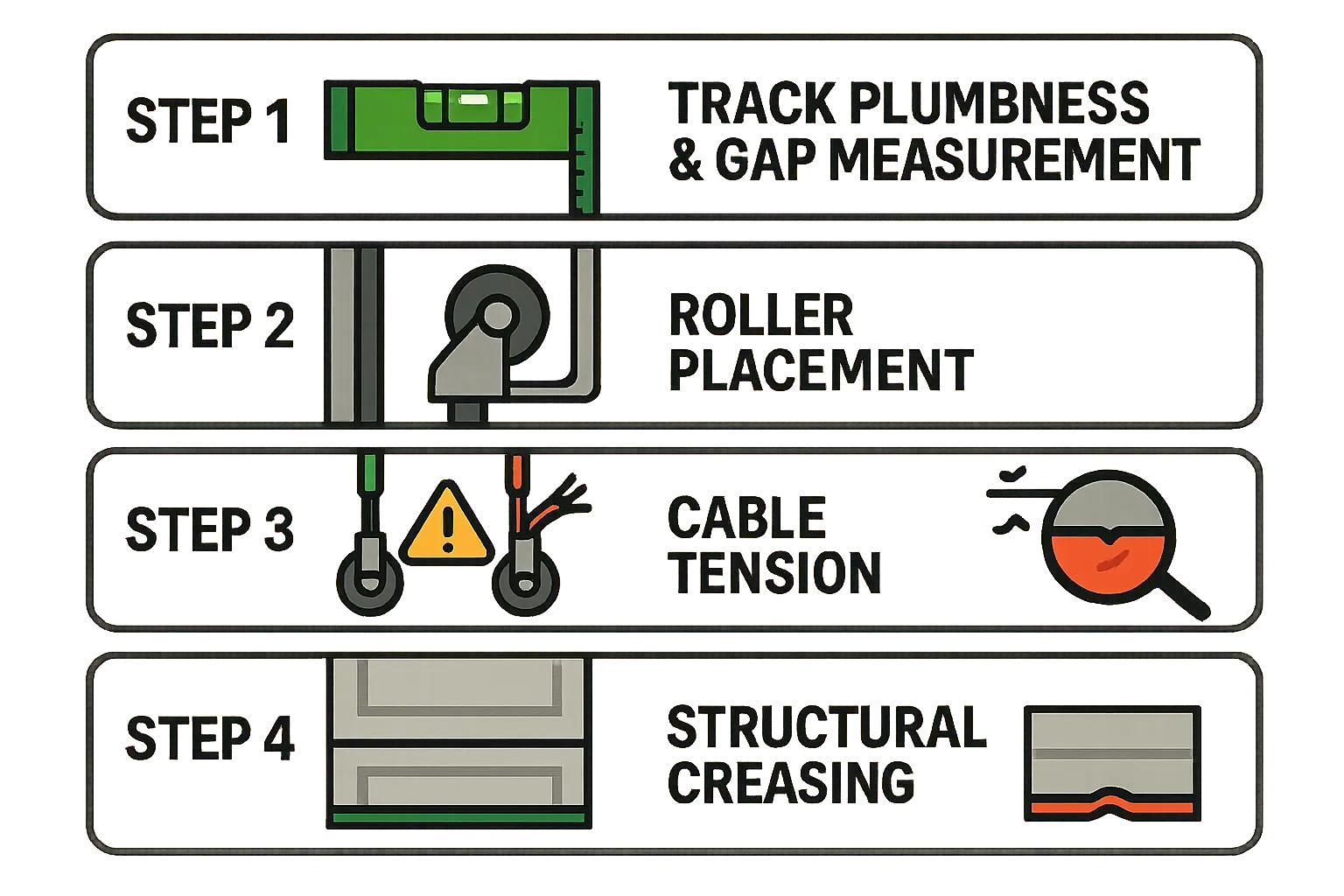
  1. Track Plumbness & Gap Analysis: Run a bubble level down the vertical tracks. Check that the gap between the door panel and the track channel measures between 1/4″ and 1/2″. The tracks must be aligned within 1/16″ of variance.
  2. Roller Placement: Ensure the bottom rollers sit squarely within the track channel. If a roller is slipping out or binding against the steel lip, it can cause a dangerous garage door off track scenario.
  3. Cable Tension Check: Inspect both lift cables for slack or fraying. If you notice severe garage door cable problems, do not touch the door.
  4. Structural Panel Creasing: Inspect the interior and exterior metal skins. Minor cosmetic dents are manageable, but a deep horizontal crease across the width means you will need to research how to repair garage door panel assemblies before operating the opener.

This educational flowchart guides users through a clear, systematic diagnostic inspection to identify damage and safety hazards after a snowblower hits the garage door's vulnerable bottom section.

The "Who Pays?" Contractor and Insurance Playbook


When damage occurs, financial responsibility depends on who was operating the snowblower.

  • Hired Snow Removal Contractors: If a third-party plow crew hit your door, document the damage immediately with high-resolution, time-stamped photos before touching the system. Do not clean up debris or attempt repairs. Contact the supervisor, present the photo evidence, and request their General Liability Insurance Certificate to file a claim directly with their carrier.
  • Homeowner’s Insurance Claims: If you hit the door yourself, your homeowner’s insurance policy typically covers accidental damage to your home. However, with standard deductibles ranging from $500 to $1,000, filing a claim for minor track adjustments or single-panel repairs may cost more out-of-pocket than hiring a local technician directly. Save your insurance claims for structural damage that requires complete system replacements.

How to Repair a Minor Vertical Track Bend


If your inspection reveals a minor bend in the flat outer lip of a vertical track—with no metal tearing or structural creasing—you can often perform a safe DIY adjustment.

  1. Secure the System: Place locking pliers or heavy-duty C-clamps on the track directly above the highest roller to block the door from moving.
  2. Set the Anvil: Place a flat scrap block of 2×4 wood inside the track channel. This wood block acts as an anvil to maintain the correct shape of the steel channel.
  3. Reshape the Steel: Use a rubber mallet to gently tap the outer lip back to vertical. Never use a metal hammer directly on steel tracks. Doing so stretches, thins, and warps the metal, ruining the track’s structural strength permanently.
  4. Verify Alignment: Remove the wood block, clear your tools, and confirm the track is plumb with a level. Check our detailed guide to verify your garage door track alignment meets safety standards before removing the locking clamps.

Frequently Asked Questions


Can I run my automatic garage door opener if a snowblower hit the bottom track?

No. Operating an opener with a misaligned track can bend the opener’s rail, strip the internal gears, or snap the high-tension lift cables. Always disengage the manual emergency release cord and visually inspect the entire track system first.

Is a single creased garage door panel repairable, or must I replace the whole door?

You do not need to replace the entire door system. Individual steel sections can be replaced independently if the manufacturer model is still active. A structural reinforcement strut can also sometimes stabilize a minor bend, but severe creases require a single-panel replacement.

How do I know if my garage door cables have lost tension after an impact?

Look at the vertical tracks on both sides of your closed door. The steel lift cables should run tight and parallel to the tracks, wrapping cleanly around the drums at the top corners. If a cable is loose, frayed, or completely off the top spool, do not touch the door, and call a professional immediately.

Contact / Request a Call