Sustainable Garage Door Disposal: The Ultimate Green Recovery Guide


Published: Sep 18, 2026

Upgrading your home’s exterior is an exciting milestone, but it leaves behind a heavy logistical challenge: a 150-to-250-pound assembly of steel, wood, glass, and electronics sitting in your driveway. How you choose to handle this material has significant financial and ecological consequences.

For modern homeowners, the goal is to shift from simple disposal to sustainable recovery. This guide outlines how to extract value from your old system, safely navigate hazardous components, and make an environmentally responsible choice.

INTRO - THE ECOLOGICAL WEIGHT OF AN OVERHEAD DOOR


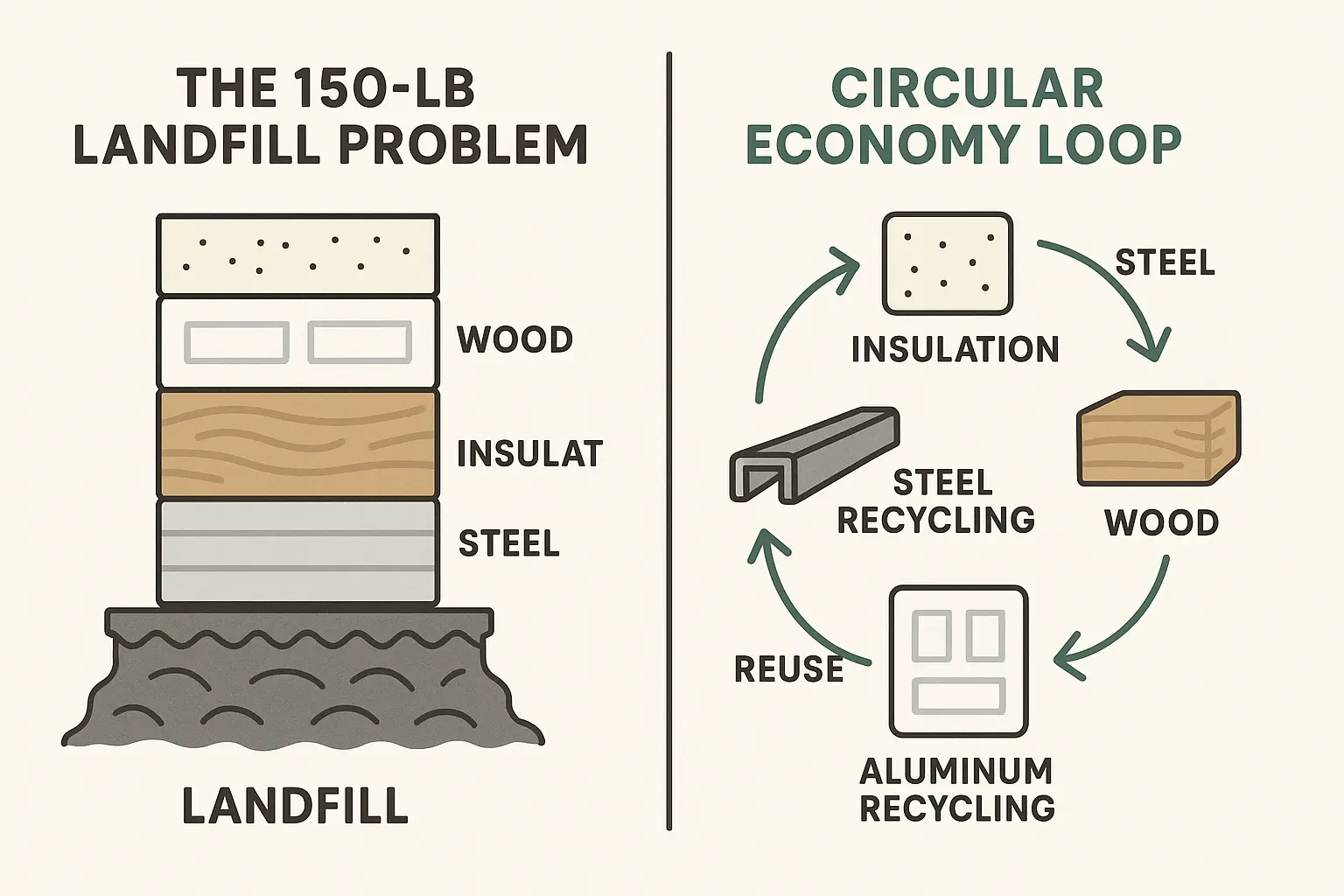
An average residential garage door takes up 20 to 30 cubic feet of landfill space (EPA). Because modern systems are built to endure harsh weather, materials like insulated steel and vinyl-backed composites can persist in landfills for hundreds of years. Landfill disposal of modern insulated garage doors also introduces ecological hazards, as aging polyurethane foam cores can slowly off-gas hydrofluorocarbons (HFCs) as they degrade.

By contrast, choosing a circular economy approach keeps these valuable materials in production loops.

Understanding the true ecological weight of your old garage door reveals why recycling metals, wood, and insulation materials conserves resources and reduces landfill impact for generations to come.

THE DECISION MATRIX - RECYCLE, SCRAP, OR HAUL?


Before throwing your door in a standard municipal dumpster—which often results in heavy weight overages or outright bans—consider your recovery options:

  • Scrapping: Best for pure metal doors. Yields cash back at local yards based on weight and material grade.
  • Recycling: The greenest pathway. Keeps composite, wood, and metal elements out of municipal waste streams.
  • Donation: Ideal for functional, undamaged wood or steel doors that can be rehomed via architectural salvage.
  • Professional Green Hauling: The most convenient choice. Your installer manages the dismantling, transport, and certified recycling.

Selecting high-quality, durable components upfront, such as low maintenance garage door materials, reduces future waste by extending your door’s lifespan.

STEP-BY-STEP MATERIAL BLUEPRINTS


Metal Garage Doors (Steel & Aluminum)

Metals are highly valued in the circular economy. Recycling steel saves 74% of the energy required to make it from raw ore (Steel Recycling Institute). For a standard 150 lb double steel door, this saves roughly 111 kWh of electricity—enough to power an average home for nearly four days. Knowing the physical properties of your door, like comparing 24 vs 25 gauge steel thickness, helps scrap yards determine its weight and value. Understanding these steel garage door benefits underscores why steel is such an environmentally friendly material to salvage.

Aluminum is even more energy-efficient: recycling aluminum saves 95% of the energy required to produce virgin metal (The Aluminum Association).

The Rust Question

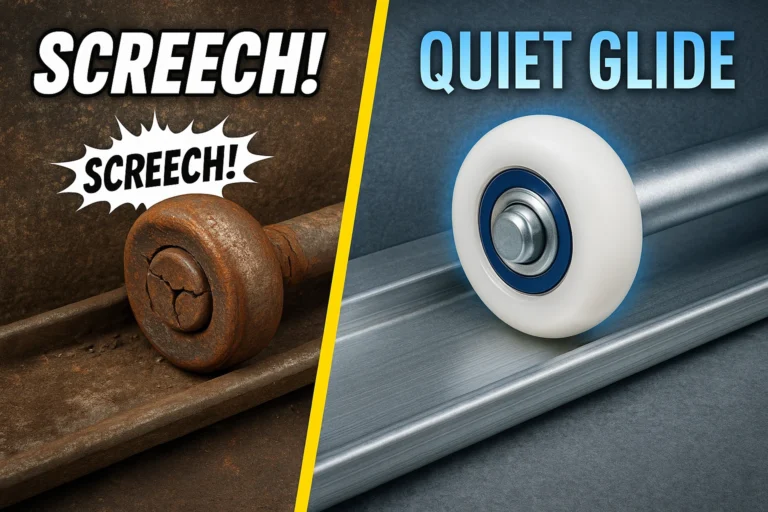
Many homeowners worry that surface corrosion makes metal unrecyclable. However, iron oxide simply burns off during the industrial smelting process. Scrap yards readily accept rusted steel, though severe oxidation may slightly reduce the total weight at the scale.
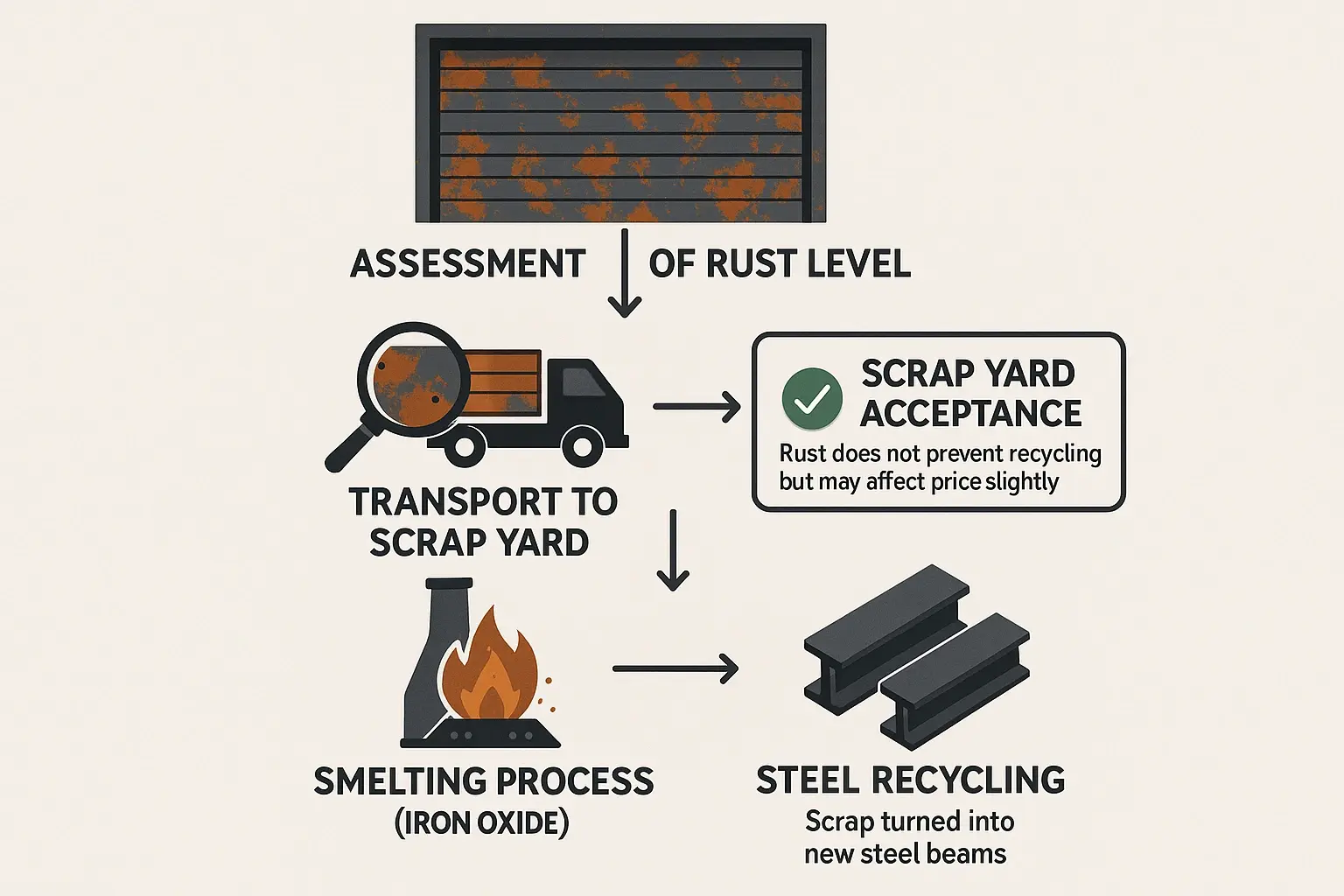
Rust on steel garage doors doesn't block recycling — it simply burns off during smelting, keeping valuable metal in the circular economy while reducing waste.

Complex Insulated and Wooden Doors

Composite doors present unique recycling challenges. You must separate the external skin from internal layers, such as various garage door insulation types, like polystyrene or glued polyurethane. For wood doors, painted panels must be inspected for lead-based finishes before they can be repurposed or safely mulched.

⚠️ SAFETY WARNING: Never attempt to dismantle torsion springs yourself. These components operate under extreme mechanical tension. A sudden release of kinetic force can cause severe injury or property damage. If you have broken garage door springs or need to safely unwind a spring, contact a professional technician. Do not attempt a DIY garage door torsion spring winding without certified training and professional tension rods.

DECONSTRUCTING THE OPENER (E-WASTE COMPLIANCE)


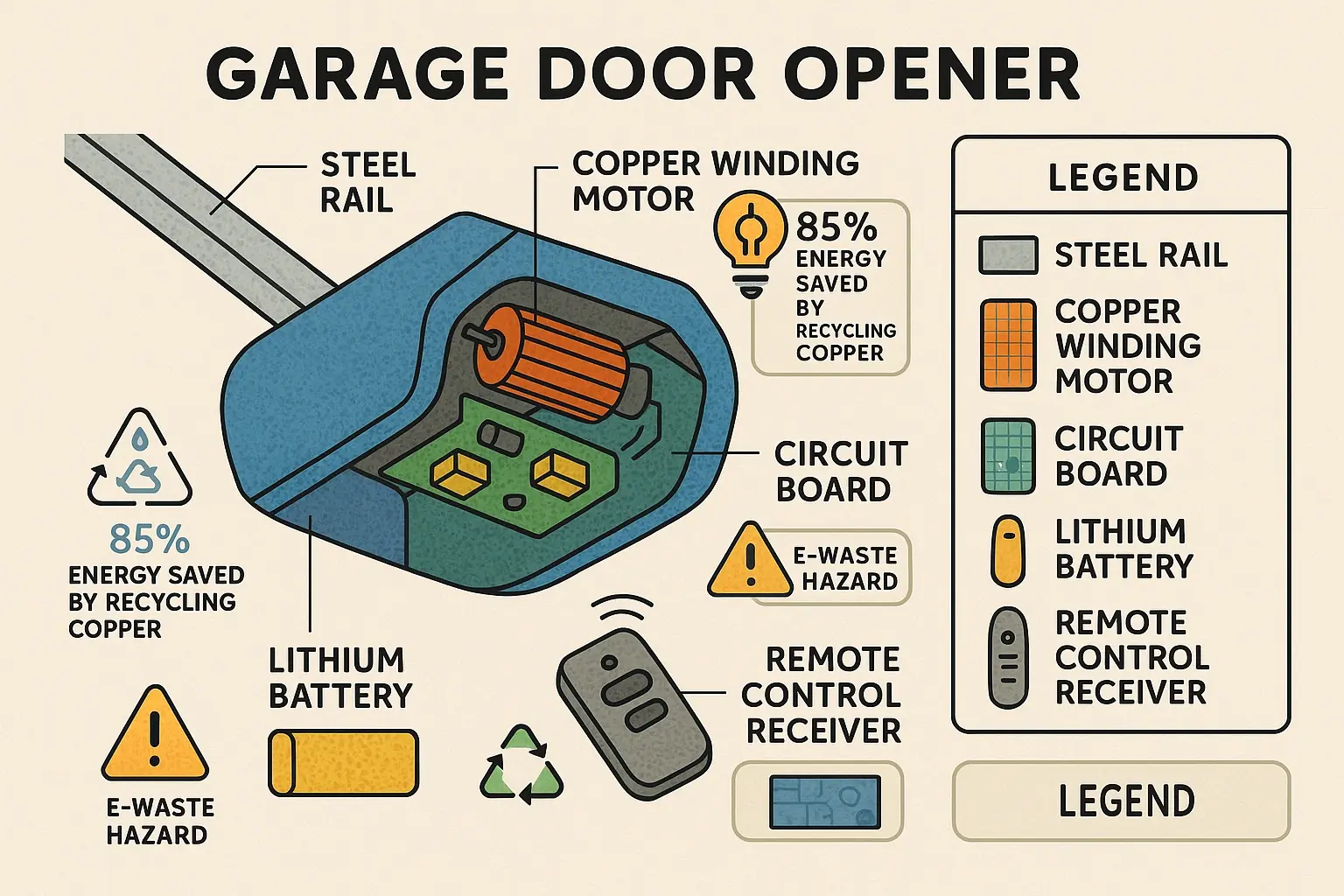
Your garage door opener is packed with recyclable electronic components. The heart of the motor contains concentrated copper windings; recycling copper saves 85% of the energy compared to mining raw ore (Copper Alliance).

Before dropping the motor at a recycling center, you must safely disconnect garage door opener assemblies from the structural rail. Additionally, check if your system includes backup batteries: determining if your system has battery power and answering do garage door openers have batteries is essential for safe handling, as these lithium-ion or lead-acid batteries must be extracted and taken to a designated hazardous waste drop-off.

Knowing the parts inside your garage door opener helps unlock its hidden value—recovering copper, safely handling batteries, and reducing toxic waste for a greener planet.

THE 24H GARAGE DOORS GREEN GUARANTEE


Eco-friendly disposal doesn’t have to be a logistical headache. When you partner with 24H Garage Doors for your replacement, we manage the entire process from start to finish. Our team of technicians carefully dismantles your old system, safely handles high-tension springs, and delivers the components directly to our certified local recycling partners.

Understanding what to expect during a professional garage door installation gives you peace of mind, knowing your home improvement project is clean, safe, and environmentally responsible. Contact us today to schedule your green garage upgrade.

Frequently Asked Questions


Can I put an old garage door in a standard trash dumpster?

Most waste management companies do not allow garage doors in standard household dumpsters due to weight restrictions and the physical size of the panels. Always check local guidelines first to avoid fines.

Are rusty steel garage doors still recyclable?

Yes. Rust (iron oxide) does not prevent steel from being recycled because it is completely separated from pure metal during the high-heat smelting process.

What should I do with a garage door opener's backup battery?

Opener backup batteries are hazardous e-waste and must never be thrown in the trash. They should be taken to a dedicated household hazardous waste facility or a retail battery recycling kiosk.

Contact / Request a Call