main logo

Metal Gauge Guide: How to Choose Steel Garage Door


Published: Jul 8, 2026

The answer isn't just "metal." It lies in a combination of hidden factors: the steel's thickness, its layered construction, and the core material that insulates it. Understanding these three elements is the key to choosing a door that not only looks great but also performs for years to come.

This guide will demystify the technical jargon and give you the confidence to see past the showroom shine. We'll break down the construction of a steel garage door so you can make a smart, informed decision for your home.

Understanding Steel Gauge Foundations


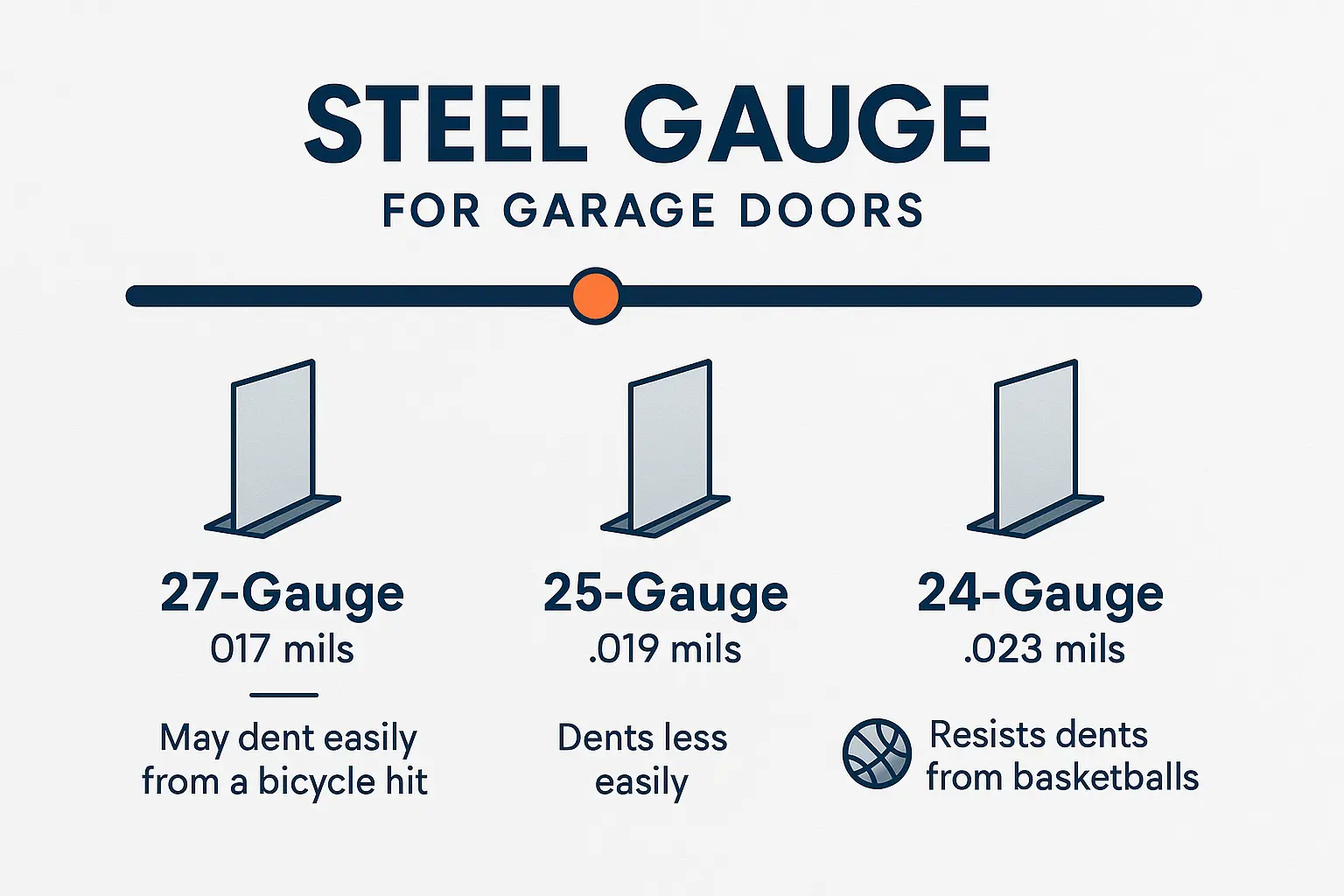
When you start shopping for steel products, you'll hear the term "gauge" a lot. Here’s the single most important thing to know, and it's a bit counter-intuitive: with steel gauge, a lower number means thicker, more durable steel.
Understanding steel gauge: Lower gauge numbers mean thicker, stronger steel. This infographic clarifies durability differences to simplify your garage door choice.
A 24-gauge steel door is thicker and stronger than a 25-gauge door, which is in turn thicker than a 27-gauge door. Think of it as a ranking system—#1 is better than #2. It's a common point of confusion, but once you grasp this simple rule, you're already ahead of the game.
So, why does this matter in the real world?

  • Dent Resistance: A thicker, 24-gauge door is far more likely to withstand a stray basketball or a bump from a lawnmower than a thinner, 27-gauge door. This superior durability and garage door abrasion resistance are key long-term steel garage door benefits.
  • Longevity & Stability: Thicker steel provides more structural integrity, especially for wider double-car doors. It's less prone to the wavy effect known as "oil canning" and will operate more smoothly over its lifespan.
While gauge is a great starting point, the industry's "gauge controversy" reveals it isn't a perfectly exact measurement due to manufacturing tolerances. However, it remains the most reliable indicator of a door's baseline strength.
Understanding steel gauge: Lower gauge numbers mean thicker, stronger steel. This infographic clarifies durability differences to simplify your garage door choice.

Layers and Insulation of Steel Door Explained


Beyond the thickness of the steel skin lies the door's internal structure. This is where layers and insulation come into play, working together to determine everything from energy efficiency to how quiet the door is.

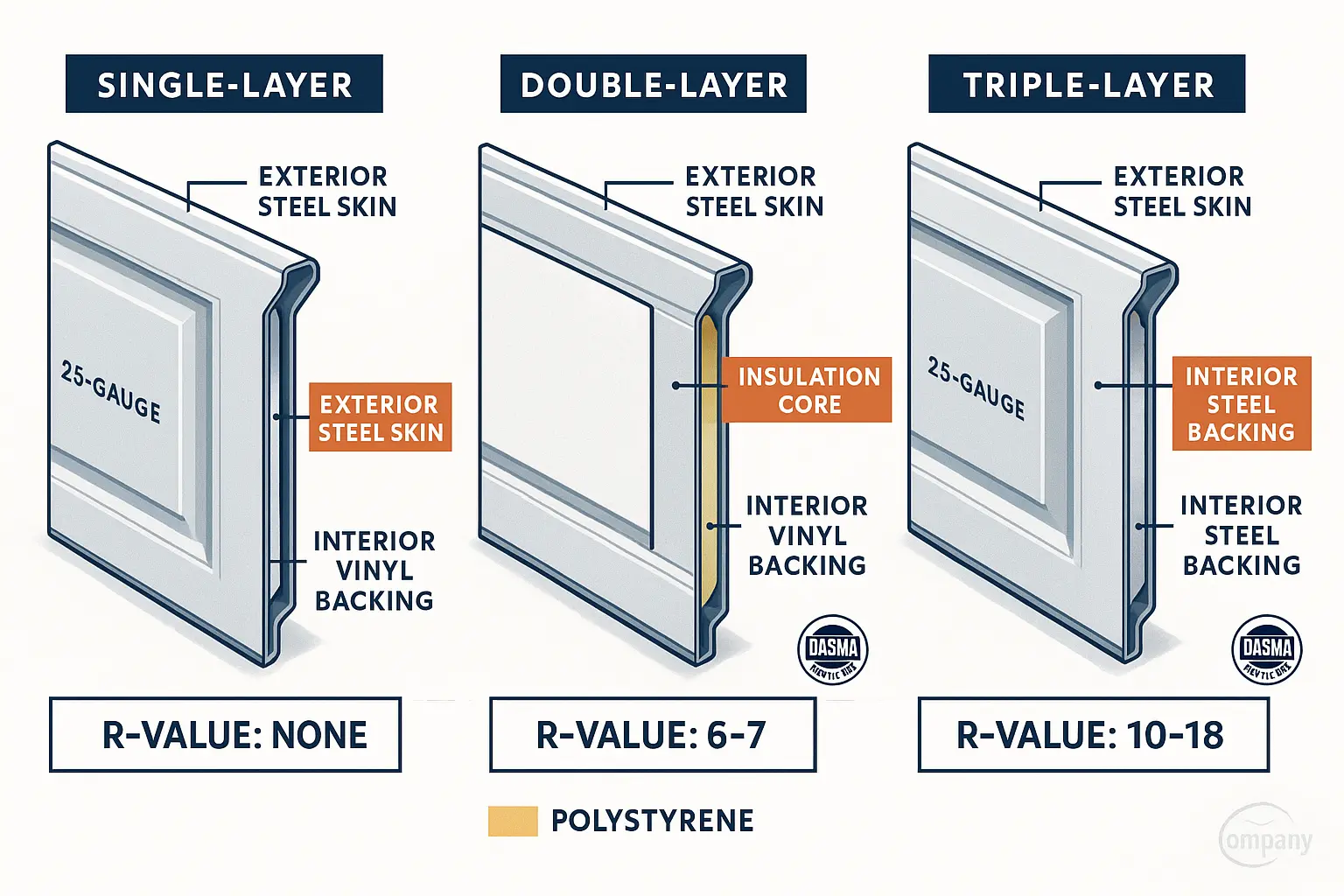
Steel doors are typically available in single, double, or triple-layer constructions.

Single-Layer Doors: The Budget-Friendly Basic

  • What It Is: A single sheet of steel. That's it. There is no insulation or interior backing.
  • Why You'd Choose It: It's the most economical option, perfect for detached garages or sheds where climate control and noise are not concerns.
  • Keep in Mind: These doors offer minimal durability and no insulating properties. They are the most susceptible to dents from the inside and outside.
Explore how steel gauge, layers, and insulation combine to influence garage door durability and energy efficiency with this expert cross-section comparison.

Double-Layer Doors: The Balanced Performer

What It Is: A steel exterior layer with a layer of polystyrene or polyurethane insulation bonded to the back.

Why You'd Choose It: This is a significant step up. The insulation adds rigidity (making the door stronger) and provides a moderate barrier against temperature and noise.

Keep in Mind: The insulation is visible from the inside, often covered with a thin vinyl film. It's a great middle-ground for many attached garages.

Triple-Layer Doors: The Premium Protector

What It Is: A "sandwich" construction. An outer layer of steel, a thick core of insulation, and an inner layer of steel.

Why You'd Choose It: This is the strongest, most energy-efficient, and quietest option. The steel-insulation-steel construction creates a robust, finished-looking door that can handle kids, cars, and harsh weather.

Keep in Mind: This is the premium choice for homeowners who use their garage as a workshop, gym, or have a room above it. The construction is available across all styles, whether you're comparing garage door raised panel vs flush panel designs.

A Tale of Two Cores: Polystyrene vs. Polyurethane

The type of insulation used in double and triple-layer doors makes a huge difference.

Polystyrene: Think of this like the rigid foam panels in a styrofoam cooler. It's cut to fit and glued into the door panels. It offers good insulating value (R-value) for its cost.

Polyurethane: Imagine this as spray foam that's injected into the door cavity, where it expands to fill every single nook and cranny. This creates a denser, more solid structure with a significantly higher R-value per inch. It also provides superior sound dampening.

For homeowners serious about energy savings, fully insulated garage doors with polyurethane cores are the gold standard.

Explore how steel gauge, layers, and insulation combine to influence garage door durability and energy efficiency with this expert cross-section comparison.

How to Make the Right Choice


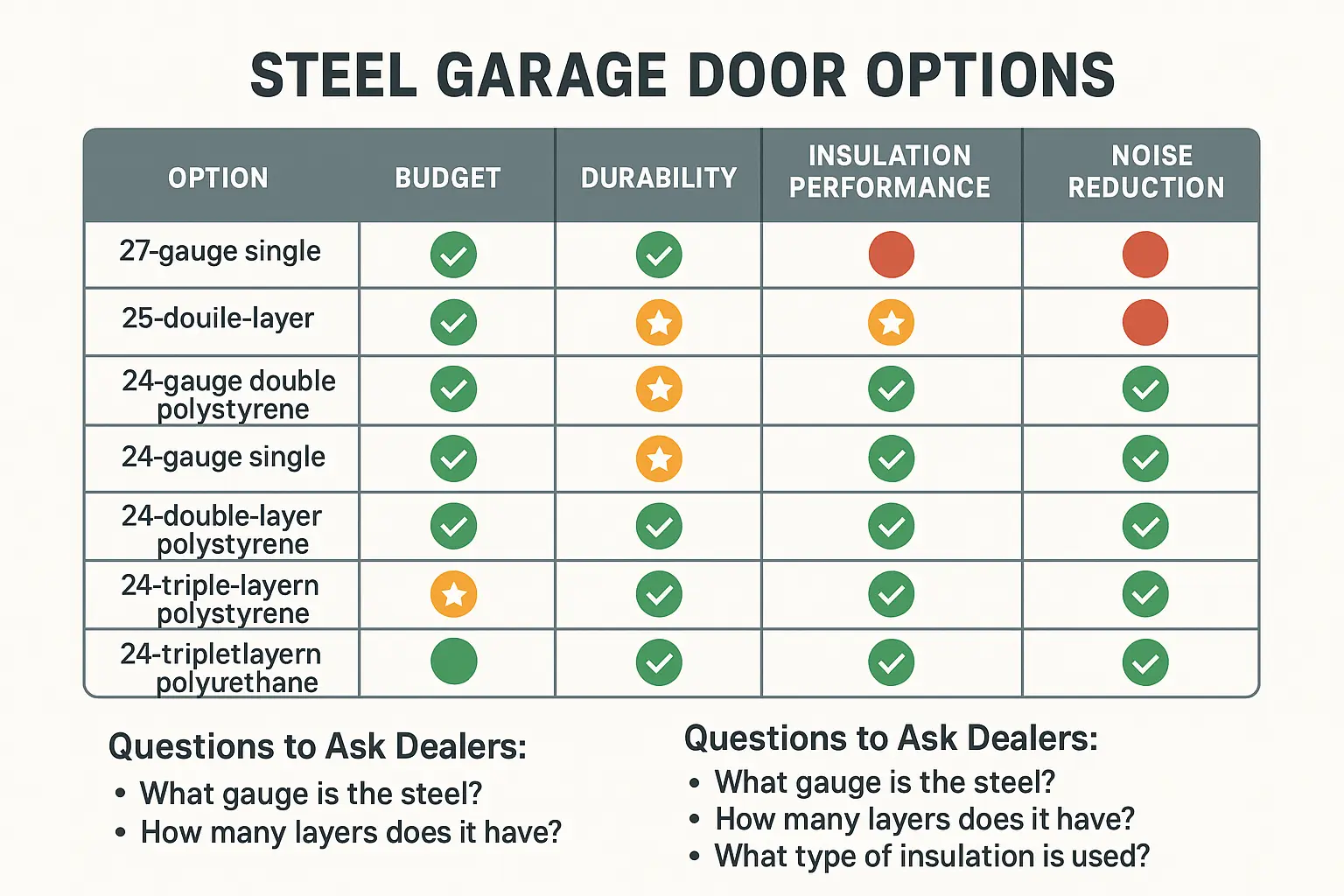
Use this matrix to find the ideal steel garage door for your needs—balancing budget, durability, and insulation to make an informed choice with confidence.
So, how do you put all this information together? The "best" garage door is the one that best fits your priorities. Use this simple matrix to guide your decision.

Your choice of construction directly impacts how your door will handle common problems. A 24-gauge, triple-layer door with polyurethane insulation will be a quiet, energy-saving fortress that resists dents. A 27-gauge, single-layer door will be a basic, budget-friendly barrier. Both are valid choices, depending on your needs.

Use this matrix to find the ideal steel garage door for your needs—balancing budget, durability, and insulation to make an informed choice with confidence.

Your Smart Buyer's Checklist


Ask these smart questions to ensure you get a durable, efficient steel garage door that meets your home's unique needs and withstands the test of time.
When you're ready to talk to a professional, you'll be armed with the right knowledge. Don't be afraid to ask specific questions to ensure you're getting exactly what you want.

Ask these smart questions to ensure you get a durable, efficient steel garage door that meets your home's unique needs and withstands the test of time.

Frequently Asked Questions (FAQ)


What is the best gauge steel for a garage door?

For most residential homes, 24-gauge or 25-gauge steel offers a great balance of durability and value. 24-gauge is the superior choice for dent resistance and longevity, especially for families with active kids or for wider doors.

Are insulated garage doors worth it?

Absolutely, especially for attached garages. Insulation strengthens the door, reduces noise, and most importantly, helps regulate the temperature in your garage. This can lower your home's overall energy bills and make the garage a more comfortable space.

What is R-value and why does it matter?

R-value measures thermal resistance, or how well the insulation prevents heat transfer. A higher R-value means better insulation. A door with an R-value of 12 or more is excellent for climates with cold winters or hot summers.

What is the difference between polystyrene and polyurethane insulation?

Polyurethane is a denser, higher-performing insulator that offers a better R-value and more structural rigidity than polystyrene. While polystyrene is a good, budget-conscious choice, polyurethane is the premium option for energy efficiency and strength.

By investing a little time to understand the fundamentals of steel garage door construction, you can choose a product that will protect your home, enhance its curb appeal, and provide lasting value for years to come.

You may also like