Living by the coast is a dream. The ocean breeze, the stunning views, the sound of the waves—it’s an environment that soothes the soul. But that same environment is waging a silent, two-front war on one of the largest and most important parts of your home: your garage door.
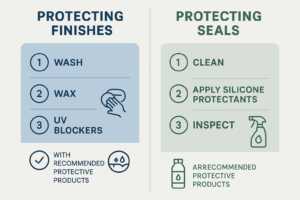
You’ve probably noticed the early signs. The once-vibrant paint looks a little duller, almost chalky. The rubber seals at the bottom and sides feel stiff and have tiny cracks starting to appear. These aren’t just signs of aging; they’re symptoms of a powerful environmental assault.
Hook: Your Coastal Home is Attacking Your Garage Door – The One-Two Punch Analogy
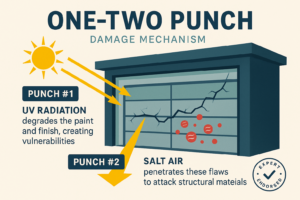
The accelerated wear and tear on your garage door isn’t caused by one single thing. It’s the result of a devastating “One-Two Punch” combo delivered by sun and salt, working together to break down your door’s defenses.
- Punch #1: UV Radiation. Think of the sun’s ultraviolet rays as a relentless force that weakens your door’s “skin”—its paint, stain, or factory finish. UV radiation breaks down the chemical bonds in these coatings, causing them to fade, become brittle, and eventually crack or peel. This first punch compromises the protective layer.
- Punch #2: Salt Air. Once the UV rays have created openings, the corrosive salt-laced moisture from the ocean air moves in for the second punch. It seeps into those tiny cracks and begins attacking the door’s “bones”—the underlying steel, wood, or composite material. This leads to rust, rot, and delamination far faster than in non-coastal areas.
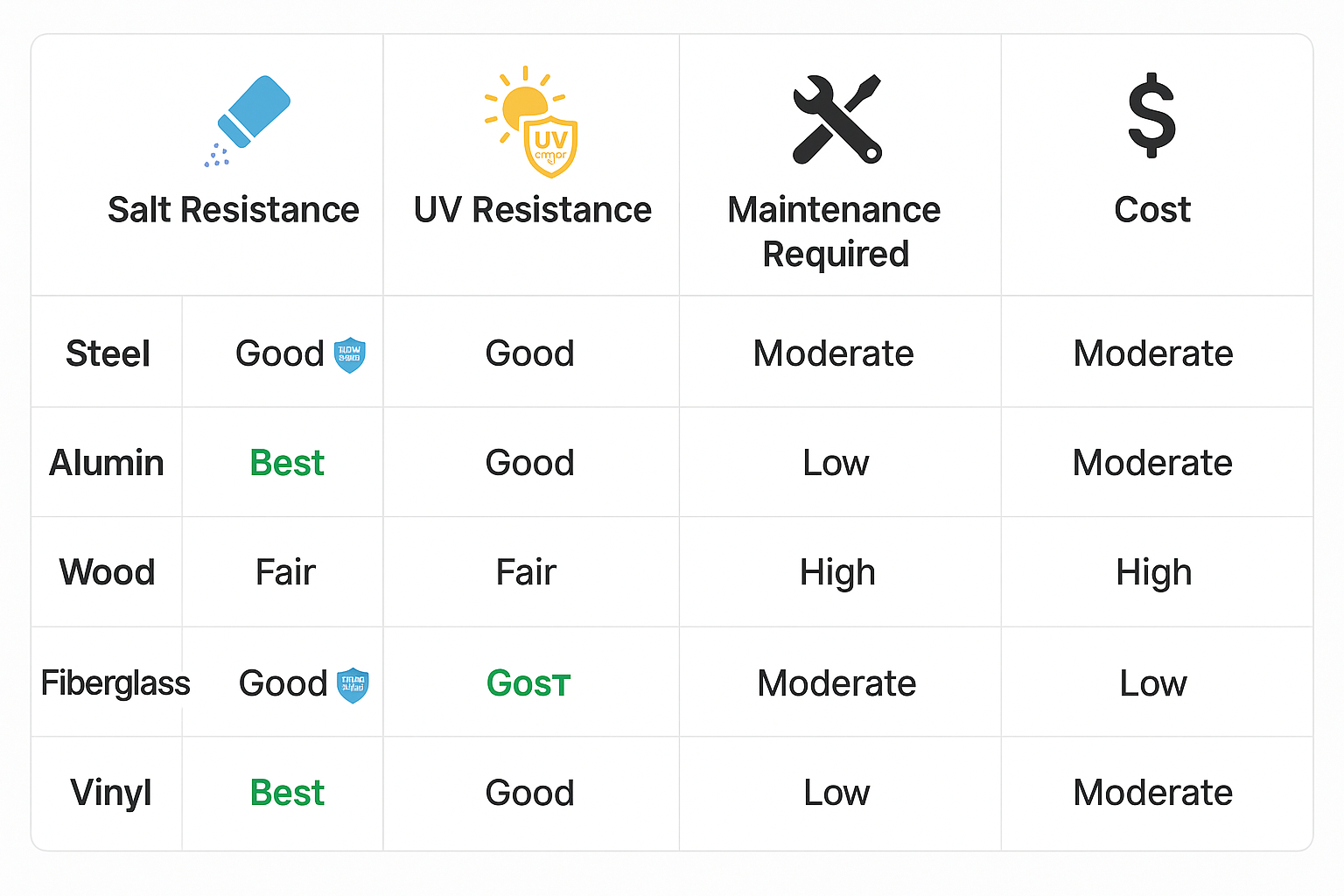
This synergistic effect is why a garage door that might last 20 years inland can show significant damage in just 5 to 7 years near the coast. But don’t worry—with the right knowledge, you can build a powerful defense.
 Aluminum: A lightweight and rust-proof option. However, standard aluminum can be prone to denting. For coastal applications, look for anodized or powder-coated aluminum doors, which have a much more robust finish to resist corrosion and fading.