Garage Door Won’t Close at Night: A 10-Minute Triage Before You Call Anyone


Published: Aug 31, 2026

It is bedtime, and you are ready to lock up. You press the remote button, but your garage door moves a few inches, stops, and reverses back open. The immediate panic is real. Your home feels vulnerable, and the thought of paying a $150–$300 emergency technician call-out fee is frustrating.

Before you worry, take a deep breath. Many nighttime garage door malfunctions are caused by predictable, physics-based factors: rapid temperature drops, sensor dew, nocturnal pests, or even radio frequency interference from security lights. This fast, 10-minute triage guide will help you secure your home tonight without spending a dime on unnecessary emergency visits.
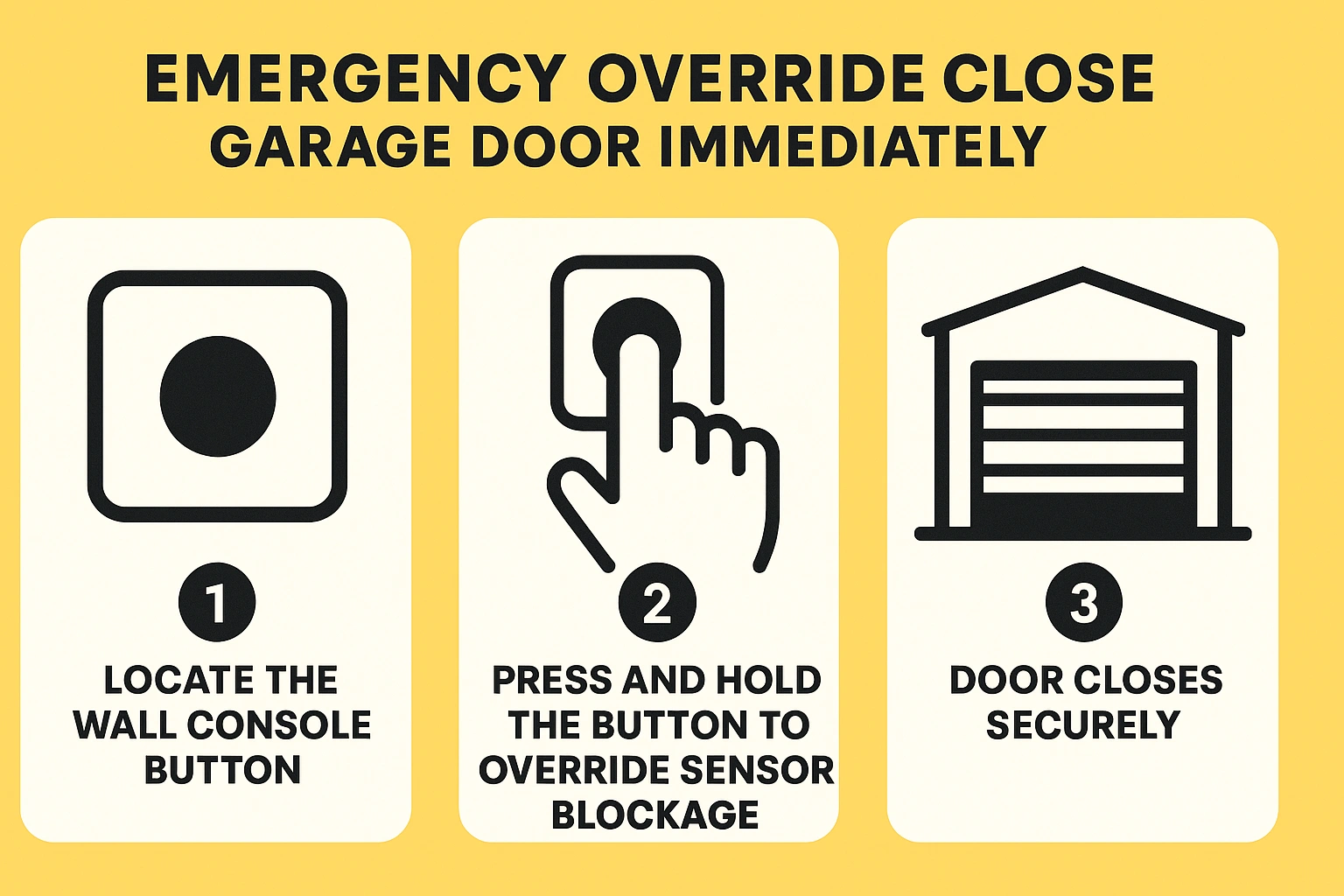
Step 0: The Wall-Button Force-Close Override (Get Secure Now)


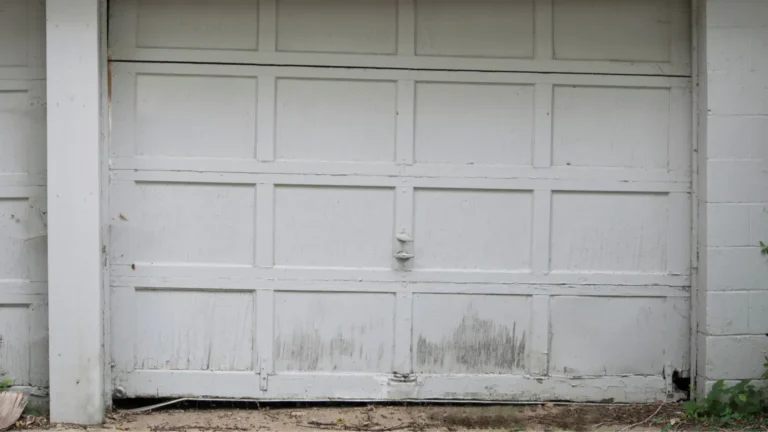
Quickly secure your garage at night by using the wall console button to override sensor issues and close the door safely in three simple steps.

If you just want to lock your house and deal with diagnostics tomorrow morning, you can bypass the safety sensors immediately using a simple manual override.

  1. The Wall-Console Push: Walk to your wall-mounted garage button inside the garage. Press and continuously hold the button down. Do not let go. Keeping it fully depressed forces the opener to bypass the safety sensor signals. Once the door is fully closed against the floor, release the button.
  2. The Manual Release Hook: If the wall button fails, use the garage door emergency release cord. Pull the red cord down and back toward the motor to disengage the carriage. Manually slide the door down and use the physical slide lock to secure it from the inside. If you do this, you will need to learn how to reset garage door after pulling red cord in the morning before using the motor again.

The 10-Minute Physical Diagnosis Flow


If you want to resolve the underlying issue tonight, go through these three high-probability checks designed to diagnose night-specific failures.

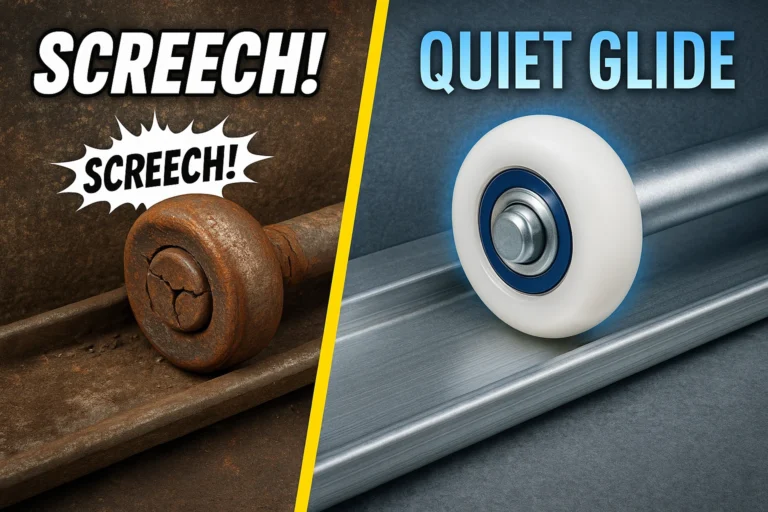
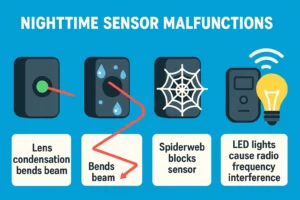
Understand why garage door sensors fail at night: condensation, cobwebs, and LED lights can block or jam sensor signals preventing door closure.

Path A: Is the Opener Clicking and Flashing? (Sensor Triage)

When a garage door wont close and the opener’s light bulbs flash, the system is telling you that the safety sensors are blocked or misaligned.

If you notice your garage sensor light not on or blinking, look for these common nighttime culprits:

  • Nighttime Dew & Lens Condensation: As temperatures drop to the dew point, moisture forms on the cold safety glass. This condensation refracts the infrared beam. Take a clean microfiber cloth and thoroughly wipe both sensor lenses dry.
  • Nocturnal Pests & Debris: Spiders love the warm draft of garage doors. A fresh spiderweb built across the sensor path or a moth sitting directly on the lens will block the signal. Clear any webs around the base of the tracks with a broom.

Path B: Did the Remote Just Stop Working? (Signal Triage)

If the wall button closes the door perfectly but your garage door remote not working, you are likely dealing with Radio Frequency Interference (RFI) rather than a mechanical issue.

  • The LED Security Bulb Phenomenon: Modern energy-efficient LED bulbs (especially inexpensive exterior security floodlights that activate automatically at dusk) emit electromagnetic noise. If these drivers run on frequencies near 300–390 MHz, they can completely jam your remote’s signal.
  • The Diagnosis: Temporarily switch off your home’s outdoor security lights or remove the LED light bulbs from the opener motor itself. If your remote immediately begins working, you have found the culprit. Replace them with shielded, garage-rated LED bulbs.

Path C: Does the Door Reverse on Contact with the Ground? (Track Triage)

Does the door travel almost all the way down, hit the floor, and immediately bounce back open? This points to physical resistance or sensor misalignment near the bottom.

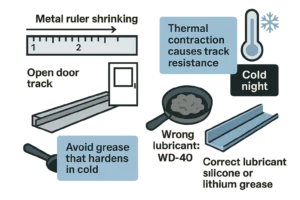
Remember: cold weather contracts metal tracks and hardens incorrect grease, causing door to reverse. Use silicone or lithium grease for smooth operation.

  • Thermal Contraction & Hardened Grease: Metal tracks contract slightly in cold night air. If your tracks are lubricated with the wrong product—like WD-40, which attracts dust and thickens in cold weather—the motor will encounter high resistance. The opener interprets this drag as an obstruction and reverses.
  • The Solution: Knowing how often should you lubricate your garage door is critical to preventing this. Always use professional-grade silicone or lithium grease. If the door continues to bounce, a minor garage door opener adjustment to the “down limit” or “close force” screws on the motor head can compensate for thermal drag.

When to Call a Professional


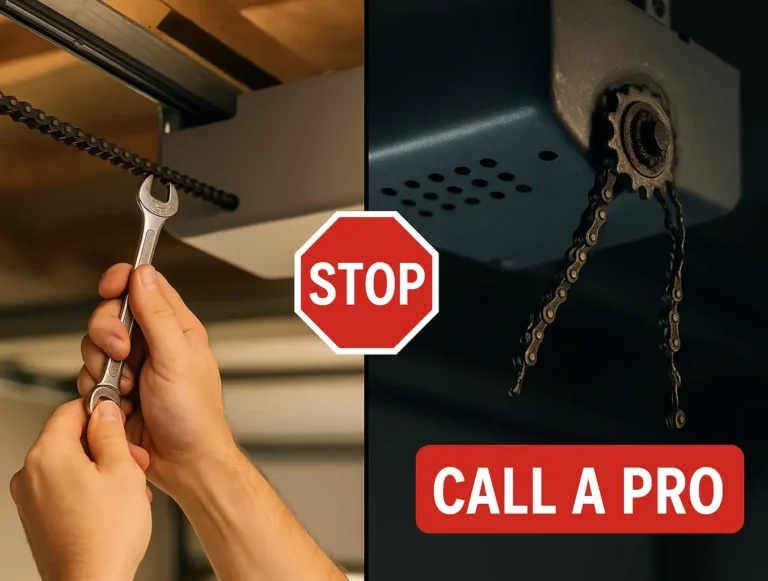
If your door is physically off-track, if a cable is frayed and loose, or if a torsion spring has snapped with a loud bang, do not attempt to force it closed. The garage door off track repair cost is a minor investment compared to the danger of a heavy door falling unexpectedly.

If your 10-minute triage fails to secure the door, or if you suspect structural damage, secure your interior house door and contact a professional. An expert 24 hour garage service provider can dispatch a technician to restore your home’s security and peace of mind before morning.


Nighttime Garage Door FAQs


Why does my garage door only refuse to close at night?

This is usually caused by temperature-driven physical changes: condensation gathering on the safety lenses, metal track contraction increasing resistance, or night-activated LED security lights emitting wireless interference.

Can I permanently bypass safety sensors?

No. Safety sensors are federally mandated safety features designed to prevent serious injury. You can temporarily override them by holding down the physical wall button, but you should never permanently disconnect or bypass them.

Why does my opener light flash ten times when the door reverses?

Ten flashes is the standard diagnostic code indicating a safety sensor misalignment or obstruction. Check for condensation, dirt, or spiderwebs blocking the beam.

Contact / Request a Call