Fogged Garage Door Windows: Replace the Glass or the Section?


Published: Oct 8, 2026

Few things compromise your home’s curb appeal faster than cloudy, moisture-filled garage door windows. When dual-pane glass loses its seal, it traps condensation, obscuring your view and leaving an unsightly haze.

As a homeowner, you face a critical diagnostic choice: is it better to replace the individual glass unit or replace the entire door section containing the windows? Making the wrong choice can lead to recurring failure, aesthetic mismatches, or even mechanical strain on your opener. This guide provides the technical insights and financial breakdowns you need to make a confident decision.
INTEL: Why Do Garage Door Windows Fog Up?


Understanding why your windows failed in the first place is key to choosing the right remedy. Unlike static residential windows, garage door windows operate in a highly dynamic, high-vibration environment. Every cycle of the door subjects the window seals to structural movement, reducing the average life expectancy of dual-pane garage seals to 7 to 10 years.

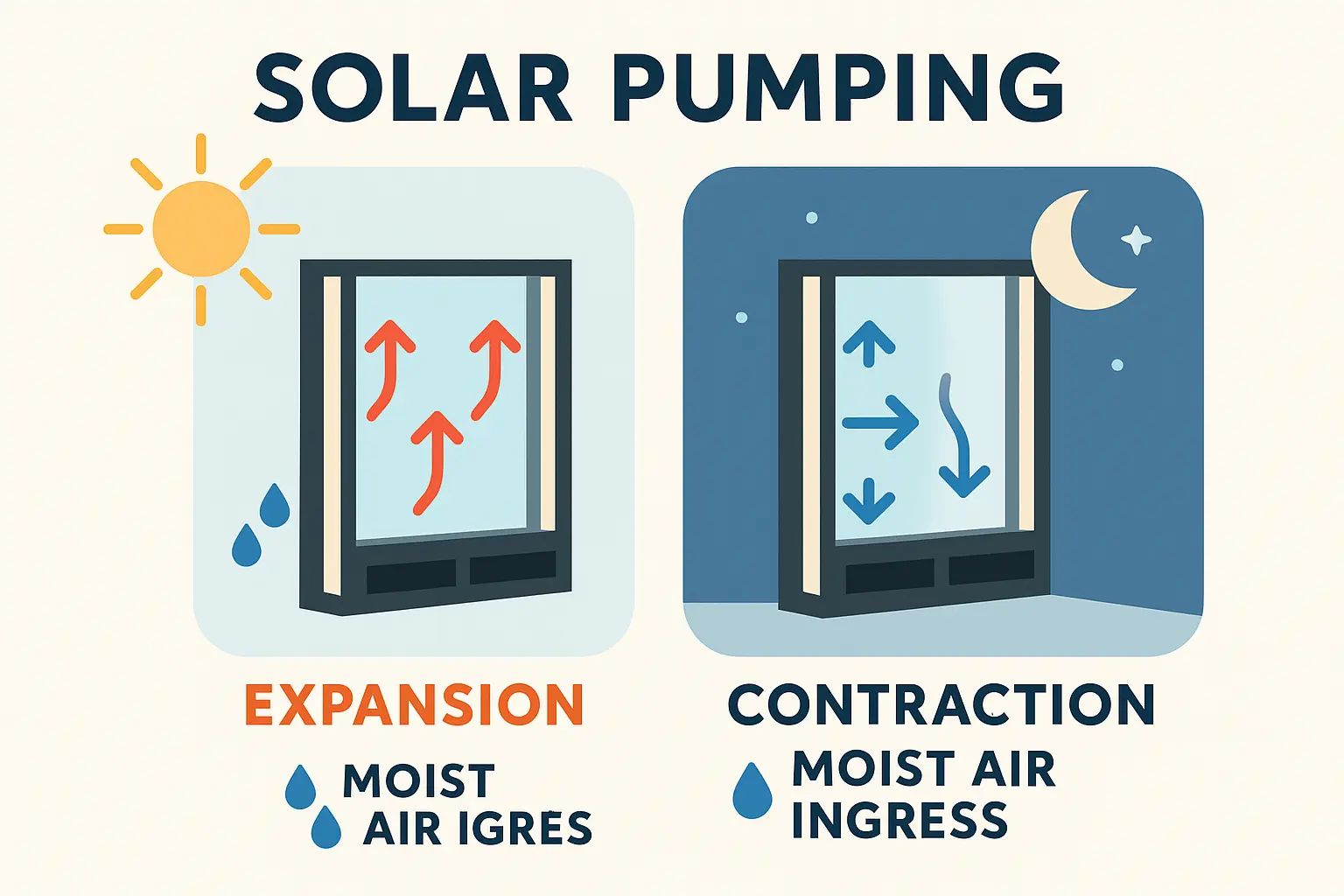
The physical driver of this condensation is a phenomenon called Solar Pumping.

How 'Solar Pumping' leads to garage door window fogging: Heat expands gas inside the sealed unit by day, contraction at night pulls moisture inside, causing condensation between panes.

During the day, intense sunlight heats the air trapped between the glass panes, causing it to expand and escape through microscopic seal weaknesses. At night, the temperature drops, the gas contracts, and damp outside air is sucked back inside, saturating the internal desiccant. Over time, this constant cycle leaves permanent, cloudy mineral deposits. If you are assessing your options, you must decide whether standard inserts or robust glass garage doors fit your long-term aesthetic and functional goals.

OPTION A: Replacing the Glass Only


A glass-only replacement is a targeted, surgical approach. A technician removes the exterior retaining trim, scrapes away the old adhesive, and installs a new sealed Insulated Glass Unit (IGU).

  • Financial Profile: Single-pane glass replacements range from $100 to $300, while sealed dual-pane IGUs typically cost $250 to $450 per pane, depending on labor, sizing, and decorative finishes.
  • When It Makes Sense: This is highly effective if your door is relatively new (under 5 years old), the surrounding section and frames are in pristine physical condition, and only a single, isolated window has failed.

OPTION B: Replacing the Whole Section


Section replacement involves swapping out the entire horizontal panel that houses the window frames. Rather than focusing on a single piece of glass, a technician uninstalls the damaged section from the hinges and slides a factory-built section into the track system.

  • Financial Profile: A complete section replacement ranges from $500 to $1,500+, depending on the door’s width, brand, and thermal R-value.
  • When It Makes Sense: Section replacement is the ideal path when multiple windows have failed, the plastic retaining frames are severely degraded, or you are already performing a broader garage door panel repair due to structural wear.

TECHNICAL TRAPS


Evaluating these options solely on initial cost can lead to unexpected expenses down the road. Experienced technicians look for four hidden technical traps before making a recommendation.

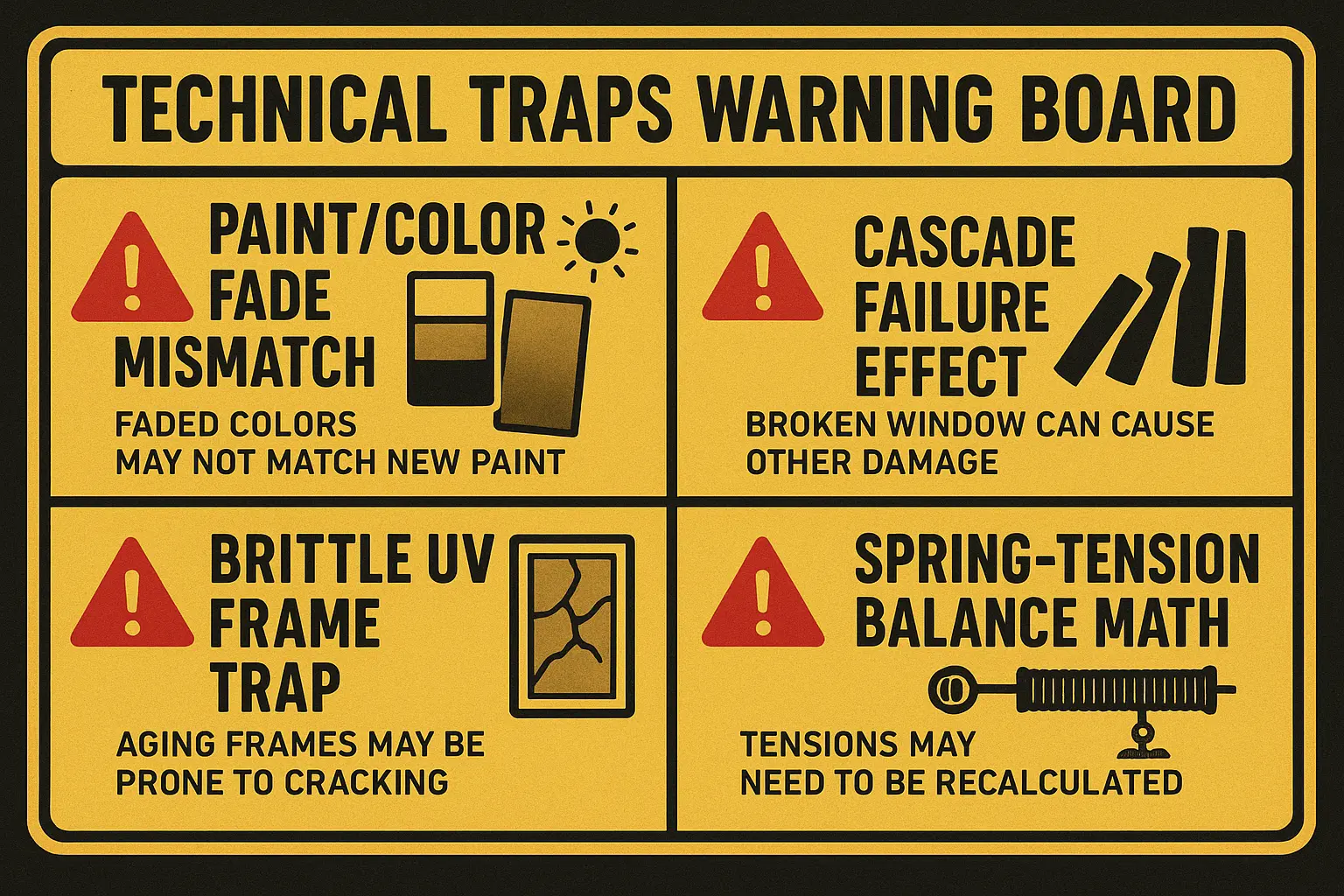
Watch out for these 'Technical Traps' when repairing fogged garage door windows: avoid aesthetic mismatches, multiple failure costs, brittle frame breakage, and dangerous spring imbalances.

  • The Paint and Color-Fade Mismatch: A brand-new factory-finish section will look jarringly bright next to five-year-old, sun-faded panels. When opting for section replacement, you must plan for custom paint matching, taking into account garage door materials easiest to fix and refinish.
  • The Cascade Failure Effect: Because the IGUs on your garage door were manufactured in the same batch, their seal life expectancies are nearly identical. If one window fogs up on an eight-year-old door, the others are highly likely to fail within 12 to 18 months. Paying for multiple glass-only service calls will quickly exceed the cost of a single, comprehensive section replacement. Planning ahead is a smart way to prevent garage door repairs from draining your budget.
  • The Brittle-Frame Trap: Standard ABS or polycarbonate window frames degrade and lose elasticity after 5 to 7 years of direct UV exposure. Backing out screws during a DIY glass swap often snaps the brittle plastic bosses, forcing an unplanned frame replacement.
  • Spring Tension and Weight Calculations: If you transition from lightweight single-pane glass or acrylic inserts to heavy, double-pane insulated glass, you will significantly increase the door’s weight. Understanding how do garage door springs work to balance the load is essential; a failure to recalibrate the springs can lead to burnt-out opener motors or unexpected garage door spring broken symptoms.

VISUAL DECISION MATRIX


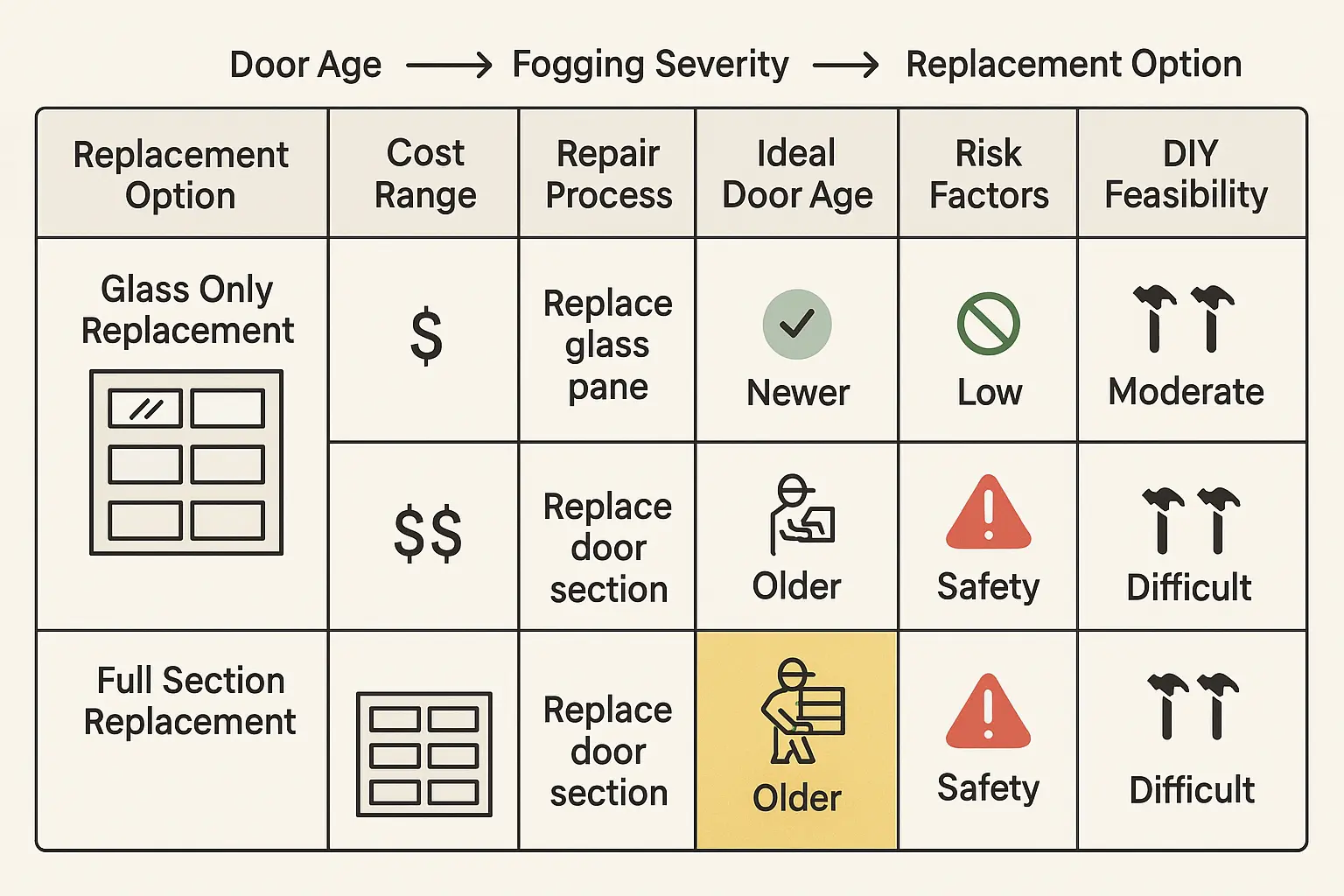
To determine the most structurally sound and cost-effective solution for your home, review this evaluation framework.

Decision Matrix: Evaluate whether to replace just garage door glass or the whole section by comparing costs, process complexity, door age, and safety risks.

This diagnostic matrix balances door age, window damage, and long-term performance value, ensuring you preserve your home’s curb appeal while maintaining your door’s thermal envelope and original garage door insulation r value.

SAFETY & PRO vs. DIY


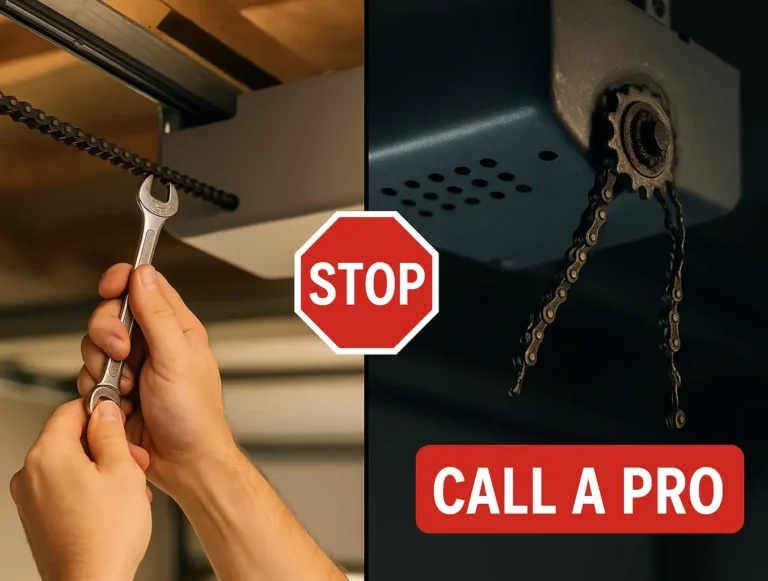
While swapping out simple window inserts can seem like an attractive weekend project, handling the physical components of a garage door involves significant safety hazards.

Garage doors rely on tightly wound torsion or extension springs to offset their massive physical weight. If you adjust or remove panels without securing these springs, you run the risk of sudden, catastrophic tension releases. Professional technicians are trained to handle these forces safely. DIY attempts risk severe injury, which is why understanding garage door spring danger is critical before starting any mechanical work.

If you are dealing with fogged windows, let our experienced, local technicians inspect the door, test spring tension, and provide a clear, flat-rate recommendation to restore your garage door safely.

Frequently Asked Questions


Can I clear the fog inside my garage door window without replacing it?

No. Once the seal on an insulated glass unit fails and moisture enters, the internal desiccant becomes fully saturated. While the fog may temporarily evaporate on hot days, the mineral deposits and moisture will inevitably return. The only permanent solution is to replace the glass unit or the section.

Will replacing my garage door windows affect my opener's warranty?

If you significantly alter the weight of the door—such as upgrading from single-pane glass to heavy insulated dual-pane units—without recalibrating the torsion springs, you will strain the opener motor. This unnecessary stress can void the manufacturer’s warranty and lead to premature motor failure.

How do I know if my window frame is too brittle for a glass-only replacement?

If your garage door is more than seven years old and gets direct afternoon sunlight, the plastic frames have likely suffered UV degradation. A quick test is to look for slight yellowing or a chalky residue on the plastic. If these signs are present, the frame is brittle and will likely crack during a glass replacement.

Contact / Request a Call