How Garage Door Materials and R-Values Impact Your Home’s Energy Efficiency


Published: Aug 13, 2026 | Updated: Aug 14, 2026

Have you ever stopped to think about your garage door? For most of us, it’s just the big door we open and close every day. But in reality, your garage door is often the largest uninsulated opening in your entire home—a massive gap in your home’s thermal defense.

If your garage is scorching in the summer and freezing in the winter, or if you have a room above it that’s impossible to keep comfortable, that giant, uninsulated door is likely the culprit.

Choosing an insulated garage door is one of the smartest upgrades you can make, but it opens up a world of new questions. What is an R-value? Is polyurethane better than polystyrene? Does door material matter? It can feel overwhelming.

Think of this as your friendly, no-jargon guide. We’ll walk through everything you need to know, step-by-step, to find the perfect insulated door that not only lowers your energy bills but also transforms your garage into a more comfortable, usable, and quiet space.

Understanding R-Value & Insulation 101


Before we dive into materials and styles, let’s get the basics right. The conversation around insulated doors always starts with two things: R-value and the type of insulation used.

What Is R-Value? A Simple Analogy

R-Value is a measure of thermal resistance. In simple terms, it tells you how well a material stops the flow of heat. The higher the R-value, the better the insulation.

Think of it like a thermal blanket for your garage. A thin sheet provides a little warmth (a low R-value), while a thick, high-tech winter quilt provides a lot (a high R-value). For a garage door, a higher garage door r value means less of that blistering summer heat gets in and less of your home’s precious warmth escapes in the winter.
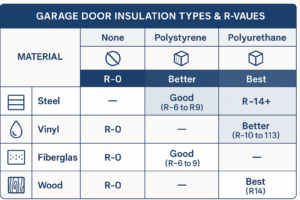
Side-by-side comparison of garage door materials paired with insulation types clarifies R-value ranges and energy efficiency benefits, helping you pinpoint the best combination for your garage's climate and use.

The “Good, Better, Best” Scale of Garage Door Insulation

R-values for garage doors typically range from R-6 to R-18 or higher. To make it simple, we can break them down into three practical tiers:

  • Good (R-6 to R-9): This is the entry-level for insulation. These doors feature a single layer of polystyrene insulation and are a significant upgrade from a non-insulated door. They are best for attached garages in mild climates where the primary goal is to reduce extreme temperatures and dampen noise.
  • Better (R-10 to R-13): This is the sweet spot for many homeowners. These doors often use thicker polystyrene or more efficient polyurethane insulation. They offer a noticeable improvement in temperature control, making them ideal for moderate climates or for people who use their garage as an occasional workshop or gym.
  • Best (R-14 and up): This is the premium tier. These doors almost always use high-density, injected polyurethane insulation. They are designed for homeowners in extreme hot or cold climates, those with heated or cooled garages, or anyone with a bedroom or living space directly above the garage. The investment here pays off in maximum energy savings, superior soundproofing, and a remarkably durable door.

The Two Main Players: Polystyrene vs. Polyurethane

Not all insulation is created equal. The two dominant garage door insulation types are polystyrene and polyurethane. Understanding the difference is key to knowing what you’re paying for.
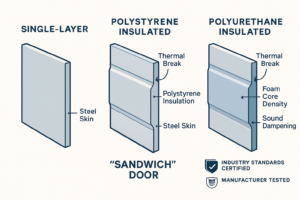
Visualizing insulation construction: Polystyrene's layered design versus polyurethane's injected foam reveals why material and method impact energy savings and durability.

Polystyrene:

  • How it’s made: This is the same type of rigid foam insulation you might see in a disposable coffee cup or a shipping cooler. For garage doors, it’s cut into large sheets and glued to the inside of the door panels.
  • Pros: It’s a cost-effective way to achieve good insulation levels (typically in the R-6 to R-9 range).
  • Cons: Because it’s glued in, there can be small air gaps that reduce its overall effectiveness. It doesn’t add much structural strength to the door.

Polyurethane:

  • How it’s made: This is a liquid foam that is injected between the steel panels of the garage door, where it then expands and hardens.
  • Pros: This injection process fills every single crack and crevice, creating a seamless, airtight bond. This makes it a much more effective insulator, achieving higher R-values in the same amount of space (R-12 to R-18+). It also makes the door significantly stronger, quieter, and more resistant to dents.
  • Cons: It’s a more premium material, so doors with polyurethane insulation come at a higher price point.

Key Takeaway: For basic temperature moderation, polystyrene is a great choice. For maximum energy efficiency, durability, and quiet operation, polyurethane is the superior option.

Building Your Perfect Door: A 3-Step Guide


Now that you understand the “what,” let’s figure out the “which.” Choosing the right R-value isn’t about just picking the highest number; it’s about matching the door to your specific needs.

Step 1: Where Do You Live?

Your local climate is the single biggest factor. A homeowner in Hartford, Connecticut faces very different challenges than one in Phoenix, Arizona.

  • Cold Climates: If you live where winters are harsh, a higher R-value (R-13+) is crucial to keep your garage and adjacent rooms warmer and prevent your energy bills from skyrocketing.
  • Hot Climates: In scorching hot areas, a high R-value door (R-13+) works just as hard, but in reverse. It acts as a barrier to keep the intense sun and heat out of your garage, protecting your car and anything you have stored inside.
  • Moderate Climates: If your weather is relatively mild, you can find a great balance of performance and value in the “Better” tier (R-10 to R-13).

Step 2: How Do You Use Your Garage?

Think about what your garage is—or what you want it to be.

  • Just for Parking and Storage: If your garage is attached to your home, even a “Good” insulation level (R-6 to R-9) will create a valuable thermal buffer, making your home more comfortable. If it’s detached, insulation is less critical unless you’re storing temperature-sensitive items.
  • A Workshop, Gym, or Play Area: If you spend significant time in your garage, upgrading to a “Better” or “Best” R-value (R-12+) will make the space comfortable year-round. This is especially true if you plan to heat or cool the space.
  • A Room Above the Garage: This is a non-negotiable. If you have a bedroom or bonus room over the garage, you need a “Best” tier door (R-14+). It will make a night-and-day difference in how comfortable that room is, both in winter and summer.

Step 3: What Material Do You Prefer?

While the insulation does the heavy lifting, the door material itself plays a role. Steel, fiberglass, and vinyl are all excellent candidates for insulation, as their hollow construction is perfect for adding polystyrene or polyurethane. Different garage door materials offer different aesthetics and maintenance levels, from the clean look of a flush panel garage door to traditional raised panels.

The Details That Make a Big Difference


A high R-value is fantastic, but it’s only one part of the energy efficiency puzzle. To get the full benefit of your investment, you need to look at the entire door system.

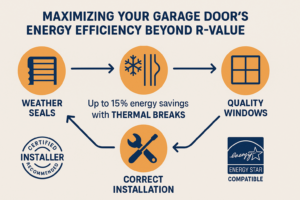
Beyond insulation cores: Learn how quality weather seals, thermal breaks, and windows significantly elevate your garage door’s energy performance for lasting comfort.

It’s Not Just the R-Value: Weather Seals & Thermal Breaks

Think of your high-R-value door panels as a thick wall. If you leave the windows and doors open, that wall won’t do much good. The same is true for a garage door.

  • Weather Seals: High-quality seals along the bottom, sides, and top of the door are critical. They prevent drafts, dust, and water from getting in. If you see a gap at bottom of garage door, you’re losing energy, no matter how good your insulation is.
  • Thermal Breaks: In very cold climates, the steel on the outside of your door can get frigid. A thermal break is a small rubber or vinyl separator between the inner and outer steel skins. This simple feature stops the cold from transferring through the steel, boosting the door’s real-world performance.

The Window Question: Balancing Light and Insulation

Adding windows to your garage door is a great way to bring in natural light. However, it’s important to know that even the best double- or triple-pane insulated glass will have a lower R-value than the rest of the door. This doesn’t mean you should avoid windows, but it’s a trade-off to consider. If energy efficiency is your absolute top priority, minimizing windows is the best path.

Making a Confident Decision


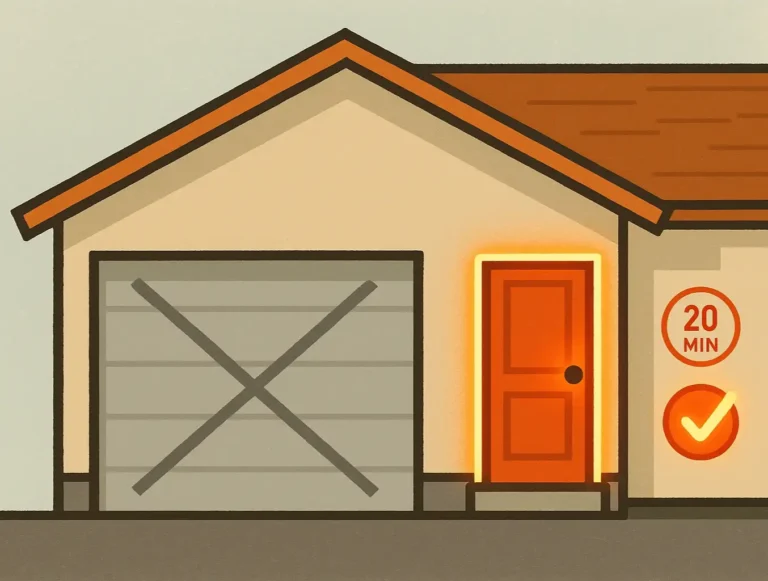
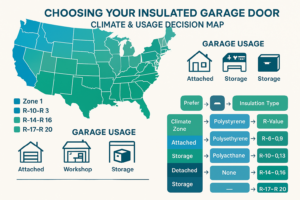
We’ve covered a lot of ground. Now, let’s bring it all together to help you make your choice. This simple decision map can guide you to the perfect insulation level for your home.

Match your climate and garage usage with expert-recommended insulation levels and materials using this easy-to-follow decision map, ensuring energy efficiency and comfort.

Your Insulation Checklist

As you review your options, ask these questions:

  • Climate: Am I in an extreme hot/cold zone or a moderate one?
  • Usage: Is my garage attached? Do I work in it? Is there a room above it?
  • Insulation Type: Does my budget favor polystyrene, or do the performance benefits of polyurethane make more sense for my needs?
  • Full System: Does the door include high-quality weather seals and a thermal break (if needed for my climate)?

The DIY Question: Can I Just Insulate My Old Door?

You may see DIY insulation kits at home improvement stores. While they can provide a minor benefit, they are no substitute for a factory-insulated door. Here’s why:

  • A non-insulated door is a single sheet of steel with no internal cavity. Kits simply glue foam panels to the inside.
  • The door itself can still transfer hot and cold temperatures.
  • You won’t get the structural rigidity, quiet operation, or airtight seal of a professionally manufactured insulated door.

Myth vs. Fact Myth: “A higher R-Value is always better.” Fact: The right R-Value depends on your climate and usage. For a detached garage in a mild climate, an R-18 door has diminishing returns. It’s about finding the sweet spot for your specific situation.

The Next Step


Choosing the right insulated garage door is about more than just a number—it’s about building a more comfortable, efficient, and valuable home. By understanding how R-values, insulation types, and door construction work together, you’re now equipped to make a choice with confidence.

If you’re exploring options for insulated garage doors and want to ensure you get the perfect fit for your home’s specific needs, professional guidance is invaluable. For homeowners in our service area, discussing your project with an expert who understands local climate challenges is the best way to guarantee performance and long-term satisfaction. If you’re looking for guidance on insulated garage doors Connecticut, our team is here to help.

Frequently Asked Questions (FAQ)


Do insulated garage doors really make a difference?

Absolutely. A properly insulated door can make your garage 10-20°F warmer in the winter and 10-20°F cooler in the summer. This creates a much more stable temperature in your garage and reduces energy transfer to the rest of your home.

What is a good R-value for a garage door?

It depends on your needs! R-8 is a good starting point for moderate climates. R-12 is a great all-around choice. R-16 and above is ideal for extreme weather or for garages that are used as living/working spaces.

Does insulating a garage door help in the summer?

Yes. Insulation works both ways. It slows the transfer of heat, keeping the hot air outside from baking your garage and seeping into your home.

Is a higher R-value garage door worth the extra cost?

If you live in a climate with extreme temperatures or if you have a room above your garage, the energy savings and comfort improvement will absolutely provide a return on your investment. The added durability and quieter operation of a high-R-value polyurethane door also add significant long-term value.

Contact / Request a Call