Photoelectric Sensor Calibration
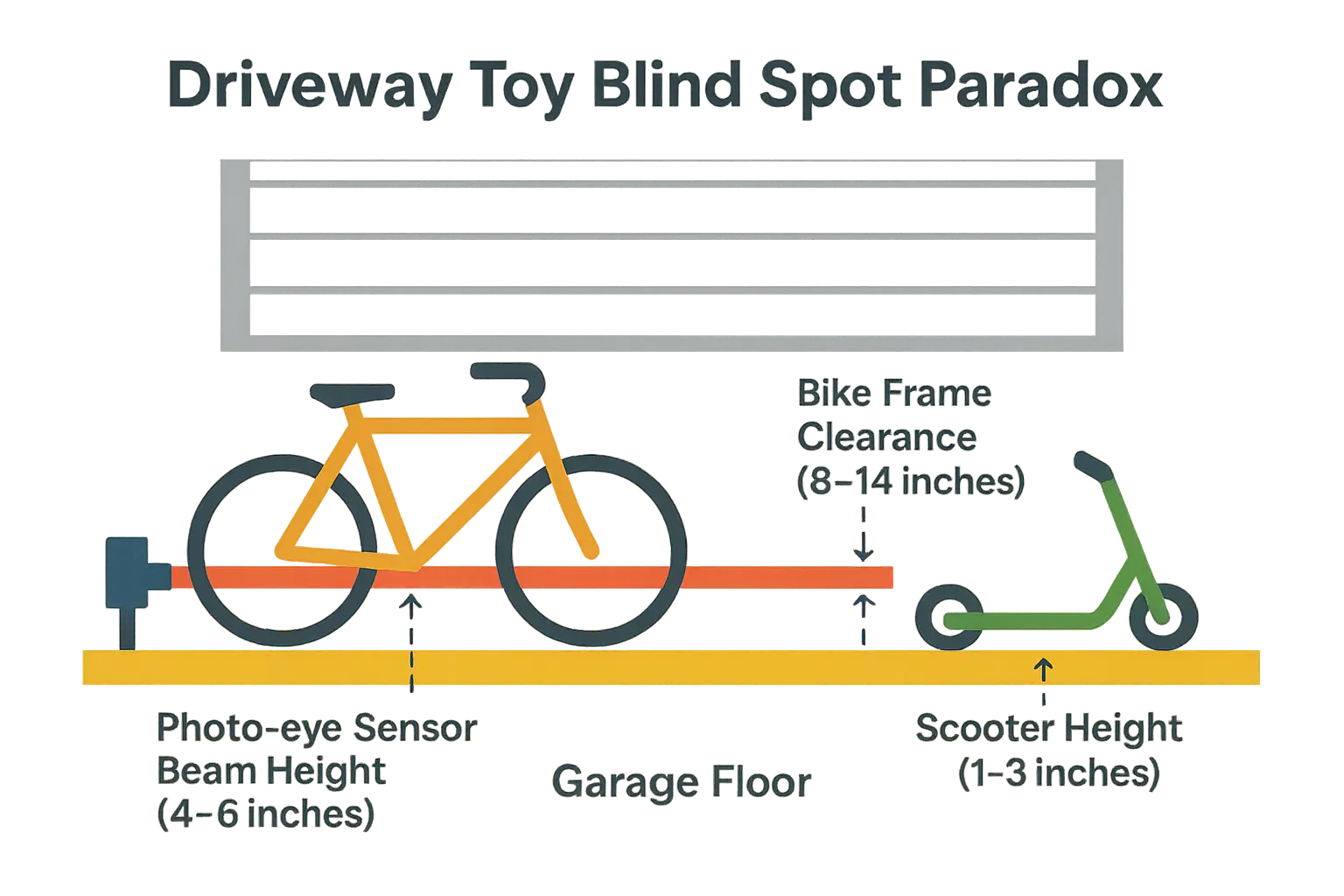
Position your sensors between 4 and 6 inches above the concrete floor. Ensure both sender and receiver lenses are clean and show solid indicator LEDs. If direct sunlight causes false reversals on west-facing driveways, install sensor sunshades or swap the transmitter and receiver positions. If you encounter flickering lights, inspect your wiring or consult a guide on garage door safety sensors not working to resolve alignment issues.
Mechanical Auto-Reverse Verification
Federal regulation 16 CFR § 1211.7 requires a compliant opener to reverse within 2 seconds of contacting a 1.5-inch obstacle.
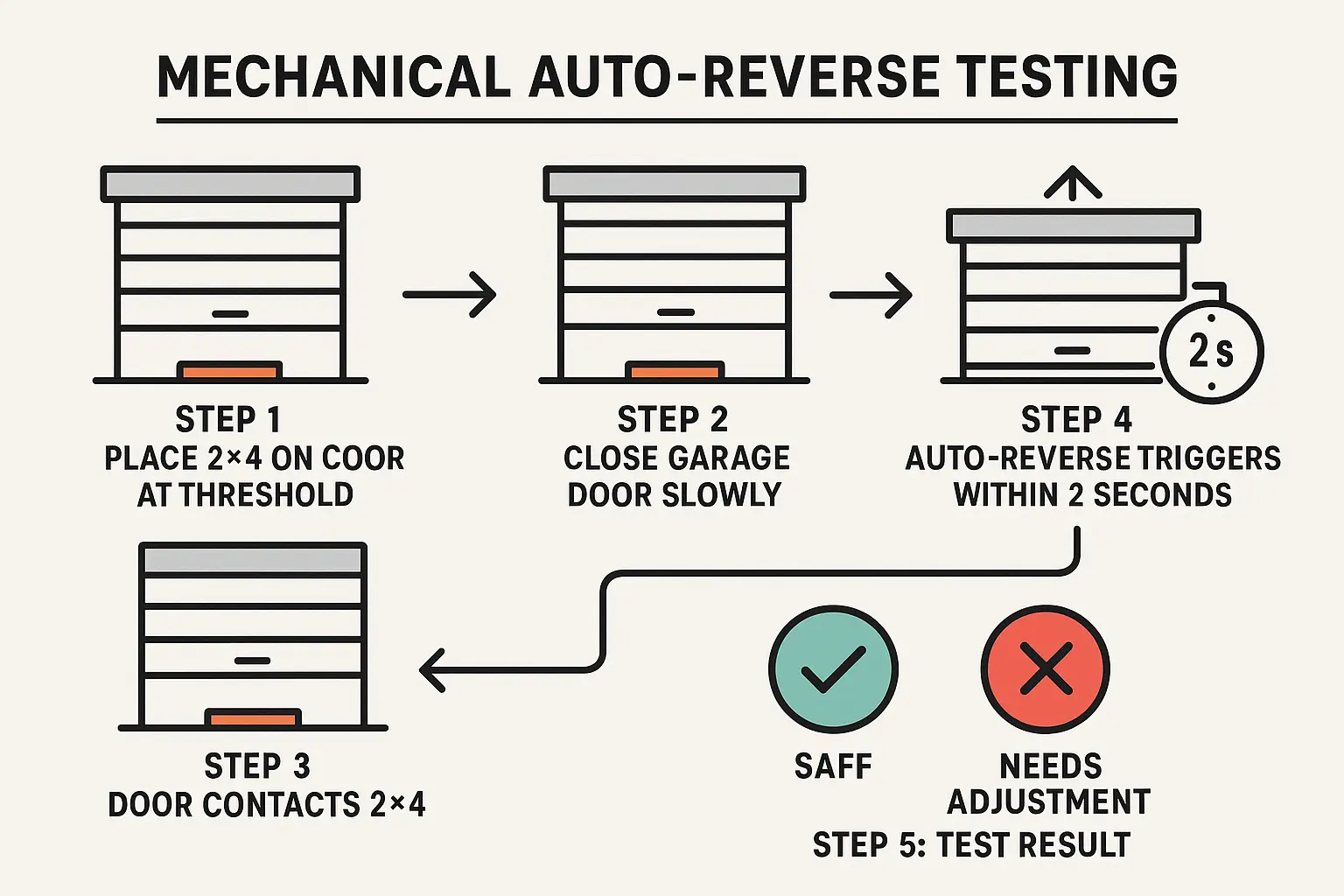
Place a flat 2×4 board beneath the door center. If the door contacts the board and stops without reversing, immediately adjust garage door pressure sensor settings and perform a precise garage door opener adjustment.
Emergency Release Cord Management
A dangling red manual release cord poses a strangulation risk for young children and can be caught by bicycle handlebars. Secure the cord so it hangs at least 6 feet above the ground using a light zip-tie (under 12 lbs breaking strength). This keeps it out of reach while ensuring adults can break the tie in an emergency. If manual operation is ever engaged, ensure you know how to correctly reconnect garage door opener hardware before resuming automatic motor use.
Control Box Height and Lockout Features
Mount wall control buttons at least 5 feet off the floor to prevent toddler operation. When kids are playing in the driveway, engage the “Lock” or “Vacation” toggle on the wall station to disable all wireless remotes, preventing accidental activation from car keys in pockets.
Smart Lighting and Motion Detection
Modern openers equipped with ambient motion sensors illuminate the entire driveway footprint when movement is detected near the threshold, enhancing visibility during twilight bike rides.