When your garage door starts acting up—making jarring noises, reversing unexpectedly, or forcing the central rail to bow—it is easy to feel stuck between two bad options. You are forced to balance the safety risks of a heavy moving door against the fear of overpaying for a basic repair.
The truth is that a garage door opener is a finely tuned system. When it loses its calibration, it doesn’t just run louder; it active damages its own mechanical components. To help you find the safest, most efficient path back to smooth operation, this guide breaks down how to diagnose, isolate, and calibrate your system like a professional.
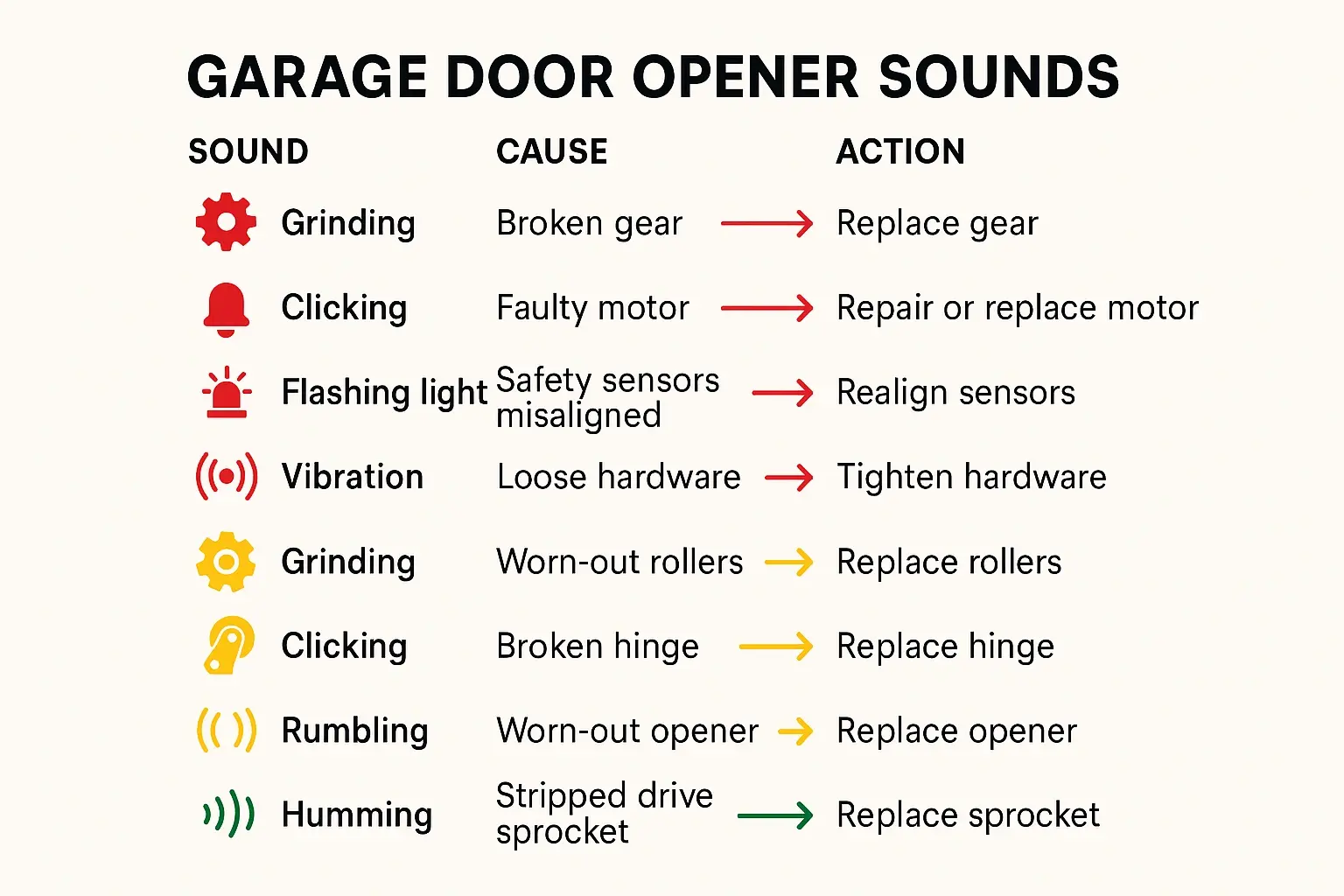
 This diagnostic triage visual helps you instantly connect the noises your garage door opener makes with specific mechanical issues and the precise calibration steps needed to fix them safely.
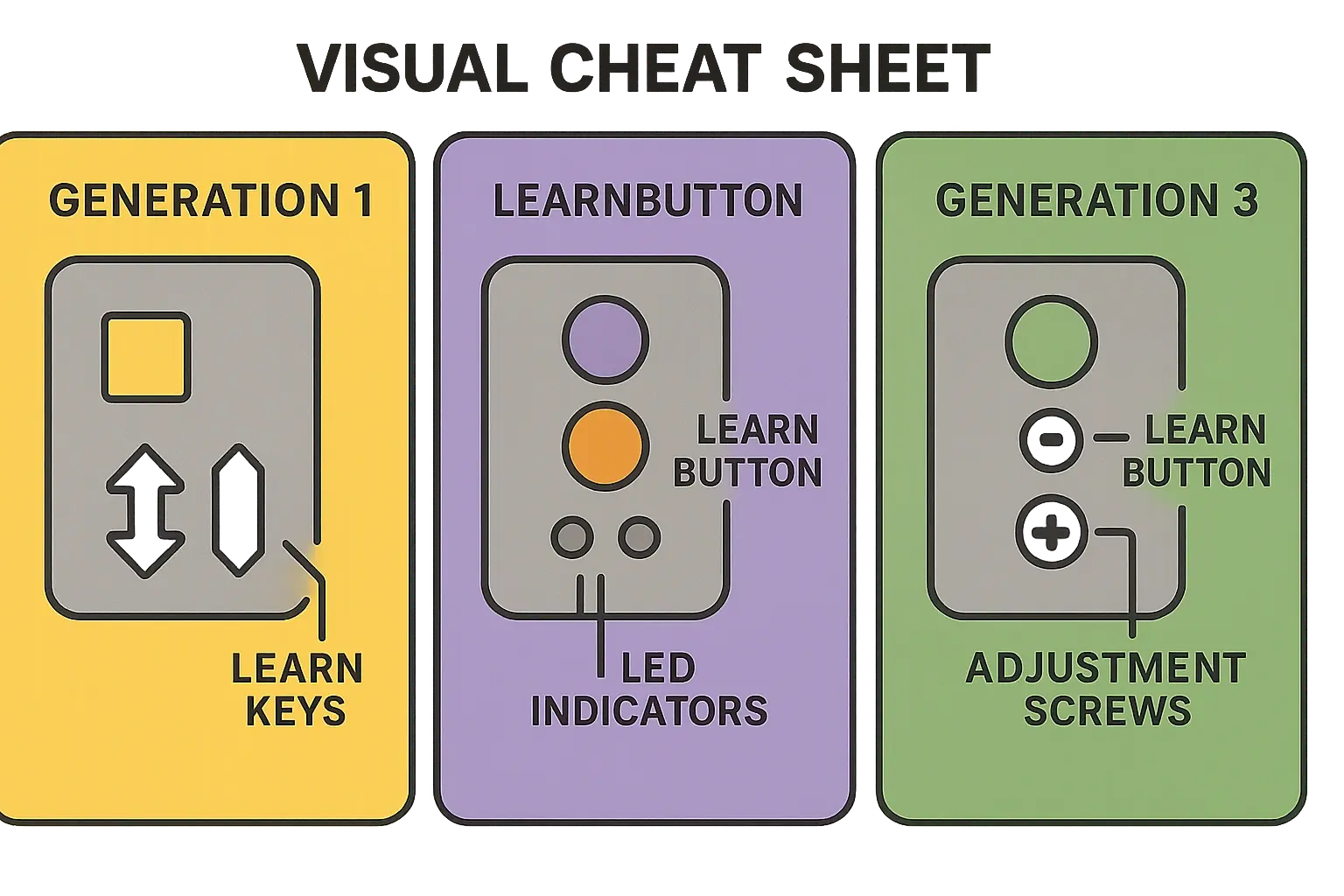
 Quickly recognize your garage door opener model generation with this clear visual guide. Matching your opener to the right calibration protocol starts here.
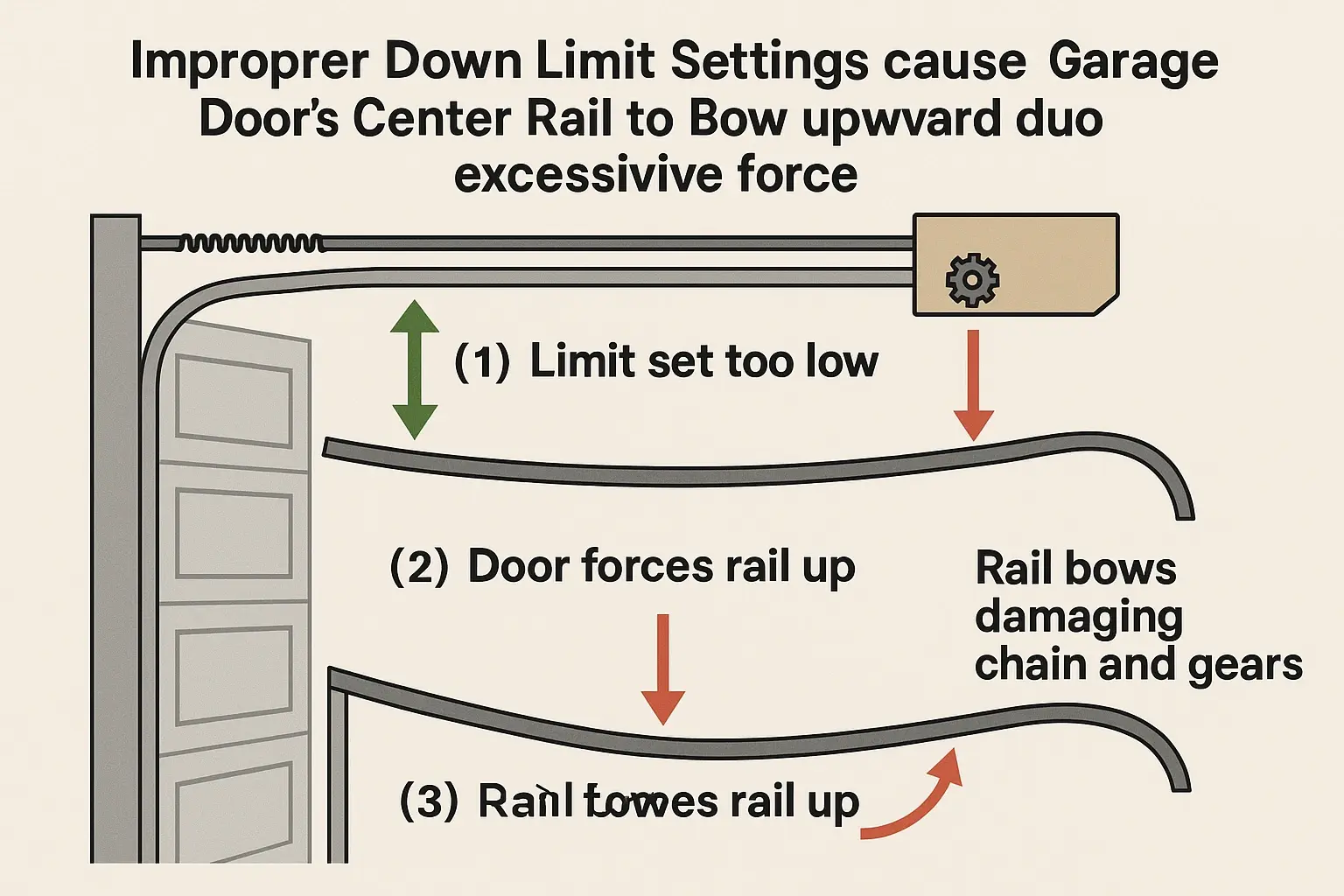
 Understand why setting your garage door’s travel limits correctly matters. This diagram shows how excessive force from an incorrect limit causes the track to bow, leading to costly mechanical wear.