You hear the familiar whir of the motor, but it’s followed by a sickening clatter and a slack, dangling chain. You put it back on last week, and now it’s happened again. It’s a frustrating cycle that makes you wonder if your garage door opener is just destined to fail.
Here’s the secret: the chain falling off isn’t the real problem. It’s a symptom.
Putting the chain back on is like taking a painkiller for a broken bone—it might offer temporary relief, but it doesn’t fix the underlying issue. In the next five minutes, you’ll learn how to stop being a “chain re-attacher” and become a “problem diagnostician.” We’ll uncover the real reason your chain keeps coming off and show you how to fix it for good.
Why Does My Garage Door Opener Chain Keep Coming Off
Published: May 29, 2026 | Updated: Jul 28, 2026
First, Understand Your System: The Chain Drive in 60 Seconds
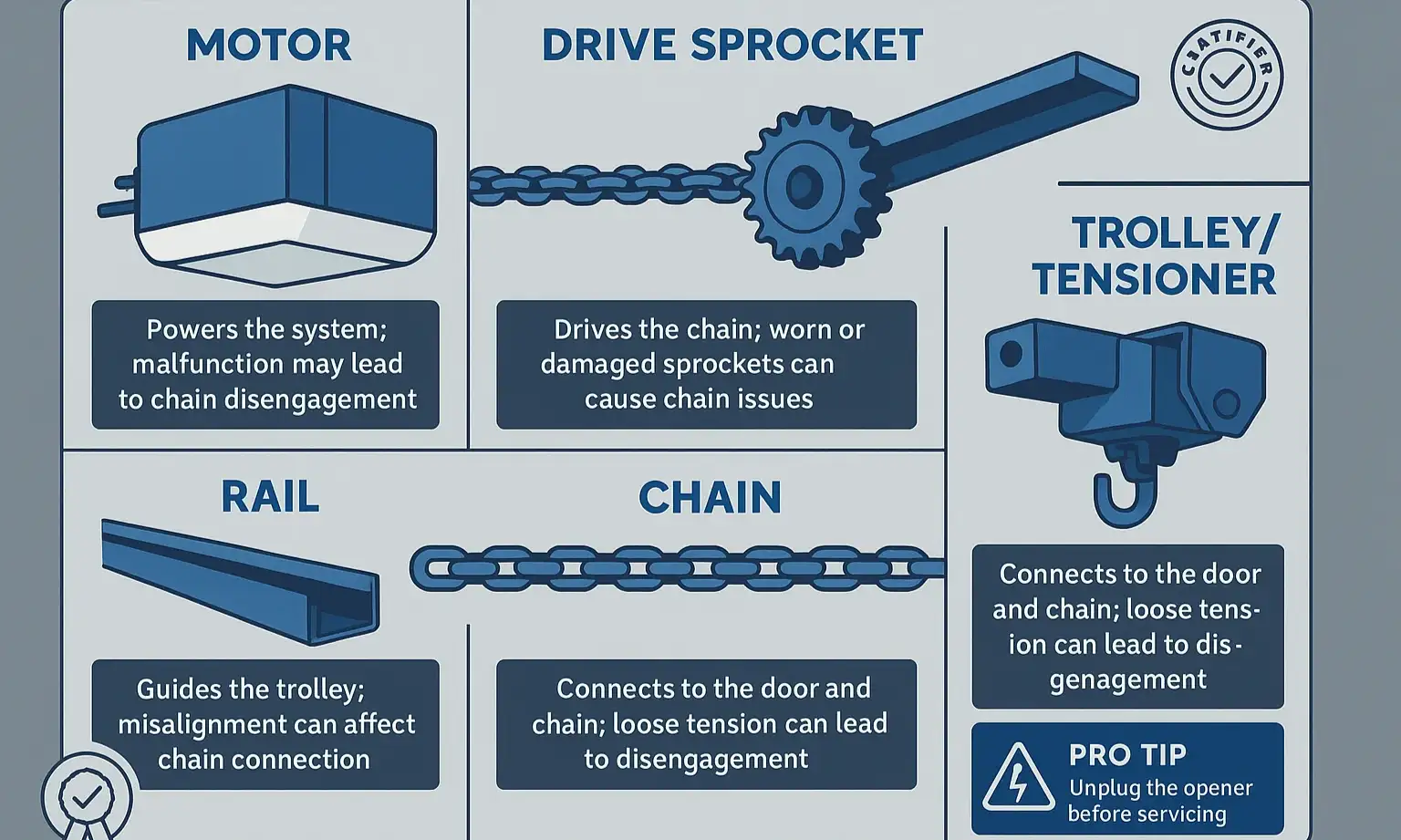
Before you can diagnose the problem, it helps to know the key players. Think of your garage door opener as a simple, powerful system. A chain-drive opener works a lot like a bicycle, using a chain to transfer power from a motor to move something. In this case, it’s your garage door.
Here are the essential parts you’re dealing with:
When these parts work in harmony, your door glides open and shut. When one is out of sync, you get that dreaded dangling chain.
The Real Reason Your Chain Falls Off: A 3-Step Visual Diagnosis
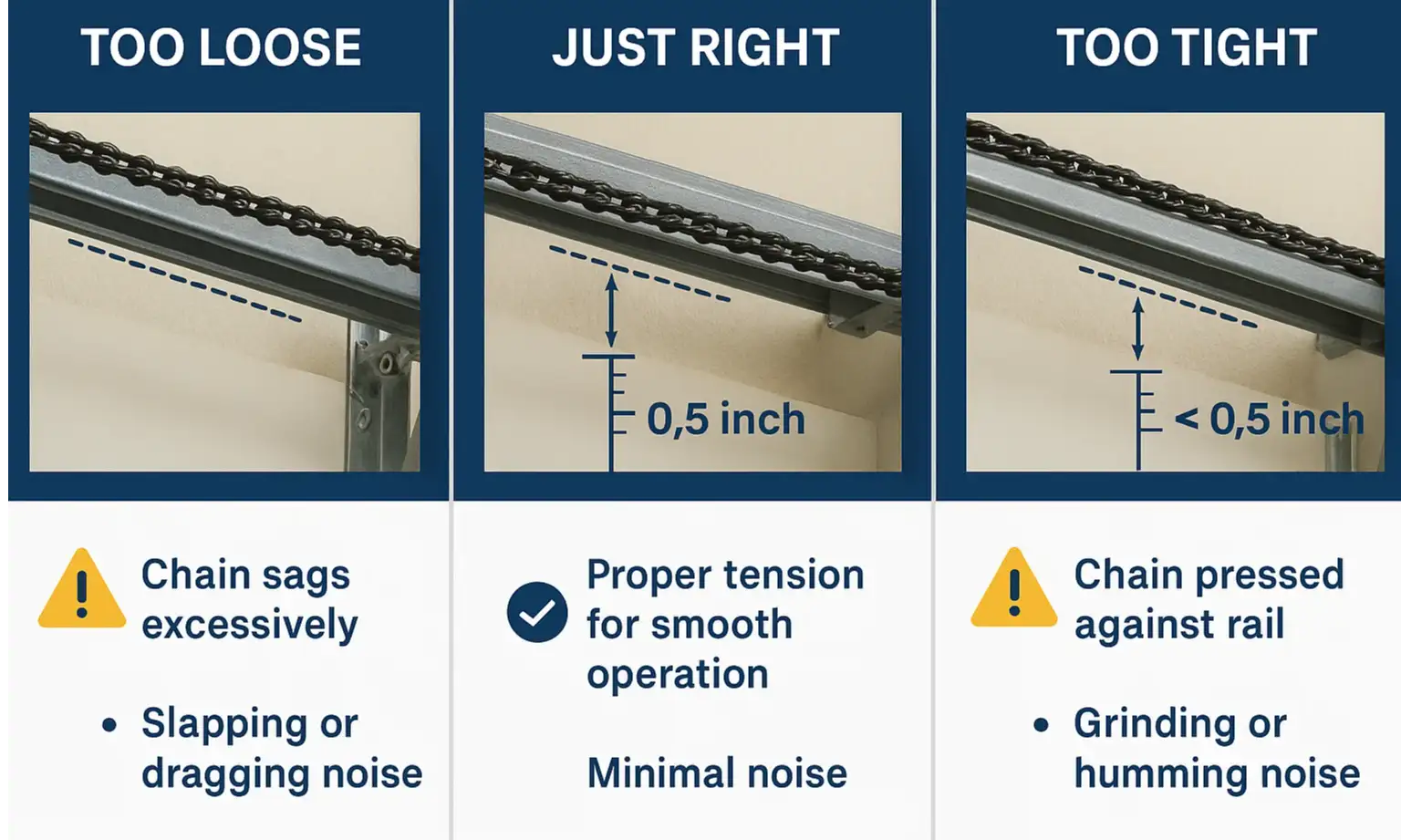
Let’s get to the bottom of this. Grab a stepladder and a flashlight, and let’s investigate.
Safety First: Before you touch any part of your garage door opener, ALWAYS unplug the motor unit from the power outlet. This prevents the door from activating unexpectedly while you work.
Safety First: Before you touch any part of your garage door opener, ALWAYS unplug the motor unit from the power outlet. This prevents the door from activating unexpectedly while you work.
Step 1: The Tension Test – Is Your Chain Too Loose or Too Tight?
The most common culprit behind a recurring garage door chain loose issue is improper tension. Just like a bicycle chain, if it’s too loose, it will sag and easily slip off the sprockets. If it’s too tight, it puts immense strain on the sprockets and motor, causing them to wear out prematurely.
How to Check: Look at the chain along the rail. A properly tensioned chain should have a slight amount of sag, but it should never touch the rail itself.
Step 2: The Sprocket Inspection – Are Your Gears Worn Out?
If your chain tension seems okay but the problem persists, your sprockets are the next suspect. The drive sprocket on the motor and the idler sprocket at the end of the rail have teeth that grip the chain. Over thousands of cycles, these teeth can wear down.
How to Check: Look closely at the teeth on both sprockets.
A worn sprocket can no longer hold the chain securely, especially under the load of opening and closing the door. No amount of tension adjustment will fix this; the chain will simply slip off the worn-out teeth.
Step 3: The Alignment Check – Is Everything Moving Straight?
Your garage door runs on metal tracks, and the opener moves along a rail. If any of these components are bent, misaligned, or obstructed, it creates jarring movements and uneven force on the chain. This sudden stress can be enough to knock the chain right off the sprocket.
How to Check:
From Diagnosis to Solution: Your Action Plan
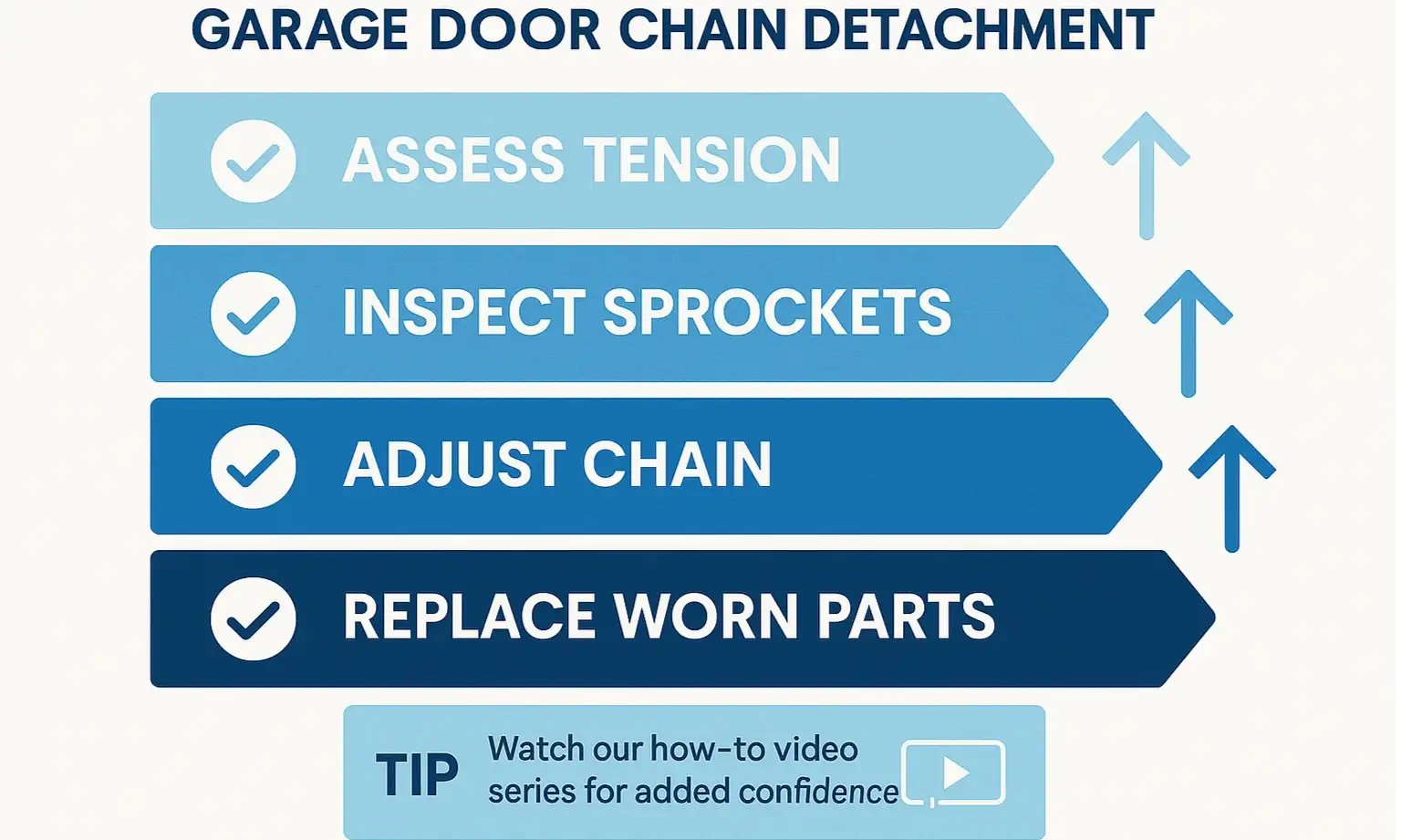
Now that you’ve identified the likely cause, you can move forward with a targeted solution instead of a temporary patch.
Solution 1: Correcting Chain Tension
If your diagnosis pointed to a loose or overly tight chain, an adjustment is in order. This is typically a straightforward DIY task that involves loosening a pair of nuts on the trolley, turning a master adjustment nut to set the tension, and then retightening everything. For a detailed walkthrough, understanding the proper garage door chain tension is crucial for long-term performance.
Solution 2: Dealing with Worn Sprockets
If you’ve discovered worn, “shark-fin” teeth on your sprockets, this is the root of your problem. Replacing a sprocket kit is a more involved repair. While it’s possible for a confident DIYer, it requires disassembling parts of the motor unit. This is often the point where calling a professional is the safest and most efficient path to a reliable garage door chain repair.
Solution 3: Fixing Misalignment and Door Balance Issues
If your door is sticking or the opener rail is bent, these issues must be addressed. A full garage door adjustment might be necessary, including the tracks, springs, and opener settings. An unbalanced or misaligned door puts a tremendous strain on the opener, guaranteeing that problems like a dropped chain will continue to happen.
The Best Fix is Prevention: Your 5-Minute Monthly Checklist
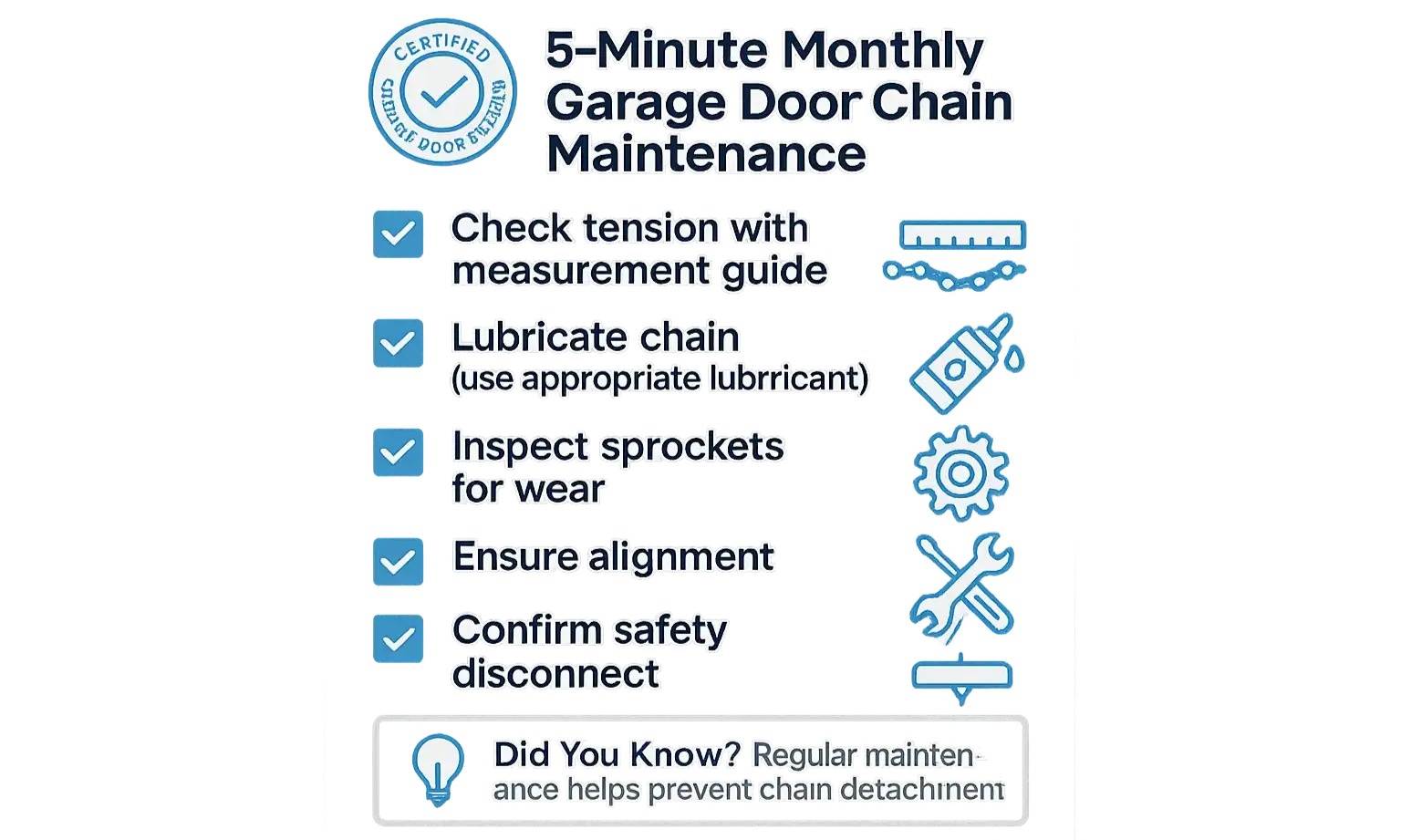
You can avoid most chain-related headaches with a simple maintenance routine. Set a calendar reminder to do this once a month—it’s the best way to catch small issues before they become major problems.
Frequently Asked Questions (FAQ)
How tight should a garage door chain be?
Perfect tension means the chain is about 1/4 to 1/2 inch above the bottom of the rail at its midpoint. It should be tight enough not to slap against the rail but have enough slack to move freely without straining the sprockets.
Can you use WD-40 on a garage door chain?
No, you should not. WD-40 is a solvent and degreaser, not a long-term lubricant. It can actually strip away the existing grease, leaving the chain unprotected and accelerating wear. Use a white lithium grease or a silicone-based spray specifically designed for garage door parts.
Why did my garage door chain suddenly get loose?
Sudden slack can be caused by extreme temperature changes that cause the metal to expand or contract. However, it’s more often a sign of a critical failure, like a stripped gear inside the motor unit or a broken sprocket. If the chain goes from fine to extremely loose overnight, a thorough inspection is needed immediately.
Beyond the Quick Fix: Thinking Like a Pro
The next time your garage door opener chain falls off, resist the urge to just hook it back on. See it as a message from your garage door system. By taking a few minutes to diagnose the root cause—be it tension, worn parts, or alignment—you’re not just fixing the problem for today. You’re ensuring your garage door works safely and reliably for years to come.
Frequently Asked Questions
How tight should a garage door chain be?
Perfect tension means the chain is about 1/4 to 1/2 inch above the bottom of the rail at its midpoint. It should be tight enough not to slap against the rail but have enough slack to move freely without straining the sprockets.
Can you use WD-40 on a garage door chain?
No, you should not. WD-40 is a solvent and degreaser, not a long-term lubricant. It can actually strip away the existing grease, leaving the chain unprotected and accelerating wear. Use a white lithium grease or a silicone-based spray specifically designed for garage door parts.
Why did my garage door chain suddenly get loose?
Sudden slack can be caused by extreme temperature changes that cause the metal to expand or contract. However, it’s more often a sign of a critical failure, like a stripped gear inside the motor unit or a broken sprocket. If the chain goes from fine to extremely loose overnight, a thorough inspection is needed immediately.