Ready to see how your door stacks up? Let’s walk through a simple audit and then explore a “Good, Better, Best” approach to upgrading each pillar.
Step 1: The 5-Minute Security Audit
Grab a screwdriver and take a look at your garage side door. Answer these simple questions:
• Check the Hinge Screws: On one of the hinges, remove a screw closest to the center of the door frame. Is it short, likely less than an inch long?
• Check the Door: Knock on the door. Does it feel light and sound hollow, or does it feel heavy and solid?• Check the Lock: Do you have a deadbolt, or just a lock in the doorknob? A doorknob lock offers almost no protection against forced entry.
• Check the Strike Plate: Look at the metal plate on the door frame where the deadbolt enters. Is it a small, simple plate held in by tiny 3/4-inch screws? (Hint: Most are.)
• Check the Swing: Does your door swing into the garage or outward? If it swings out, the hinge pins are exposed on the exterior.
If you answered yes to having short screws, a basic strike plate, or a hollow door, you have significant and easy-to-fix security vulnerabilities. Let’s tackle them one by one.
Step 2: Pillar 1 – The Frame (The #1 Point of Failure)
Strengthening the frame is the single most important upgrade you can make. It’s where a kick-in attack concentrates its force.
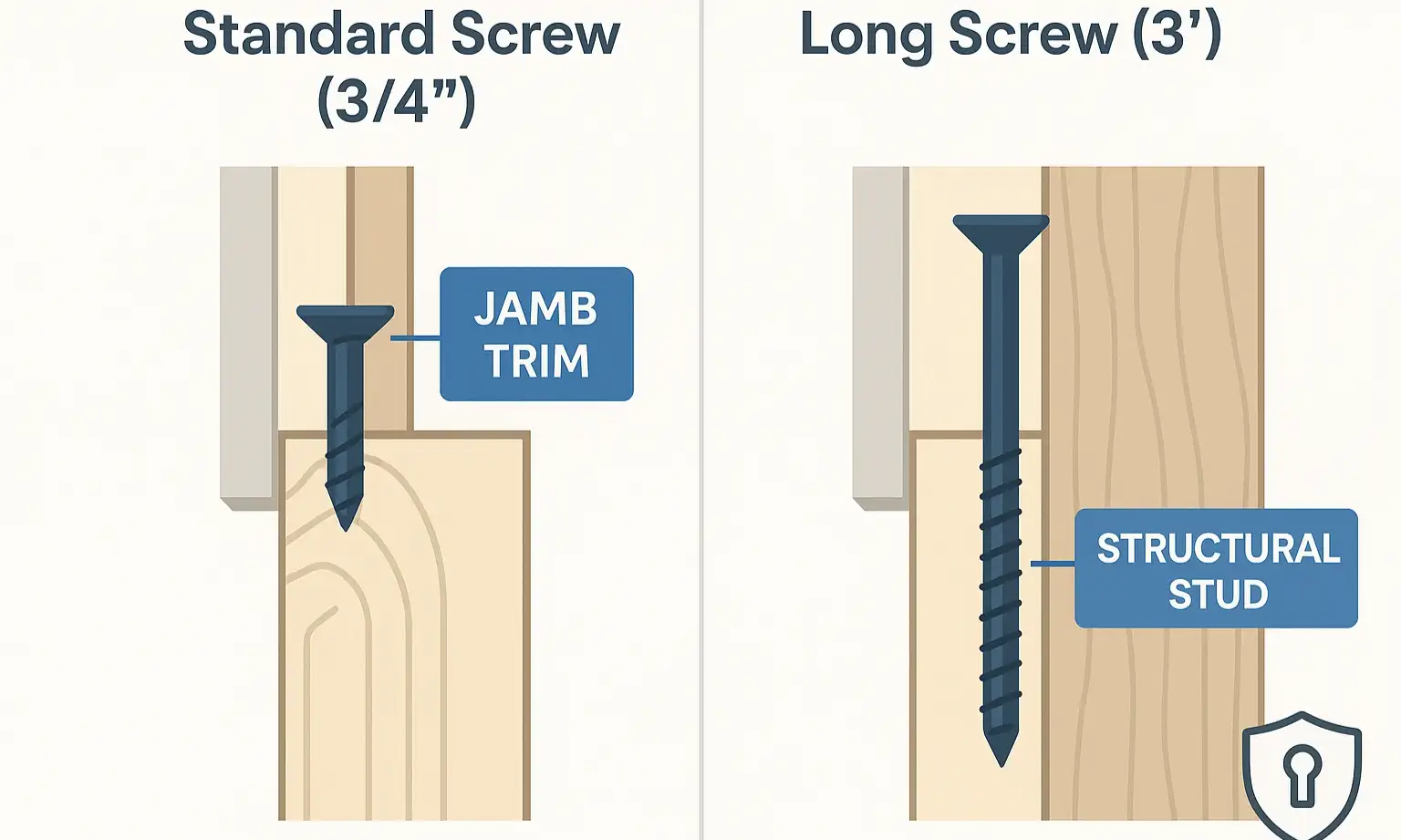
• Good: The $10 Upgrade That Changes Everything. This is the big “aha moment” for home security. Unscrew the small 3/4-inch screws from your strike plate and replace them with 3-inch construction screws. This simple change anchors the strike plate not just to the thin door jamb, but deep into the structural 2×4 stud of your house frame. It instantly multiplies the force required to break the frame.
• Better: Install a Heavy-Duty Strike Plate. A standard strike plate is a thin piece of metal. Upgrade to a “box strike,” which wraps the bolt in a steel enclosure, or a heavy-duty plate that uses four to six long screws instead of two. This distributes the impact of a blow across a much wider, stronger area of the frame.
• Best: Install a Full-Jamb Reinforcement Shield. For maximum security, products like Door Armor or other jamb shields are the gold standard. These are long pieces of galvanized steel that run almost the entire length of the door jamb, reinforcing the lock area, the deadbolt, and the wood frame in one integrated piece. A properly installed shield makes the door frame virtually shatterproof.
Step 3: Pillar 2 – The Hinges (The Forgotten Weakness)
The hinges are the frame’s partner in crime. If the frame is the primary target for a kick, the hinges are the target for prying or a brute-force shoulder slam. A faulty hinge can also lead to other issues, making regular garage door hinge repair a good maintenance habit.
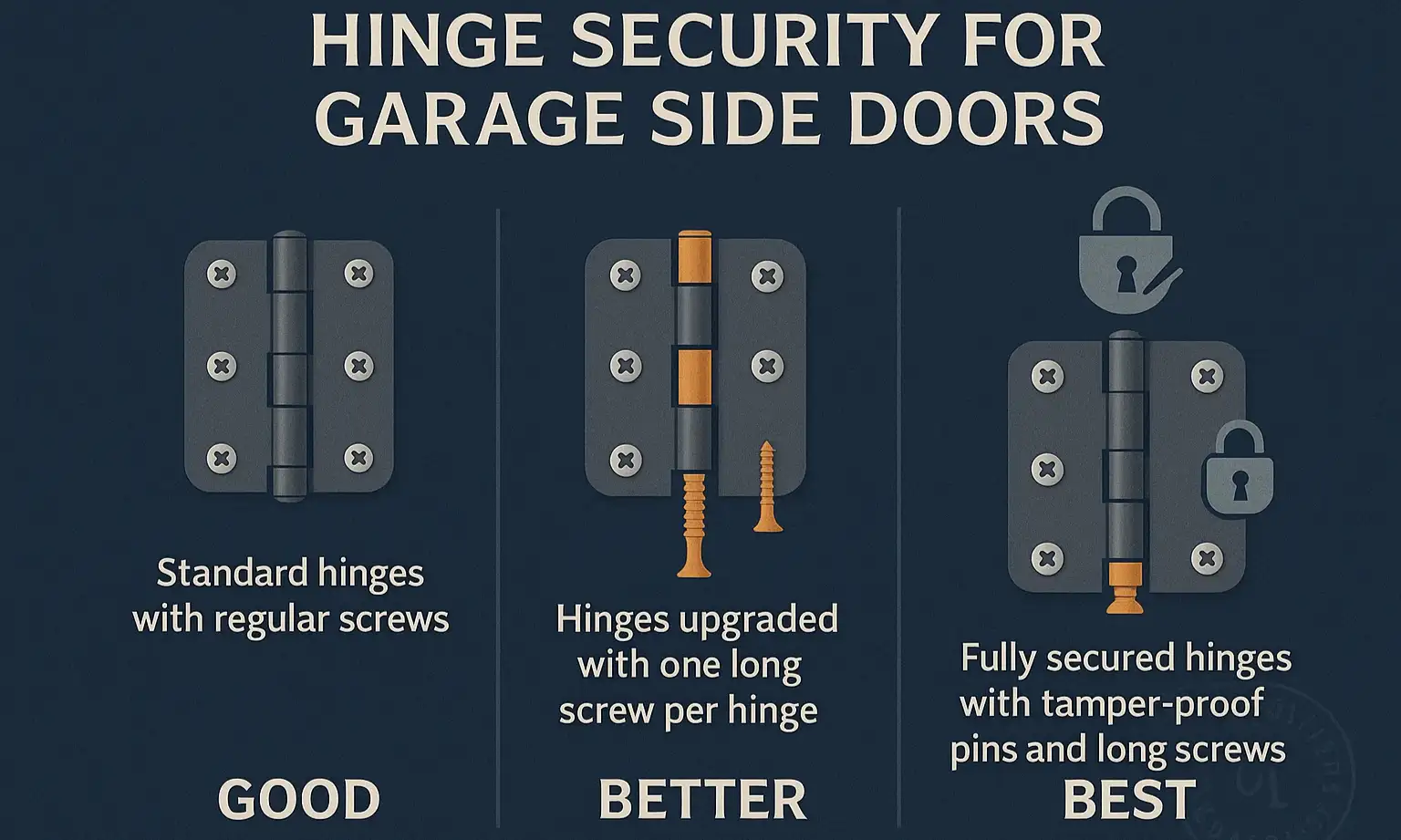
• Good: Longer Hinge Screws. Just like with the strike plate, replace at least one screw in each hinge with a 3-inch screw. Choose a screw hole that goes into the wall stud, not just the door. This anchors the door itself to the house structure, not just the flimsy jamb.
• Better: Install Tamper-Proof Hinges. If your door swings outward, the hinge pins are exposed and can be tapped out by a burglar. You can prevent this by installing security hinges, which have a non-removable pin, or by using a simple stud-and-hole design that keeps the door locked in place even if the pin is removed.
• Best: The Full Package. Combine 3-inch screws on all hinges with tamper-proof security hinges. This ensures your door is as strong on the hinge side as it is on the lock side, creating a balanced and secure system.
Step 4: Pillar 3 – The Lock (The Obvious Upgrade)
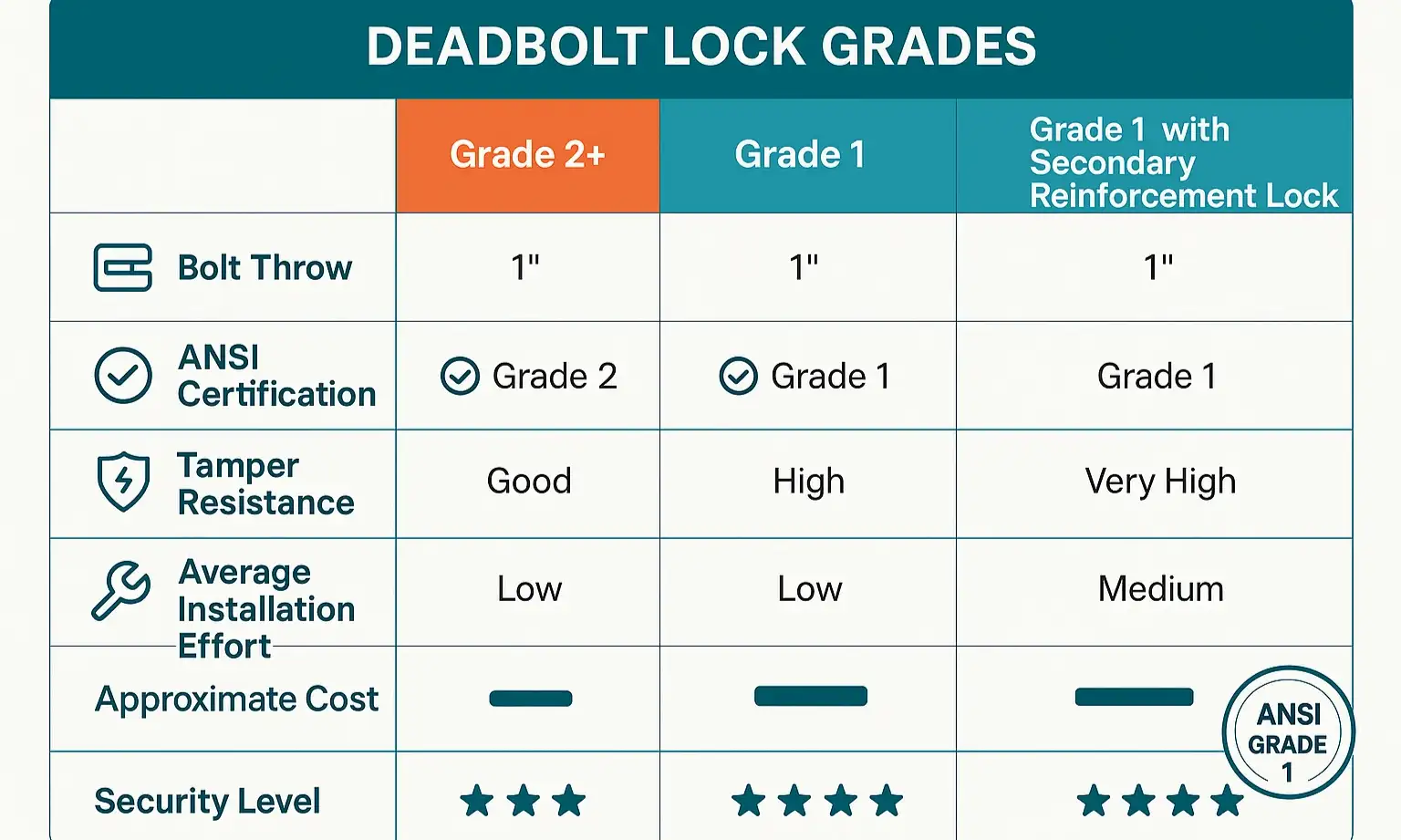
Now that the frame and hinges are solid, we can make the lock upgrade meaningful. Look for locks with an ANSI (American National Standards Institute) Grade.
• Good: A Quality Grade 2 Deadbolt. Make sure you have a deadbolt with at least a 1-inch throw (the length the bolt extends from the door). A Grade 2 lock is a significant step up from standard hardware store locks and is sufficient for most residential applications.
• Better: Upgrade to a Grade 1 Deadbolt. This is the highest security rating for residential locks. Grade 1 deadbolts are tested to withstand more force, more picking attempts, and more wear and tear. They often feature hardened steel inserts to resist drilling.
• Best: Add a Secondary Reinforcement Lock. For ultimate peace of mind, especially if you’re away for long periods, a secondary lock is a powerful deterrent. These can be surface-mounted deadbolts or keyless reinforcement locks that are only engaged from the inside.
Step 5: Pillar 4 – The Door Itself (The Final Barrier)
The door is your last line of defense. If your side entry door is a hollow-core interior door (which many are), it can be punched through easily, bypassing all your other upgrades.
• Good: Identify Your Door. First, determine what you have. Solid-core doors feel heavy and dense. Hollow-core doors feel light and sound empty when knocked on. If you have a hollow-core door on an exterior entry point, replacing it should be a top priority.
• Better: Install a Solid-Core Wood or Composite Door. These doors provide a significant upgrade in strength and kick resistance. They are dense and much harder to break through than a hollow door. You can even find options that look like the best faux wood garage doors to match your home’s aesthetic. Another option could be a pedestrian door built into your main garage door for convenience without sacrificing security.
• Best: Install a Steel Security Door. For the highest level of security, a solid steel or steel-wrapped door is the ultimate barrier. These are highly resistant to being kicked in, pried, or drilled.