Off-Grid and Hybrid Power Solutions for Garage Doors: The Complete Architectural Guide


Published: Sep 24, 2026

Detached structures like standalone workshops, vehicle barns, and outlying garages present a significant infrastructure challenge. Trenching standard utility grid lines from your main residential panel to a distant structure can easily cost between $3,000 and $10,000. For property owners seeking a cost-effective and self-reliant alternative, designing an independent power system is the logical step.

Navigating the transition to a solar-powered layout requires understanding the physical and electrical demands of modern motorized doors. Many homeowners struggle with how to make a garage door electric in off-grid environments due to conflicting advice from manufacturers and sizing mismatches. By breaking down the engineering tradeoffs, you can design a resilient off-grid or hybrid power system that guarantees reliable access in any weather.
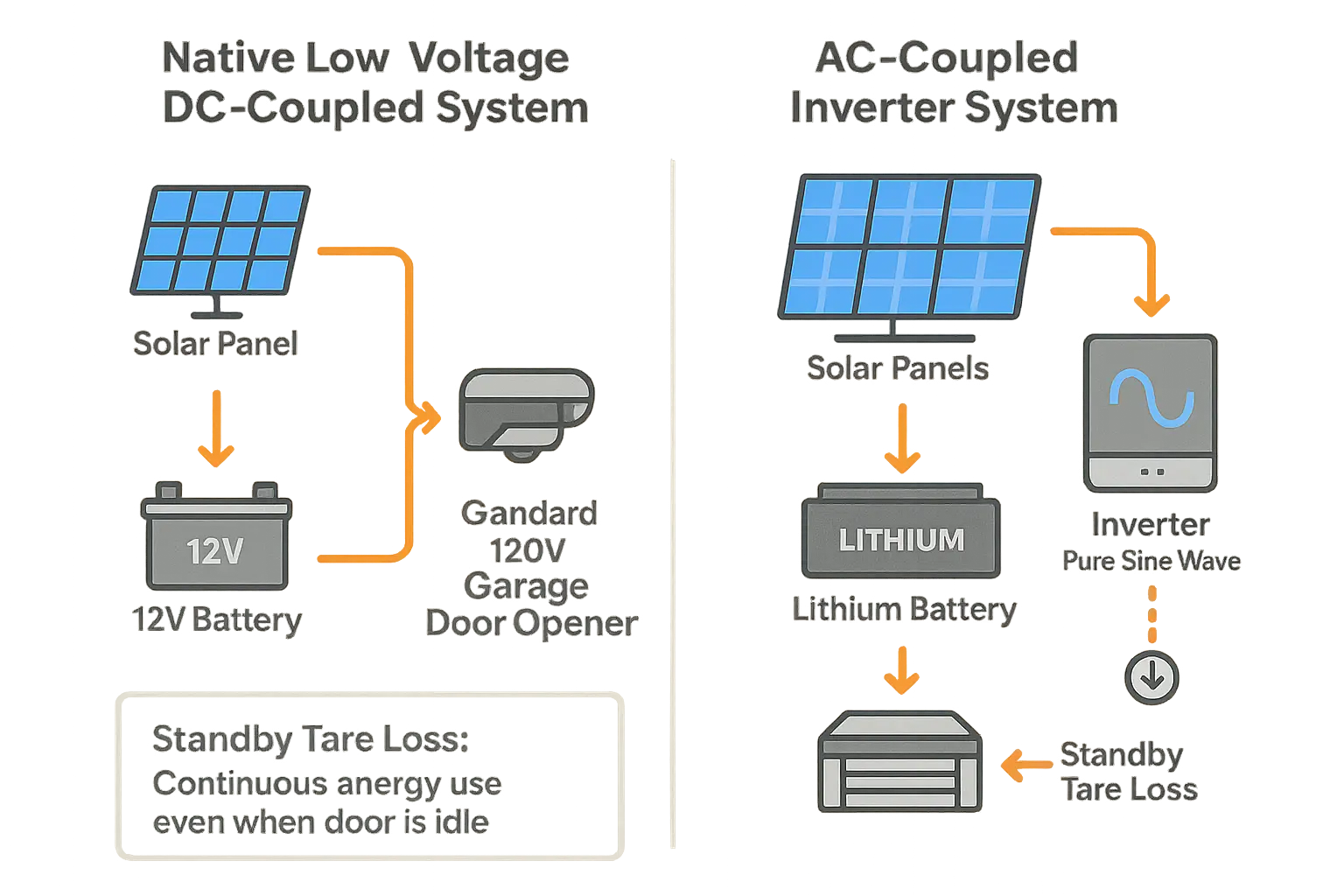
Architectural Power Layouts: DC-Coupled vs. AC-Coupled


When engineering an independent power system for a garage or workshop structure, you must choose between two distinct architectural approaches:

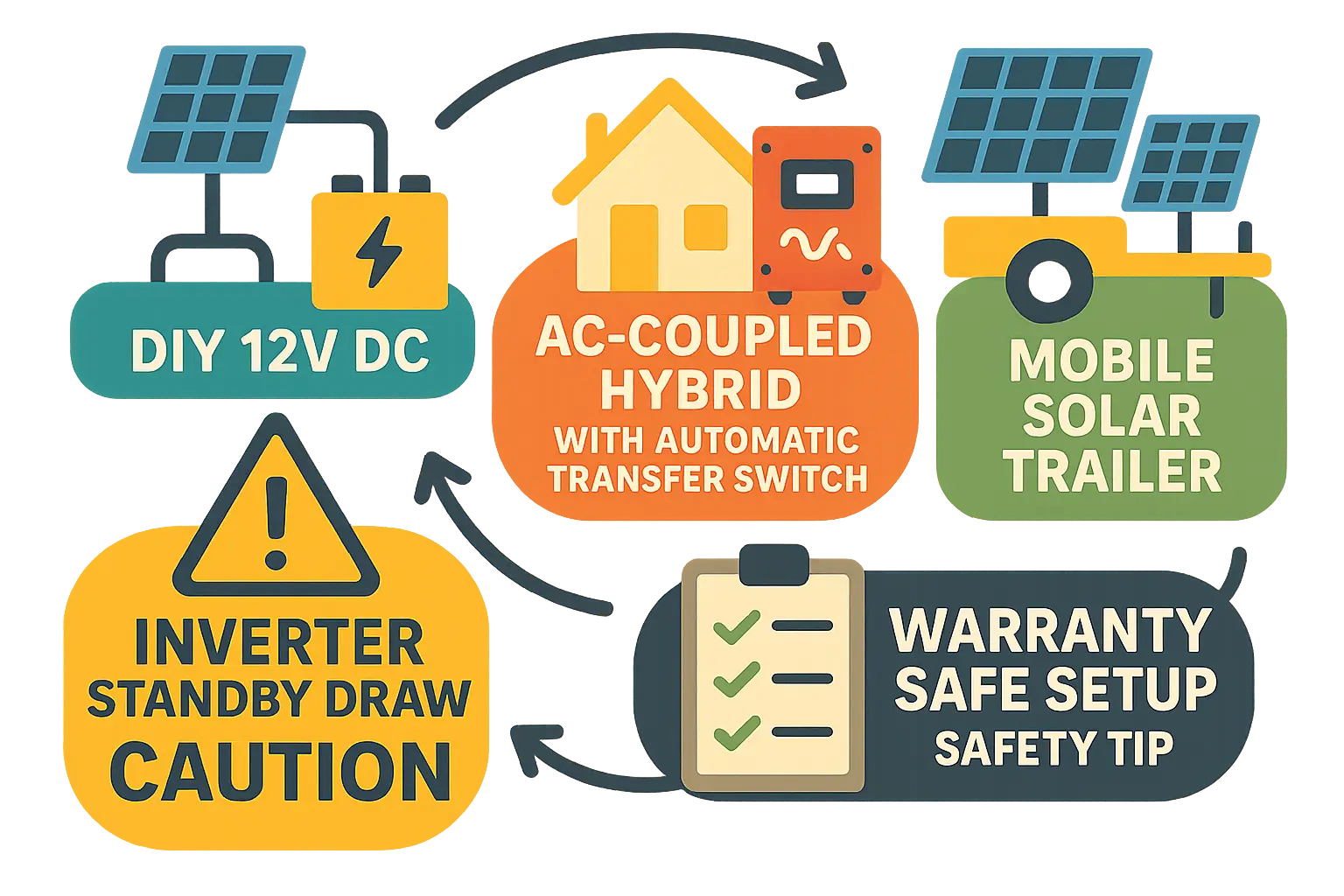
  • Native Low-Voltage DC Systems: These systems run directly on 12V or 24V DC power, completely eliminating the need for an power inverter. Systems like the Marantec Comfort 260 accu utilize a small 12V 5Ah battery paired with an efficient 30W peak solar panel. Because there is no inverter to power, native DC systems suffer zero standby power losses.
  • AC-Coupled Inverter Systems: This approach powers a standard 120V AC residential garage door opener by converting stored battery DC power into AC electricity using a pure sine wave inverter. This configuration allows you to run existing openers alongside standard LED lighting, power tools, and battery chargers. It offers unmatched versatility but requires careful system sizing to overcome continuous standby energy consumption. Designing this system correctly is the primary concern when evaluating a solar powered garage door opener.

Compare DC-Coupled vs AC-Coupled Systems

The Standby Inverter Draw Trap


The most common point of failure in DIY off-grid builds is neglecting standby power consumption (also known as tare loss). A standard 1/2 HP AC opener demands 500W to 800W under load but only operates for roughly 15 seconds per run. Running the door four times daily consumes only about 8 Watt-hours (Wh) of actual motor energy.

However, to run this AC motor, your power inverter must remain turned on 24/7. A typical 1000W pure sine wave inverter has a continuous standby tare loss of 10W to 20W. This means the inverter alone consumes 240Wh to 480Wh per day—up to 60 times the energy of the actual motor usage.

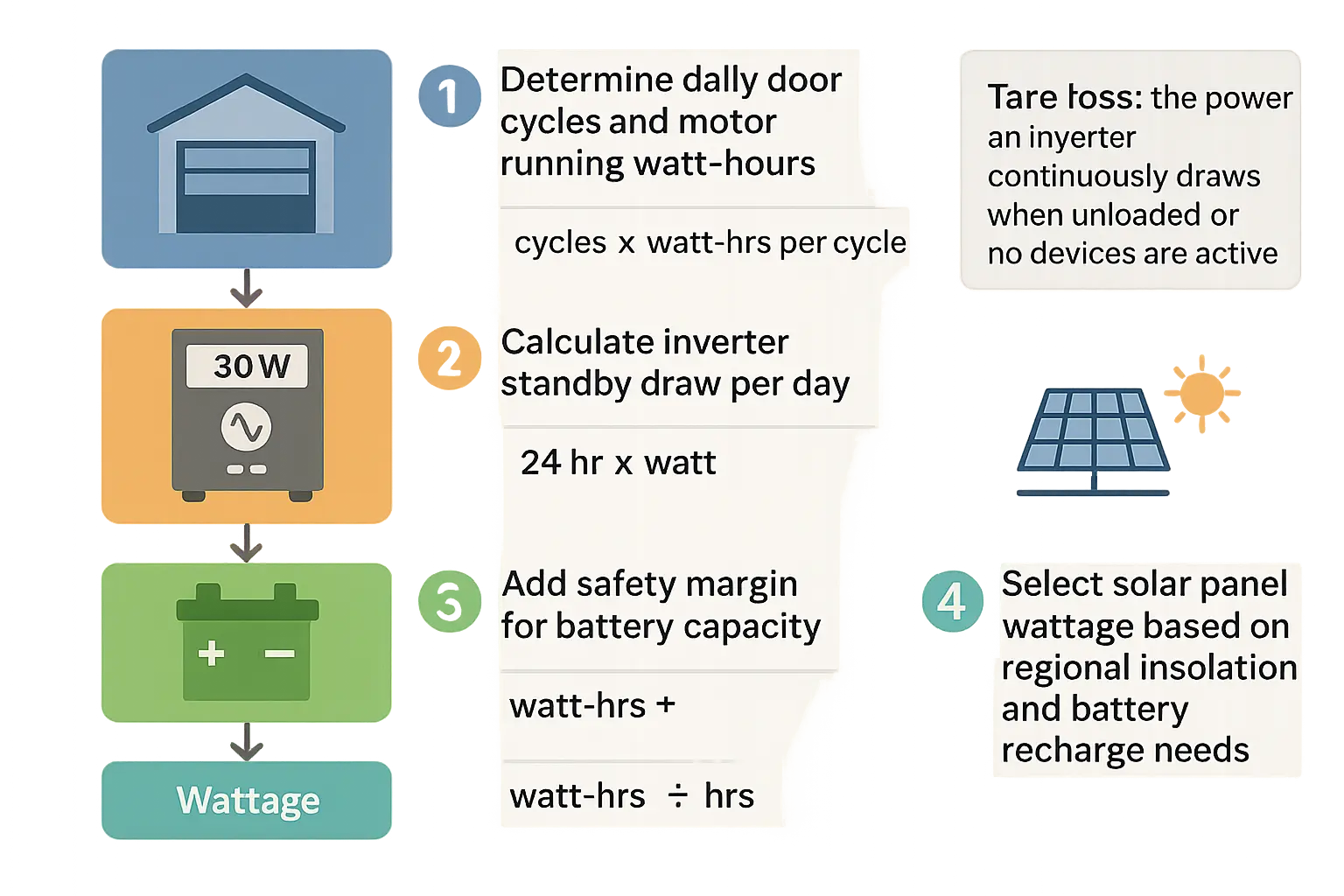
Consequently, evaluating how many watts does a garage door opener use requires calculating this standby overhead. To survive a three-day winter storm, an AC-coupled setup requires at least a 100W to 200W solar panel array and a high-quality 100Ah LiFePO4 battery. Additionally, understanding how many amps does a garage door opener use is critical because high inductive startup currents can overwhelm undersized inverters.

Inverter Standby Sizing Calculator Map

Navigating Manufacturer Warranties Safely


Major brands like Chamberlain and LiftMaster frequently note that standard residential AC models are not designed for solar conversion and that modifying the internal electronics will void the manufacturer’s warranty.

Fortunately, there is a simple architectural workaround. By powering your standard 120V opener through a standalone, high-quality pure sine wave inverter, you keep the physical unit entirely unmodified. The opener receives the clean AC current it expects, replicating a standard dedicated circuit vs shared outlet garage opener installation on the utility grid. This configuration preserves the manufacturer’s warranty while achieving full off-grid utility.

Hybrid Solar and Grid-Fallback Integration


For maximum operational resilience, hybrid setups bridge the gap between grid reliance and off-grid independence. Integrating an Automatic Transfer Switch (ATS) or utilizing a hybrid solar inverter allows the system to run on solar power primarily, only toggling back to utility grid electricity if battery reserves drop below a preset threshold (such as 20%).

To build an extra layer of protection, consider whether does a garage door opener have a battery backup. Utilizing a physical battery backup garage door opener inside the unit provides critical secondary redundancy. Finally, incorporate robust garage door opener surge damage protection to shield sensitive control boards from potential grid power fluctuations or lightning strikes.

Heavy-Duty Mobile Solar Solutions


Off-grid power demands extend beyond stationary detached structures. Custom-built solar cargo trailers and toy haulers with heavy motorized rear ramp doors require robust architectural planning. Sizing travel trailer solar banks demands analyzing massive inductive startup surges and battery management systems (BMS).

Mobile off-grid trailer setups typically fall into clear tiers:

  • Tier 1 (DIY Utility): $1,500–$3,000 (standard trailer with basic panels and DIY battery box).
  • Tier 2 (Modular Commercial): $4,900–$15,000 (steel utility frames, folding panel racks, up to 600W solar, and plug-and-play generators like RevoPower).
  • Tier 3 (Heavy-Duty Enclosed): $36,000–$60,000+ (16′ to 36′ enclosed cargo haulers with high-end Sol-Ark inverters and 32kWh–64kWh LiFePO4 battery banks from premium builders like Ozark Mountain Offgrid).

For high-capacity mobile systems, utilizing diagnostic tools for large electric garage door failure analysis ensures your system can sustain heavy cyclic demands in remote field operations.

Strategic Implementation Path


Achieving energy independence for your garage door requires balancing system simplicity against overall power versatility. Deciding between a specialized low-voltage DC setup or a more robust AC-coupled inverter system determines your upfront budget, installation difficulty, and structural reliability. Selecting the right combination of solar panels, battery chemistry, and surge protection safeguards your equipment for years to come.

Summary Image Layout

Frequently Asked Questions


Can you run a standard garage door opener on solar power?

Yes. While standard 120V AC openers are designed for grid power, you can run them using an AC-coupled solar system that includes a pure sine wave inverter, battery bank, and solar panels.

Why do small solar setups fail to run garage doors in winter?

Most failures are caused by inverter standby tare loss. Even when the garage door motor isn’t running, an active inverter continuously drains 10W to 20W of power, which can completely deplete small battery systems during consecutive overcast winter days.

Does converting a garage door opener to solar power void the warranty?

If you physically modify the internal circuit boards or wire of the opener, you will void the manufacturer’s warranty. However, plugging an unmodified standard 120V AC opener directly into a pure sine wave inverter does not void the warranty, as it receives clean, standard AC power identical to utility grid power.

Contact / Request a Call