Replacing an old garage door system seems straightforward until you are left with 150+ pounds of steel, toxic electrical elements, and composite insulation sitting on your driveway. Navigating local disposal regulations, separating non-recyclable materials, and avoiding heavy municipal fines requires a clear understanding of how these systems are classified. If you are comparing a DIY tear-down versus hiring a professional service, this guide maps out the exact logistical, safety, and environmental realities of garage door disposal.
Garage Door Disposal Regulations Hazards and Recycling
Published: Aug 20, 2026
Is a Garage Door Considered "Bulk Trash"? (The Regulatory Reality)
Many homeowners assume they can simply leave old garage door parts on the curb for weekly municipal collection. However, most municipalities—including major municipal zones in Texas (such as Amarillo and Austin) and Florida—classify garage doors as Construction and Demolition (C&D) waste. This classification explicitly bans them from standard residential curbside bulk pickup.
Where curbside pickup is permitted, preparation rules are highly restrictive. For instance, the Town of Huntington, NY, requires solid garage door panels to be cut exactly in half, with each half billed as a separate bulk item. Violating these rules can lead to immediate fines from municipal waste departments or HOA boards.
Interactive Eco-Disposal Map & Diagram
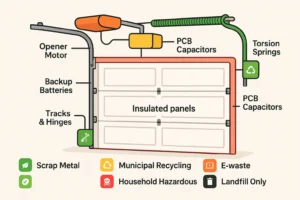
To plan your disposal strategy, you must audit your door’s components. Certain parts hold high scrap value, while others are strictly destined for hazardous waste facilities or C&D landfills.
| Component | Material / Hazard | Disposal Route |
|---|---|---|
| Tracks & Hinge Brackets | Heavy Galvanized Steel | Scrap Metal Yard (Cash) |
| Opener Motor (Internal) | Copper Windings, Steel | Scrap Metal Yard (High Value) |
| Pre-1979 Opener | PCBs (Oil-Filled Run) | Household Hazardous Waste Only |
| Backup Batteries | Sealed Lead-Acid (SLA) | Battery Recycling Center |
| Insulated Panels | Polyurethane Foam Core | C&D Landfill (Non-Recyclable) |
| Torsion Springs | High-Tension Steel | Professional Detension / Scrap |
Step-by-Step Breakdown of the "Composite Door" Nightmare
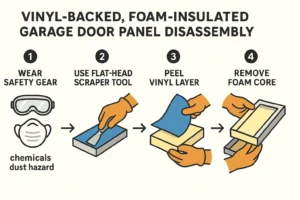
Modern composite doors provide excellent insulation but are incredibly difficult to recycle. Unlike standard steel doors, which offer direct recycling incentives, composite panels fuse a steel exterior to a vinyl backing or polyurethane foam core.
To prepare these panels for disposal, you must physically separate these materials—a labor-intensive process. You will need safety goggles, a heavy-duty dust mask, and a flat-head scraper tool to peel the synthetic backing away from the steel frame. Be aware that cutting into polyurethane foam releases micro-dust that should never be inhaled. Understanding these complexities highlights the long-term value of choosing easy-to-recycle materials for your garage door maintenance strategy.
The Invisible Hazards of Garage Door Openers
Before you attempt to disconnect garage door opener units, you must identify potential environmental and chemical hazards:
- Pre-1979 PCB Capacitors: Vintage motorized openers (such as older Genie or Chamberlain models) rely on oil-filled start capacitors that contain Polychlorinated Biphenyls (PCBs). According to the Connecticut Department of Energy and Environmental Protection (DEEP), these materials are classified as hazardous waste and cannot be sent to municipal landfills.
- SLA Backup Batteries: Under modern regulations like California’s Senate Bill 969, openers must contain backup batteries. These Sealed Lead-Acid (SLA) batteries fall under EPA universal hazardous waste rules. If you’re planning a garage door battery backup diy replacement, never toss the old battery into residential trash; it must be brought to a certified battery collection depot.
The Torsion Spring Protocol (Safety & Scrap Demands)
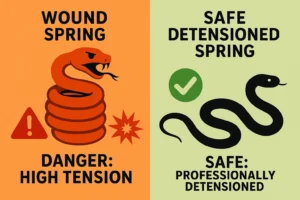
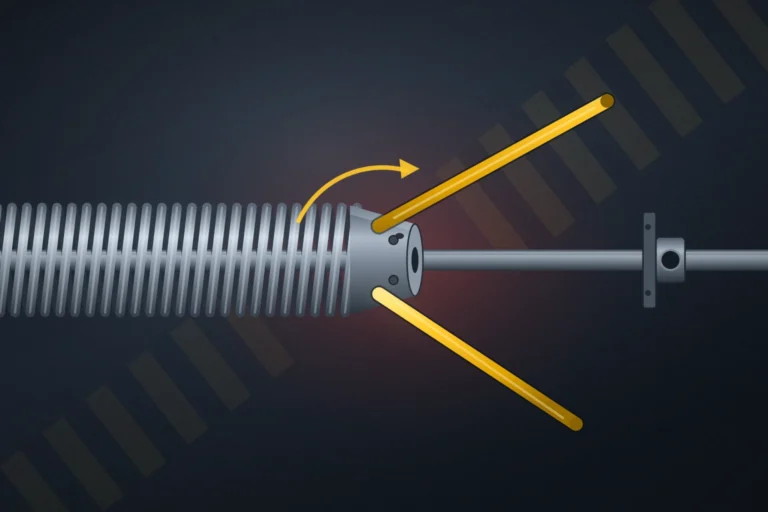
High-tension torsion springs pose the greatest physical hazard during demolition. Because a wound spring holds enough kinetic energy to cause catastrophic injury, scrap yards and municipal waste haulers routinely refuse complete spring assemblies unless they are certified as completely detensioned.
Safely handling these requires a specialized garage door spring tension tool and exact technical execution to unwind the coils safely. Attempting to cut or throw away a tensioned spring is incredibly dangerous.
Partner with Certified Professionals
Navigating disposal laws, handling high-tension springs, and separating composite materials is complex and risky. When evaluating your options, choosing a professional garage door installation ensures that environmental compliance, hazard mitigation, and recycling are completely taken care of.
For homeowners seeking reliable, hassle-free service, our team at 24H Garage Doors handles everything from safe extraction to eco-friendly disposal. If you are dealing with a broken system or planning an upgrade, book your certified new haven garage door repair or installation with our experienced technicians today.
Frequently Asked Questions
Can I get cash back for scrapping my old garage door?
Yes, but only for the raw metal components. Steel tracks, brackets, and copper-wound motor parts can be sold at scrap yards. However, insulated panels hold no scrap value and require landfill fees.
Why won't my town pick up my old garage door panels?
Most municipalities classify doors as C&D (Construction and Demolition) waste rather than household trash due to their size and composite materials.
How do I safely dispose of an opener with a backup battery?
Extract the SLA battery and drop it off at a certified hazardous waste or retail battery collection center. The remaining metal rail and motor can then be recycled.