main logo

Beyond the Floor: A Strategic Guide to Overhead Garage Storage for Seasonal Sanity


Published: Jun 18, 2026

Does this sound familiar? The holiday lights you use for three weeks a year live in a prime, easy-to-reach spot. The summer beach chairs are buried under winter sleds. Every change of season triggers a garage-wide excavation project, turning what should be a simple swap into a weekend of frustrating clutter Tetris.

You’ve reclaimed the floor space, but the chaos has simply moved to the shelves.

What if there was a better way? The most underutilized space in your entire home isn't in a closet or the basement—it's the 10 feet of air above your car. Overhead garage storage isn't just about getting things off the floor; it's about creating a strategic, accessible "second attic" that works for you. This guide will show you how to transform that empty space from an afterthought into the most organized part of your home.

Foundation: Is Overhead Storage Your Solution?


Before you start looking at racks, it’s crucial to understand the fundamentals. Getting this part right ensures your system is safe, effective, and perfectly suited to your needs. This isn't just about installing a shelf; it's about designing a long-term storage solution.
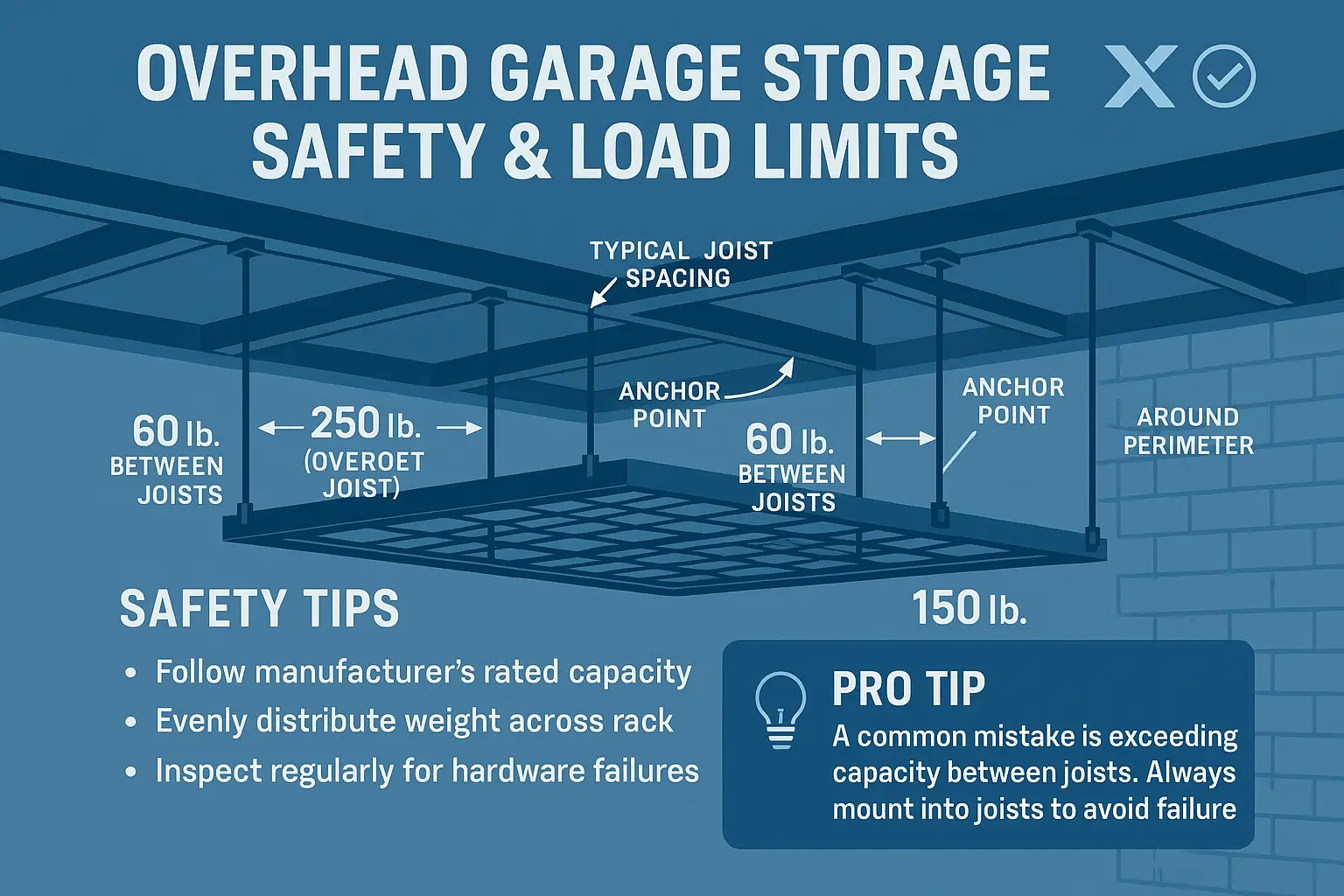
Understand safety limits and best practices to ensure your overhead storage setup can securely hold your seasonal items without risk.

What Should (and Shouldn't) Be Stored Up High?

Overhead storage is ideal for items that are relatively lightweight, durable, and not sensitive to temperature swings. Think of it as the perfect home for things you need intermittently, but not daily.
Excellent Candidates for Overhead Storage:

  • Holiday decorations (Christmas, Halloween, etc.)
  • Seasonal sports equipment (skis, snowboards, pool floats, camping gear)
  • Extra luggage and travel gear
  • Archived documents in sealed bins
  • Out-of-season clothing in weather-proof containers
Items to Avoid Storing Overhead:
  • Flammable or Hazardous Materials: Cans of paint, propane tanks, and chemicals should never be stored overhead where a leak could be dangerous and difficult to access.
  • Heavy, Dense Items: Free weights, tool chests, or large bags of soil can easily exceed weight limits.
  • Temperature-Sensitive Items: Delicate electronics, old photographs, and important papers can be damaged by the heat and humidity common in garages.
Understand safety limits and best practices to ensure your overhead storage setup can securely hold your seasonal items without risk.

Safety and Load Limits: The Most Important Step

The single most critical factor in overhead storage is safety. Your system will be suspended over cars, and potentially, people. Understanding and respecting load limits is non-negotiable.
A well-organized garage is a safe garage. As you plan your storage, consider other aspects of garage door safety for kids and pets to create a truly secure environment.

Building: Planning Your System for Effortless Rotation


Here’s the "aha moment" most people miss: Your overhead storage system should be designed around how you plan to retrieve items, not just how you store them. This strategic thinking is what separates a functional system from a frustrating one.

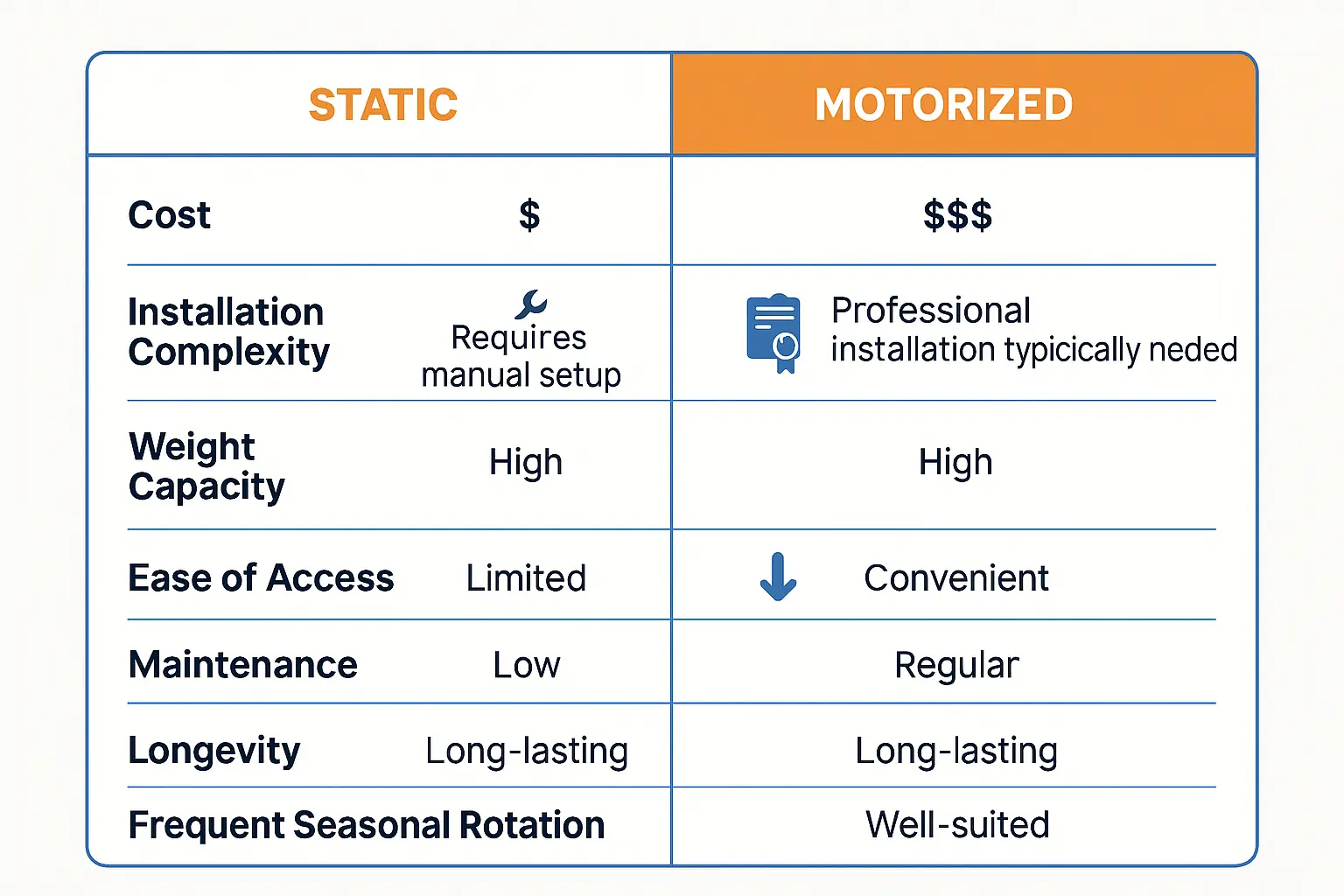
Choosing Your Rack: Static vs. Motorized

Your choice of rack depends entirely on your budget, what you're storing, and how often you'll need to access it.
Static Racks: These are the most common and affordable option. They are fixed shelves that you access with a ladder.

- Pros: Cost-effective, simple to install, very reliable with no moving parts.

- Cons: Requires a sturdy ladder and physical effort to lift and lower heavy bins.

Motorized (or Hoist) Racks: These systems use a motor or a manual pulley to lower the platform for easy loading and unloading at ground level. Understanding what size garage door opener do I need can provide some context for how these small but powerful motors work.

- Pros: Excellent accessibility, eliminates the need to carry heavy bins up a ladder, much safer for heavier items.

- Cons: Significantly more expensive, more complex installation, requires a power source.
Compare static and motorized overhead racks side-by-side to choose the best system for your seasonal item rotation needs.

The Art of Placement: Mapping Your Airspace

Before drilling a single hole, map out your garage. Consider:

• Vehicle Clearance: Will the rack and the bins hanging below it clear your car's roof, especially if you have an SUV or truck? Open your garage door fully to see how much space you truly have.

• Ladder Access: Plan for a "landing zone" where you can safely place and climb a ladder without being cramped.

• Garage Door Opener & Tracks: Ensure the rack doesn't interfere with the operation of your garage door.

The Seasonal Swap Strategy: Your Blueprint for Success

This is the core concept for mastering your storage. Don't just throw bins up randomly. Mentally divide your rack into zones.

• Zone 1 (Fall/Winter): This side holds your holiday decorations, winter sports gear, and heavy blankets.

• Zone 2 (Spring/Summer): This side holds your beach chairs, pool toys, camping equipment, and gardening supplies.

When it's time to swap, you aren't searching through every bin. You simply bring down everything from one zone and replace it with the off-season items from your shelves. It’s a planned, one-to-one exchange.

Compare static and motorized overhead racks side-by-side to choose the best system for your seasonal item rotation needs.

Mastery: The Definitive Installation Guide


While every kit is different, the principles of a safe installation are universal. If you're not comfortable with this process, seeking professional help from a team experienced with services like garage door installation near me is the safest choice. For the confident DIYer, here's what matters most.
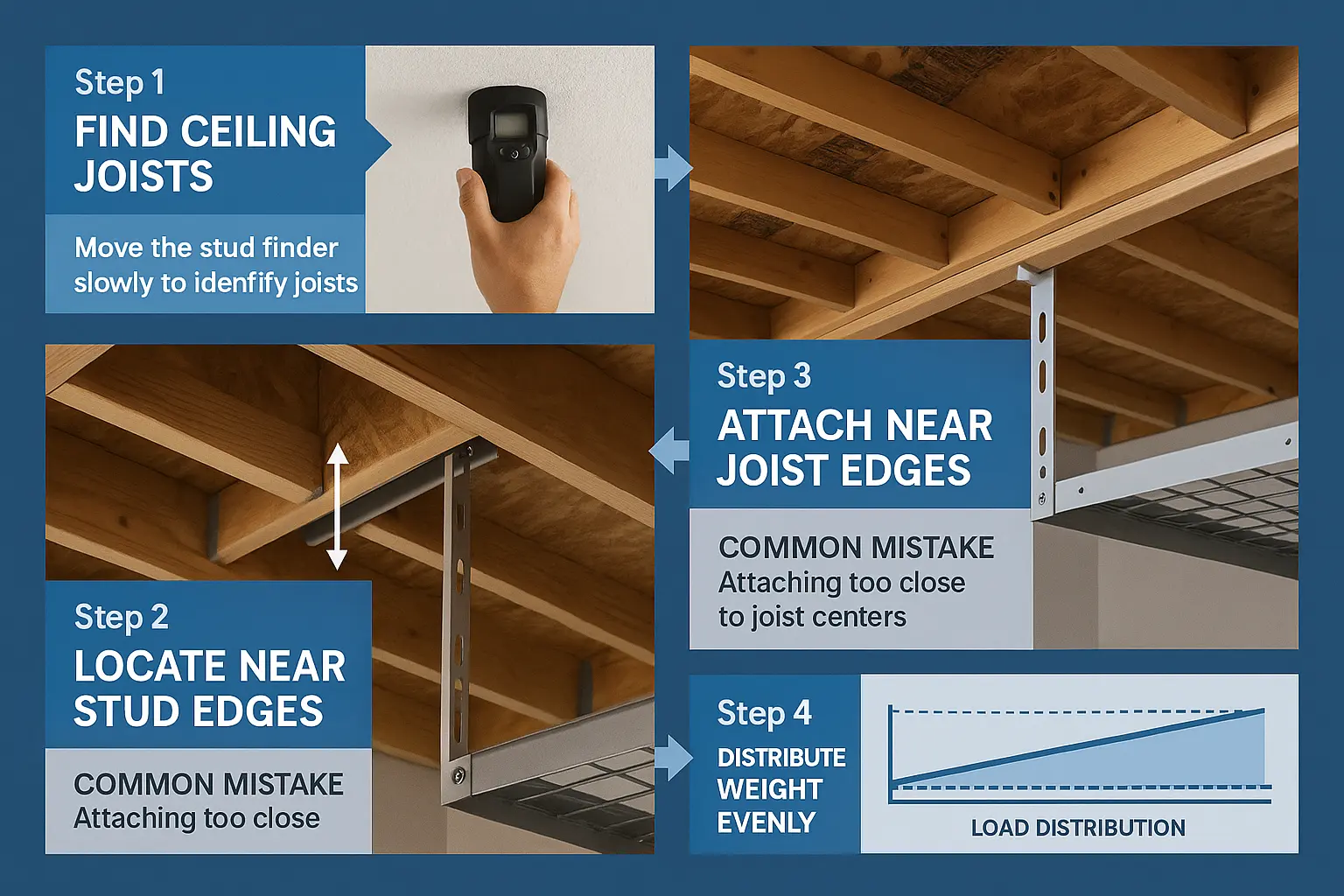
Ensure a safe, durable overhead rack installation by accurately locating joists and balancing load weight with this expert visual guide.

Visualizing Joist Finding and Weight Distribution

The structural integrity of your ceiling is paramount. You absolutely must anchor the rack's support brackets into the center of your ceiling joists (the wooden beams that frame your ceiling).
1. Use a Stud Finder: A good quality electronic stud finder is the best tool for locating joists through drywall.
2. Confirm and Mark: Once you find the edges of a joist, use a small nail to test and confirm you've hit solid wood. Mark the center of the joist.
3. Measure and Repeat: Joists are typically spaced 16 or 24 inches apart on-center. Use this knowledge to find the next one.
4. Plan Your Weight: Always distribute the heaviest bins across multiple joists rather than concentrating the load on a single point.

Ensure a safe, durable overhead rack installation by accurately locating joists and balancing load weight with this expert visual guide.

Action: Implementing Your Long-Term Storage System


Installation is just the beginning. A truly great system is one you can manage effortlessly for years to come.

Advanced Labeling and The Seasonal Swap System

You can’t see what’s in the bins when they’re 10 feet in the air. A clear, robust labeling system is your key to sanity.
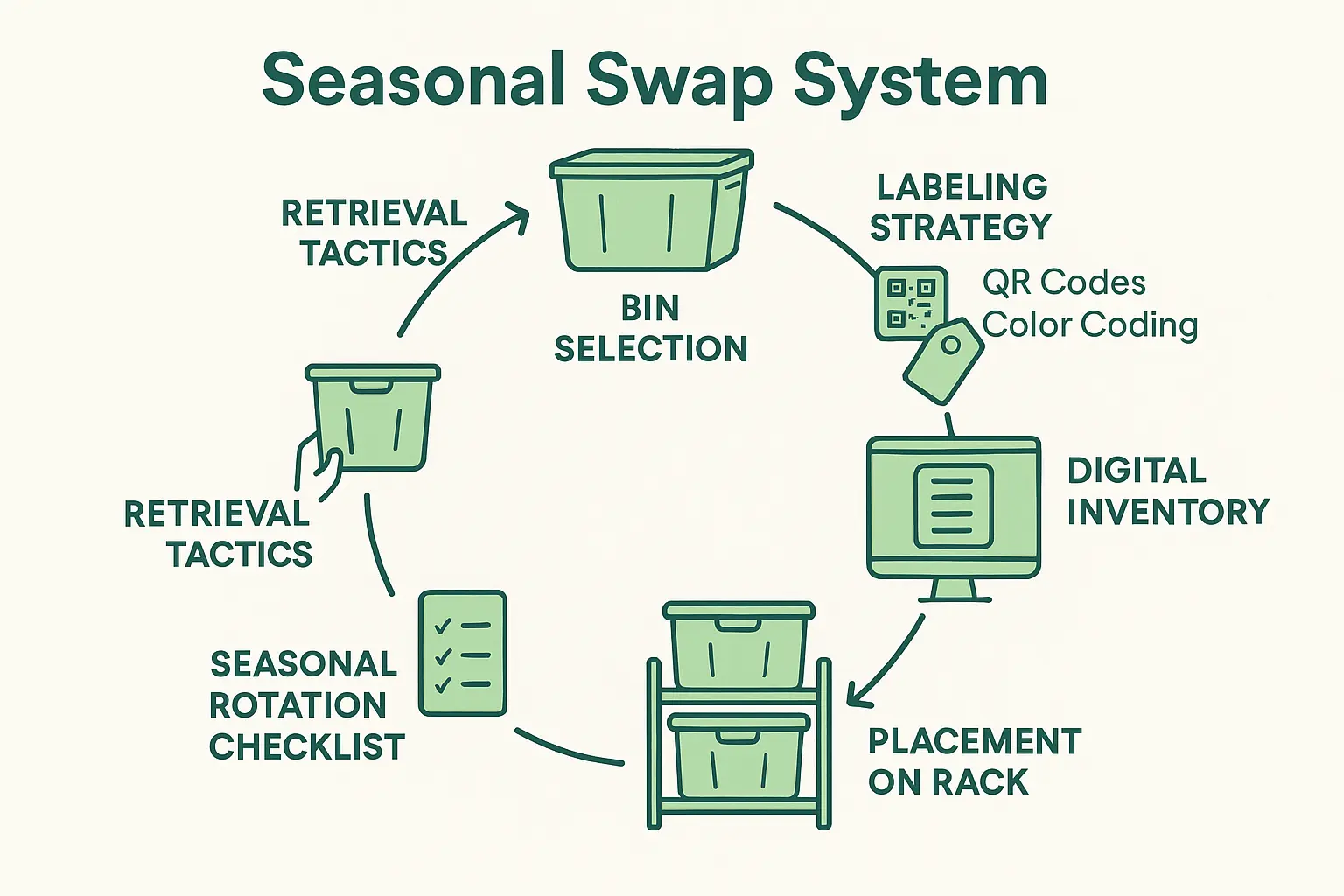
Master your seasonal item rotation with this clear, repeatable system that simplifies labeling, organizing, and retrieval for hassle-free storage.
1. Color-Coding is King: Assign a color to each season or category. Use colored tape or labels on the bins. For example: Red for Christmas, Orange for Halloween/Fall, Blue for Summer, Green for Camping. At a glance, you know exactly what's what.
2. Number Each Bin: Give every bin a unique number (e.g., Red-01, Red-02).
3. Create a Digital Inventory: Use a simple spreadsheet or notes app on your phone. List each bin number and its exact contents.
4. Choose the Right Bins: Invest in high-quality, durable plastic bins with secure, locking lids. They protect your items from dust and pests and stack securely. Clear bins are great for shelves, but for overhead storage, opaque bins are often stronger and protect items from sunlight.

Master your seasonal item rotation with this clear, repeatable system that simplifies labeling, organizing, and retrieval for hassle-free storage.

Frequently Asked Questions About Overhead Storage


What is overhead garage storage?

It's a storage system, typically a metal rack or platform, that is securely mounted to the ceiling joists in your garage. It utilizes the vertical space above your vehicles and walking areas to store items you don't need to access daily.

Is overhead garage storage safe?

Yes, it is extremely safe when installed correctly and loaded within its specified weight limits. Safety depends entirely on proper anchoring into ceiling joists and not exceeding the manufacturer's load capacity.

How much weight can it hold?

Most commercially available 4x8-foot steel racks are rated to hold between 400 and 600 pounds, provided that weight is evenly distributed and the rack is installed correctly into solid wood joists.

What are the pros and cons?

Pros: Frees up valuable floor space, organizes clutter, keeps items safe from water damage on the floor, and utilizes previously wasted space.

Cons: Can be difficult to install, requires a ladder for access (unless motorized), and has strict weight and item limitations.

Your Garage, Reimagined


By shifting your mindset from simply "storing stuff" to "designing a system," you can permanently solve the seasonal clutter problem. An overhead storage rack is more than a shelf; it's a tool that empowers you to reclaim your garage for its intended purpose—parking your car, working on projects, and moving freely.

This project is often the first step in a larger transformation. Once you see the potential of your space, you’ll be full of new garage makeover ideas to create a garage that’s not just a storage unit, but a true extension of your home.

You may also like


blog photo

How to Choose a Garage Door Color That Matches Your Exterior

Choosing a garage door color can feel surprisingly high-stakes. It covers a huge portion of your home’s exterior and has the power to either create a polished, harmonious look or an accidental eyesore. If you’re staring at a wall of paint swatches feeling lost, you’re not alone. Many homeowners focus on finding a “popular” color, but the secret to curb appeal isn’t about trends—it’s about harmony.Think of your garage door as your home's second front door. It’s a major architectural feature that can dramatically boost your home's character when chosen thoughtfully. This guide will walk you through the same principles designers use, transforming that overwhelming decision into a simple, confident choice. We'll move beyond just looking at colors and teach you how to see them, ensuring your new garage door perfectly complements your home's beautiful brick, stone, or stucco.