Metal Garage Doors (Steel & Aluminum)
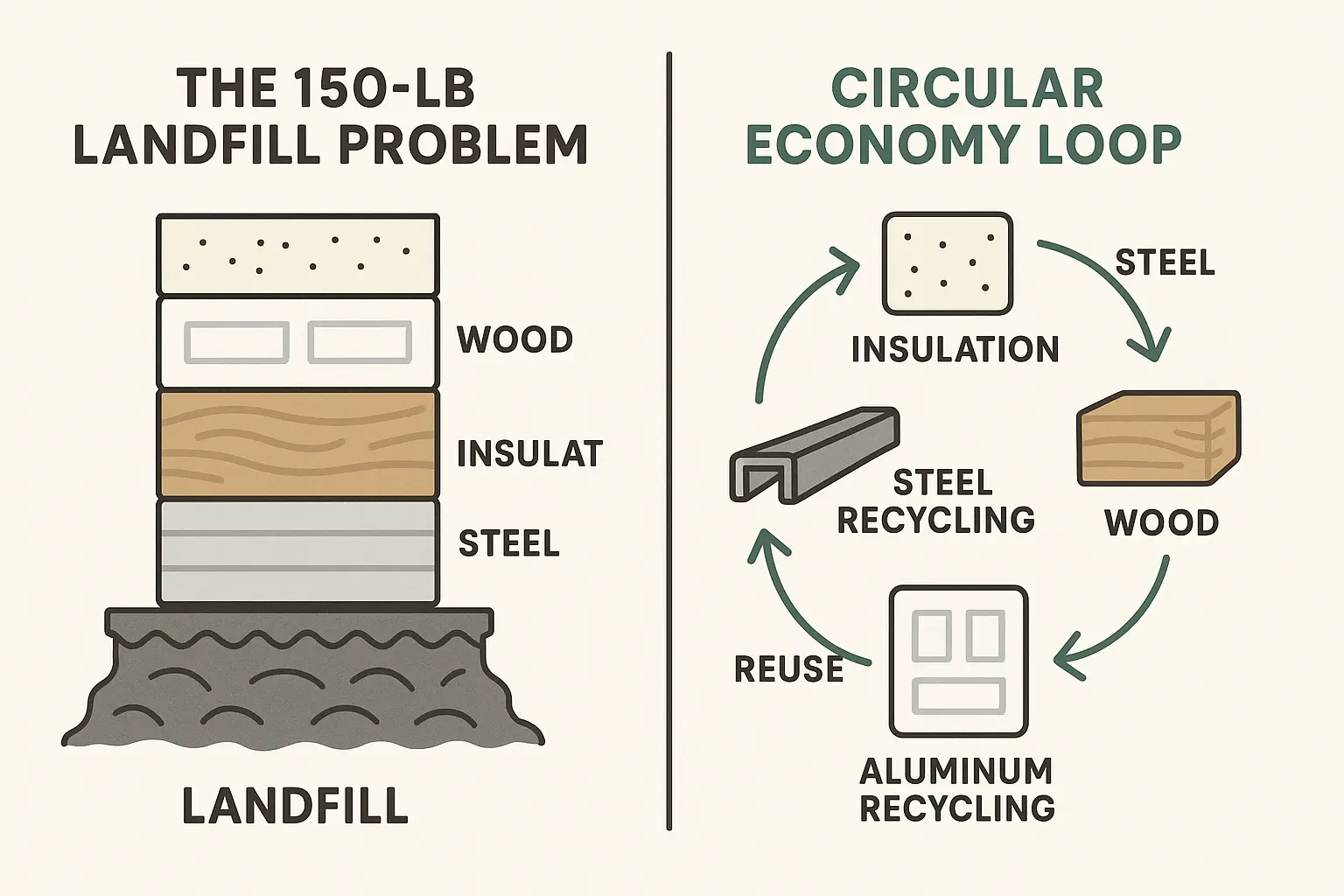
Metals are highly valued in the circular economy. Recycling steel saves 74% of the energy required to make it from raw ore (Steel Recycling Institute). For a standard 150 lb double steel door, this saves roughly 111 kWh of electricity—enough to power an average home for nearly four days. Knowing the physical properties of your door, like comparing 24 vs 25 gauge steel thickness, helps scrap yards determine its weight and value. Understanding these steel garage door benefits underscores why steel is such an environmentally friendly material to salvage.
Aluminum is even more energy-efficient: recycling aluminum saves 95% of the energy required to produce virgin metal (The Aluminum Association).
The Rust Question
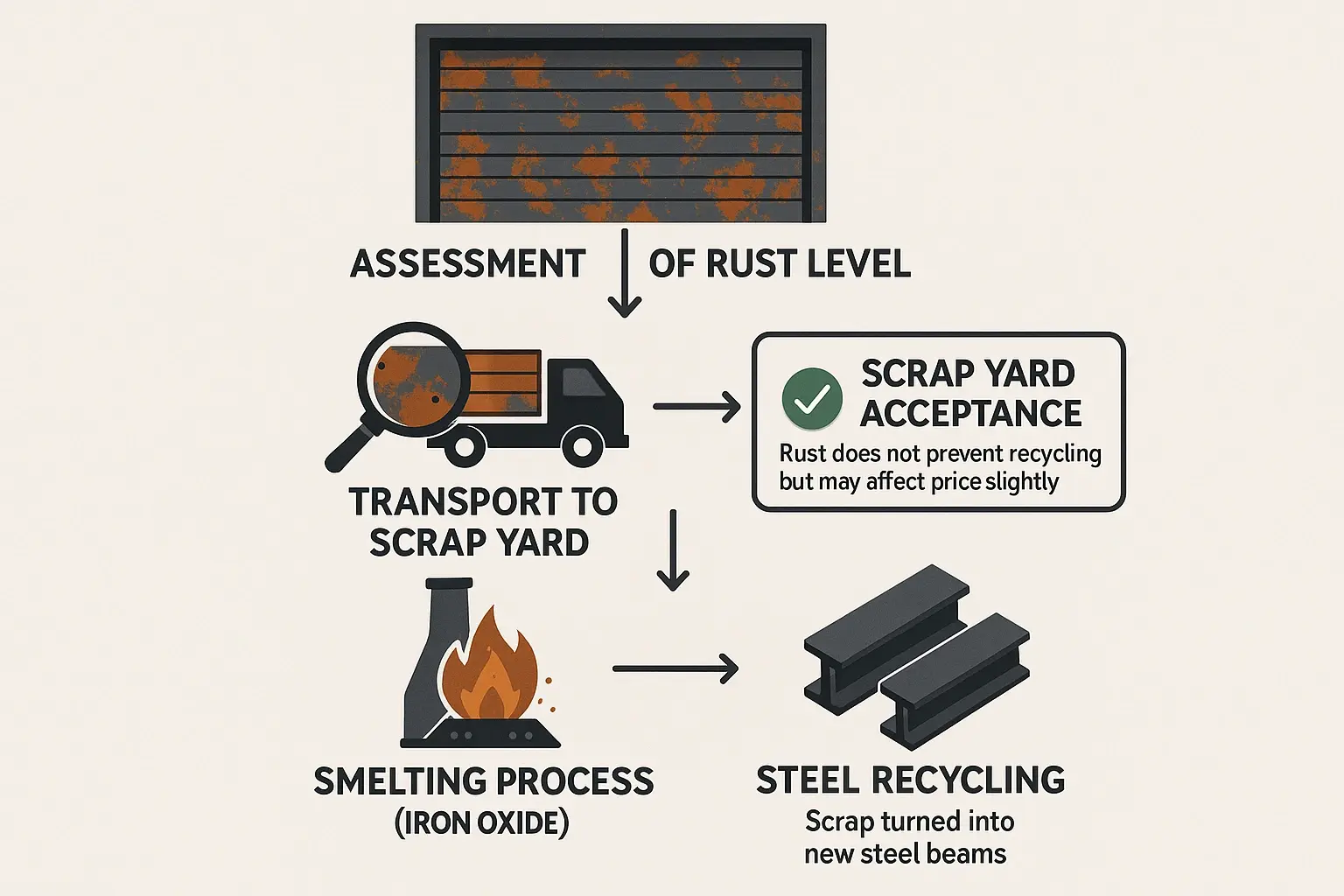
Many homeowners worry that surface corrosion makes metal unrecyclable. However, iron oxide simply burns off during the industrial smelting process. Scrap yards readily accept rusted steel, though severe oxidation may slightly reduce the total weight at the scale.
Complex Insulated and Wooden Doors
Composite doors present unique recycling challenges. You must separate the external skin from internal layers, such as various garage door insulation types, like polystyrene or glued polyurethane. For wood doors, painted panels must be inspected for lead-based finishes before they can be repurposed or safely mulched.
⚠️ SAFETY WARNING: Never attempt to dismantle torsion springs yourself. These components operate under extreme mechanical tension. A sudden release of kinetic force can cause severe injury or property damage. If you have broken garage door springs or need to safely unwind a spring, contact a professional technician. Do not attempt a DIY garage door torsion spring winding without certified training and professional tension rods.