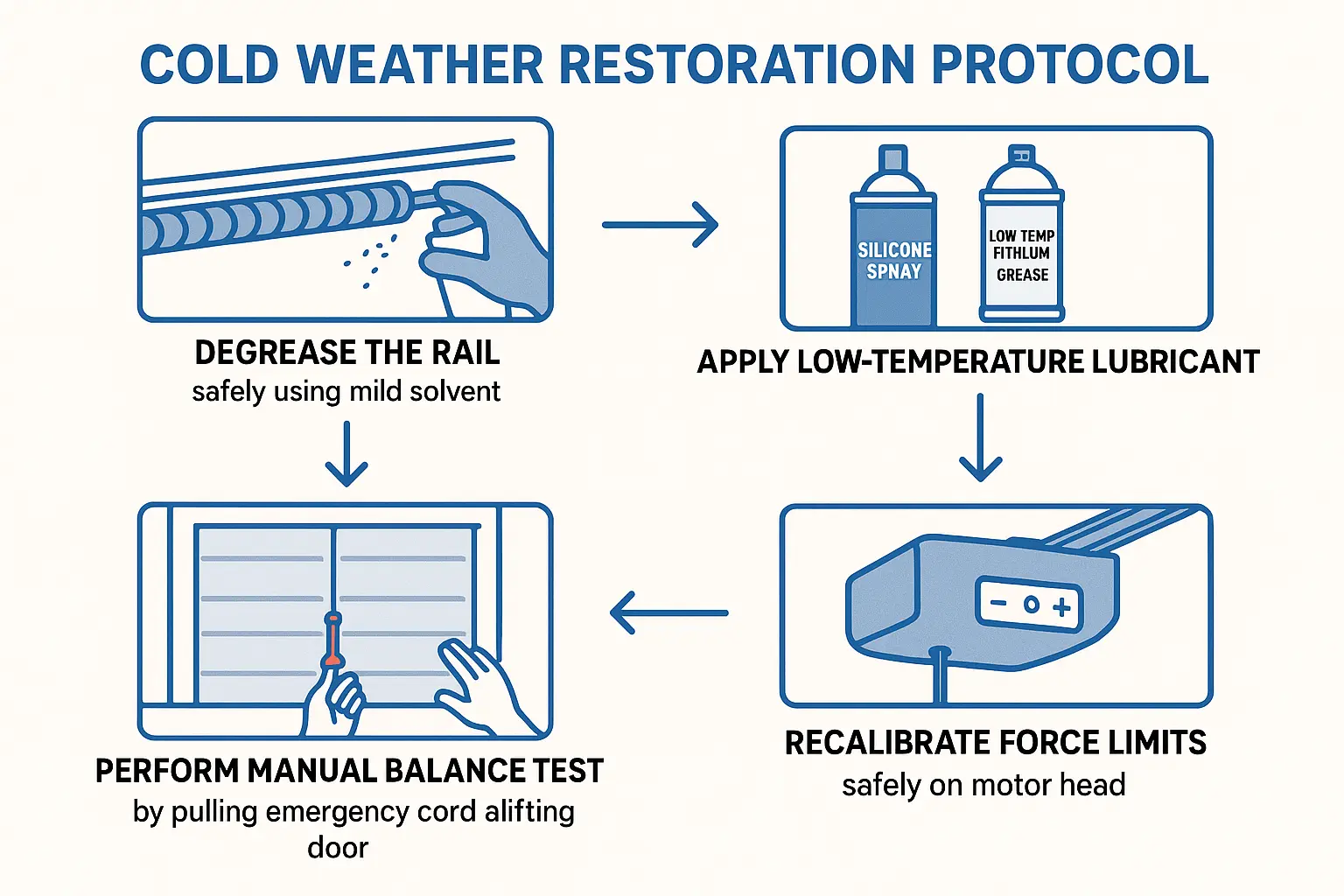
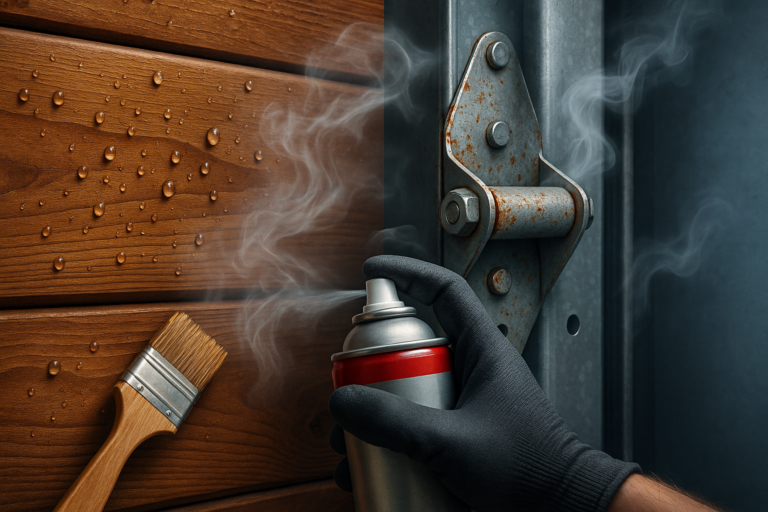
If your screw-drive system is stalled by the cold, you can restore its performance using this structured four-step DIY protocol.
Degrease the Rail
Old, contaminated grease must be removed before applying new lubricant. Dampen a rag with a mild solvent, such as mineral spirits, and thoroughly clean the old, gummed-up grease from the threaded steel rod. This process is similar to how you would clean garage door tracks to prevent dust and debris from seizing the system.
Apply a Specialty Low-Temperature Lubricant
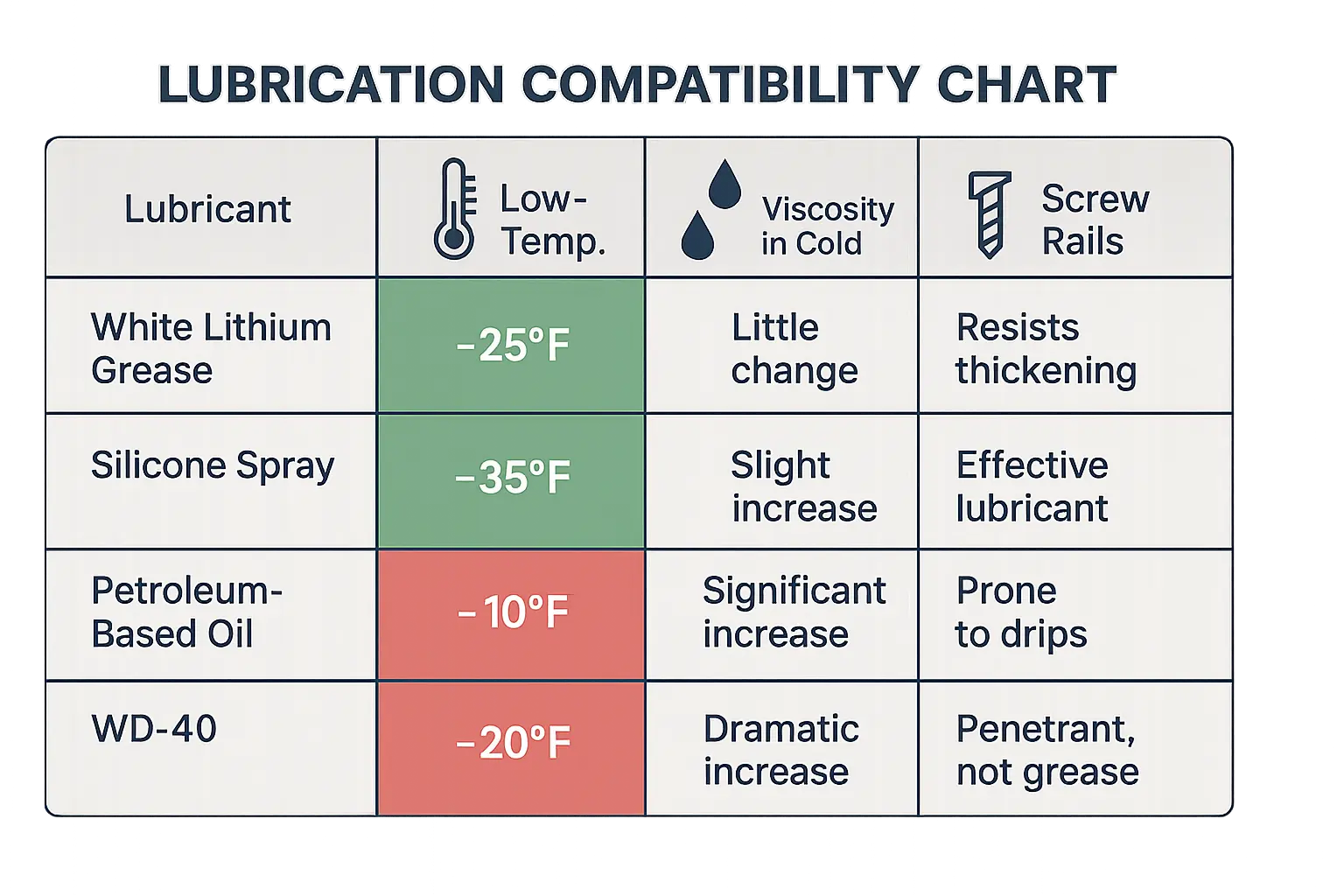
Never use multi-purpose lithium grease or standard household oils, which quickly freeze and thicken. Apply a dedicated, low-temperature synthetic lubricant designed specifically for garage door screws. Ensure even coverage along the entire length of the rod.
Perform a Manual Balance Test
Disconnect the opener by pulling the red emergency release cord. Manually lift and lower the door. If the door feels heavy, sticky, or uneven, the issue lies in frozen bottom seals or out-of-balance springs rather than the opener itself.
Safely Re-Calibrate Force Limits
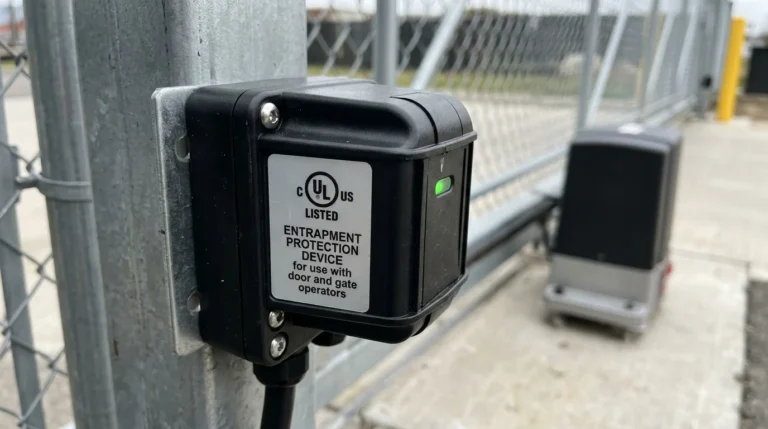
If the door still reverses due to cold-weather resistance, you may need to adjust garage door opener settings. Marginally adjusting the travel force can help the motor overcome the residual cold drag. Refer to your manual to adjust the garage door limit force settings safely, ensuring the system remains in strict ul 325 compliance for auto-reversal safety.