When a commercial rolling steel door curtain disengages from its vertical guide channels, facility operations come to an immediate standstill. A dislodged slat curtain severely compromises building envelope security, breaches environmental containment, and presents a physical hazard under OSHA 29 CFR 1910.212 standards. Commercial coiling steel curtains weigh between 10 to 18 lbs per square foot—meaning a standard 12×12 foot industrial curtain overhead weighs well over 1,400 lbs. Attempting an uncoordinated fix without proper stabilization exposes personnel to catastrophic overhead uncoiling and gravimetric drop hazards.
Rolling Steel Door Curtain Off the Guides: Causes, Safety Protocols, and Repair
Published: Nov 13, 2026
Rolling Steel Coiling Doors vs. Sectional Doors: The Critical Difference
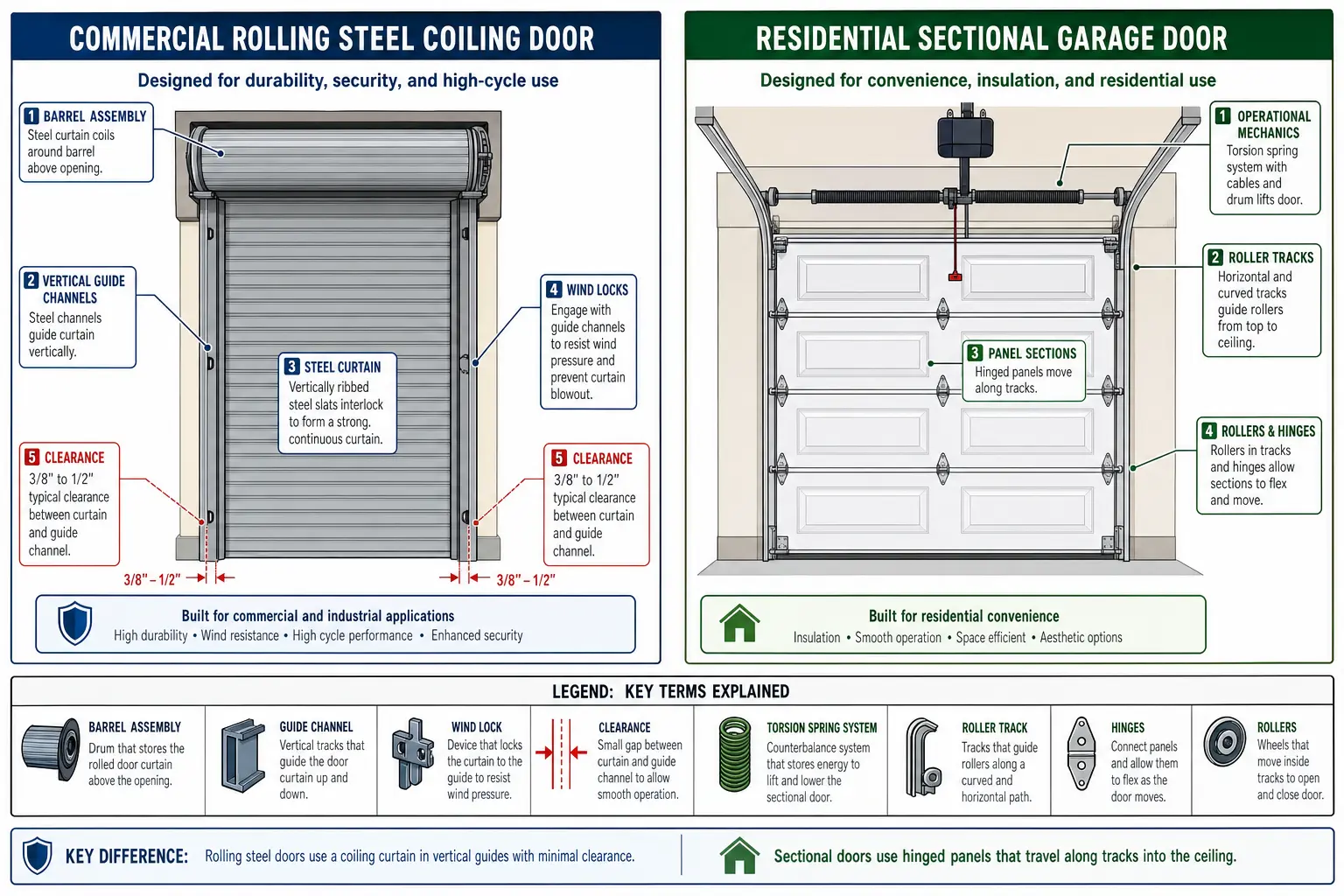
A frequent mistake in facility maintenance is treating a commercial coiling steel door like a residential sectional door. Sectional overhead doors consist of individual hinged panels that ride along curved tracks on roller stems. In contrast, rolling steel doors utilize continuous, interlocking corrugated steel slats that coil around an overhead spring-balanced barrel assembly.
According to ANSI/DASMA 102-2021 standards, structural guide channels for rolling steel doors demand strict tolerances. The guide reveal must maintain a working clearance gap of 3/8″ to 1/2″. If track spread exceeds 5/8″, structural engagement of the endlocks or wind-locks fails, causing the curtain to pop out. Using sectional track pry-bar methods on coiling steel systems risks severe mechanical failure. For broader insights into maintaining facility opening systems, explore our overview on commercial garage door repair.
Still stuck? Get it fixed today.
24/7 emergency service from licensed local technicians.
Root Causes of Curtain Disengagement
Identifying the root cause prevents repeated downtime and expensive component replacement:
- Impact Force from Equipment: Forklift or vehicle strikes deform the bottom bar assembly or twist structural jamb angles, opening the channel wider than the 5/8″ safety limit.
- Track Spread and Sheared Anchors: High cycle vibration or structural building movement shears jamb wall angle fasteners, allowing vertical channels to bow outward.
- Wind-Lock and Endlock Deterioration: Extreme wind load or high pressure differentials can shear retaining wind-locks engineered to lock the curtain inside structural guides.
- Overhead Barrel Shaft Imbalance: Loss of counter-balance spring tension causes the curtain to telescope, forcing individual slats into guide entry flares at skewed angles.
- Motor Operator Limit Switch Overtravel: Drive unit limit switch failures force the curtain beyond top stops, driving the upper slats completely out of the throat flares.
Understanding these structural mechanics is critical when establishing routine protocols to prevent garage door repairs.
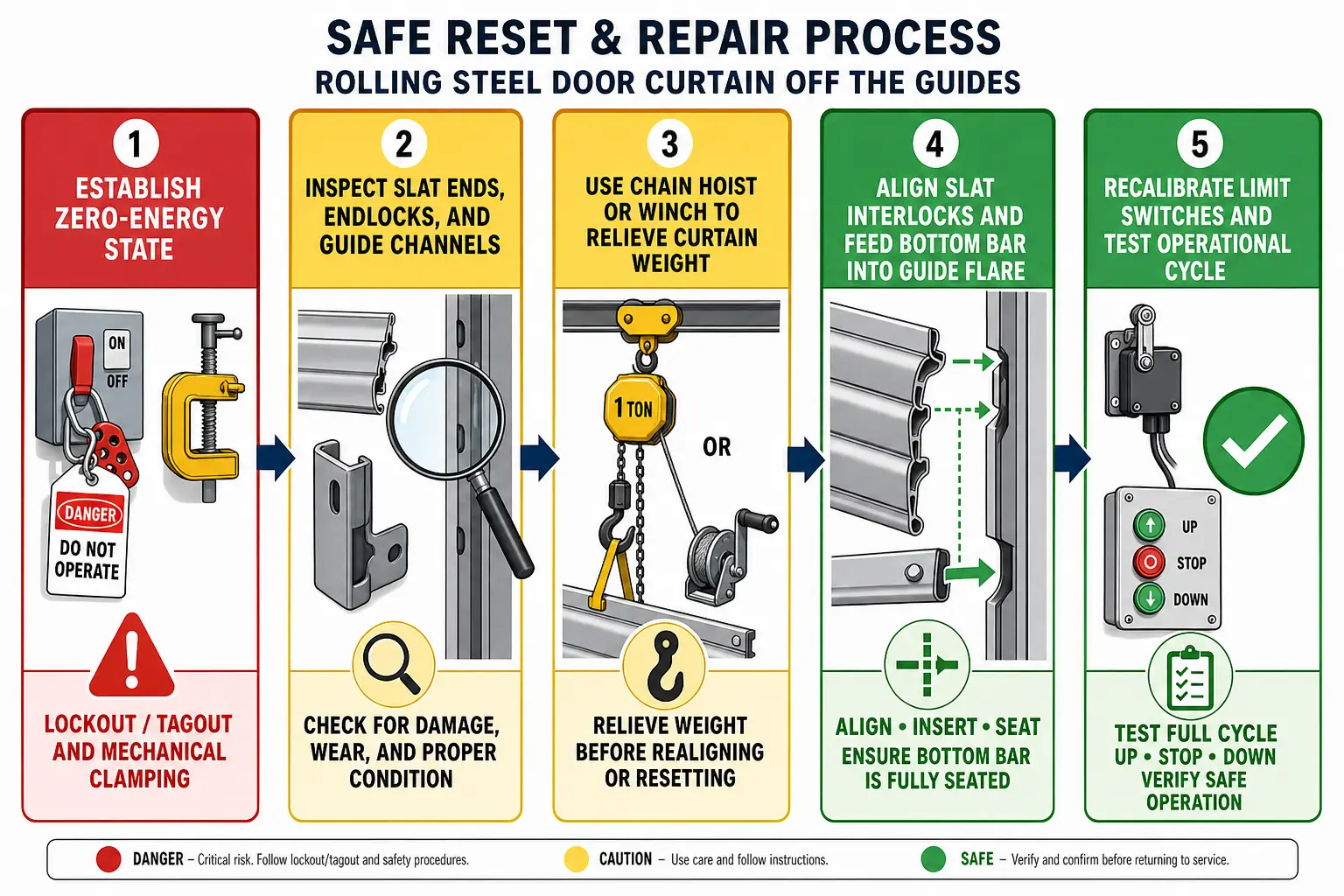
Step-by-Step Safe Reset & Repair Protocol
When performing initial stabilization with trained internal staff, adhere strictly to industry engineering protocols:
- Establish Zero-Energy State (OSHA LOTO): Disconnect and lockout all electrical power to the automated drive motor. Immediately secure heavy-duty locking C-clamps onto both guide angles directly beneath the bottom bar to prevent downward curtain acceleration.
- Inspect Slat Interlocks and Flares: Check for distorted endlocks, torn steel slats, or flared guide throats.
- Relieve Curtain Weight: Per DASMA Technical Data Sheet #271, support the suspended load using an industrial chain hoist or mechanical rigging before loosening any structural fasteners.
- Align Interlocks and Restore Guide Reveal: Carefully guide dislodged slat ends back into the throat flares while re-establishing the required 3/8″ to 1/2″ ANSI/DASMA working gap.
- Recalibrate Limit Switches and Test: Remove locking clamps, restore operator power, and perform controlled manual cycle tests.
For standard sectional door track alignment protocols, review our guide to garage door off track repair.
The Danger of Quick Fixes and Viral Hacks
Popular online video “hacks” often demonstrate loosening guide wall bolts under full curtain weight or prying track channels open with pry bars. These practices are extraordinarily dangerous. Loosening wall fasteners without locking clamps secured below the curtain can trigger an instantaneous uncoiling of the barrel shaft, releasing lethal counter-balance spring energy. Additionally, manually forcing fire-rated rolling steel doors (governed by NFPA 80) without resetting the automatic thermal release governor permanently destroys the door’s fire protection compliance.
Evaluating In-House Repair vs. Professional Service Call
Facility supervisors must rigorously balance safety risks, technician tool availability, and operational urgency when deciding whether to handle repairs in-house or escalate to certified professionals.
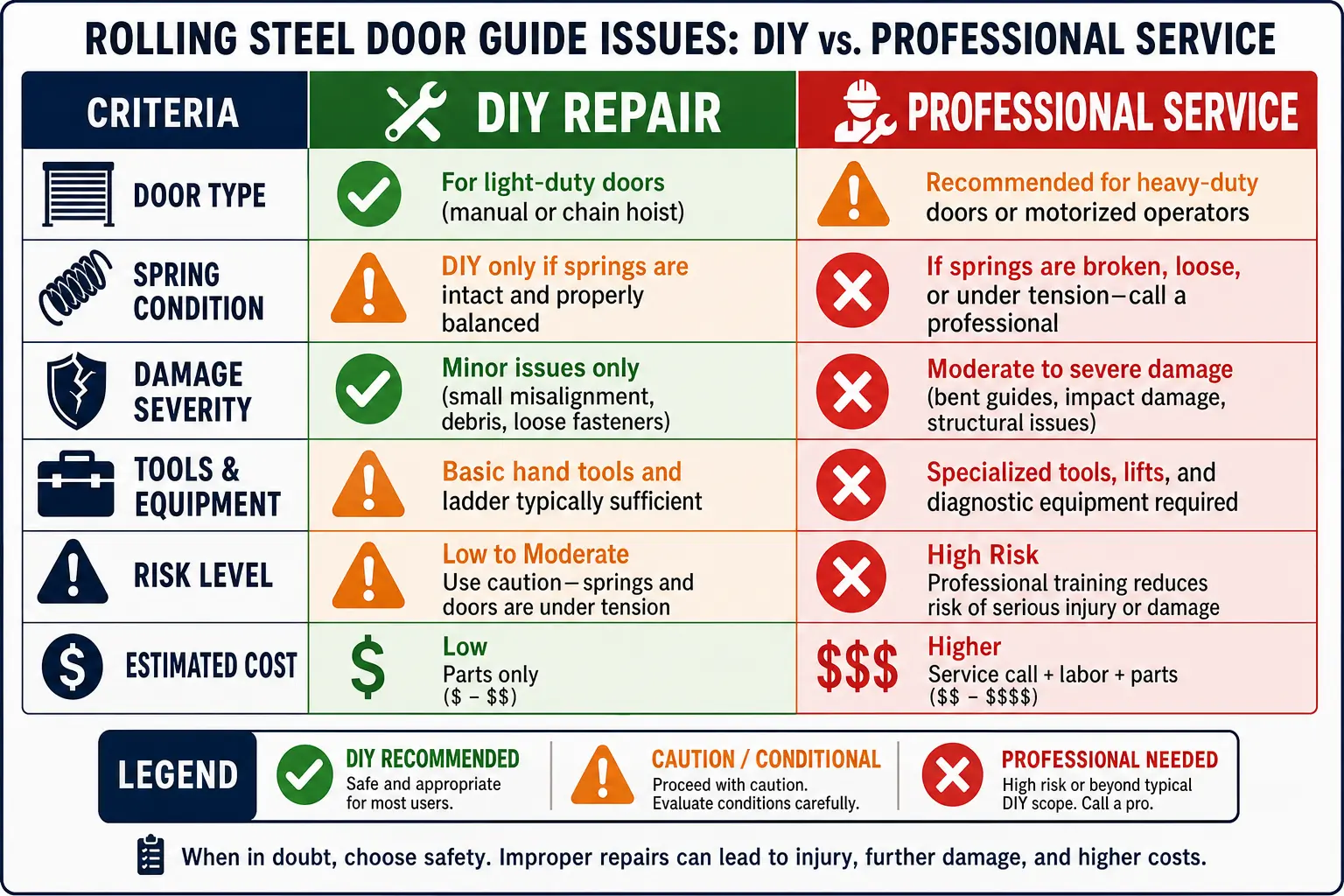
If structural guide deformation, barrel spring fatigue, or fire door drop mechanisms are involved, professional escalation is required. Dispatching certified technicians offering emergency garage door repair protects your workforce from liability while restoring building security.
Restoring Safe Commercial Operations
A disengaged rolling steel door curtain requires immediate safety precautions and precise engineering tolerances. Following ANSI/DASMA guidelines ensures facility safety, maintains security, and prevents severe structural damage. When critical overhead assets fail, rely on the certified technicians at 24 hour garage door repair to restore safe, compliant operations promptly.
Frequently Asked Questions
How do I know if my rolling door curtain issue is caused by track spread?
Measure the opening distance between the inside faces of the guide channels at the top, middle, and bottom. If the width exceeds the manufacturer specification by more than 5/8″, track spread has occurred, indicating sheared jamb fasteners or structural displacement.
Can in-house maintenance safely reset a dislodged rolling steel curtain?
In-house personnel should only perform basic resets if they strictly follow OSHA Lockout/Tagout rules, install locking C-clamps to hold curtain weight, and use certified hoisting equipment. Structural guide damage or barrel tension issues require certified technicians.
What should be done if a fire-rated rolling steel door comes off its guides?
Never attempt to force a fire door back into its guides manually. Rolling fire doors utilize specialized drop release governors governed by NFPA 80 standards. Contact a certified professional to reset the governor, adjust guides, and conduct a mandatory fire drop test.