Vinyl Stop Molding Dragging After a Cold Snap: Diagnostic & Solution Guide


Published: Nov 11, 2026

A sudden cold snap can turn a smooth-operating exterior door into a frustrating home maintenance headache overnight. When temperatures plunge, homeowners often find their entry or garage access doors sticking, dragging heavily against the frame, or refusing to latch completely.

Before taking aggressive action, it is critical to understand that cold-weather door binding is rarely a structural foundation issue. In most cases, it is caused by the unique thermal dynamics of rigid vinyl and PVC stop molding reacting to sub-freezing temperatures.


Immediate Diagnostic: Is Your Vinyl Stop Molding Too Tight?


To resolve the drag without causing permanent damage, you must first isolate the contact point.

The 60-Second Business Card Test

Take a standard business card or thick cardstock and attempt to slide it between the door slab and the vinyl stop molding along the entire perimeter while the door is closed.

  • If the card slides freely until it hits tight friction against the stop face: Your vinyl stop molding has shifted or tight tolerances are binding against the door edge.
  • If the card jams only at the top latch-side corner: The issue is likely top-hinge sag or frame rack rather than molding expansion.
  • If the door closes smoothly but springs back open: The flexible vinyl weatherstrip flange has hardened, preventing the latch bolt from fully seating in the strike plate.

Still stuck? Get it fixed today.
24/7 emergency service from licensed local technicians.
Call (860) 362-3018

The Science: Why Cold Snaps Make Vinyl Door Stops Drag


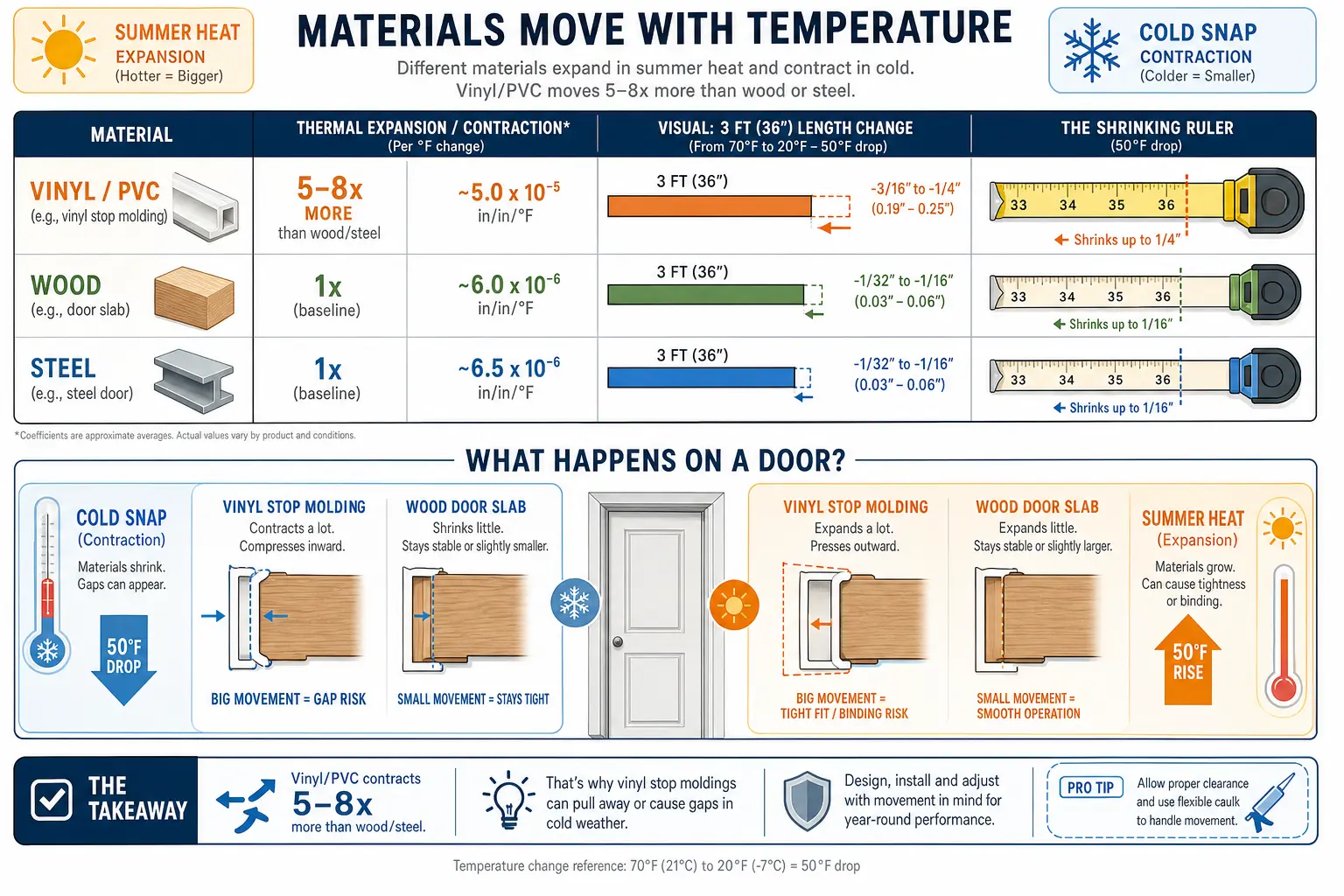
This image explains why vinyl PVC door stops contract more than wood or steel during cold snaps, causing exterior doors to drag.

Understanding material performance helps prevent costly DIY mistakes. Cellular PVC and vinyl have a Coefficient of Linear Thermal Expansion (CLTE) of approximately $3.0 – 3.5 times. This expansion and contraction rate is 5 to 8 times higher than steel and natural wood.

When a cold snap brings a temperature drop, an 80-inch vertical vinyl stop strip contracts up to 1/10 (inch) in total length. Simultaneously, thermal bridging causes the exterior face of the vinyl profile to contract faster than the interior side, slightly bowing the profile inward across the jamb width.

Additionally, standard vinyl seals undergo glass transition below 32F. The plasticizers that normally keep the seal lip flexible freeze, transforming pliable weatherstripping into a rigid wall. When combined with indoor condensation freezing into micro-crystals along the contact strip, the door slab drags heavily against the stop.


Critical Warning: Never Sand or Plane Your Door in Winter


Many general home improvement guides recommend planing or sanding down the door slab edge when sticking occurs. Following this advice during a winter cold snap is a permanent mistake.

Because wood and steel doors expand during hot, humid summer months and contract slightly in dry winter air, sanding the door edge while the vinyl stop is thermally compressed creates massive operational gaps once spring arrives. When seasonal temperatures equalize, your door will end up with severe drafts, compromised insulation, and high energy bills. Always adjust the vinyl stop or hinge position—never destroy the door slab.


Step-by-Step Fixes: Adjusting Tight Vinyl Stop Molding Without Damage


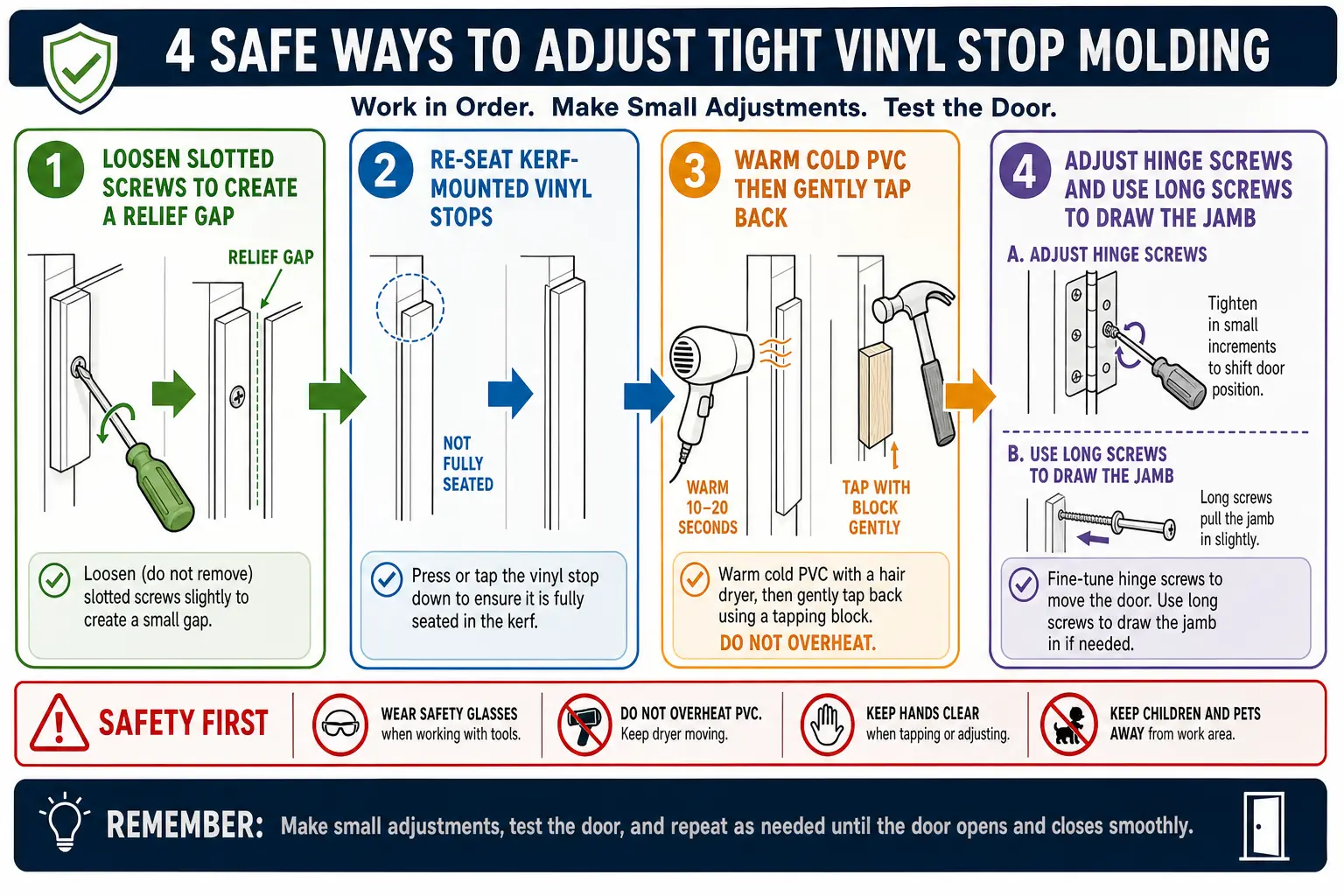
Follow these safe and effective steps to adjust your vinyl stop molding without damaging brittle PVC during cold weather.

When working with cold PVC, exercise caution: freezing temperatures make plastics brittle. Prying or hammering cold vinyl can easily shatter the strip.

Pre-Warm Brittle PVC

Before making mechanical adjustments, warm the vinyl stop molding using a household hair dryer on medium heat. Bring the material surface temperature above 60F to restore polymer flexibility.

Loosen Screw-Attached Stops

If your stop molding utilizes countersunk fasteners or slotted screw channels, loosen the mounting screws by one full turn. Shift the stop outward by $1/16text{“}$ to re-establish proper clearance before retightening.

Re-Seat Kerf-Mounted Seals

For push-in kerf seals, inspect whether the vinyl base has dislodged from its jamb groove. Warm the seal and press it firmly back into the channel, ensuring the flexible lip is oriented correctly away from the path of the closing door.

Draw In Bowed Jambs with Long Screws

If jamb movement is pulling the stop against the door slab, replace the center screw of the top and middle hinges with a 3-inch wood screw. Driving this longer screw directly into the structural wall framing draws the jamb back, immediately relieving pressure on the vinyl stop. For broader structural frame issues, consulting specialists in 24 hour garage door repair ensures perimeter seals remain aligned across all seasonal shifts.

Solution Evaluation & Comparison Table


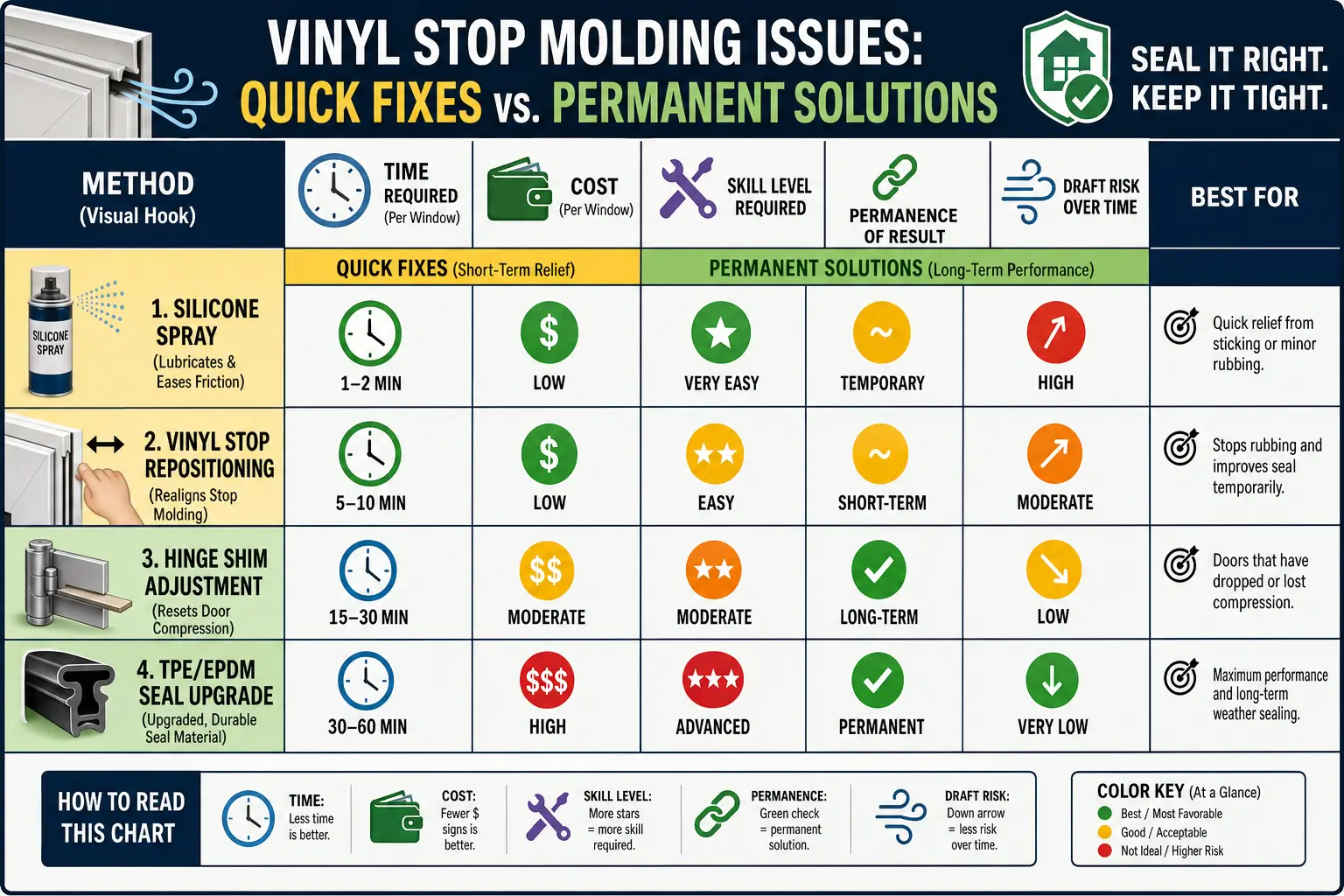
This comparison chart helps you decide the best solution for your door’s vinyl stop problem based on your time, budget, and skill level.


Preventive Maintenance for Future Cold Snaps


To prevent future cold-weather drag, apply a layer of pure dry silicone spray or fluoropolymer lubricant along the contact face of the vinyl stop before winter hits. Never use petroleum-based lubricants like standard WD-40 or vaseline. Petroleum products break down vinyl polymers, causing the material to soften, swell, and permanently degrade.

Establishing a seasonal relief gap during installation guarantees smooth door operation through freezing cold snaps while maintaining weather-tight efficiency year-round.


Professional Guidance for Year-Round Performance


Managing seasonal building dynamics requires the right balance between weather-tight seals and smooth mechanical operation. If adjusting your perimeter stops or hinges does not restore proper movement, professional inspection can resolve underlying jamb alignment issues without damaging your entryways. For localized home entrance or overhead door evaluations, contact certified technicians specializing in garage door repair stamford ct or learn more about expert installation standards from experienced 24 hour garage door repair connecticut teams.

Frequently Asked Questions


Why does my exterior door only stick when it freezes outside?

Cellular vinyl stop molding has a thermal contraction rate up to eight times higher than wood or steel. Cold air causes the exterior face of the molding profile to contract faster than the interior side, while sub-freezing temperatures harden flexible vinyl seal lips into rigid barriers that drag against the door slab.

Can I spray lubricant on my dragging vinyl door stop?

Yes, but you must use a pure dry silicone or Teflon-based spray. Avoid petroleum-based lubricants, as petroleum causes vinyl polymers to break down, swell, and degrade over time.

How do I stop cold air from coming in after adjusting the vinyl stop?

Maintain a precise $1/16text{“}$ seasonal relief gap. This small clearance prevents drag during cold snaps while allowing the flexible seal lip to compress firmly against the door face when closed, maintaining energy efficiency without binding.


Contact / Request a Call