How To Protect Your Garage Opener's Power From Humidity
Published: Jul 9, 2026
Most of us blame the battery's quality or the remote itself. But the real culprit might be something you can't even see: the air in your garage. Humidity, that often-overlooked environmental factor, acts like a tiny, invisible thief, slowly stealing the power from your batteries and causing premature failure. This isn't just about the damp feeling in the air during a summer storm; it's about a persistent, year-round chemical process silently happening inside your remote.
Let's pull back the curtain on this hidden issue and explore why understanding your garage's humidity is the key to a reliable opener.
The Science of Moisture & Metal
To understand why humidity is such a problem, we need a quick chemistry lesson—don't worry, it's painless. Humidity is simply the amount of water vapor in the air. When that moist air gets inside your garage (and inside your opener remote), it sets the stage for two major problems: corrosion and accelerated self-discharge.
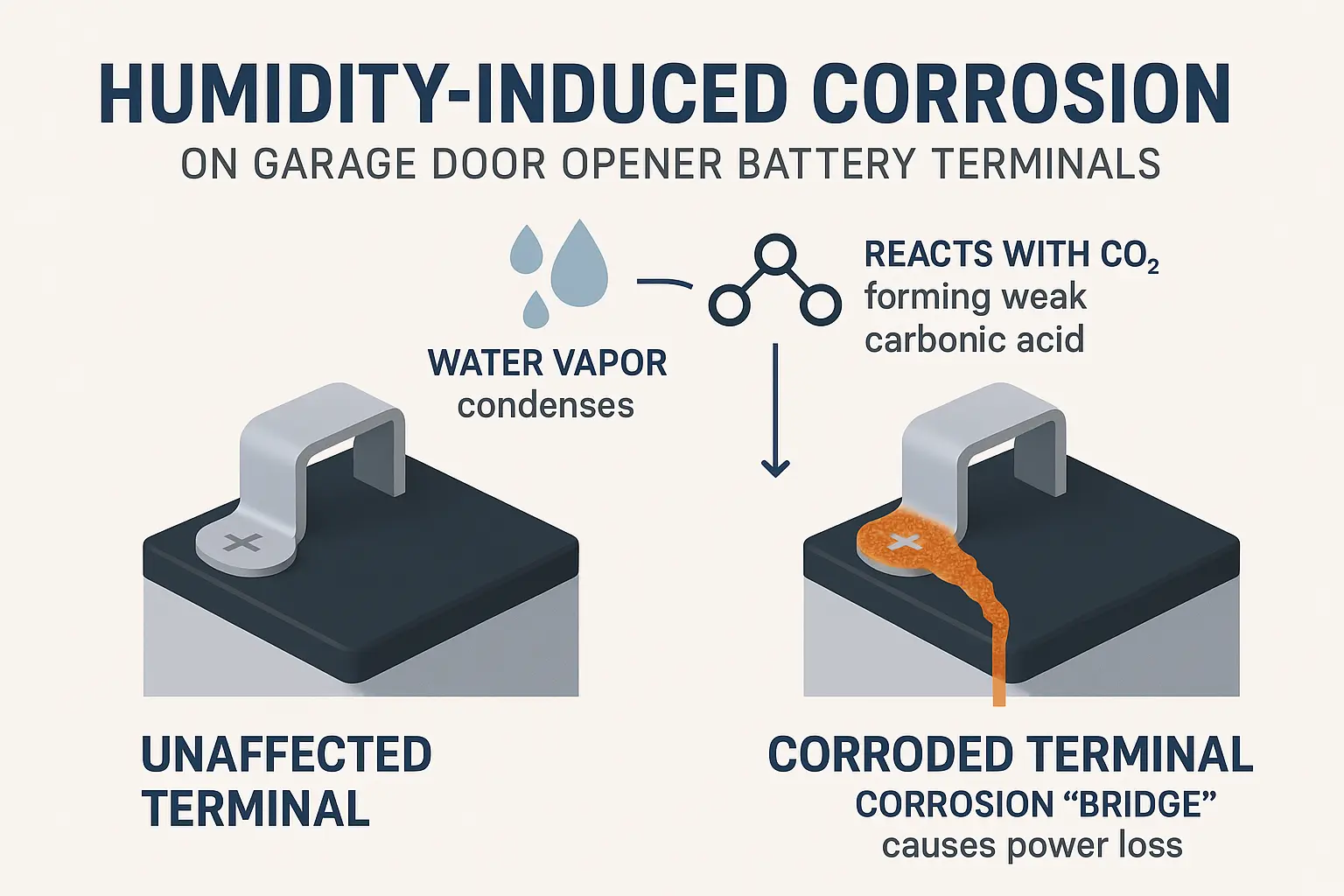
1. The Corrosion Creep: High humidity means more water molecules are floating around. These molecules can condense on the cool metal terminals of your battery. This microscopic layer of water then absorbs carbon dioxide from the air, creating a weak carbonic acid. This mild acid is the perfect electrolyte to kickstart corrosion, forming that familiar white or greenish crust (usually copper sulfate or zinc carbonate) on the terminals. This crust isn't just ugly; it creates electrical resistance. It's like putting a roadblock between the battery and the remote, forcing the battery to work harder and draining its power much faster.
2. The Self-Discharge Sprint: Every battery naturally loses a small amount of its charge over time, even when it’s not being used. This is called self-discharge. Humidity acts like a performance-enhancing drug for this process. The moisture in the air can create a tiny, invisible "bridge" of conductivity on the surface of the battery between the positive and negative terminals, causing the battery to discharge itself at an accelerated rate. A battery that should last a year might only last a few months in a very humid garage. While you're investigating a broken garage door opener, the battery itself might be the simple, yet overlooked, cause.
Quick Test: Check Your Remote
Pop open your garage door remote right now. Do you see any crusty buildup on the metal contacts where the battery sits? If so, you're seeing the direct impact of humidity.

Not All Batteries Are Created Equal
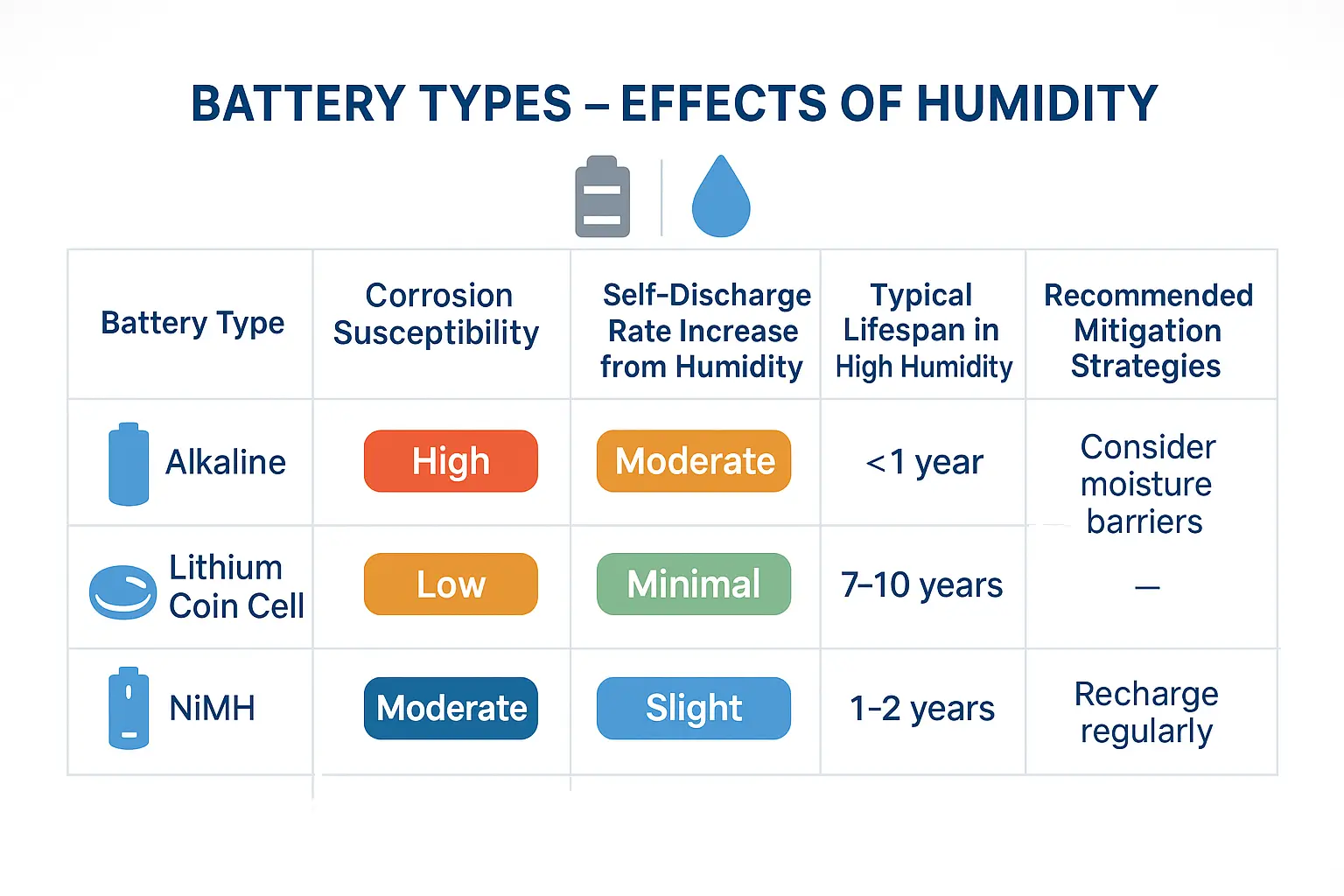
Does the type of battery in your remote matter? Absolutely. Different battery chemistries react to humidity in different ways, and choosing the right one can make a significant difference.
Alkaline Batteries (e.g., AA, AAA, 9V)
- Pros: Inexpensive and widely available.
- Humidity Vulnerability: Very high. Alkaline batteries have a steel casing that is prone to rust and their chemistry makes them more susceptible to leaking when corroded. The potassium hydroxide electrolyte inside can leak out and cause significant damage to your remote's electronics. They also have a higher self-discharge rate, which humidity makes even worse.
Lithium Coin Cell Batteries (e.g., CR2032, CR2016)
- Pros: Longer shelf life, wider operating temperature range, and higher energy density.
- Humidity Vulnerability: Lower, but not zero. Lithium batteries are better sealed and less prone to leaking. However, their external metal terminals are still fully exposed to the air and just as susceptible to the corrosive effects of humidity. The corrosion "roadblock" will still form, draining power and preventing a clean connection.
Myth Buster: Many assume the plastic case of a remote fully protects the battery.
Fact: The case is not airtight. Air—and the moisture it carries—easily gets inside through button openings and seams, directly exposing the battery and its contacts to the humid environment. When it's time to replace your garage door opener remote battery, consider the environment it will be living in.
Humidity Impact Diagnosis & Prevention
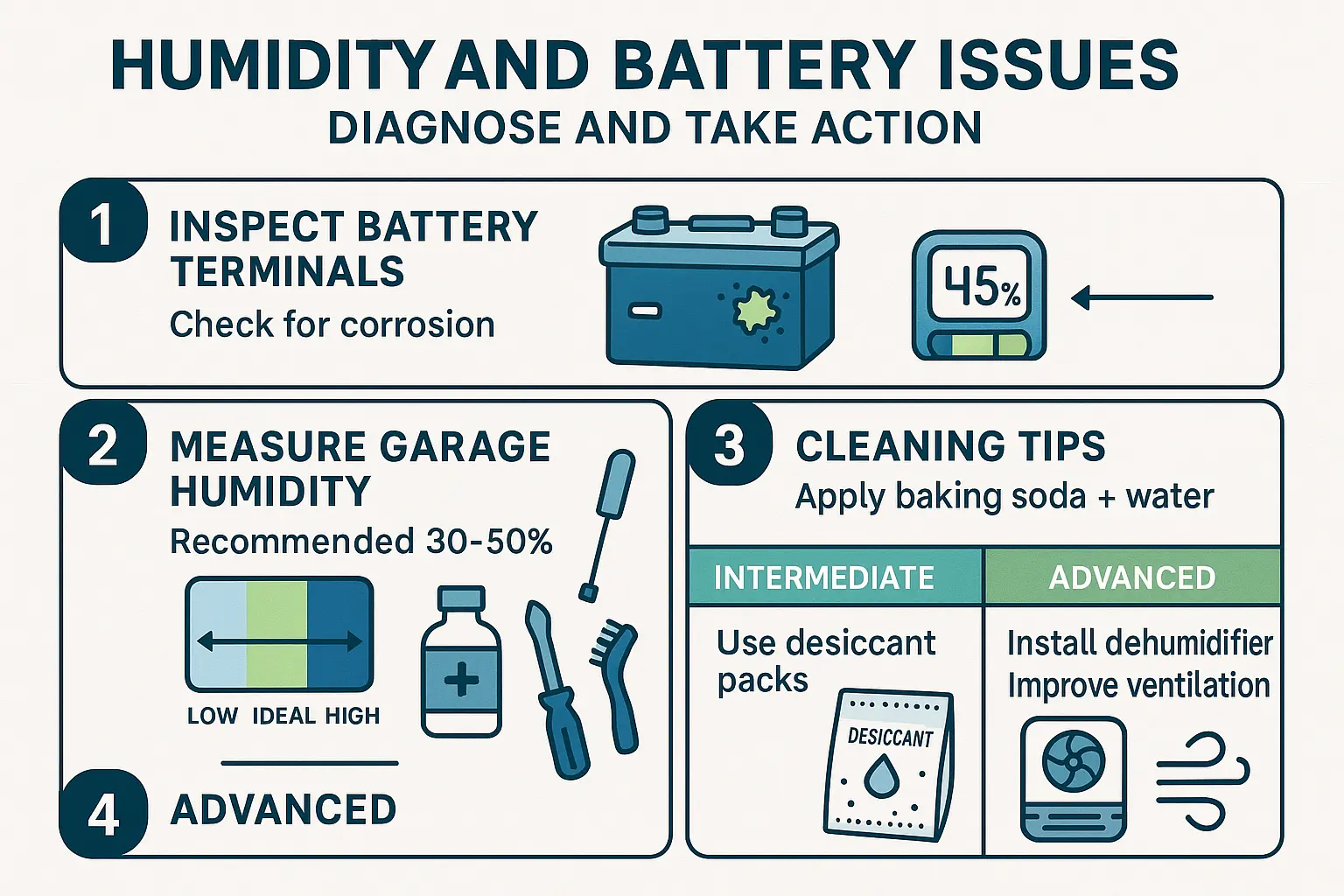
So, how can you tell if humidity is the phantom menace draining your batteries, and what can you do about it? Here’s a simple diagnostic checklist and a tiered plan for prevention.
Is Humidity Your Problem? A Checklist
- Musty Odor: A musty smell is a tell-tale sign of high moisture and potential mold growth.
- Seasonal Failure: Do your batteries seem to die more often during the hot, humid summer months?
- Visible Corrosion: Do you see white, blue, or greenish powder on the battery or terminals?
- Frequent Replacements: Are you replacing batteries more than once a year?
- Condensation: Does your garage feel damp, or do you notice condensation on tools, windows, or the concrete floor?
If you answered "yes" to one or more of these, it's highly likely that humidity is impacting your garage door opener battery's health. Taking steps to control the moisture will not only help your remote but also benefit other garage door components.
Your Tiered Prevention Plan
Tier 1: Simple & Free Maintenance
Clean the Terminals: When changing the battery, gently clean the metal contacts inside the remote with a cotton swab and a bit of isopropyl alcohol to remove any early-stage corrosion.
Use Dielectric Grease: Apply a tiny, pin-head-sized amount of dielectric grease to the battery terminals before installing a new battery. This non-conductive grease creates a waterproof seal that blocks moisture without interfering with the electrical connection.
Tier 2: Low-Cost Environmental Controls
Improve Ventilation: If possible, open the garage door for 15-30 minutes on dry days to air it out. Installing a simple vent fan can also make a huge difference.
Use a Desiccant: Place a moisture-absorbing product, like DampRid, in your garage. These are inexpensive and effective at pulling water vapor out of the air in smaller spaces.
Tier 3: Advanced Humidity Management
Install a Dehumidifier: For garages with persistent humidity problems, a dedicated dehumidifier is the most effective solution. Aim to keep the relative humidity between 30% and 50%.
Seal the Garage: Check and replace worn weather stripping around the garage door and any windows. Seal cracks in the concrete floor with an epoxy sealant to prevent moisture from seeping up from the ground.
Your Humidity-Proofing Plan
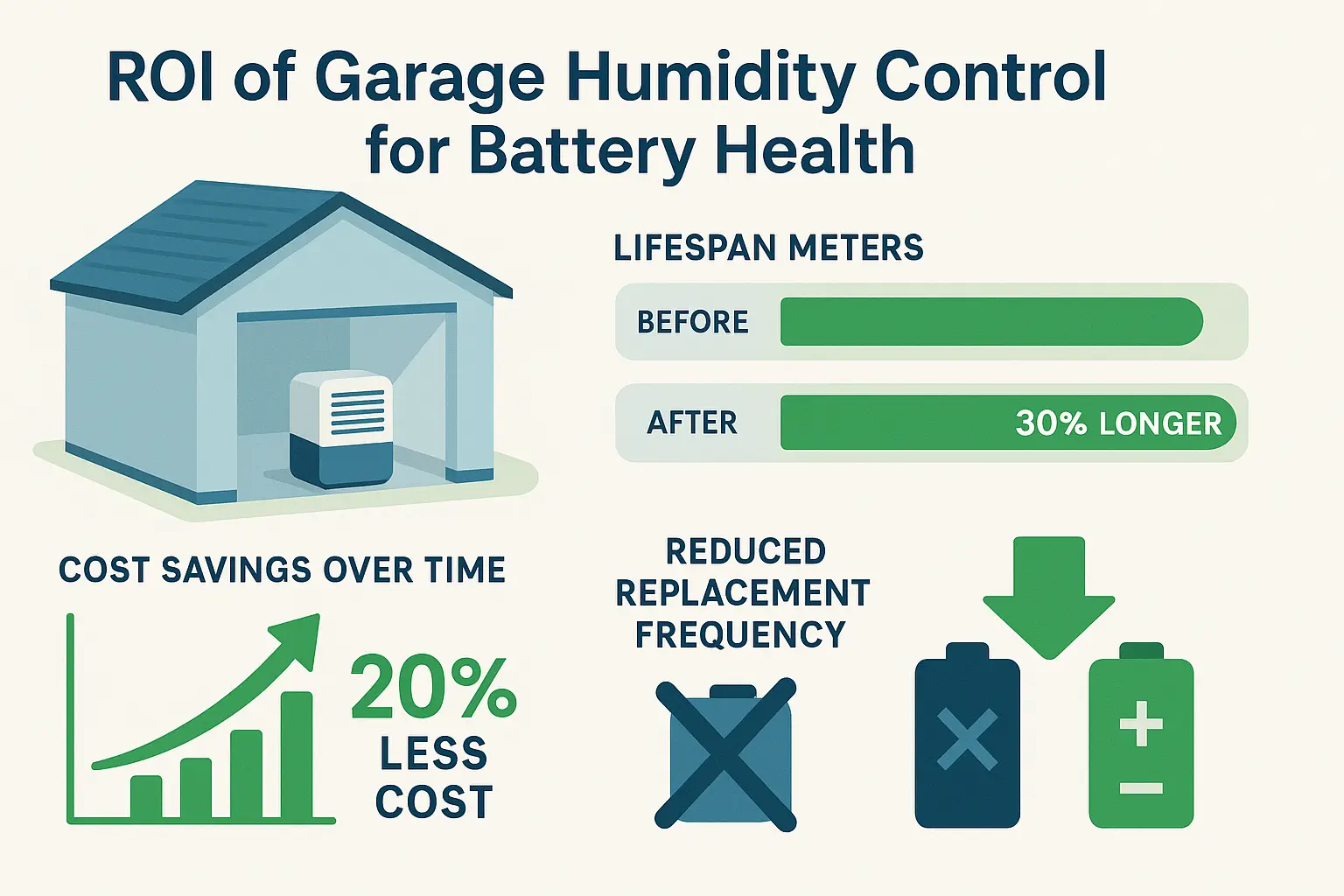
Protecting your garage door opener's battery from humidity isn't just about convenience; it's about reliability and saving money on replacement batteries over time. By taking a few proactive steps, you can ensure your opener works when you need it most.
Your Actionable Summary:
1. Inspect:: Check your current remote battery for signs of corrosion.
2. Clean & Protect:: Clean the terminals with isopropyl alcohol and consider using a dab of dielectric grease with the new battery.
3. Choose Wisely:: When it's time for a new battery, opt for a high-quality lithium cell if your remote supports it. Our garage door remote battery guide can help you find the right fit.
4. Control the Air:: Implement at least one strategy to reduce garage humidity, whether it's simple ventilation or a desiccant pack. By thinking beyond the battery itself and considering its environment, you can significantly extend the lifespan of your garage door systems and avoid that frustrating moment of being stuck in your driveway.
Frequently Asked Questions (FAQ)
What is the ideal humidity level for a garage?
For optimal longevity of electronics, tools, and batteries, you should aim for a relative humidity level between 30% and 50%. Above 60%, the risk of corrosion, mold, and mildew growth increases significantly.
Can low humidity also cause problems for my garage door opener?
While less common, extremely low humidity (below 20-30%) can increase the risk of static electricity buildup. A static discharge could potentially damage the sensitive electronics in your garage door opener unit or remote, though this is a much rarer issue than high-humidity corrosion.
Are batteries in the main opener unit also affected by humidity?
Yes. If you have a garage door opener with a battery backup system, that larger battery is also susceptible to humidity. Its terminals can corrode, and high ambient moisture can accelerate its self-discharge, reducing its effectiveness during a power outage. Proper garage door opener battery safety includes regular inspection for corrosion.
Will a sealed "weather-resistant" remote prevent this problem?
It helps, but it's not a complete solution. "Weather-resistant" usually means the remote can handle splashes of rain, but it doesn't make it airtight. Over time, moisture-laden air can still find its way inside and condense on the battery terminals as temperatures change.
My garage isn't climate-controlled. What is the single best thing I can do?
The highest-impact, lowest-cost action is to start a habit of periodically cleaning the battery contacts. Every six months, pop open the remote, remove the battery, and wipe the metal terminals with a clean, dry cloth or a cotton swab with a little rubbing alcohol. This simple step removes the corrosive buildup before it can cause a power drain.
You may also like