It’s a sound that can test anyone’s patience: a steady, persistent beep coming from your garage. Your first instinct is likely to search online for “how to charge my garage door opener battery,” assuming it just needs a boost like your phone.
Here’s the surprising truth: you’re asking the wrong question.
The relentless garage door beeping isn’t a “low battery” warning in the way you think. It’s a failure signal. Your opener’s backup battery doesn’t work like other rechargeable devices, and understanding how it actually functions is the key to a quiet garage and a reliable opener when you need it most.
Let’s dive into what’s really happening on your garage ceiling and how you can become the master of your backup battery system.
Optimal Charging Cycles for Garage Door Opener Backup Batteries
Published: Jun 25, 2026 | Updated: Jul 28, 2026
The 60-Second Explanation of Your Backup Battery
Think of your smartphone. You use it all day, run the battery down, and plug it in for a full charge. That’s called a “charging cycle.” Your garage door opener’s battery is different. It’s designed to stay at 100% all the time, waiting for a power outage.
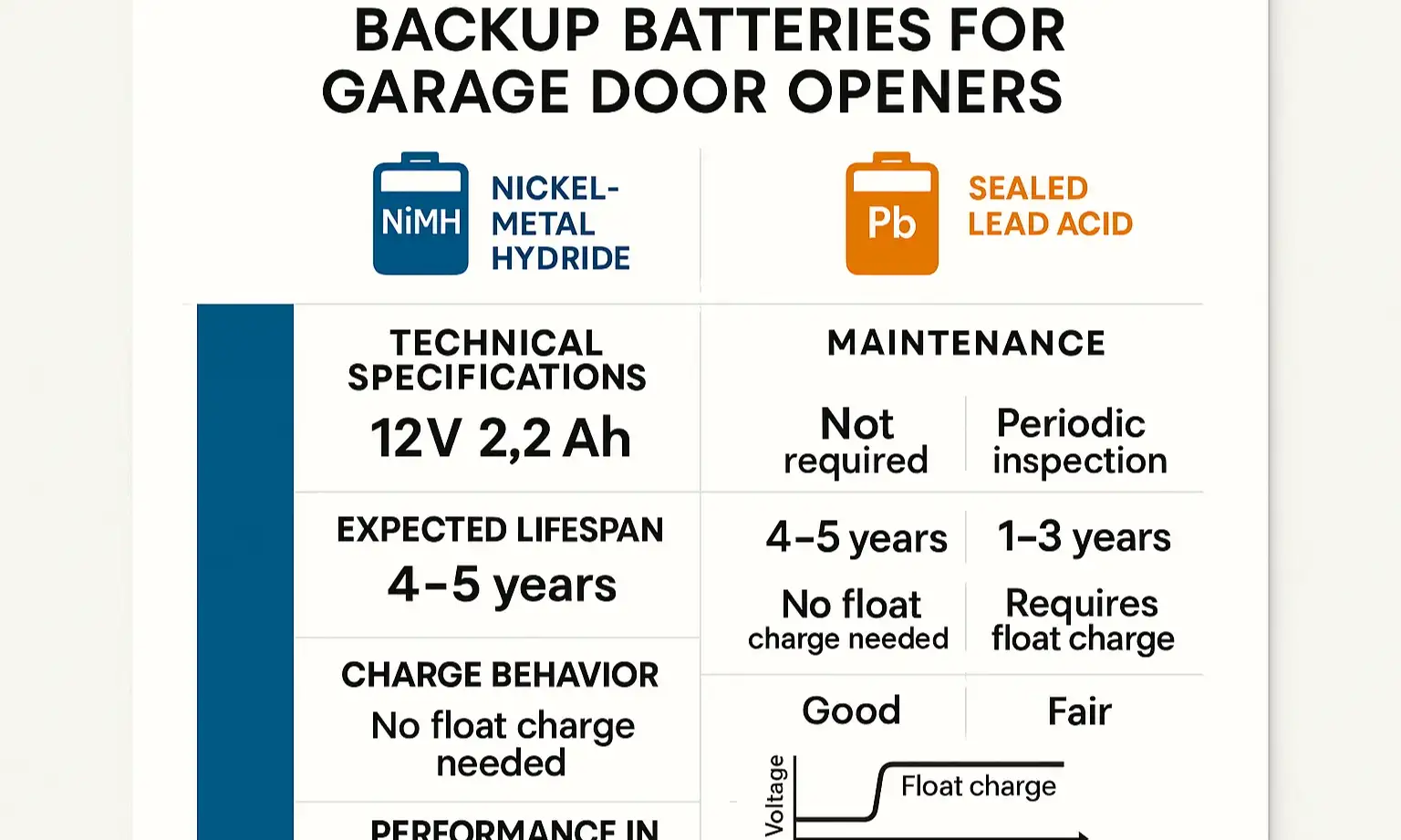
To do this, your opener uses a method called float charging. It’s a constant, low-power trickle of electricity that keeps the battery topped off without overcharging it. This is why you never have to “charge” it yourself. The system is fully automatic.
The beeping starts when the battery can no longer hold that float charge effectively. It’s the opener’s way of telling you, “I’m trying to keep this battery ready, but it’s failing and won’t be reliable in an emergency.”
To do this, your opener uses a method called float charging. It’s a constant, low-power trickle of electricity that keeps the battery topped off without overcharging it. This is why you never have to “charge” it yourself. The system is fully automatic.
The beeping starts when the battery can no longer hold that float charge effectively. It’s the opener’s way of telling you, “I’m trying to keep this battery ready, but it’s failing and won’t be reliable in an emergency.”
Two Main Players: SLA vs. NiMH Batteries
Most modern openers use one of two types of rechargeable batteries. While they do the same job, their internal chemistry is different.
Decoding the Beeps and Lights
Your opener uses a combination of audible beeps and colored LED lights to communicate the status of its battery backup garage door opener system. While specific signals vary by manufacturer (always check your manual!), these are the most common patterns:
Building: Maximizing Battery Lifespan - The 4 Key Factors
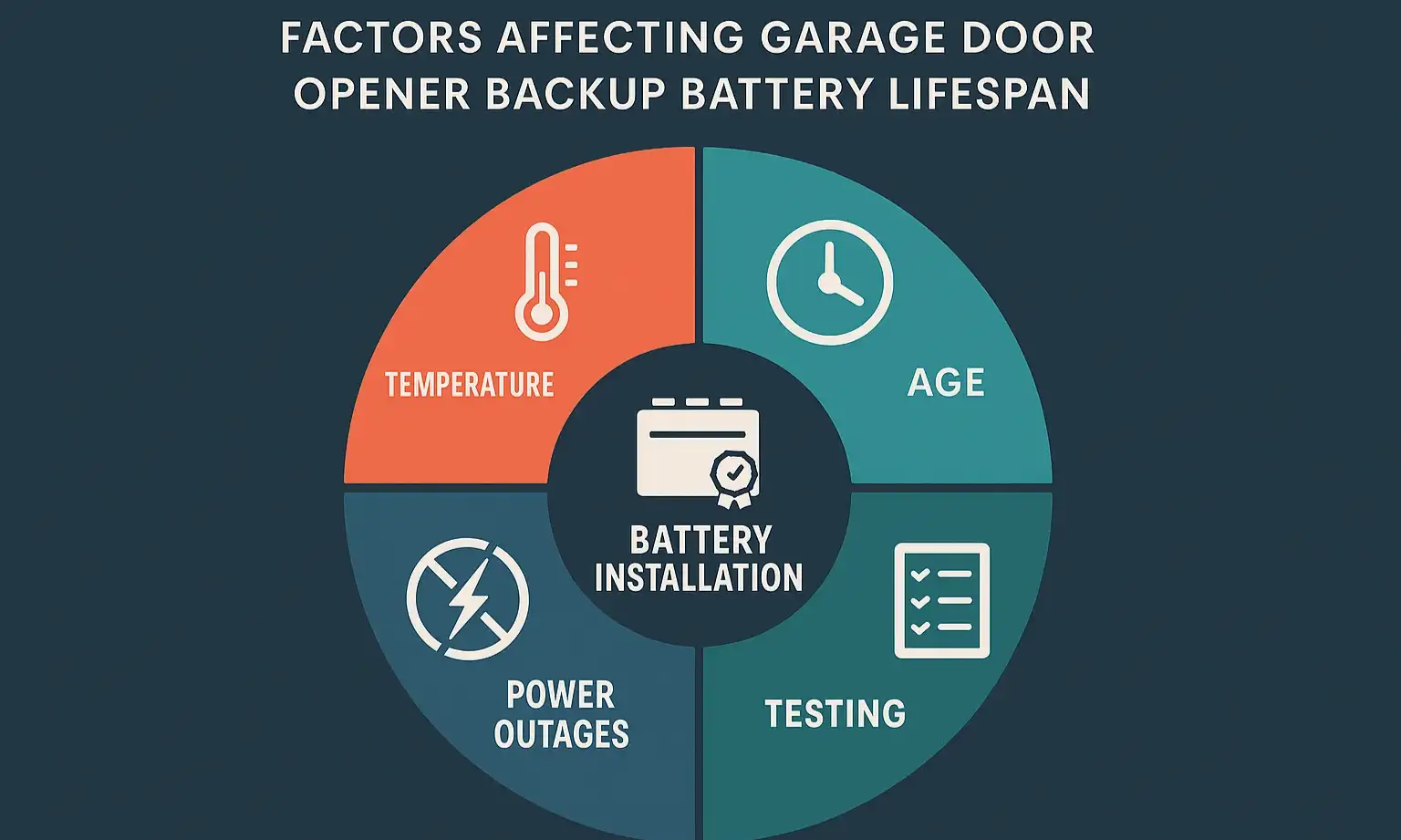
A backup battery typically lasts 1 to 3 years, but why the wide range? Its lifespan isn’t determined by “charging cycles,” but by four environmental and usage factors that cause its internal chemistry to break down.
Factor 1: The Invisible Toll of Temperature
Your garage is not climate-controlled. The summer heat and winter cold create a harsh environment for a battery.
Factor 2: The Unavoidable Reality of Age
Like a tire that slowly loses air, a battery constantly loses its ability to hold a full charge over time. For SLA batteries, this is partly due to a process called sulfation, where lead sulfate crystals build up and reduce the battery’s capacity. This degradation happens even if you never have a power outage. It’s simply a function of time and chemistry.
Factor 3: The Hidden Damage from Power Outages
While the battery is there to be used during an outage, each use takes a small toll. Discharging the battery deeply and then recharging it is more stressful than the constant float charge. A few power outages a year are fine, but if you live in an area with frequent, prolonged outages, you can expect your battery’s lifespan to be on the shorter end of the scale.
Factor 4: The Power of a Simple Monthly Test
How do you know if your battery is still good before it starts beeping? A proactive test is the best way.
Performing this simple test once a month gives you peace of mind and helps you catch a failing battery before it surprises you.
Mastery: The Complete Battery Replacement Guide
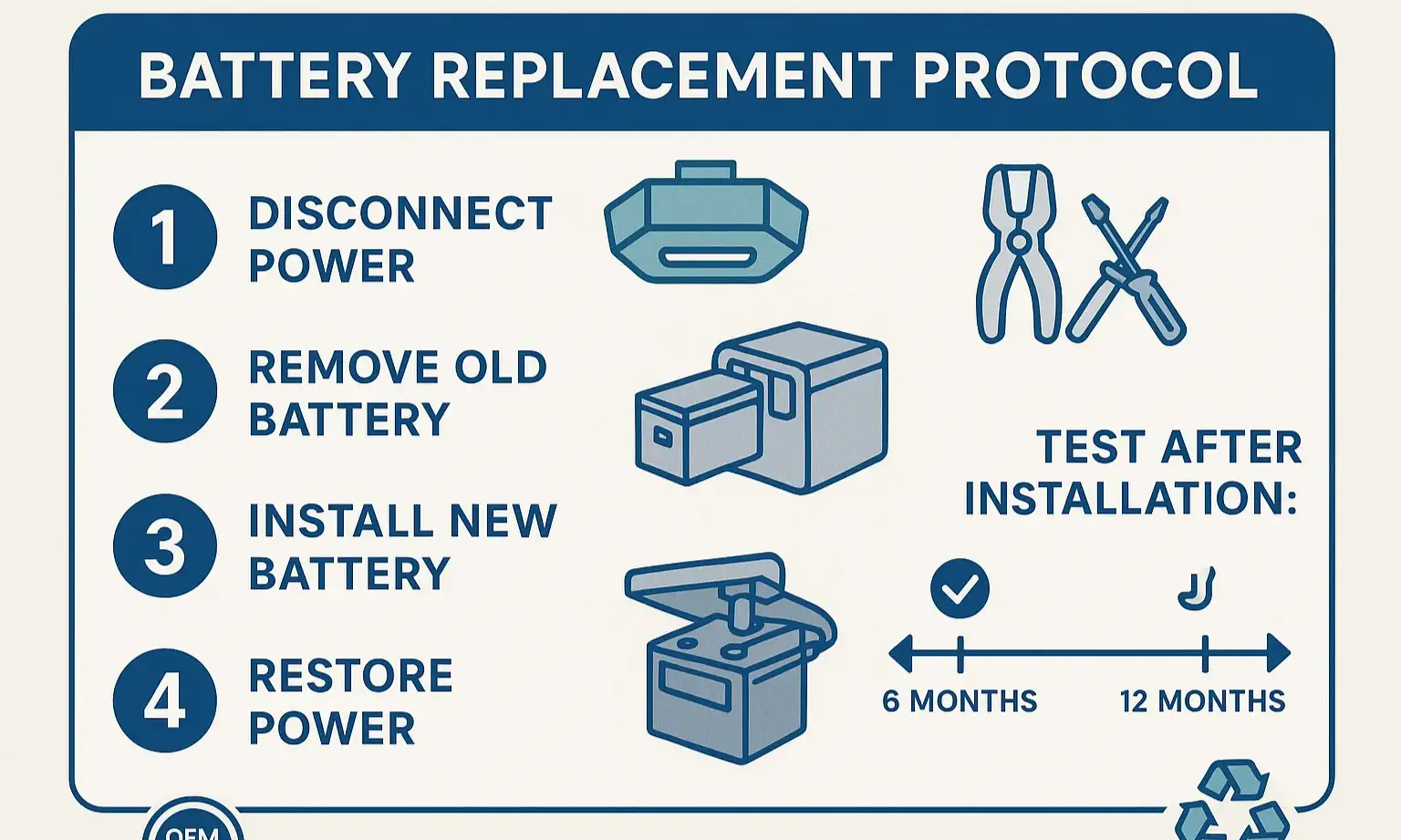
When the beeping starts and testing confirms it’s time, the next step is a simple garage door opener battery replacement. This is a safe and straightforward task that most homeowners can handle in under 15 minutes.
Your Quick DIY Protocol:
Your Quick DIY Protocol:
For a more detailed walkthrough, including important safety reminders, explore our guide to garage door battery backup DIY best practices.
Frequently Asked Questions
Can I use a third-party or aftermarket battery?
Yes, as long as the voltage, amperage, and physical dimensions match the original equipment manufacturer (OEM) specifications. However, using the OEM-recommended battery ensures perfect compatibility and is often the safest bet.
How do I dispose of my old garage door battery?
Do not throw it in the trash! SLA and NiMH batteries contain materials that should not be in a landfill. Most auto parts stores or local recycling centers will accept them for free.
Will my opener work without a backup battery installed?
Absolutely. The opener will function perfectly from wall power. You simply lose the ability to open or close your garage door during a power outage.
Why did my battery only last a year?
The most likely culprit is a harsh temperature environment. If your garage gets extremely hot in the summer, it can drastically reduce the battery’s lifespan, sometimes to as little as 12-18 months.
Your Path to a Quieter, More Reliable Garage
That constant beep is more than just an annoyance; it’s a valuable piece of information. By understanding that your garage door opener relies on a steady float charge, not active charging cycles, you can shift your focus from “charging” to “maintaining.”
You now know that temperature, age, and usage are the true factors that determine your battery’s health. With a simple monthly test and the confidence to replace the battery when needed, you’ve taken control of your system. You’ve not only silenced the beep but also ensured your garage door will be there for you, even when the lights go out.
You now know that temperature, age, and usage are the true factors that determine your battery’s health. With a simple monthly test and the confidence to replace the battery when needed, you’ve taken control of your system. You’ve not only silenced the beep but also ensured your garage door will be there for you, even when the lights go out.
Frequently Asked Questions
Can I use a third-party or aftermarket battery?
Yes, as long as the voltage, amperage, and physical dimensions match the original equipment manufacturer (OEM) specifications. However, using the OEM-recommended battery ensures perfect compatibility and is often the safest bet.
How do I dispose of my old garage door battery?
Do not throw it in the trash! SLA and NiMH batteries contain materials that should not be in a landfill. Most auto parts stores or local recycling centers will accept them for free.
Will my opener work without a backup battery installed?
Absolutely. The opener will function perfectly from wall power. You simply lose the ability to open or close your garage door during a power outage.
Why did my battery only last a year?
The most likely culprit is a harsh temperature environment. If your garage gets extremely hot in the summer, it can drastically reduce the battery’s lifespan, sometimes to as little as 12-18 months.