Which Battery Is Best For A Garage Door Remote and Keypad
Published: Jul 2, 2026
Here’s the secret most people don’t realize: the problem isn’t just the battery—it’s the wrong type of garage door remote battery for unique, often harsh environment.
Your garage isn't like the inside of your home. It faces punishing temperature swings, from freezing winter nights to sweltering summer days. These extremes are the primary culprit behind mysteriously short battery life. Choosing the right battery chemistry isn’t a minor detail; it's the key to ensuring your remotes and keypads work when you need them most.
Foundation: Meet the Battery Contenders
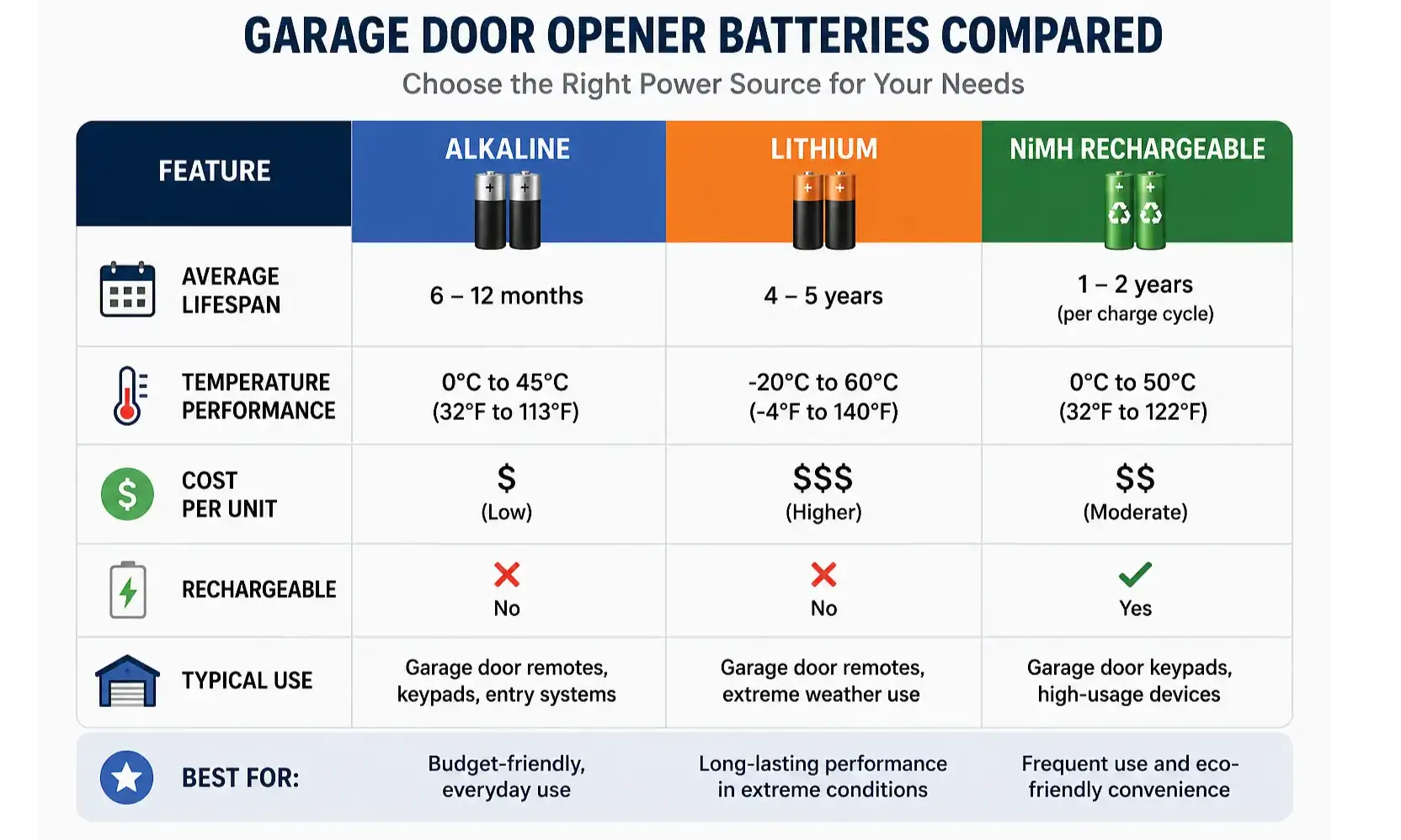
When you look at the batteries that fit your device, you’re really looking at three different "engines" or chemistries. Each has a distinct personality, and understanding them is the first step to solving your battery woes.
Let's think of them as athletes:
- Alkaline (The Sprinter): This is your standard, everyday battery. It's affordable and delivers a strong burst of power, making it great for many household items. However, like a sprinter, it has limited endurance and gets tired very quickly when the conditions aren't perfect, especially in the cold.
- Lithium (The Marathon Runner): This is a premium, high-performance battery. It provides a steady, reliable stream of power for an incredibly long time. Most importantly, it's a true all-weather athlete, performing consistently whether it's freezing cold or blazing hot.
- Nickel-Metal Hydride (NiMH) (The Forgetful Student): This is your common rechargeable battery. While smart and capable of being reused, it has a critical flaw for this specific job: it’s forgetful. It suffers from "self-discharge," meaning it loses its charge just by sitting idle.
The Garage Challenge: Why Heat & Cold Are Battery Killers
Here's the "aha moment" that changes everything: your garage is an extreme environment. The temperature fluctuations it endures are far more dramatic than those inside your climate-controlled home, and this is where battery science comes into play.
Batteries are essentially tiny chemical reactors. Temperature dictates the speed and efficiency of those reactions.
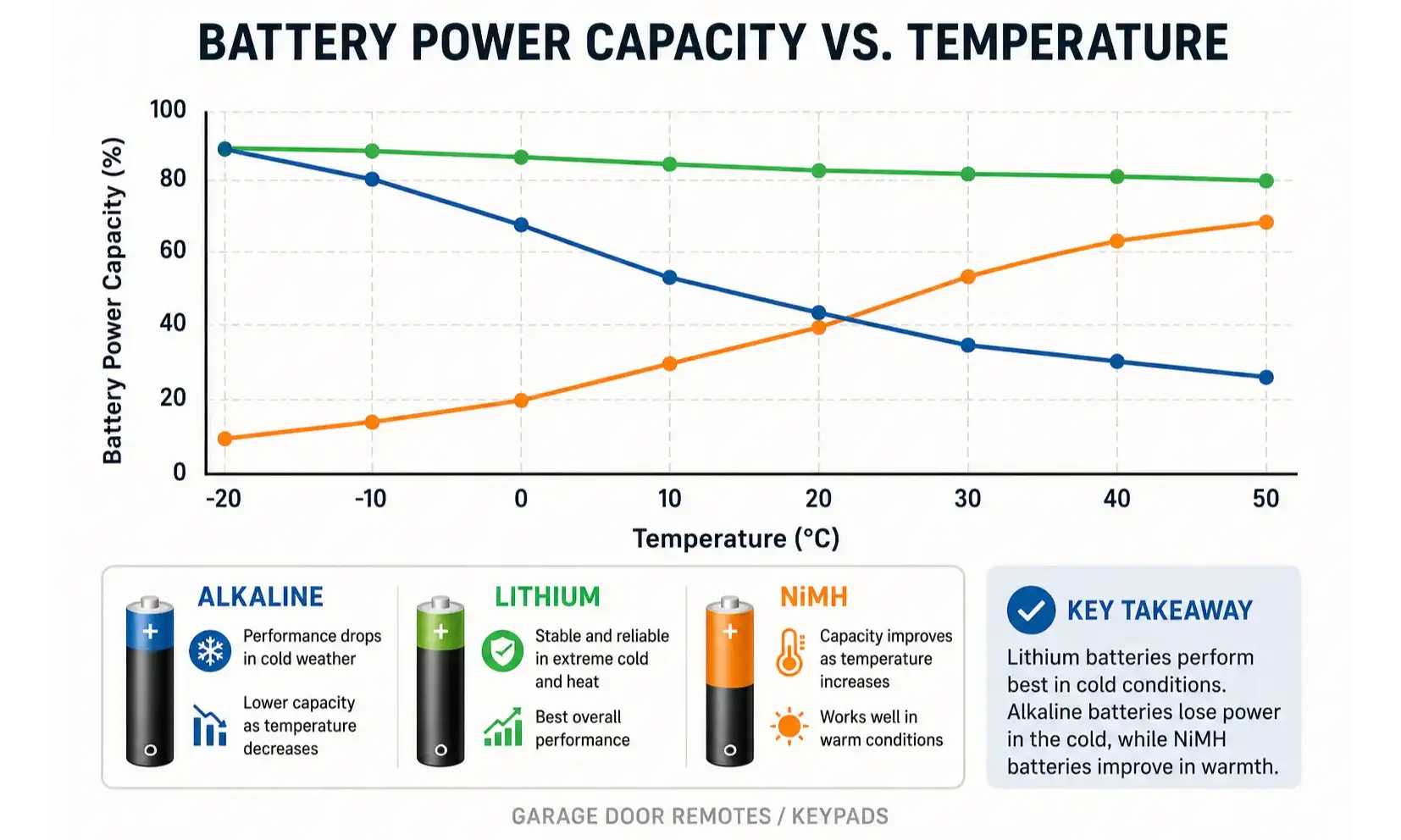
• In the Cold: The chemical reactions inside an alkaline battery slow down dramatically. This reduces the battery's ability to deliver adequate voltage, making it appear weak or dead even if it’s technically full. At 32°F (0°C), a standard alkaline battery can lose as much as 50-80% of its effective capacity.
• In the Heat: High temperatures accelerate a battery's internal chemical reactions. For alkaline batteries, this increases the rate of self-discharge and, more alarmingly, the risk of leaking corrosive potassium hydroxide, which can permanently damage your remote or keypad.
Lithium batteries, by contrast, use a different chemistry that is far more resilient to these temperature swings, maintaining stable performance from well below freezing to scorching hot.

Mastery: The Right Battery Chemistry for Your Garage
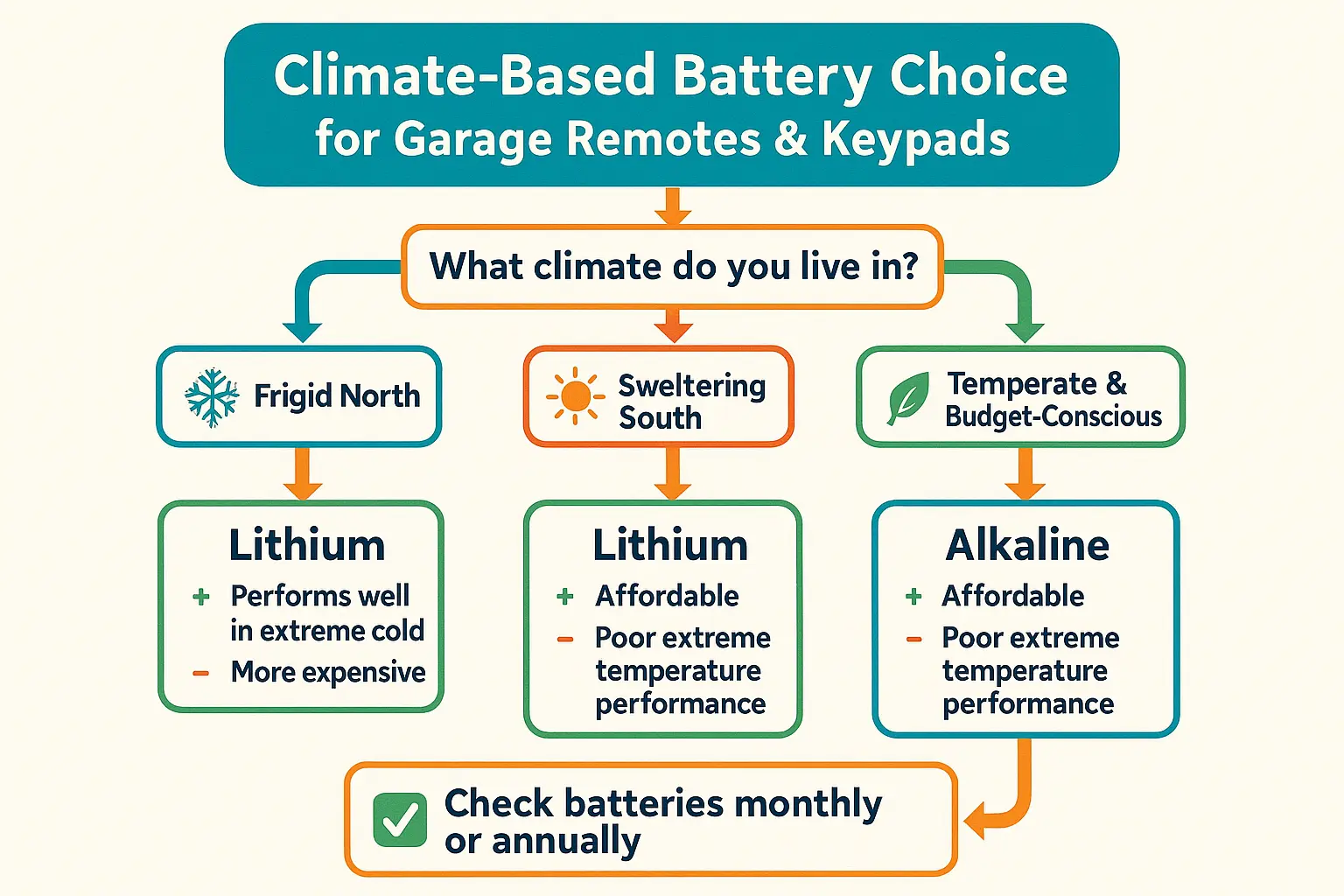
Your local climate is the single most important factor in choosing the right battery. Let's break it down into simple scenarios.
Scenario 1: For Garages in Cold Climates (The Frigid North)
If your garage regularly sees temperatures at or below freezing, lithium is the only reliable choice. An alkaline battery is practically guaranteed to fail you on the coldest days. Investing in a lithium battery means you won't be locked out during a snowstorm, and a single battery can last for years, not months.
Scenario 2: For Garages in Hot Climates (The Sweltering South)
If your garage feels more like a sauna in the summer, lithium is your best defense against heat-related failure and leakage. While alkaline might work, the high heat accelerates its demise and increases the risk of it bursting and ruining your device. Lithium's stability provides peace of mind.
Scenario 3: For Temperate Climates & Budget-Conscious Users
If you live in a moderate climate without extreme temperature swings, an alkaline battery can be an acceptable, budget-friendly option. However, treat it as a short-term solution. Plan to replace it annually as a part of your home maintenance routine to avoid being caught by surprise.
Action: Practical Guide & Pro Tips
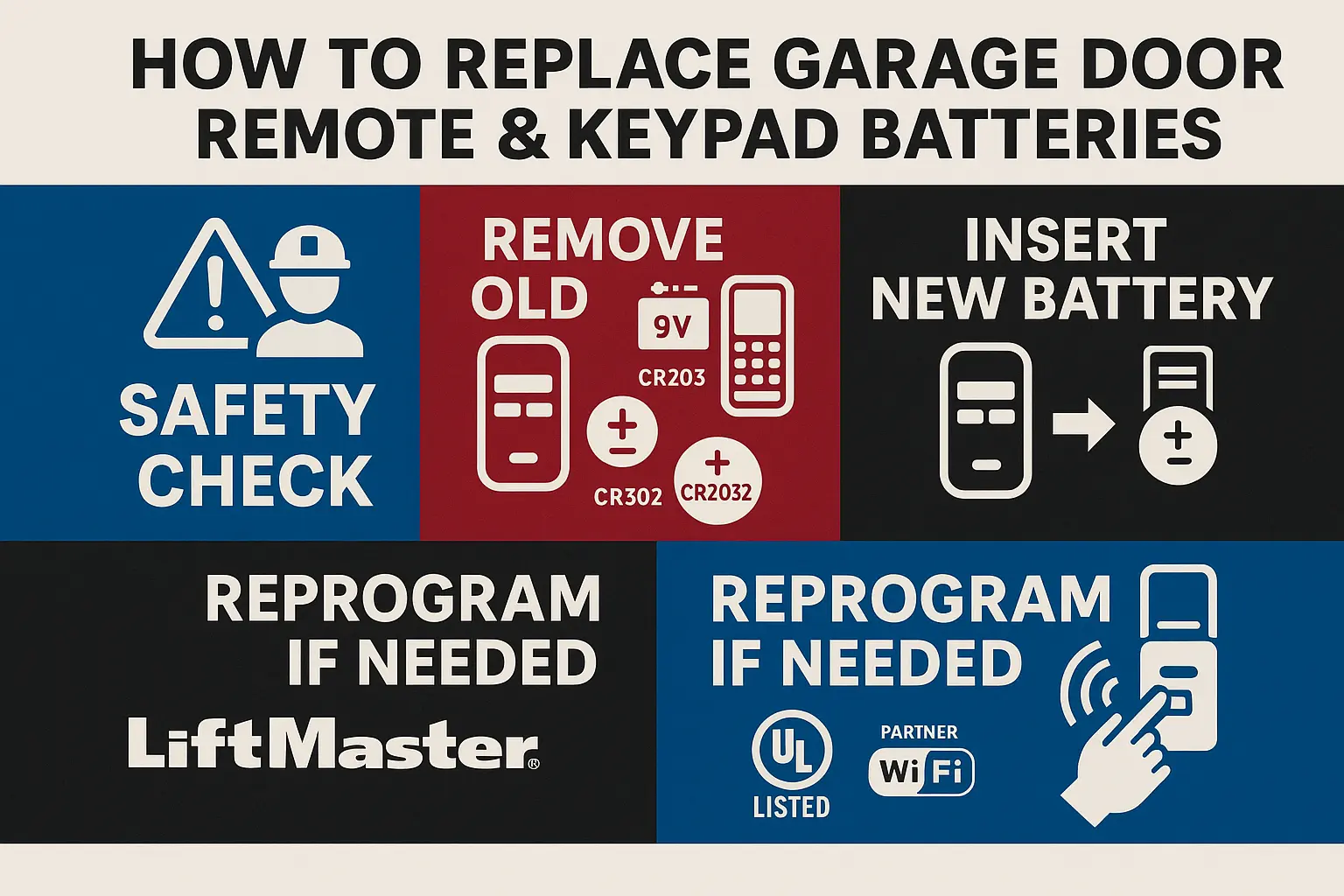
Once you've chosen your battery, replacing it is usually a simple task involving common types like the 9V battery in keypads or coin cells (like the CR2032) in remotes.
For detailed visual instructions, our guide on changing your garage door remote battery provides quick, easy-to-follow steps.
COMMON MISTAKE: Using a cheap, multi-pack alkaline battery in a garage that gets below freezing. You're not saving money if you have to replace it multiple times a year and risk getting locked out.
Frequently Asked Questions (FAQ)
Why does my garage door keypad battery die so fast?
The most common reason is using an alkaline battery in a garage that experiences cold temperatures. The cold saps its power, making it seem like it's draining quickly. In rare cases, if you notice your garage door remote eating batteries, it could signal a faulty device with a short circuit.
Can I use rechargeable (NiMH) batteries in my remote or keypad?
We don't recommend it. Rechargeable batteries are designed for high-drain devices used frequently, like a camera flash. Garage remotes are low-drain devices that sit idle for long periods. NiMH batteries have a high self-discharge rate (they lose power over time even when not in use), making them a poor and unreliable choice for this job.
Do I need to reprogram my keypad after changing the battery?
In most cases, no. Your keypad should retain its code. However, if it does lose its memory, don't worry. The process is simple. You can learn how to reset garage door code or follow our instructions for first-time garage door keypad programming.
Is the battery in my remote the same as the one in the main opener unit?
No, they are completely different. Your remote uses a small, low-voltage battery. The main opener unit may have a much larger battery backup garage door opener system designed to operate the entire door during a power outage. If you're wondering do garage door openers have batteries for backup power, the answer depends on your model.
Are more expensive lithium batteries really worth it?
Absolutely, especially if you live in a climate with temperature extremes. Think of it as total cost of ownership. One lithium battery can easily outlast three to five alkaline batteries, saving you money, time, and the frustration of a dead remote. Prioritizing performance and garage door opener battery safety by choosing lithium is a smart investment in reliability.
The Takeaway: Choosing a Battery is Choosing Reliability
The next time you're faced with a dead garage remote, don't just reach for the cheapest battery. Think like a pro: consider your garage's environment, understand the difference between the sprinter and the marathon runner, and choose the battery chemistry that's built for the job.
By investing a few extra dollars in a lithium battery, you're not just buying longer life—you're buying confidence, security, and the peace of mind that comes from knowing your garage door will open every single time you need it to.
You may also like