Cold Morning Safety Sensor Condensation: Causes, Diagnostics, and Solutions


Published: Nov 20, 2026

Stepping into your vehicle on a freezing morning only to be greeted by dashboard alerts like “Forward Safety Impaired,” “Front Camera Blocked,” or “Driver Assist Unavailable” can trigger immediate concern. Before assuming your expensive system has suffered a permanent hardware failure, recognize that temperature drops frequently create localized micro-condensation across optical lenses.

Understanding whether your active safety system is temporarily blinded by moisture or experiencing an actual electronic fault saves you from unnecessary dealer fees while keeping your vehicle safe.
Urgent Morning Safety Protocol


When safety sensor warnings illuminate on cold mornings, follow this rapid 60-second de-fogging sequence to purge humidity and clear optical pathways safely:

  1. Turn A/C ON Immediately: Engage your air conditioning even when setting the temperature to warm. The A/C system acts as an active dehumidifier to strip ambient moisture from cabin air.
  2. Switch to Fresh Air Mode: Disable internal air recirculation. Purge trapped cabin moisture by pulling in drier outside air.
  3. Set Defrost to Maximum Warmth: Direct high airflow to the upper windshield to rapidly heat the glass surface near sensor pods.
  4. Lower Both Sun Visors: Flip visors down toward the windshield. This creates an upper airflow pocket that traps warm air directly against the camera shroud.
Still stuck? Get it fixed today.
24/7 emergency service from licensed local technicians.
Call (860) 362-3018

The Science: Why Safety Sensors Fog Up on Cold Mornings


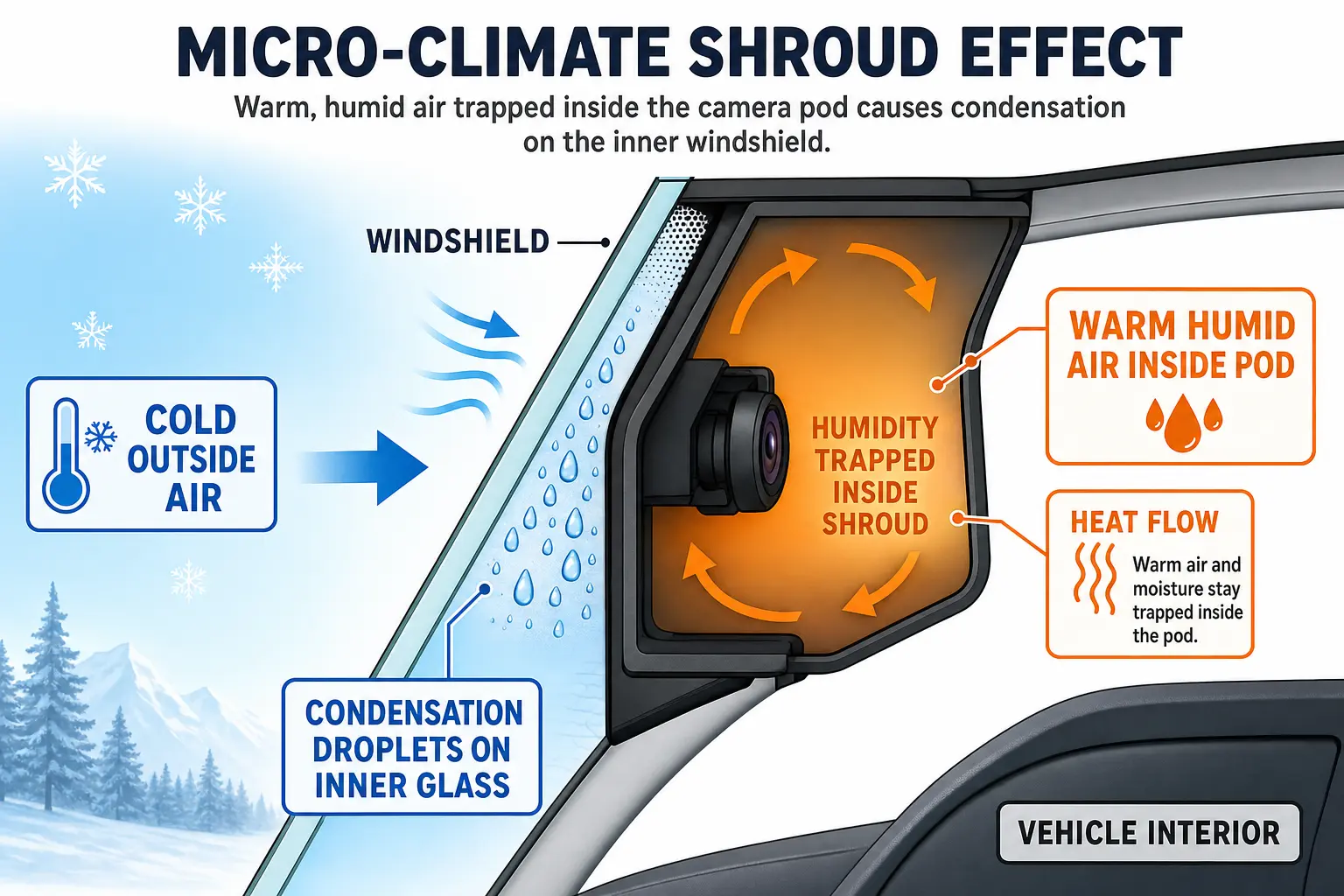
Over 78% of modern vehicles locate their primary Advanced Driver Assistance Systems (ADAS) cameras inside a plastic enclosure mounted behind the rearview mirror. This housing forms an isolated micro-climate against the windshield.

This diagram explains how warm humid air trapped inside the sealed camera housing pod causes condensation on the cold inner windshield glass during cold mornings, leading to safety sensor fogging.

When evening temperatures drop, outer windshield glass chills below the internal dew point of air trapped inside the pod. Humidity condenses on the inner surface of the glass directly in front of the lens. Integrated Positive Temperature Coefficient (PTC) camera heaters typically take 8 to 15 minutes in sub-freezing conditions to clear this micro-climate moisture, during which driver-assist functions remain temporarily offline.

Diagnostic Tree: Identifying Your Condensation Type


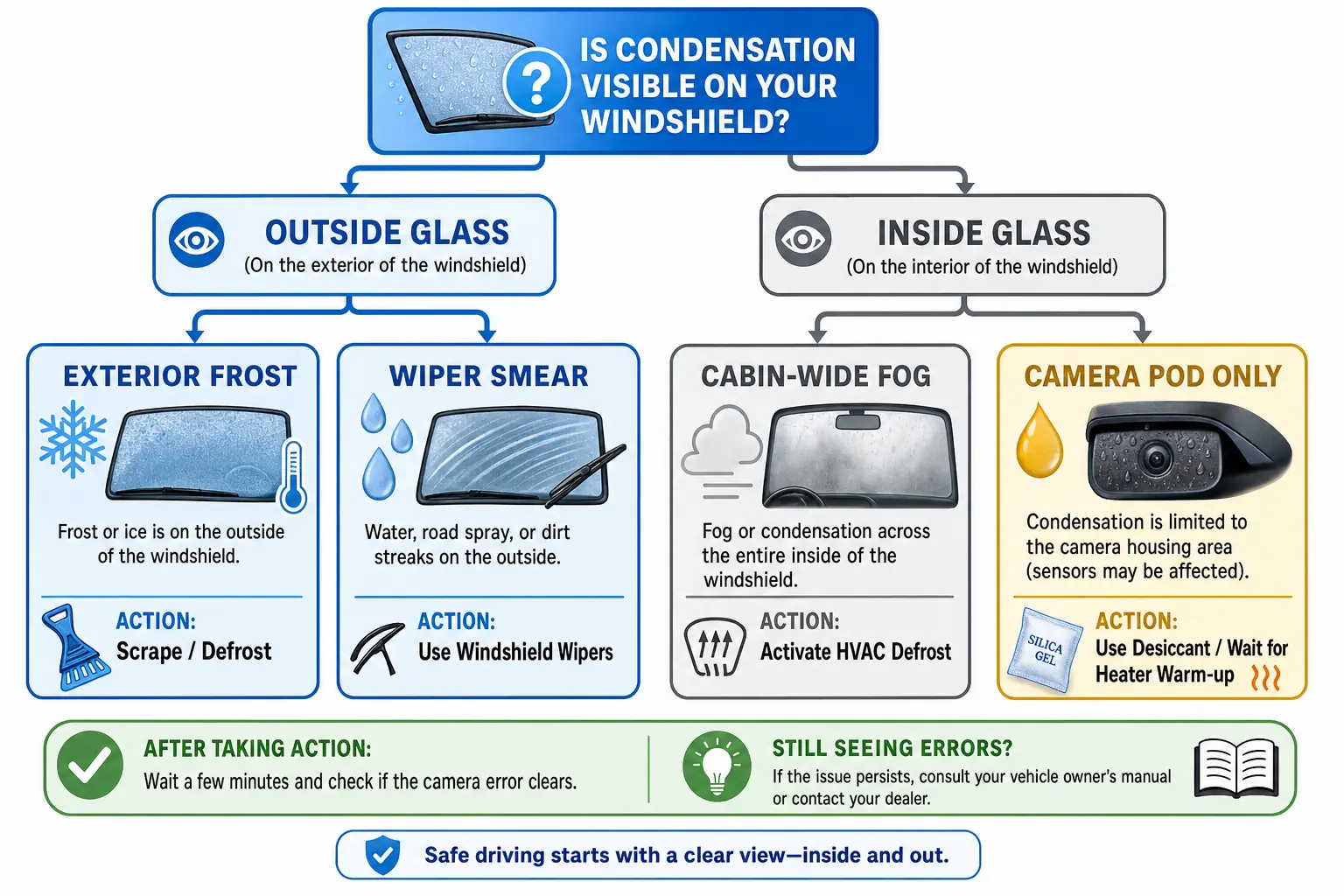
Not all windshield fogging originates from the same source. Isolating the precise moisture location ensures you apply the correct solution without damaging delicate components.

Use this diagnostic flowchart to quickly pinpoint whether your windshield condensation is outside frost, cabin fog, or internal camera pod moisture—each requiring a different clearing approach.

  • Exterior Frost: Clears instantly via windshield wipers and washer fluid.
  • Cabin-Wide Fog: Responds rapidly to the standard HVAC defrost sequence.
  • Trapped Camera Pod Moisture: Appears as localized water droplets inside the upper plastic housing while the rest of the glass is clear.
  • Chemical Outgassing Haze: Displays a milky film inside the pod caused by plasticizers vaporizing off interior components over time.

OEM System Warning Matrix


Different manufacturers utilize specific error messages and Diagnostic Trouble Codes (DTCs) when moisture obstructs optical field of view. Understanding how your system behaves helps isolate temporary weather effects from underlying faults—much like diagnosing home security or automated entry systems where a garage door sensor green light not on indicates power or beam obstruction.

OEM System Dashboard Error Message Triggered Codes System Impact
Toyota Safety Sense (TSS) “Front Camera Blocked / Clean Windshield” C1A67 Disables PCS & Dynamic Radar Cruise
Subaru EyeSight “EyeSight Disabled / No Camera Visibility” P2583 Disables Pre-Collision Braking & Lane Keep
GM Super Cruise “Driver Assist System Unavailable” B174W (FVCM) Disables Super Cruise & Front Braking
Tesla Vision “B-Pillar / Front Camera Blocked or Blinded” Visual Alert Disables Autopilot & Traffic-Aware Cruise
Honda Sensing “Front Radar / Camera Obstruction” OEM Diagnostic Disables LKAS & Adaptive Cruise Control

Whether dealing with automotive driver assist or verifying optical alignment on a home entry system safety sensor, optical clarity is paramount for automated system operation.

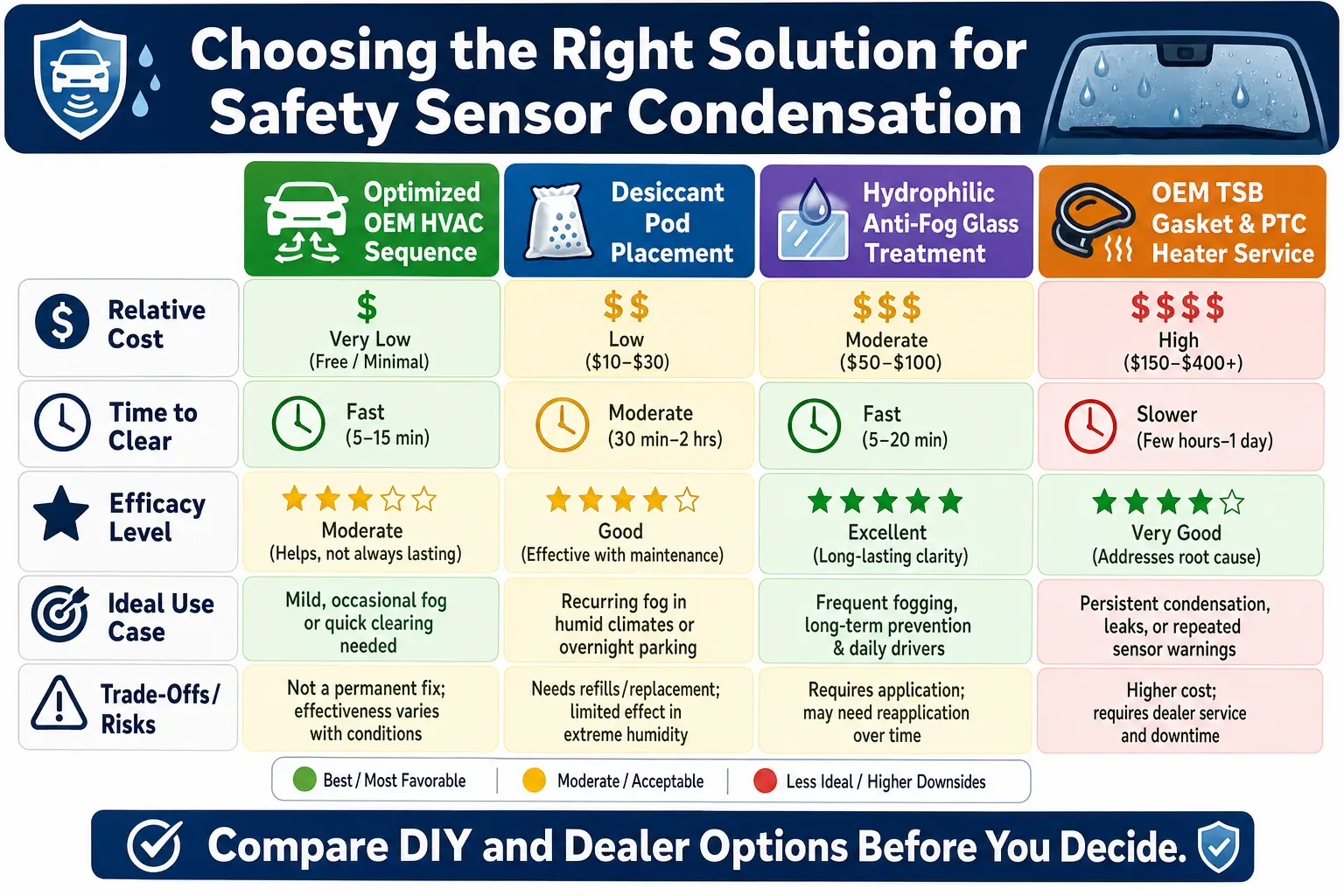
Solution Evaluation Matrix (MOFU Decision Factors)


Evaluating preventative options based on cost, installation speed, and long-term efficacy allows vehicle owners to make confident decisions based on their winter climate conditions.

This solution evaluation infographic helps you remember and compare common condensation fixes by cost, time, effectiveness, and safety risks to choose the best option for your needs.

Addressing mechanical hardware issues early prevents misdiagnoses. For instance, knowing when to service sensors versus when to calibrate garage door opener electronics prevents unnecessary hardware replacement fees.

What NOT to Do: Avoiding Costly Sensor Mistakes


Misinterpreting condensation for a failed camera module leads to expensive misdiagnoses, costing consumers between $1,200 and $4,500 in unnecessary module replacements and recalibration procedures.

  • Never Apply Heat Guns or Hairdryers: Applying direct heat to cold windshield glass risks severe thermal shock, cracking the laminated glass instantly.
  • Never Touch the Camera Optics directly: Attempting to clean the camera lens with shop towels or fingers strips anti-reflective coatings and transfers skin oils, creating permanent optical distortion.
  • Avoid Spraying Solvents Directly into Housing Vents: Aerosol cleaners leave residue inside the camera chamber, permanently hazing interior glass.

Practicing sound preventative care—similar to routine winter garage door care during sub-zero months—safeguards complex sensitive equipment against cold-weather stress.

Frequently Asked Questions


Why does safety sensor condensation happen inside a sealed camera housing?

Sensors are enclosed in a plastic shroud to shield them from cabin debris. However, warm humid air becomes trapped inside during warm spells. When ambient outside temperatures plunge, the inner surface of the windshield glass drops below the trapped air’s dew point, causing moisture to condense directly in front of the lens.

Will my automatic emergency braking work while the sensor is fogged?

No. When an optical camera’s view is obstructed by condensation, the vehicle’s ECU disables vision-dependent safety features including Automatic Emergency Braking (AEB), Lane Keep Assist (LKA), and Adaptive Cruise Control until the glass warms up and clears completely.

How can I get dealer TSB repairs covered under warranty for recurring sensor fogging?

Document recurring dashboard warnings with photos showing the date and time. Present specific OEM Technical Service Bulletins (such as GM FVCM B174W or Subaru TSB 12-134-12) to your service advisor, as these establish known factory remedies for shroud seal replacements or PTC heater upgrades covered under factory warranty.

Contact / Request a Call