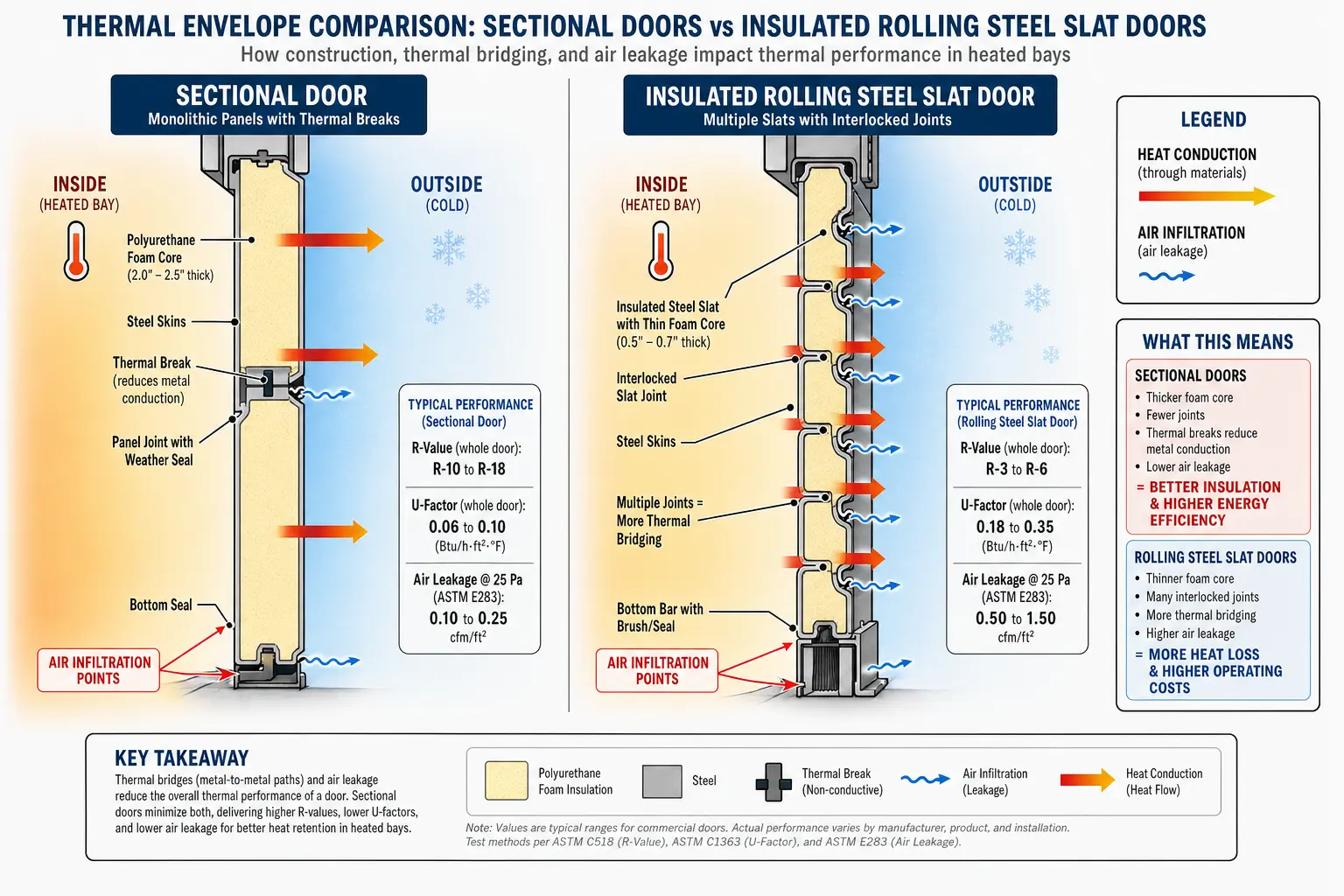
In heated commercial bays, up to 80% of structural energy loss occurs via air infiltration through perimeter and panel joints rather than conductive heat transfer.
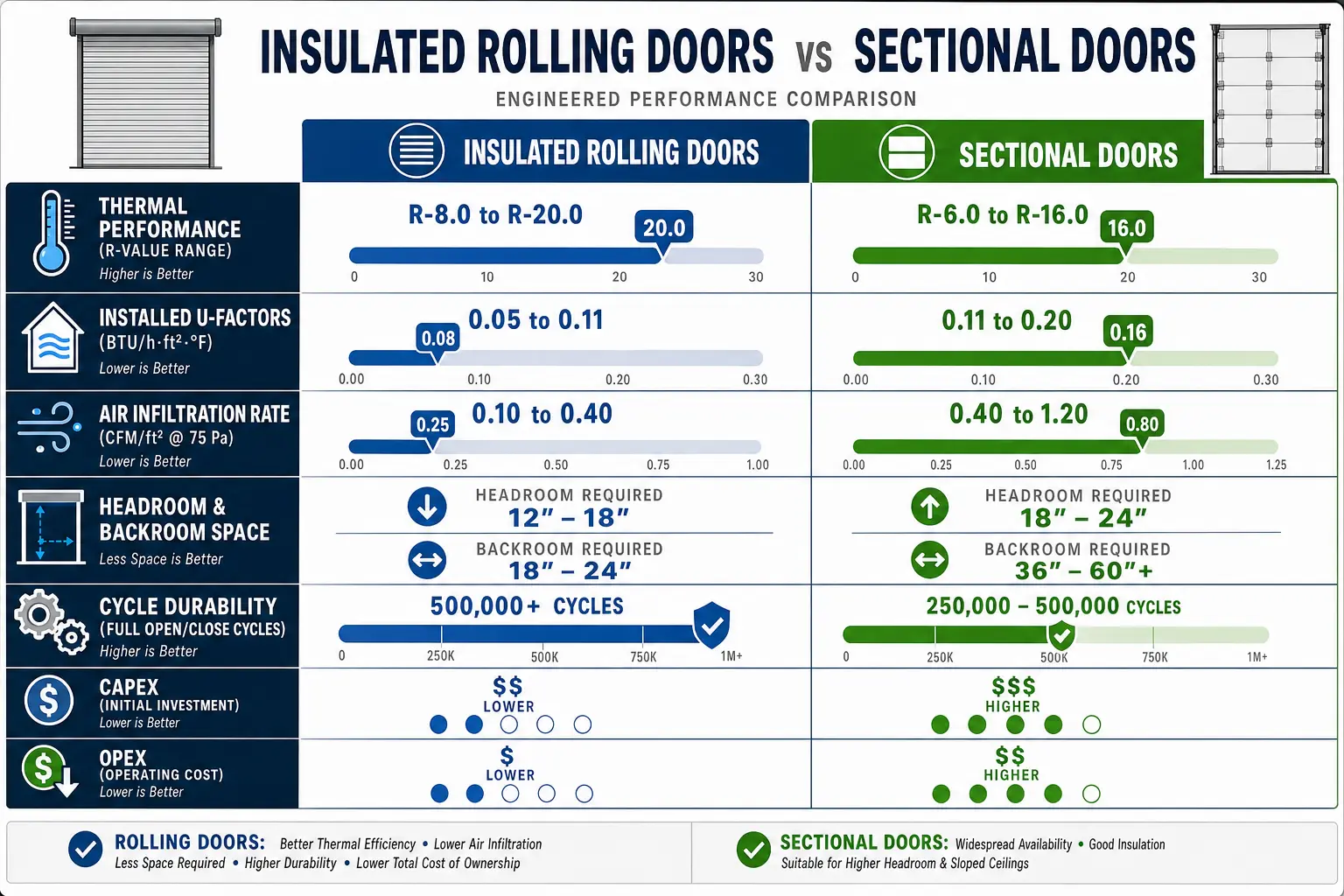
Polyurethane-injected sectional doors offer superior conductive resistance. Featuring 2-inch to 3-inch continuous foam cores with built-in thermal breaks, sectionals reach high thermal ratings. Knowing how to evaluate a garage door insulation r value is crucial here; sectional panels seal tight via tongue-and-groove profile joints, restricting air leakage below 0.10 cfm/ft² under ASTM E283 testing.
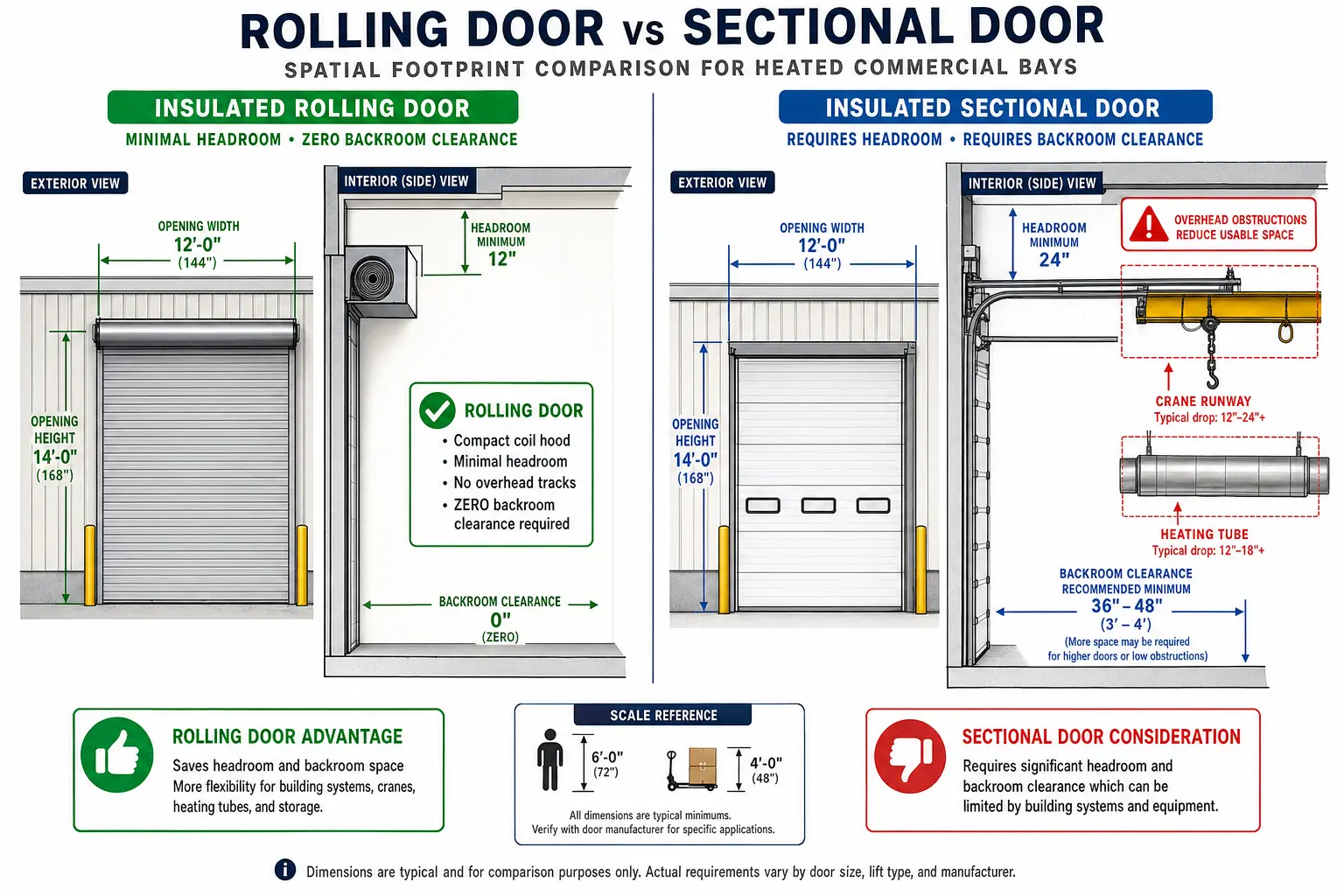
Insulated rolling doors feature polyurethane or expanded polystyrene (EPS) cores enclosed inside individual metal slats. Because each slat must roll tightly around a drive shaft, foam thickness is constrained to 1/2″–7/8″, capping assembly ratings between R-4.5 and R-14.5. Hundreds of interlocking horizontal metal hinges create linear thermal bridges. Even when paired with perimeter brush seals and heavy-duty garage door weather stripping, rolling doors average air infiltration rates of 0.20 to 0.40 cfm/ft².
Consulting an experienced garage door insulation company helps determine whether your regional ASHRAE 90.1 or IECC climate zone mandates a U-factor below 0.37, which sectional architectures achieve natively.