Garage Door Cable Snapped While the Door Was Down: Emergency Action & Evaluation Guide


Published: Oct 22, 2026

A loud bang in the garage followed by an unyielding door usually indicates a snapped lifting cable. Over 85% of garage door cable failures happen while the door is fully closed. When closed, counter balance springs are at 100% peak strain, exerting maximum tension on galvanized steel cables. If a cable snaps under this load, a trapped vehicle or stuck door requires immediate triage.

Before taking action, avoid pressing the automatic opener button again. Attempting to motor-drive a door with a snapped cable increases the structural stress on the remaining hardware by 100%, risking track twisting or motor burnout.
Emergency Car Extraction: Can You Safely Open the Door?


When your vehicle is stuck inside, determining whether you can open the door manually depends on your system’s current mechanical condition.

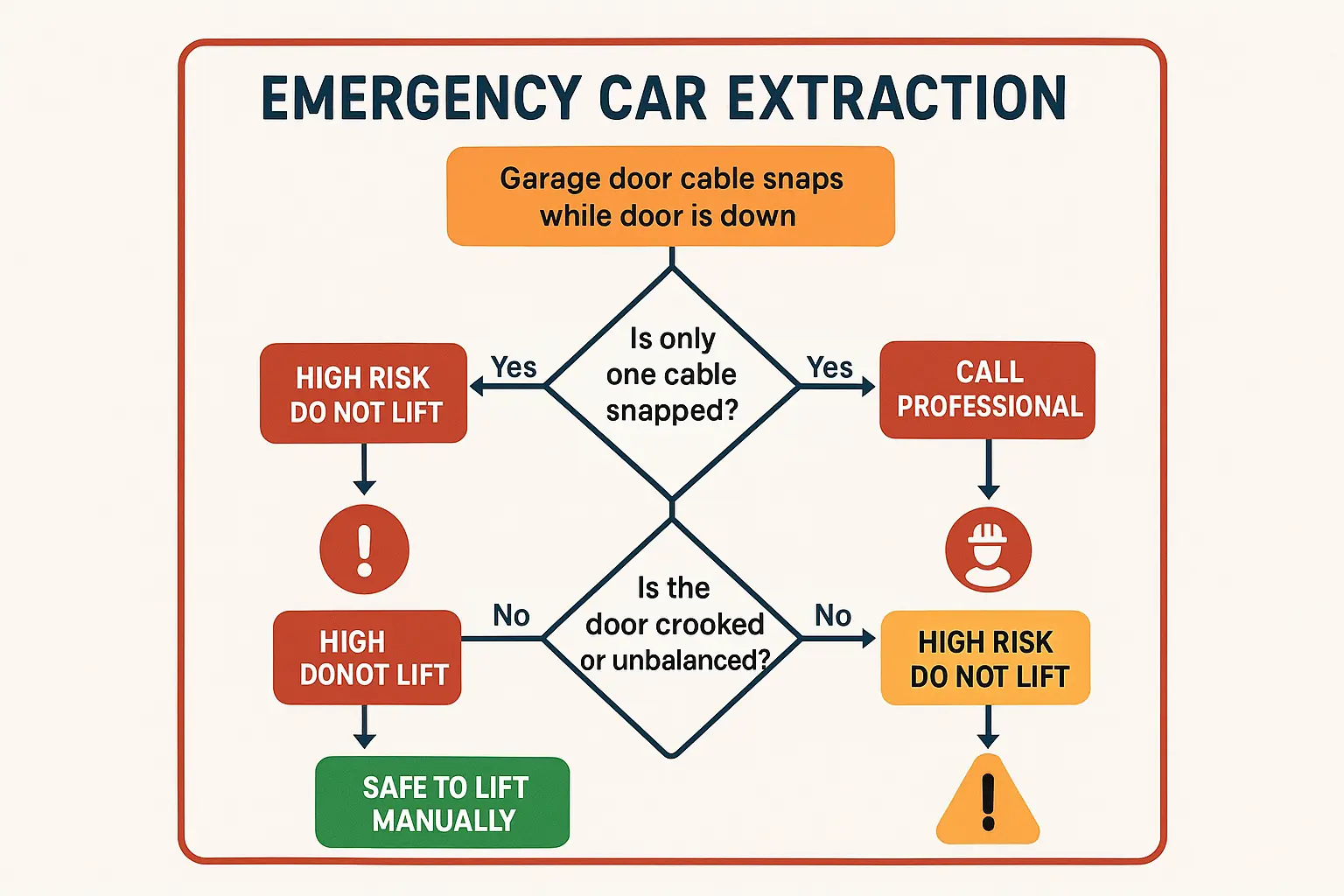
If a single cable has snapped while the spring remains intact, manual lifting is possible using a coordinated two-person technique. Position one person at each bottom corner, lift evenly using lower handles, and secure both side tracks immediately beneath the bottom rollers with heavy-duty C-clamps.

However, if a cable snapped in conjunction with a broken spring, attempting to lift the door means manually hoisting 150 to 300+ pounds of uncounterbalanced weight. In this scenario, attempting to lift garage door with broken spring components poses a severe crushing hazard. Releasing the emergency disconnect cord on an unbalanced, weight-heavy door can cause it to crash downward violently. Contact an emergency garage door service provider to safely extract your vehicle.

Stepwise emergency triage flowchart

This stepwise emergency triage flowchart empowers homeowners to quickly evaluate if it’s safe to manually open their garage door with a snapped cable, prioritizing safety first.

Root Cause Diagnostics: Why Cables Fail at Rest


Galvanized steel cables have a standard rated lifespan of 7 to 10 years, or roughly 10,000 operational cycles. Over time, several mechanical factors accelerate failure:

  • Corrosion & Moisture: Humidity and road salt cause internal strand rusting near bottom bracket friction points.
  • Friction & Wear: Misaligned pulleys or worn winding drums force cables to scrape against tracks, fraying individual steel strands.
  • Drum Slippage: If a garage door cable keeps coming off drum grooves, uneven tension causes metal fatigue. Identifying these underlying issues with garage door control cables prevents premature failures.

Torsion vs. Extension Cable Systems: Know What You Have


Identifying your hardware configuration determines both the repair complexity and associated safety hazards.

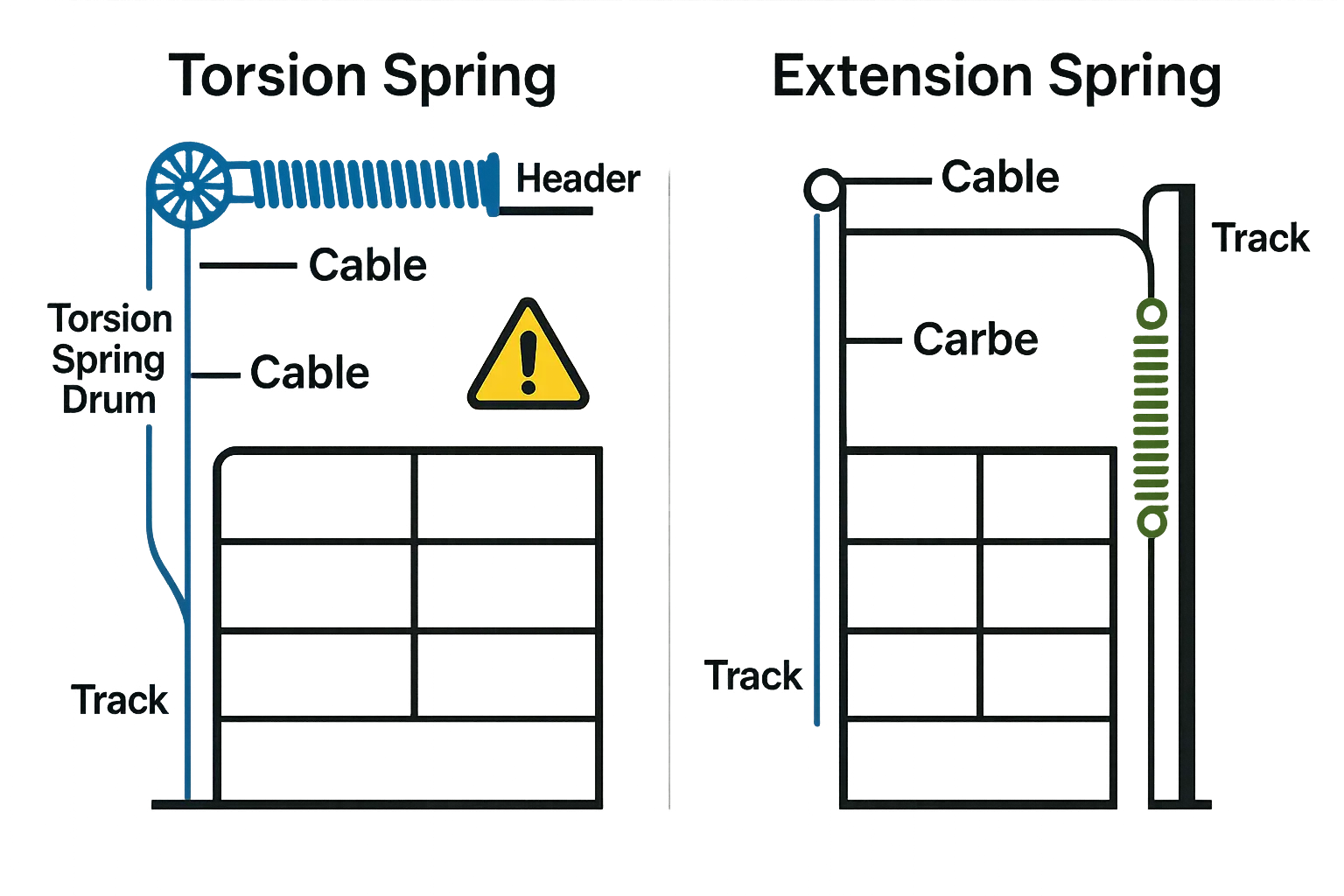
Torsion vs extension spring garage door cable systems diagram

This visual clarifies the key differences between torsion and extension spring garage door cable systems, helping homeowners instantly recognize their door type and understand associated safety risks.

Torsion Spring Systems

Mounted horizontally above the door opening header, torsion systems utilize center-mounted springs on a steel shaft. Cables wrap around drums at each end. Because high rotational torque remains stored in the spring assembly even when closed, working around these components presents severe kinetic risks. Improper handling can lead to personal injury, making homeowners question are garage door springs dangerous—and the answer is unequivocally yes without proper tools.

Extension Spring Systems

Extension springs run along upper horizontal tracks on both sides. Cables run through pulleys to assist in lifting. While under less sudden rotational tension than torsion systems, replacing them still requires precise tension balancing to avoid a crooked door or needing garage door off track repair.

DIY vs. Professional Repair Evaluation


When evaluating repair options, compare the true trade-offs between self-repair and professional service.

  • DIY Cable Kits: Raw replacement cables cost between $15 and $50. However, DIY installation requires specialized tools such as winding bars, vice grips, and cable crimps, alongside 2 to 3 hours of labor. Handling torsion springs without training carries severe safety hazards.
  • Professional Service: Total professional repair typically ranges from $150 to $400 nationwide. Certified technicians complete the work safely in 30 to 60 minutes, properly balancing the entire counterweight system.

Comprehensive Repair Cost Breakdown


Understanding regional pricing structures helps you evaluate service estimates accurately.

Service Item Typical Cost Range Included Components & Factors
Single Cable Replacement $150 – $250 Labor, single cable, system balance inspection
Dual Cable Replacement $200 – $400 Recommended: matching wear pairs, drum check
Cable + Torsion Spring Package $250 – $550 Complete counterweight system overhaul
DIY Cable Replacement Kit $20 – $50 Parts only (excludes specialized safety tools)

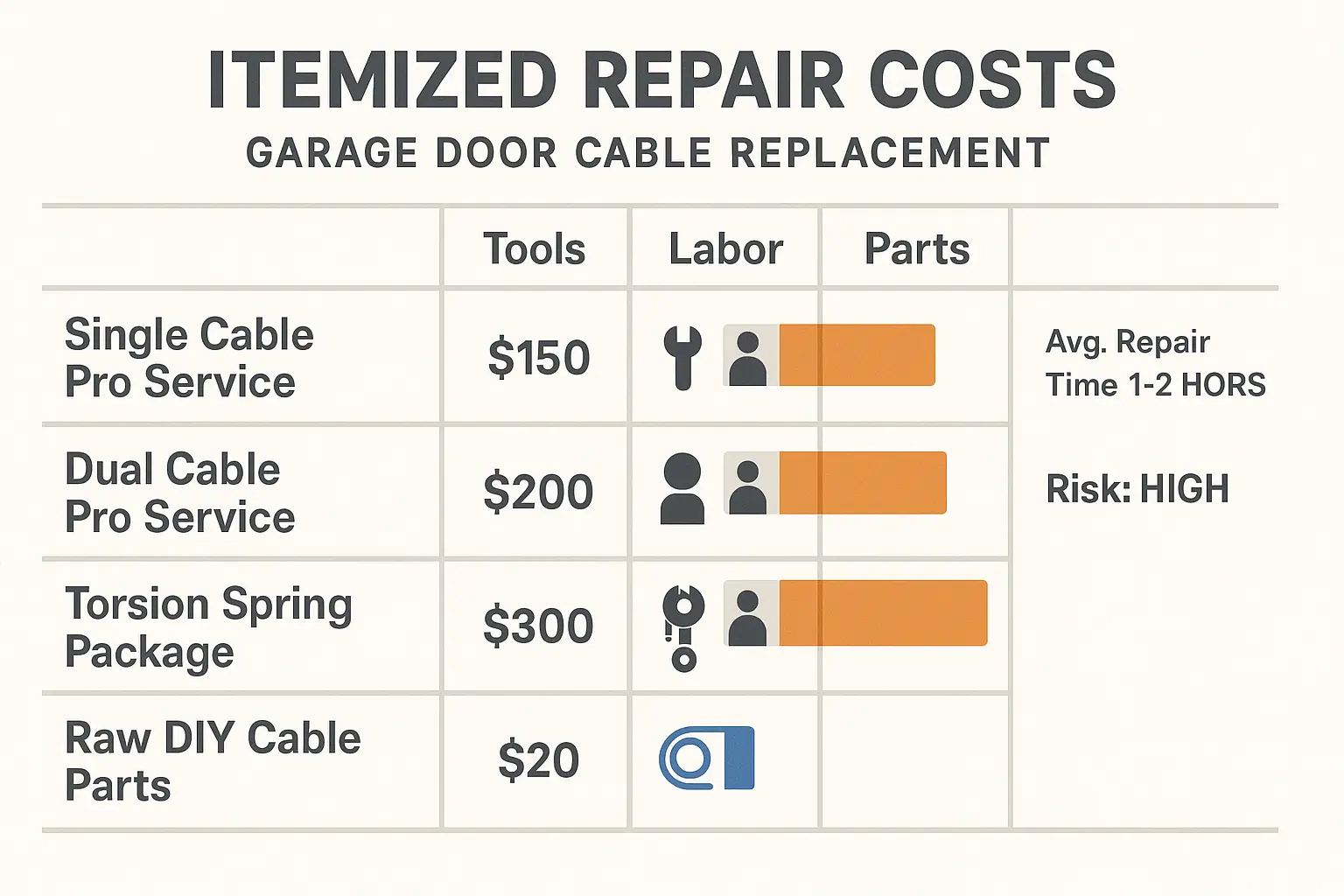
Visual cost comparison for cable repair options

A visual cost comparison helps readers easily remember and weigh the financial trade-offs between DIY parts and professional garage door cable repair services.

Replacing both cables simultaneously is standard industry practice. Because both cables experience identical cycle counts and strain, the secondary cable typically fails shortly after the first. Scheduling a local technician for a professional garage door cable replacement near me ensures reliable operation and helps homeowners prevent garage door repairs in the future.

Frequently Asked Questions


Can I replace just one garage door cable?

While replacing a single cable is physically possible, technicians strongly advise replacing both simultaneously. Cables stretch over time; installing one new cable alongside an older cable causes uneven lifting, binding tracks, and accelerated wear on the door opener.

How long does a professional garage door cable repair take?

A trained garage door technician equipped with proper winding bars and track clamps typically completes a dual cable replacement and balance calibration in 30 to 60 minutes.

Will my opener work if I manually lift the door and reattach the cable?

No, automatic openers are designed to push and pull balanced weight—not lift dead weight. Operating an opener with uncalibrated or improperly tensioned cables will strip drive gears and burn out the motor.

Contact / Request a Call