Preventing and Thawing Frozen Garage Doors: The Complete Winter Guide


Published: Oct 13, 2026

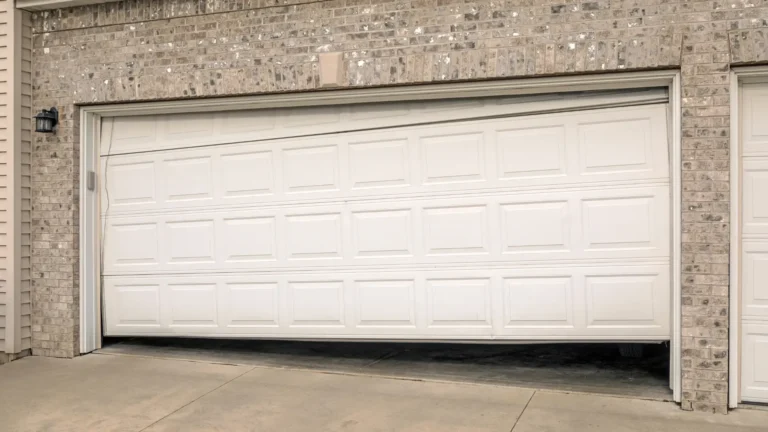
A garage door frozen to the ground is a frustrating winter emergency. When daytime snowmelt at 33°F–36°F pools along your threshold and plunges into a 15°F–22°F overnight freeze, your bottom seal creates an airtight ice bond with the concrete.

Before taking action, pause. Forcing your opener while the door is ice-locked can strip internal nylon drive gears, burn out motor windings ($200–$600 replacement), or buckle lower door panels.
Immediate Crisis Mode: The Safe 60-Second Disconnect Plan


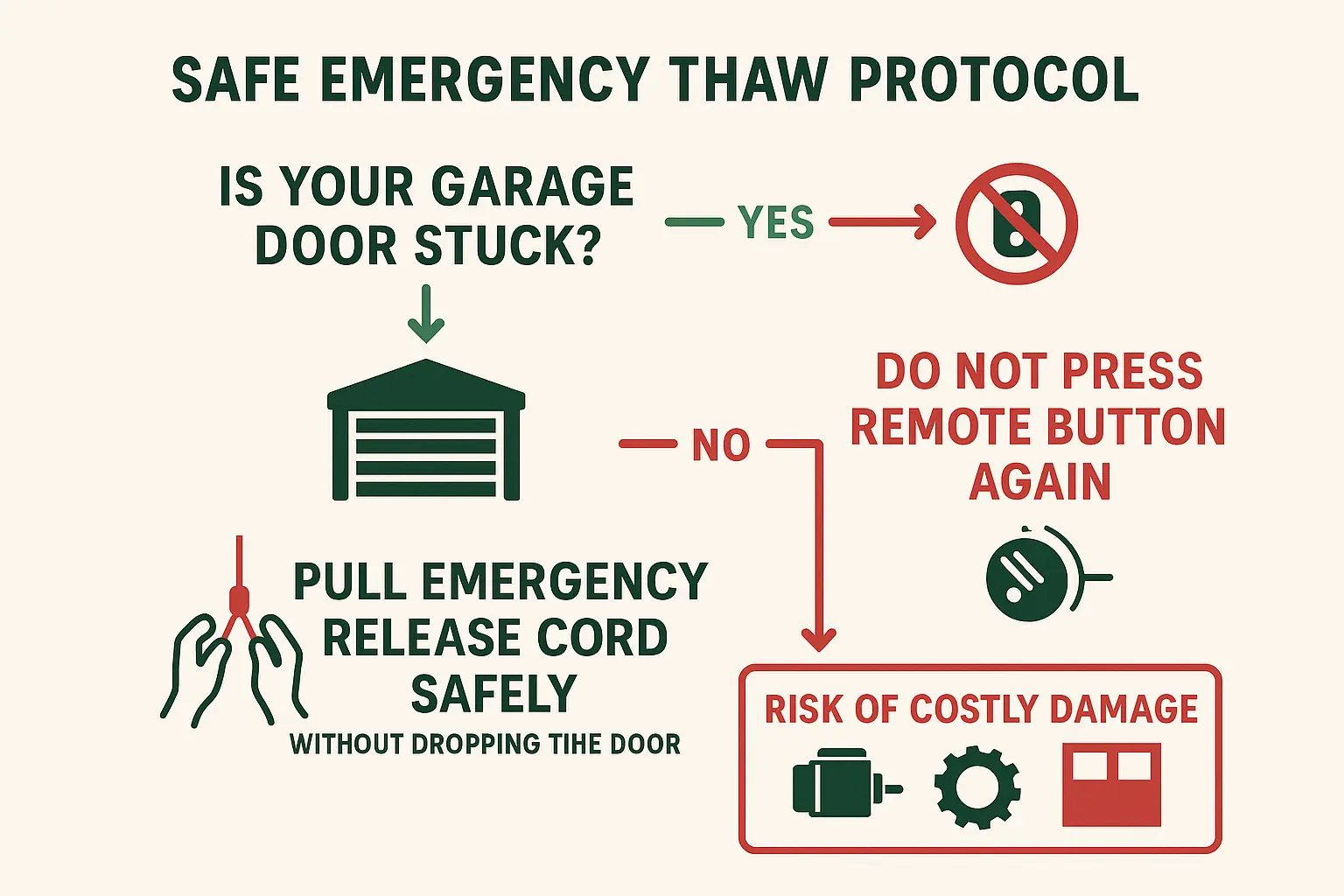
This flowchart guides homeowners through the safest immediate steps to thaw a frozen garage door without causing mechanical damage, emphasizing the importance of using the emergency release cord first.

If your door is stuck right now, follow this immediate protocol to isolate the issue:

  1. Stop Using the Remote: Repeatedly hitting the button forces the opener against hundreds of pounds of frozen resistance.
  2. Pull the Emergency Release Cord: Disengage the opener carriage by pulling the red cord down and toward the motor.
  3. Manual Lift Test: Gently attempt to lift the door by hand. If it shifts slightly or lifts free, the issue is hardened track grease or motor sensitivity rather than an ice bond. If it refuses to budge, the bottom seal is frozen shut.
  4. Inspect Safety Sensors: Cold snaps can cause condensation or frost on optical lenses. If your door hesitates or reverses unexpectedly, review standard garage door safety sensor troubleshooting before assuming structural failure.

If cold-thickened grease causes resistance, you may need to adjust your system settings. See our guide on adjusting force on garage door opener to prevent unnecessary motor strain.

Safe vs. Dangerous Thaw Protocols


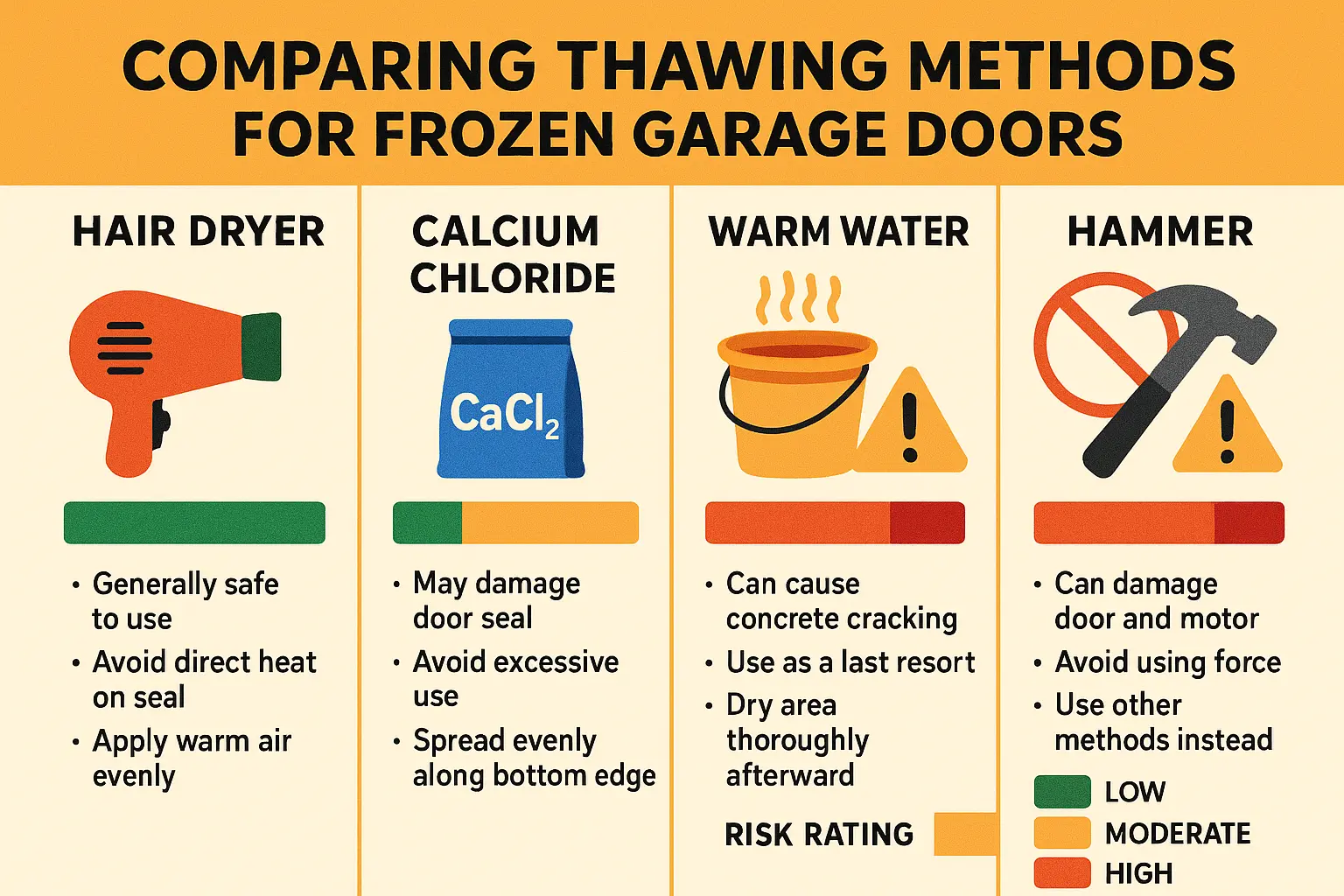
This infographic visually clarifies which thawing techniques are safe and which can cause costly damage, empowering readers to make informed decisions quickly and avoid common DIY pitfalls.

Not all DIY thawing techniques are safe. Popular online hacks often lead to permanent structural and component damage.

Safe Thawing Methods

  • Hair Dryer or Heat Gun: Keep the heat source 6 to 12 inches away from the seal and sweep back and forth along the base line. Avoid concentrating heat on one spot to prevent melting synthetic seals.
  • Warm Water (Under 100°F): Pour lukewarm water directly along the concrete seam at the outside base. Immediately mop up standing water and dry the seal to prevent re-freezing.
  • Calcium Chloride De-Icer: Sprinkle calcium chloride pellets along the exterior base line. It melts ice down to -25°F without harming concrete or rubber as severely as standard rock salt.

Dangerous Methods to Avoid

  • Boiling Water: Pouring boiling water onto frozen components creates thermal shock, cracking cold concrete thresholds and shattering glass panels.
  • Chisels, Screwdrivers, and Hammers: Prying at the base tears the bottom seal ($80–$150 replacement) and chips your garage floor threshold.
  • Petroleum-Based Solvents (WD-40 / Vaseline): Standard WD-40 and petroleum jelly contain light distillates that dissolve EPDM synthetic rubber, turning seals gummy, brittle, and prone to severe future freezing.

Winterization and Prevention Evaluation


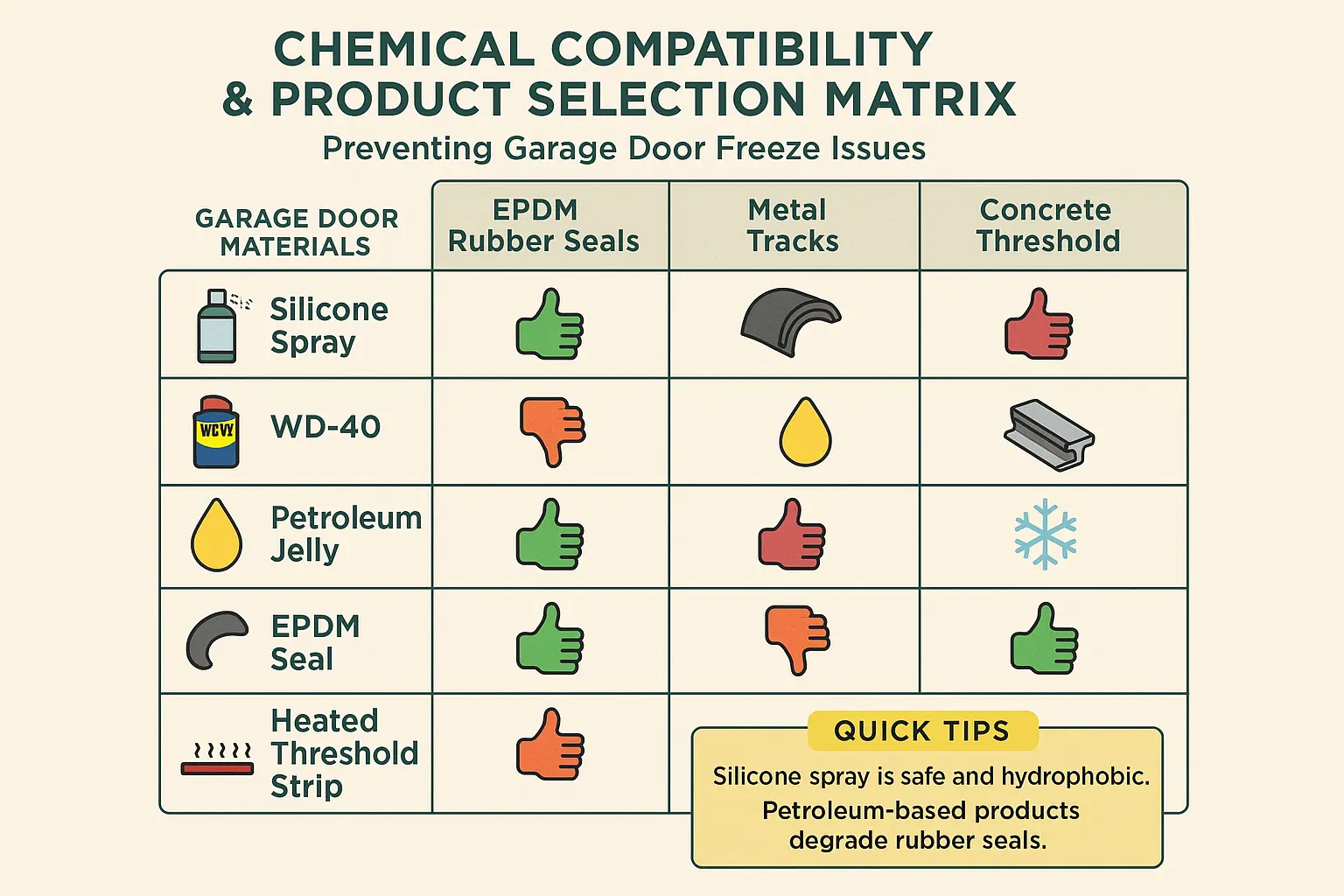
This product compatibility matrix helps readers remember which chemical treatments and physical upgrades protect their garage doors from freeze damage and which can worsen it.

Preventing winter freeze-down requires selecting the right barrier materials and chemical treatments:

  • 100% Silicone Spray: Apply silicone lubricant to the rubber bottom seal and side weatherstripping monthly. Silicone forms a hydrophobic barrier that repels water while preserving rubber flexibility down to -40°F.
  • EPDM Rubber Seals vs. Standard Vinyl: Standard vinyl bottom seals stiffen and crack in sub-zero weather. Upgrading to high-grade EPDM synthetic rubber maintains flexibility, helping a garage door bottom seal help with energy efficiency while eliminating moisture pockets.
  • Raised Polymer Threshold Barriers: Installing a solid polymer threshold ramp (such as GaraDry) creates a raised lip behind the door seal. This diverts melted snow runoff away from the door line.
  • Low-Temperature Spring & Track Care: Cold weather increases metal brittleness. Learn more about cold weather impact on garage door springs to prevent seasonal spring snaps and keep track rollers moving smoothly.

Protect Your Garage Door This Winter


Taking preventive measures before severe winter weather hits saves hundreds in emergency repairs. If your system exhibits binding, motor strain, or severe freeze damage, schedule professional seasonal garage door maintenance to keep your door operating smoothly all winter long.

Frequently Asked Questions


Why won't my garage door open in cold weather?

Cold weather thickens factory roller lubricant, contracts metal tracks, reduces opener force limits, and freezes rubber bottom seals directly to wet concrete thresholds.

Will salt damage my garage door rubber and track?

Yes. Rock salt (sodium chloride) accelerates corrosion on steel tracks and bottom retainers while drying out rubber seals. Use calcium chloride de-icer sparingly along base edges instead.

How much does it cost to fix a frozen garage door motor?

If forcing a frozen door strips the internal drive gear, repairs average $150 to $400. Full motor winding burnout or opener replacement ranges from $400 to $1,000 depending on drive mechanism and horsepower.

Contact / Request a Call