Emergency Board-Up After Severe Garage Door Damage: A Homeowner’s Guide to Security and Structural Safety


Published: Sep 29, 2026

When a vehicle strikes your garage door or extreme weather buckles the steel panels, your home transitions from a secure sanctuary to an immediate security and safety crisis. The physical vulnerability is compounded by extreme mechanical hazards. A standard double-car residential garage door weighs between 150 to 250+ lbs. When this dead weight is compromised, attempting to manually handle the door or ignoring proper securing protocols can lead to catastrophic failure.

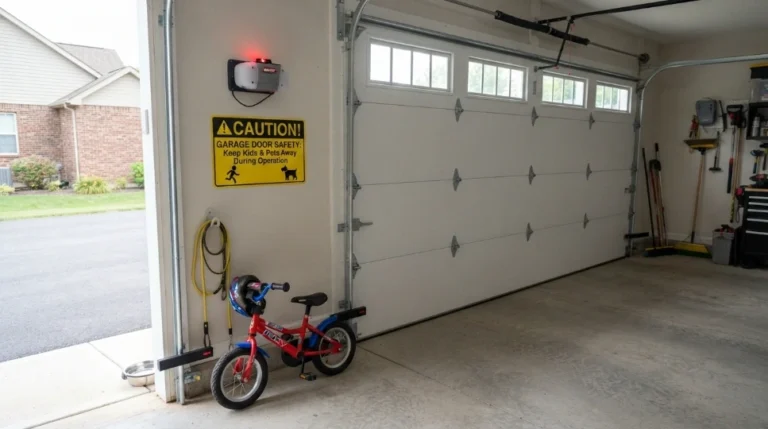
Before taking any action, establish a strict 8-foot safety zone around the opening. If your door is partially open or crooked, do not pull the red garage door manual release. Doing so uncouples the door from the electric opener carriage, which may be the only mechanism preventing 200+ pounds of steel from crashing down. Additionally, never touch the red-painted hardware on your system. These components are directly connected to the torsion springs, which operate under 200 to 300+ lbs of rotational tension. Tampering with them poses extreme garage door spring danger, potentially leading to severe injury. Finally, isolate the system by unplugging the opener motor from the ceiling outlet to prevent anyone from accidentally activating it via remote.
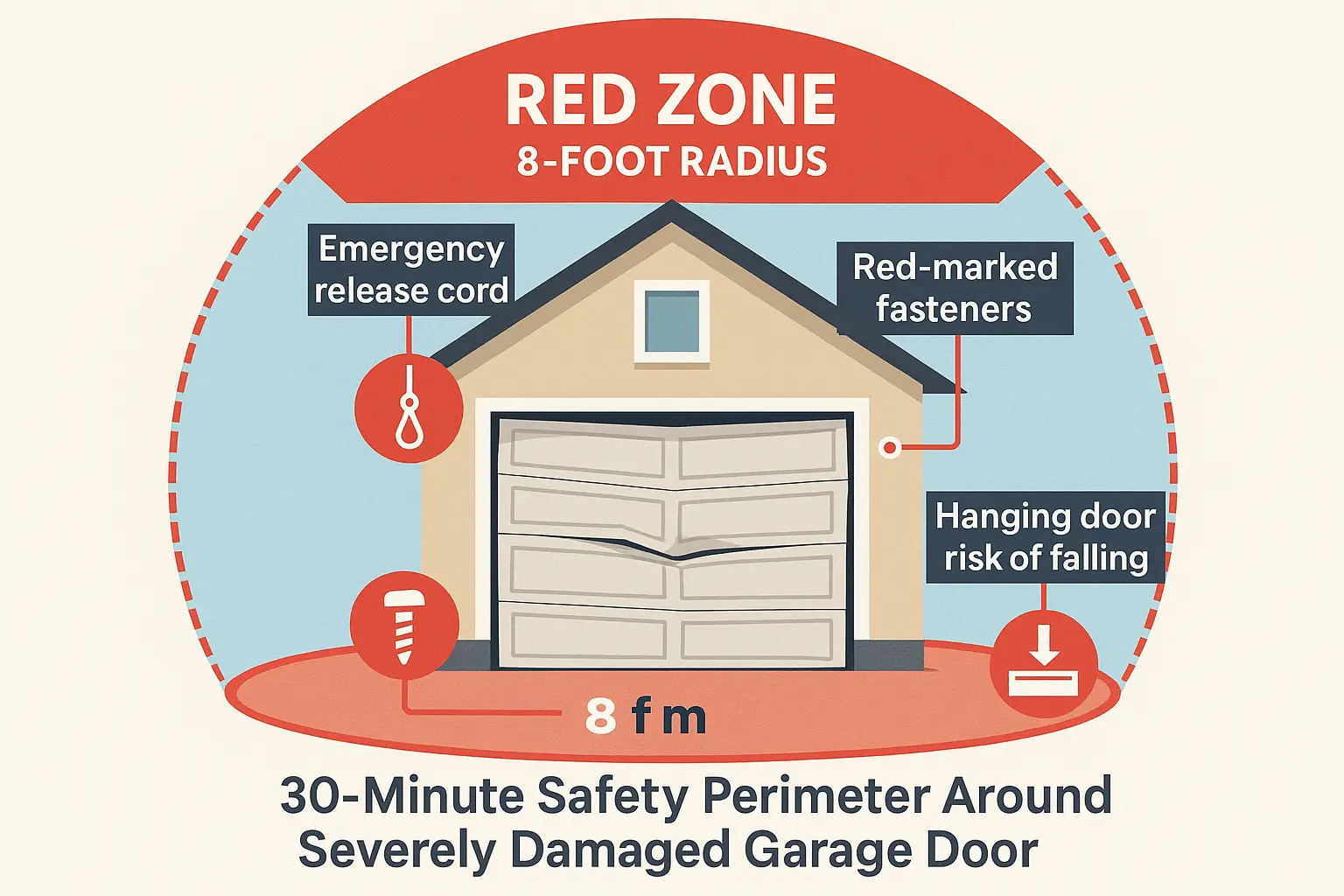
This visual clarifies critical safety zones and hazards to avoid immediately after severe garage door damage, helping users prevent injury during initial emergency moments.

Decoupling the Emergency: Securement vs. Permanent Repair


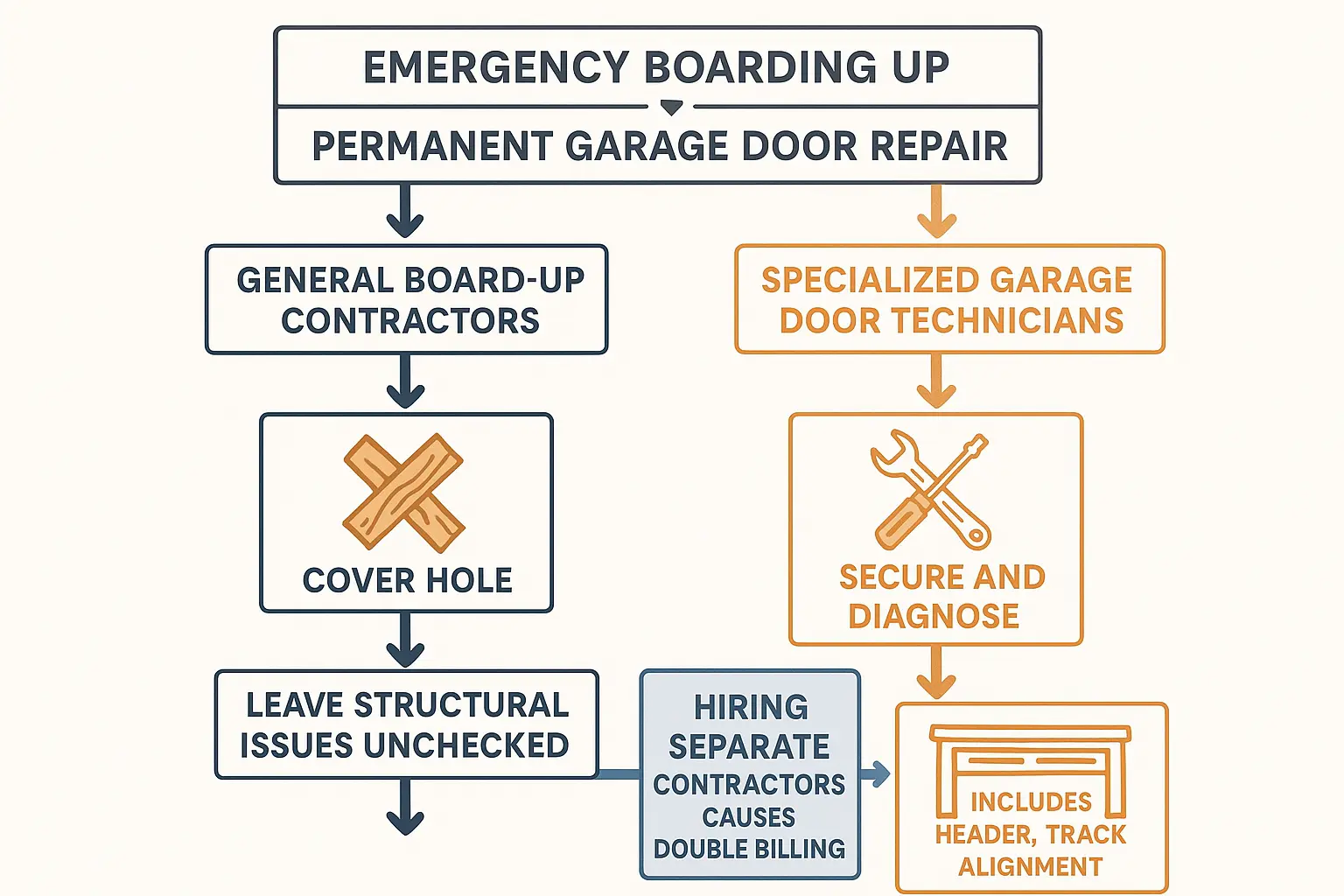
In the immediate aftermath of severe damage, many homeowners instinctively call a general disaster restoration contractor to board up the gaping hole. However, this shortcut often leads to unnecessary double-billing and structural complications down the line. A general board-up company only focuses on securing the hole by mounting plywood over the frame. They do not have the training to evaluate the door’s high-tension mechanical tracks, the structural header, or the automatic operator.

When you hire a specialized garage door technician, the emergency board-up and the initial diagnostic assessment happen simultaneously. This integrated approach ensures that when we secure the opening, we also examine the bent garage door track and align the frame, preparing your home for a successful, long-term broken garage door panel repair connecticut. If a general contractor warps the structural framing during a crude board-up, a garage door specialist will later have to tear down their temporary work to realign the system, charging you twice for labor and framing reconstruction.

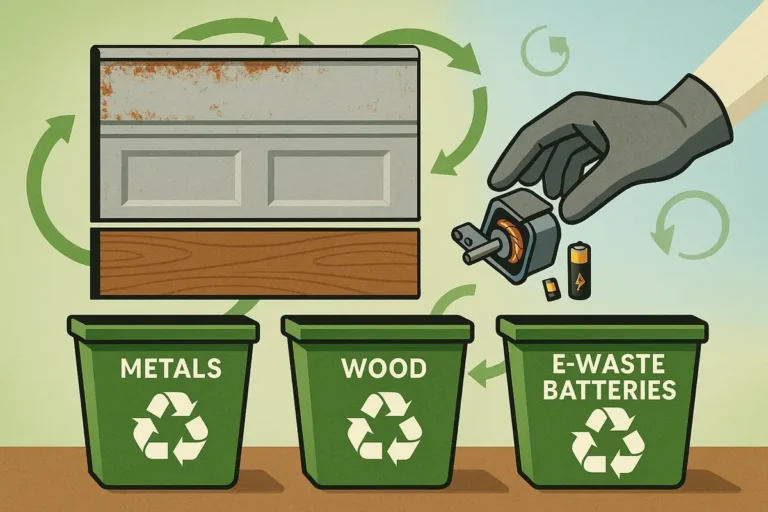
This diagram educates readers on why choosing specialized garage door experts for emergency board-up and repairs reduces costs and improves safety compared to generic contractors.

The Technical Blueprint for Plywood Securement


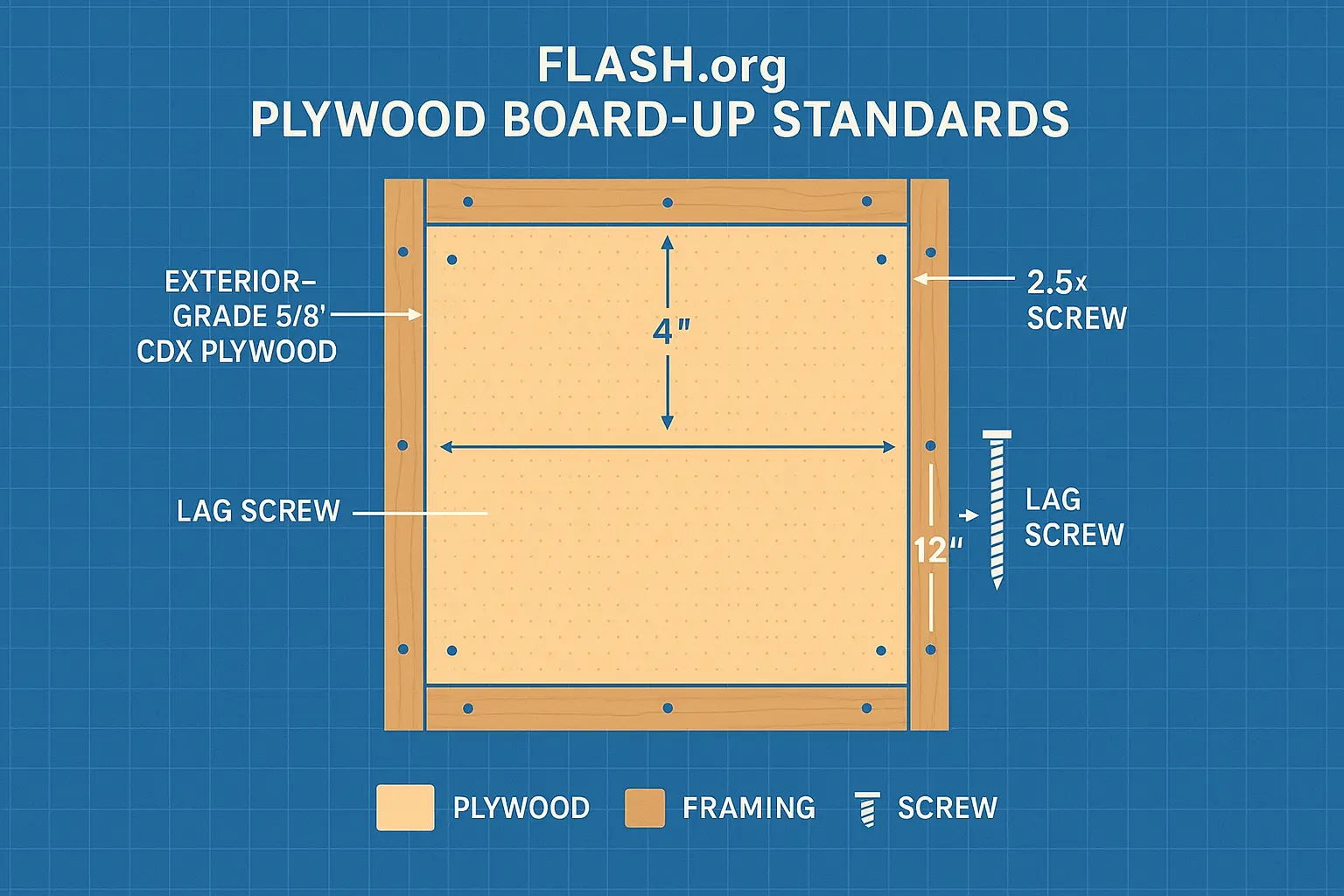
If you must execute a temporary securement before a professional dispatch team arrives, it is critical to build to structural standards that genuinely resist high winds and determined intruders. According to structural guidelines established by the Federal Alliance for Safe Homes (FLASH), standard emergency mitigation requires exterior-grade CDX plywood with a minimum thickness of 5/8-inch.

To secure the opening properly, adhere to the following technical parameters:

  • Frame Overlap: Measure the opening carefully and ensure the plywood panels overlap the exterior wood framing by at least 4 inches on all sides.
  • Fastener Depth: Secure the panels using heavy-duty lag screws that penetrate the solid wood wall framing studs by a minimum of 2.5 inches.
  • Screw Spacing: Install fasteners at maximum intervals of 12 inches along the entire perimeter.
  • Seam Reinforcement: For double-car spans where multiple plywood sheets meet, reinforce the joints with vertical or horizontal 2×4 lumber blocks secured on the interior side with 10-gauge deck screws.

Keep in mind that if your door is hanging crookedly under uneven spring tension, executing a DIY board-up is physically impossible without professional stabilization first. In these hazardous scenarios, calling a professional for emergency garage door service is the only safe way to protect your property.

Memorably illustrates the essential plywood board-up construction details users must know to perform a safe emergency securement or to evaluate professional work.

Managing Downstream Risks: Moisture and Interior Security


While a boarded-up garage looks secure from the driveway, it creates hidden physical vulnerabilities. First, completely sealing a garage opening creates an unvented “moisture trap.” Relative humidity levels behind the plywood barrier can spike by 30% to 40% within just 48 hours. This trapped moisture accelerates rust and oxidization on raw steel cables, rollers, and ceiling opener logic boards within 3 to 7 days, turning a straightforward repair into a costly mechanical overhaul. Booking your permanent garage door panel replacement promptly is essential to avoid these compounding costs.

Second, while the main garage opening is temporarily boarded, you must reinforce your secondary barrier: the interior passage door connecting your garage to your living space. To optimize your home’s garage door security, execute this 5-point safety check:

  • Verify the passage door is a solid-core wood or metal door, not a hollow-core door.
  • Ensure a heavy-duty deadbolt with a minimum 1-inch throw is engaged.
  • Install a reinforced metal strike plate with 3-inch screws that anchor deep into the wall framing.
  • Check that the hinges face inward toward the living space, preventing intruders from pulling the pins.
  • Install a self-closing spring hinge to ensure the door never accidentally swings open.

Additionally, ensure you take comprehensive, well-lit photos of the damage from multiple angles before mounting any plywood. These photos are vital for insurance documentation and help technicians rapidly diagnose structural requirements before arriving at your home.

Frequently Asked Questions


Can I leave my garage door boarded up for several weeks?

It is highly discouraged. Leaving a garage boarded up traps moisture and can ruin remaining mechanical components, such as rollers, cables, and opener electronics, within a few days. It also poses a persistent security weakness for your home.

What is the danger of pulling the emergency release cord after an accident?

If the door panels are damaged, off-track, or unbalanced, pulling the manual release cord disconnects the door from the opener carriage. Without the opener motor supporting the weight, the door can instantly drop with several hundred pounds of force, causing severe injury or structural damage.

Why should I choose a garage door specialist instead of a general contractor?

A general contractor only secures the opening physically but lacks the expertise to inspect high-tension spring systems, structural headers, and track alignment. A garage door specialist secures the home while performing mechanical diagnostics, preventing you from paying twice for overlapping labor.

Contact / Request a Call