Loud Bang From the Garage at Night: Is It a Broken Spring


Published: Sep 23, 2026

You are lying in bed in the quiet hours of the night when a sudden, explosive crash echoes from your garage. It is a violent sound—sharp, metallic, and loud enough to be mistaken for a gunshot, a structural collapse, or a break-in.

Your immediate instinct is a threat to your home security. However, if your home security check reveals no signs of forced entry, the culprit is almost certainly resting silently in your garage: a snapped high-tension garage door spring.

Understanding what does it sound like when a garage door spring breaks? is the first step in de-escalating your anxiety and identifying the right solution.

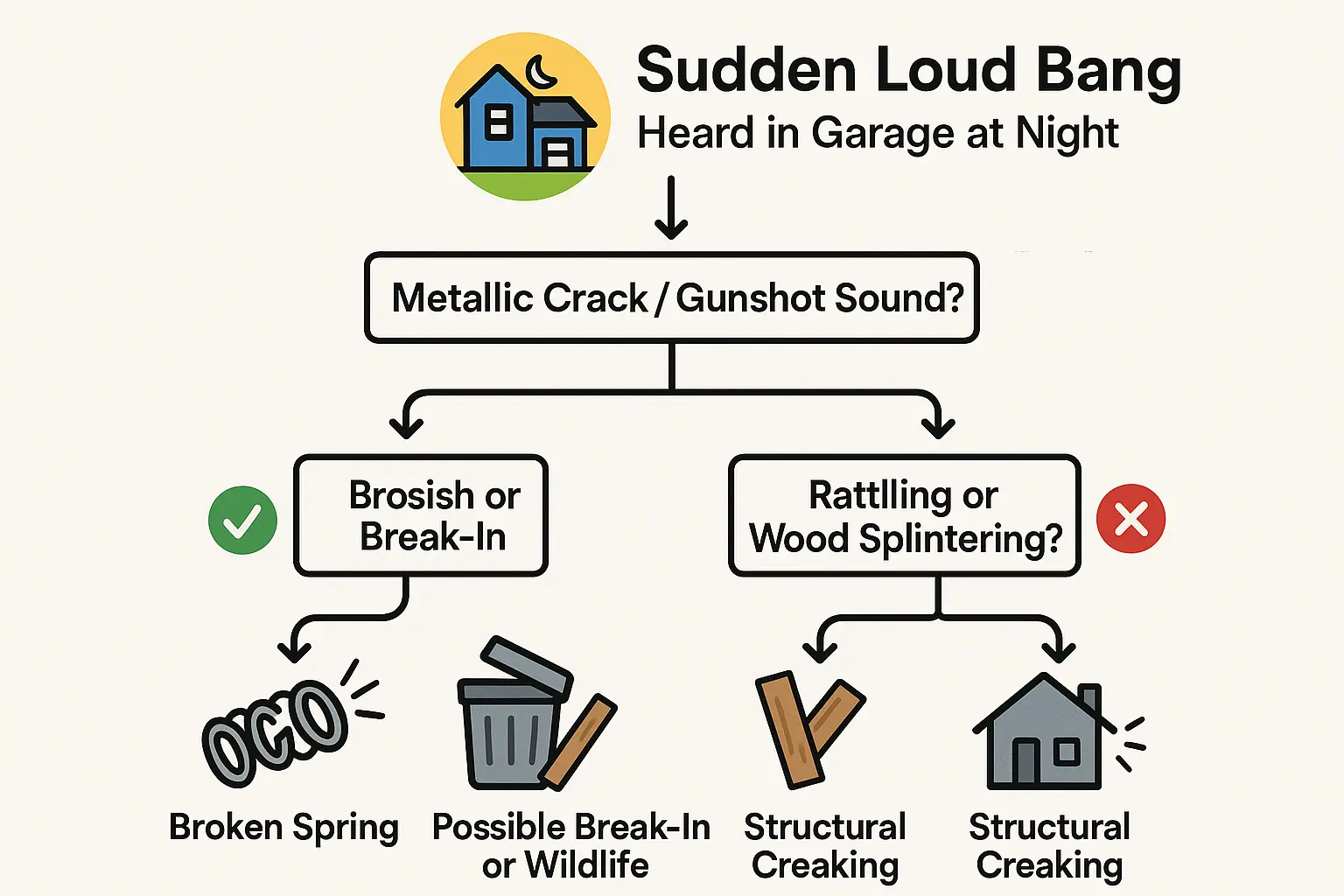
This visual decision tree helps homeowners instantly differentiate between a dangerous break-in and a mechanical spring failure, reducing panic and guiding next steps.


The 3-Second Visual Test Section


Once morning arrives, you can safely verify your suspicions without touching any moving parts. Take a flashlight into your garage and look directly above or alongside your garage door tracks to locate the visual indicators of a physical failure.

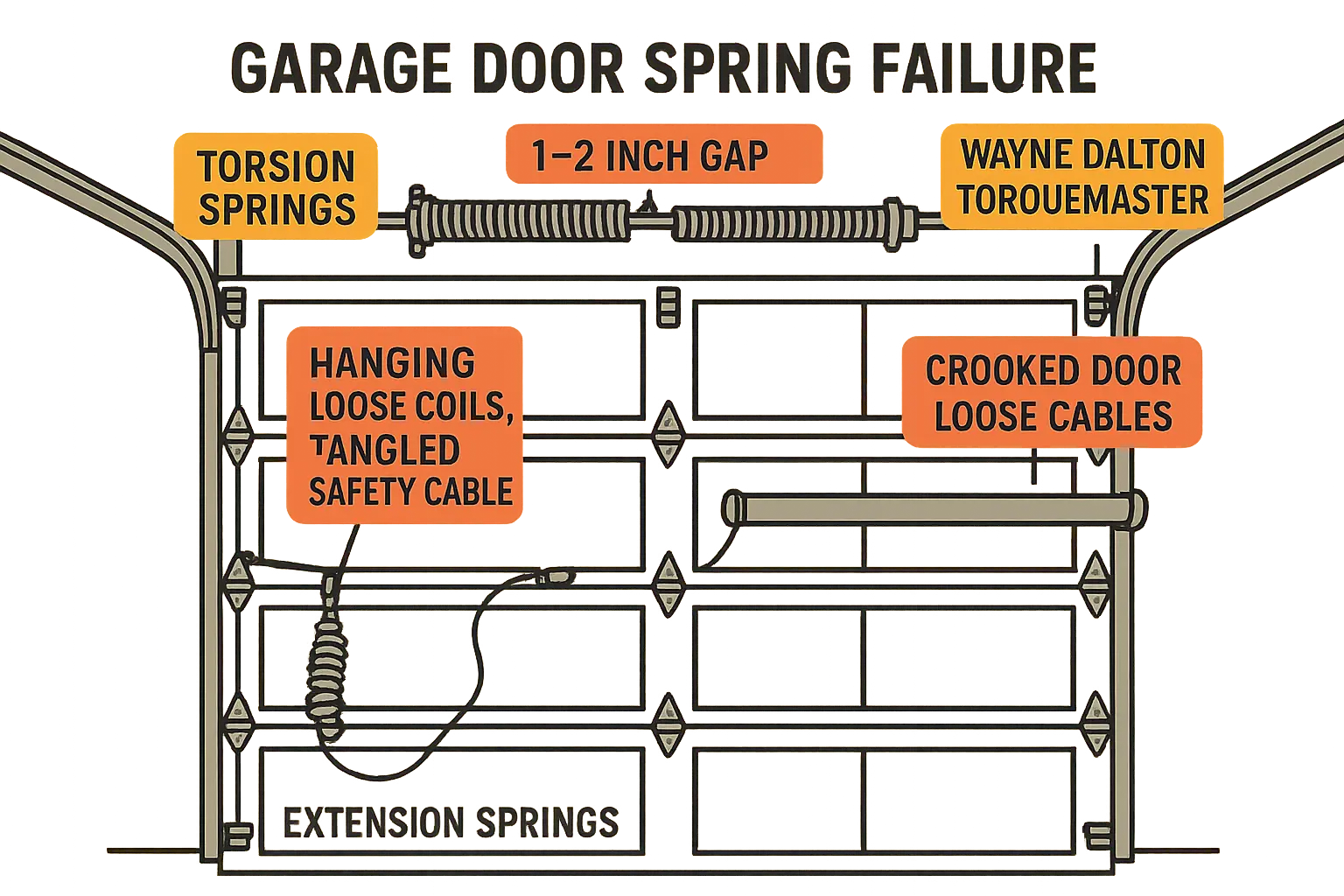
  • Torsion Springs (Mounted on a metal shaft above the door): Look for a clear, 1-to-2-inch physical gap in the middle of the tightly wound steel coil. If you see a separation in the coils, the spring has lost all tension.
  • Extension Springs (Mounted along the horizontal tracks): Look for a hanging, loose coil or a snapped safety cable that is dangling down.
  • Wayne Dalton TorqueMaster Systems: In these systems, the springs are hidden inside a protective steel tube. Look for a crooked door sitting unevenly in the tracks, or slack, loose cables pooling on either side of the door.

Learning how to tell if garage door spring is broken takes only a few seconds and provides the absolute confirmation you need before planning your next steps.

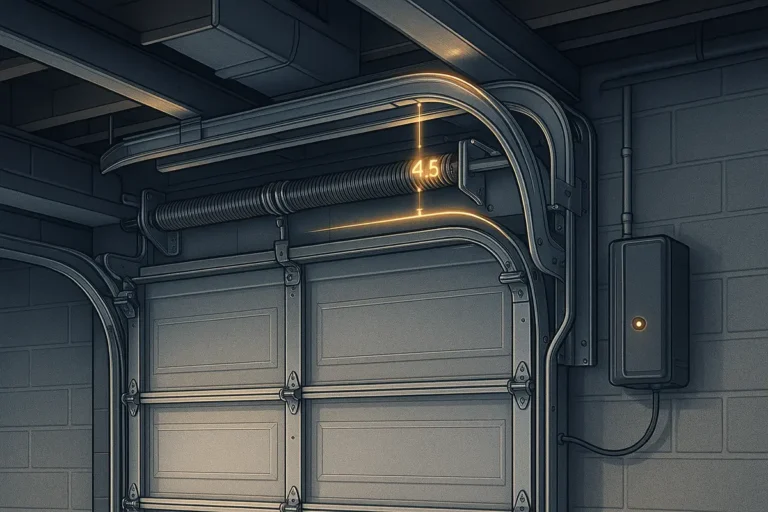
This annotated schematic guides homeowners through a quick, effective self-inspection to visually confirm a broken spring type in under 3 seconds.


Why It Happened at Night: The Thermal Contraction Physics


It is no coincidence that garage door springs frequently snap in the middle of the night. It is a matter of pure thermodynamics.

Standard residential springs are engineered to endure approximately 10,000 cycles (with one cycle representing a full open-and-close sequence) according to DASMA Technical Data Sheet #102. Under typical usage of four cycles per day, a spring reaches the end of its fatigue life in 6 to 7 years.

As a spring nears this limit, micro-fractures develop in the steel. When temperatures plunge overnight, the carbon steel contracts and becomes brittle. Because the spring is under constant, immense static tension when the door is closed, this thermal contraction pushes the weakened metal beyond its physical limits. The resulting sudden release of energy is why professional service calls for broken springs spike by 30% to 40% during colder winter months. This seasonal stress is often what causes garage door springs to break without anyone even operating the door.


Urgent Crisis Troubleshooting: Am I Trapped?


If your vehicle is inside the garage, a snapped spring turns from an overnight nuisance into an immediate operational crisis. Your automatic garage door won t open because the mechanical opener is only designed to guide the door, not lift its dead weight.

To navigate this situation safely, follow these protocols:

  1. Do Not Force the Opener: Pressing your wall button repeatedly can burn out the opener’s internal gear system. A simple spring replacement can quickly turn into a costly, complete system overhaul.
  2. Avoid the Emergency Release Cord: Pulling the red garage door emergency release cord while the door is partially open is highly dangerous. Without the counterbalance of a working spring, the heavy door can crash down under its own weight.
  3. Lift Manually Only with Extreme Caution: If you must get your car out, attempt to lift the door manually only with the help of another capable adult. Review the safety guidelines on how to open garage door with broken spring safely before attempting to lift a dead-weight door.

DIY vs. Professional Cost & Danger Analysis Section


The temptation to buy a cheap replacement spring online and tackle the job yourself is understandable, but the physics of garage door counterbalances make this an incredibly high-risk choice.

A standard 2-inch residential torsion spring wound 30 quarter-turns holds roughly 100 to 180 foot-pounds of torque. Uncontrolled release of this kinetic energy is capable of fracturing bones, severing fingers, or causing severe blunt-force trauma. Beyond the immediate physical danger, choosing the wrong spring size or failing to calibrate tension correctly will accelerate wear on your opener and tracks.

Professional installation provides immediate safety, a structural warranty, and long-term peace of mind. A single spring replacement typically ranges from $150 to $350 nationally, while a dual-spring replacement costs between $250 and $500. Professional technicians recommend replacing both springs at the same time; because they have completed the same number of operational cycles, the secondary spring is highly likely to fail shortly after the first. Replacing both during a single visit saves you an average of $100 to $150 in secondary service fees.

Additionally, a technician can evaluate the structural integrity of your system and perform any necessary garage door cable replacement near me to ensure all safety counterbalances are fully restored.

For reliable, fast, and highly rated local assistance, scheduling a professional garage door torsion spring repair connecticut ensures your home remains secure and your family stays safe.
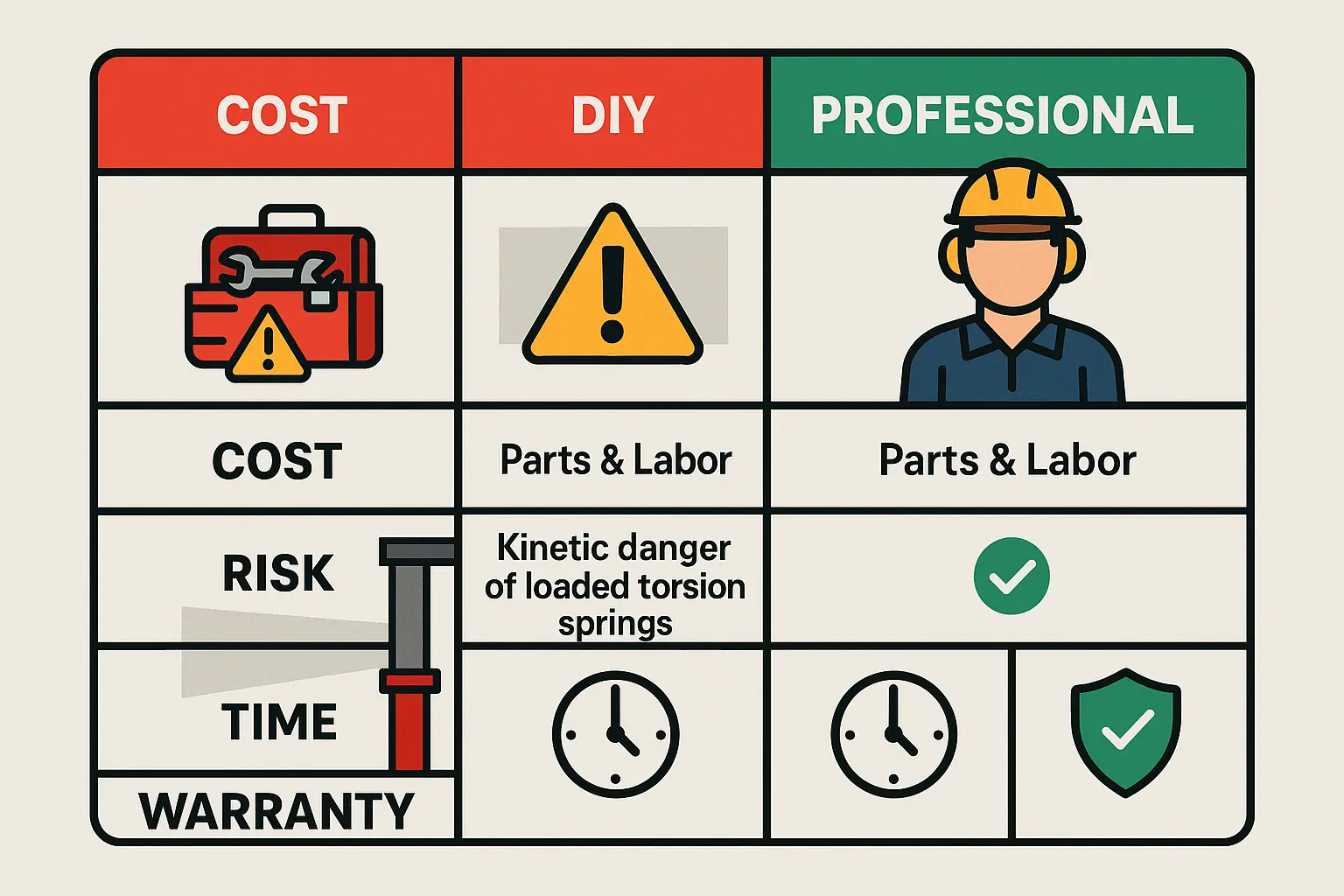

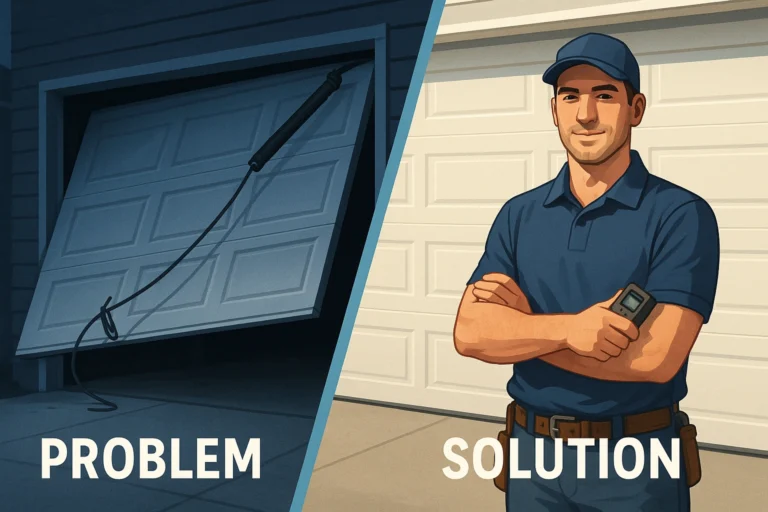
This infographic vividly encodes the hidden dangers and costs of DIY spring repair compared to professional service, anchoring safety and financial prudence in memory.


Frequently Asked Questions


Why did my garage door spring snap at night when no one was using it?

Dramatic temperature drops at night cause the carbon steel of your garage door spring to contract and become brittle. If the spring is already near the end of its 10,000-cycle lifespan, the increased internal stress from contraction will cause the weakened metal to snap spontaneously under the constant static tension of holding the door closed.

Can I manually lift my garage door if the spring is broken?

We highly discourage lifting a garage door with a broken spring. Without the spring’s counterbalancing force, you are lifting the full dead weight of the door, which can easily exceed 150 to 400 pounds. Attempting to lift this weight can cause severe back strain, and if you lose your grip, the door will crash down instantly.

Should I replace both garage door springs if only one broke?

Yes. Garage door springs are manufactured at the same time and undergo the exact same number of opening and closing cycles. When one spring breaks, it indicates that the secondary spring has reached its fatigue limit and is highly likely to fail within days or weeks, requiring a second service call and additional fees.

Contact / Request a Call