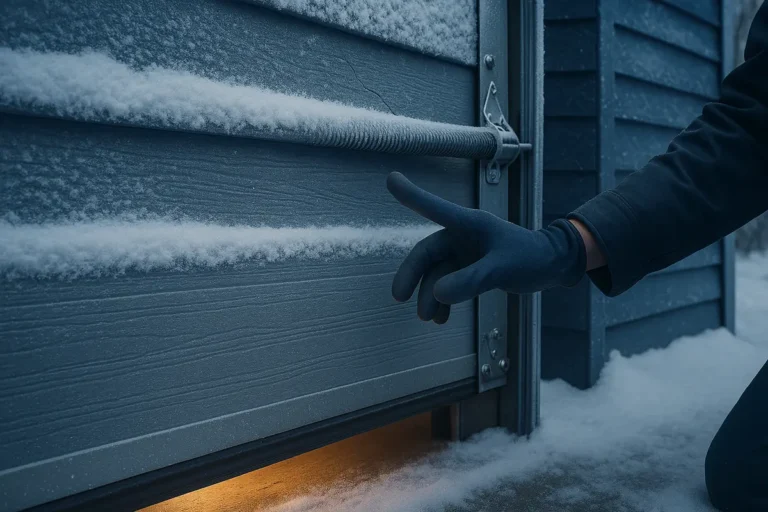
Have you noticed it? That subtle groaning sound your garage door makes on a steamy summer morning. The way it seems to stick a little on its way up, or how the bottom edge doesn’t quite meet the concrete like it used to. These aren’t just quirks of an aging door; they’re often the first whispers of a silent saboteur at work: humidity.
Especially in humid climates, the constant moisture in the air is waging a two-front war on your garage door—attacking its wooden panels and its metal hardware simultaneously. Many homeowners are caught by surprise when these subtle symptoms escalate into warped panels, rusted-out springs, and costly repairs.
But what if you could understand this invisible force and turn the tables? This guide will walk you through the science of humidity’s effects, how to diagnose the damage, and the exact steps to take to protect your door, transforming you from a concerned homeowner into a proactive guardian of your home’s largest moving part.
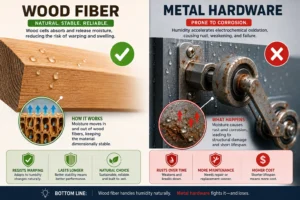 Why Metal Rusts: A Chemical Attack
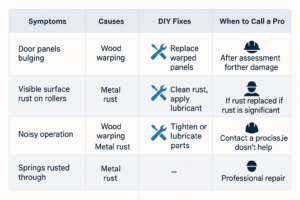 Part 1: Taming Warped Wood Panels
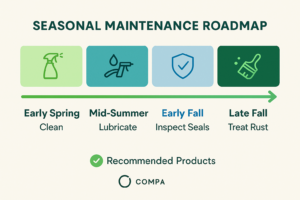 Caption: Follow this clear, seasonal maintenance roadmap to keep your garage door wood panels and metal hardware protected throughout humid months.
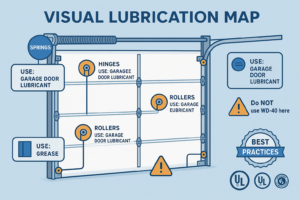 Warning: Never use a penetrating oil like WD-40 on your garage door rollers or hinges. It can strip away existing grease and attract dust and grime, making the problem worse over time. Stick to a dedicated garage door lubricant spray with a silicone or white lithium grease base.