Garage Door Stuck Open During a Storm: Securing It Until Help Arrives


Published: Oct 1, 2026

An active storm is rolling in, rain is driving sideways, and your garage door is stuck wide open. Your first instinct might be to repeatedly press the wall button or try to force the heavy door down. However, acting in a panic can worsen mechanical damage or, worse, cause severe personal injury.

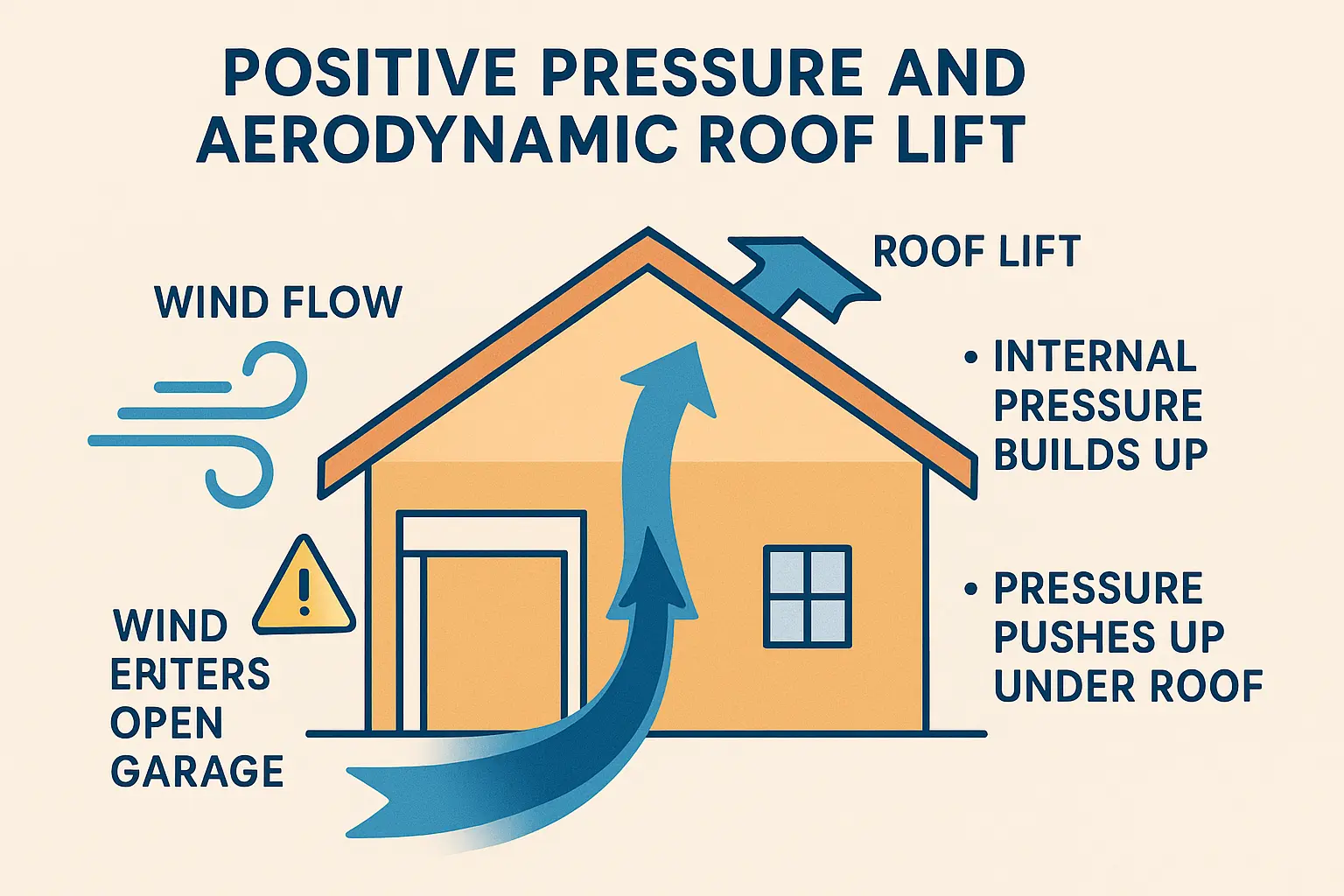
When severe weather strikes, an open garage door is not just a convenience issue—it is a structural threat. According to the Door & Access Systems Manufacturers Association (DASMA) and building standards matching ASCE 7-16, the garage door is the largest structural opening in your home. If left open during high winds, the sudden influx of internal wind pressure combines with external roof suction to create a massive wind uplift force. This aerodynamic pressure is often strong enough to lift the roof right off a residential structure, initiating a total home collapse.

Here is your immediate, step-by-step containment protocol to secure your home, protect your family, and minimize property damage until a professional technician can arrive.
The 30-Second Panic Triage Checklist


Before you attempt to fix anything, execute these immediate safety and security measures:

  • STOP: Do not continue pressing the wall console button. If the motor is struggling or if you have a garage door opener not working, continuous power cycles can burn out the circuit board or strip the internal gears.
  • LOOK UP: Check the metal springs mounted above the door. If you see a visible gap in the coils, you have a broken spring.
  • LOCK THE FIREWALL: Immediately lock and deadbolt the interior entry door leading from your garage into your living space. This is a fire-rated structural barrier designed to resist pressure and water.

This diagram reveals the hidden danger of an open garage door in a storm: internal wind pressures can create forces strong enough to lift and damage your roof. Understanding this helps prioritize immediate garage door containment.

Path A: How to Safely Lower the Door Manually


If the springs are intact and the tracks are straight, you may be able to close the door manually. However, you must respect the physics of garage door spring danger. If a spring is broken, the door will weigh several hundred pounds and can fall like a guillotine if released.

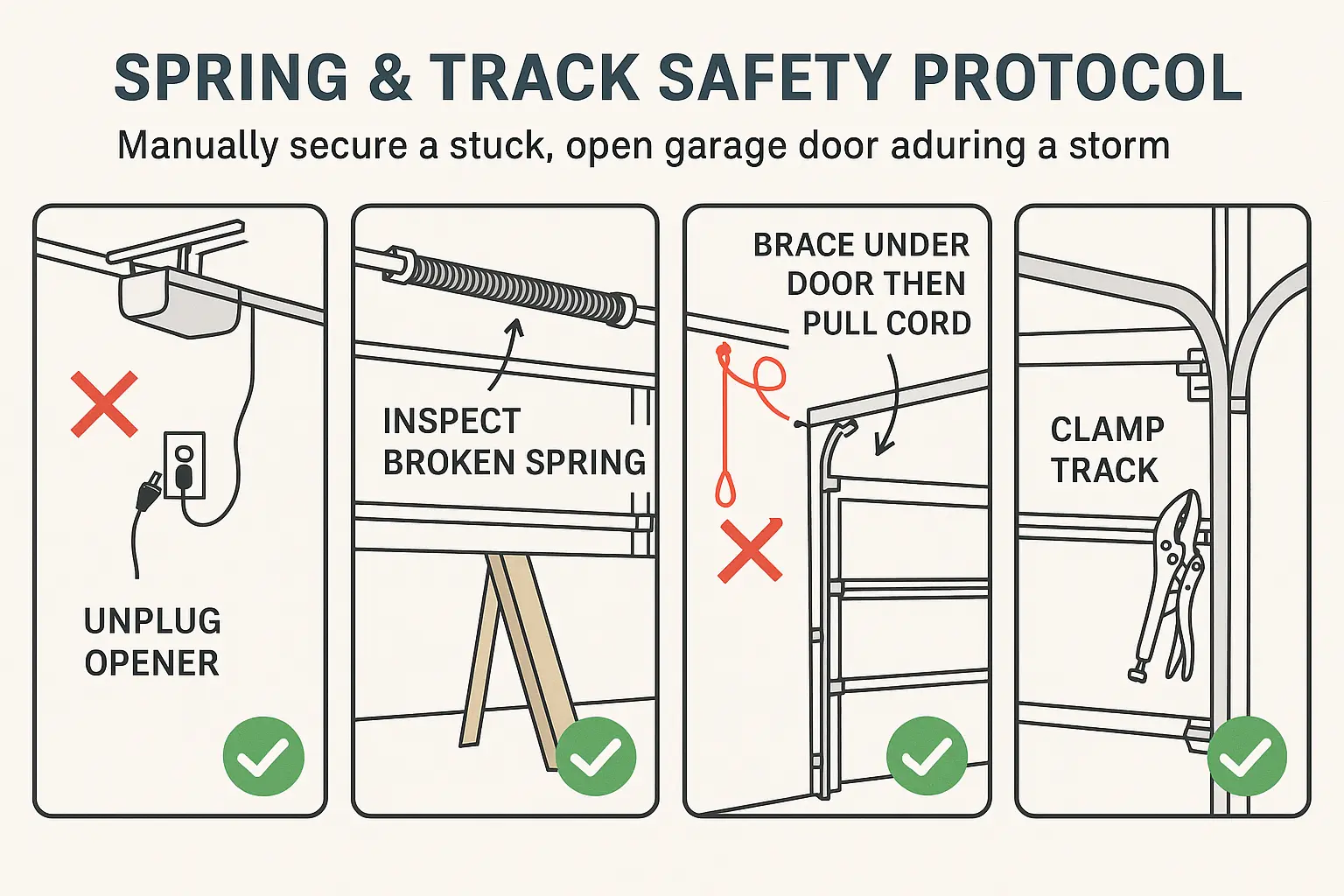
  1. Unplug the Opener: Disconnect the motor power cord from the ceiling outlet to prevent accidental activation from storm-related electrical surges.
  2. Verify Spring Integrity: If you see a physical break in the spring, do not pull the release cord. If the springs are intact, proceed cautiously.
  3. Insert a Safety Brace: Place a sturdy step-ladder or a heavy wood block underneath the door panels before touching the red cord. This physical block ensures that if you pull the garage door emergency release, the door won’t drop unexpectedly.
  4. Lower and Lock: Pull the red cord downward and backward toward the motor. Carefully lower the door manually using both hands. Once fully closed, clamp a pair of locking pliers (Vise-Grips) to the vertical metal track directly above the bottom roller. This acts as a physical manual lock, preventing heavy wind gusts from lifting the door.

Follow these four critical steps to safely lower and stabilize your garage door during a storm. This method prevents sudden drops and secures the door against high winds, minimizing risk to you and your home.

Path B: If the Door Cannot Be Closed


If you have a warped panel or require urgent garage door track repair, forcing the door down is impossible. You must pivot to damage-control mode.

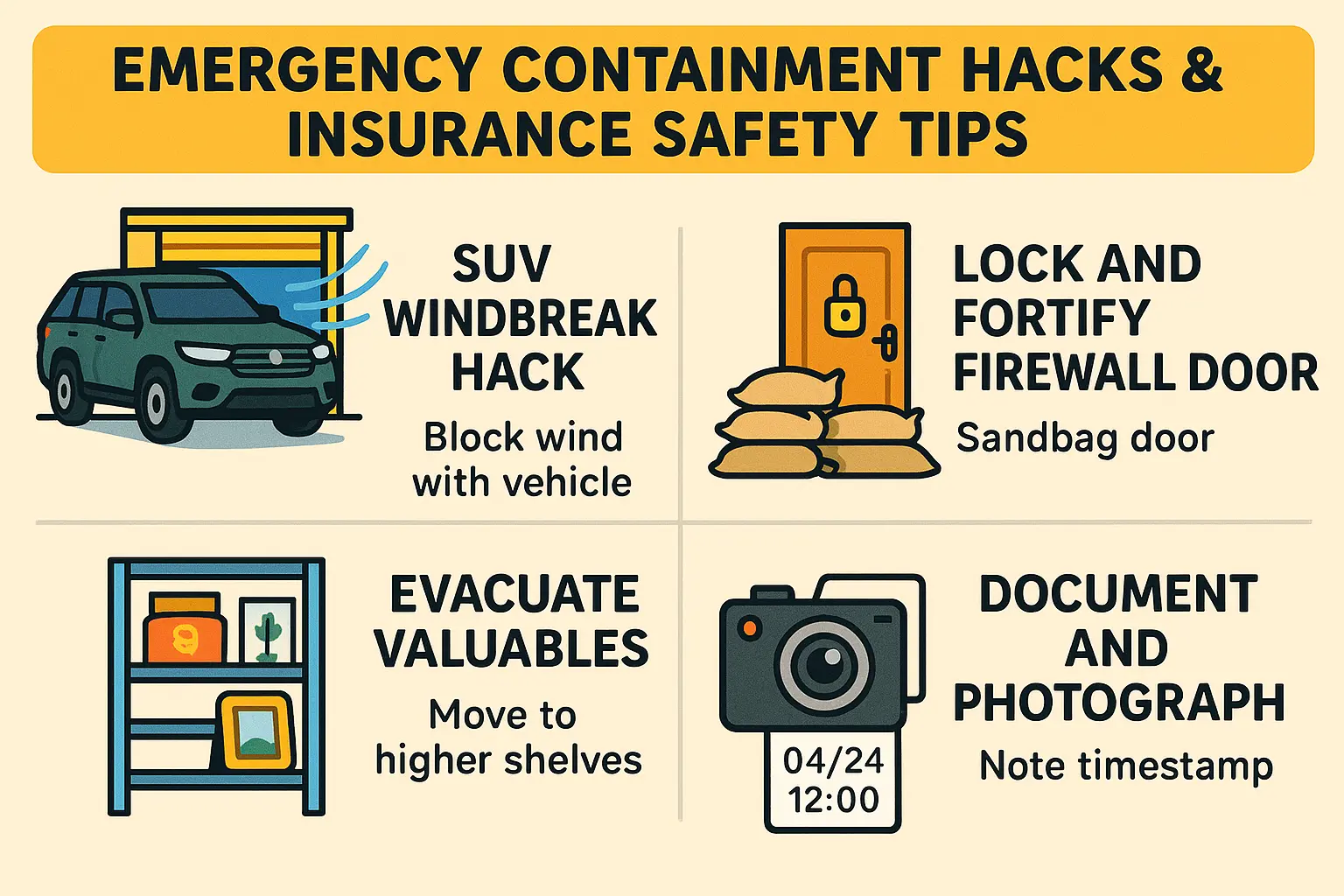
  • The SUV Windbreak Maneuver: Park a heavy vehicle, such as an SUV or truck, as close to the garage opening as possible without touching the door. This acts as an aerodynamic shield, breaking up wind velocity and diverting driving rain away from your home’s interior.
  • Fortify the Primary Firewall: Lock the interior pass-through door. Place heavy sandbags, dense storage containers, or rolled-up towels tightly against the bottom seam to prevent water seepage and seal out drafts.
  • Protect Valuables: Elevate all power tools, cardboard boxes, electronics, and documents off the floor. Cover remaining items with heavy-duty plastic tarps.

Protecting Your Insurance Claim and Evaluating Cost


Standard homeowners insurance policies (such as the standard ISO Form HO-3) contain a strict “Duty to Mitigate” clause. This means policyholders are legally required to take all reasonable steps to protect the property from further damage after an event. If your door is stuck open because of a pre-existing maintenance issue (like rusted tracks or an aged spring) and you fail to protect your home’s interior, your insurer may deny coverage for subsequent water or wind damage.

Take high-quality, timestamped photos of the failure point, such as bent tracks or broken springs, to prove the emergency was sudden and storm-related.

Keep this emergency checklist handy: use your vehicle to block wind, secure your firewall door, move valuables to safety, and document the damage to protect your insurance claim.

When deciding whether to call for emergency dispatch, balance the financial trade-offs:

  • Standard Service Rates: Typically range from $150 to $500, scheduled during normal business hours.
  • Emergency Storm Dispatch: Ranges from $300 to $800+ due to hazard conditions, high call volume, and holiday or after-hours fees.

If the storm is mild and your door can be safely lowered manually, clamping the track with Vise-Grips allows you to wait for a standard service call. However, if high winds are active and your door is completely jammed open, the minor premium of emergency dispatch is a fraction of the cost of a compromised roof or structural home repair. Knowing garage door emergency who should i call before the storm peaks can save your home from catastrophic damage.

Frequently Asked Questions


Why is leaving a garage door open during a storm structurally dangerous?

An open garage door allows high winds to enter your home, creating internal air pressure. This pressure, combined with the wind suction on the outside of your roof, can cause structural wind uplift, which can literally lift the roof off your home and compromise the walls.

Can I safely pull the emergency release cord if the door is stuck open?

You should only pull the emergency release cord if the garage door springs are fully intact. If a spring is broken, pulling the release cord removes the mechanical tension holding the door up, causing the heavy door to crash down instantly and violently.

Will homeowners insurance cover water damage if my garage door was left open?

Homeowners insurance typically covers sudden, accidental storm damage. However, if the insurance adjuster determines that the door remained open due to a neglected maintenance issue, or that you failed to make reasonable efforts to secure the interior entry door, they may deny your claim under a negligence exclusion.

Contact / Request a Call